

%201.png)
How Much Brands Pay Creators for UGC vs. Sponsored Posts
October 8, 2026
Comparing paid UGC vs sponsored posts? Here's what brands pay creators for each, what those fees cover, and how usage rights change the budget.
Read More
8 min read

.svg)


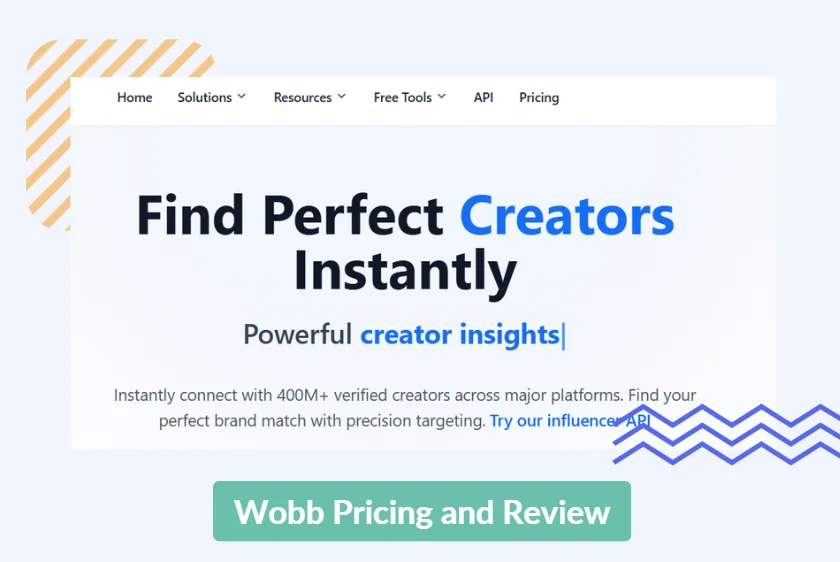
Wobb pricing starts at $99/month and tops out at $499/month before you hit custom enterprise quotes, which makes it one of the cheapest full-featured influencer platforms on the market. The catch is that almost everything you do inside it burns credits, and credits run out faster than most teams expect.
In this review, we cover Wobb's pricing tiers, standout features, real user feedback, and whether it's worth it for your team.
If you're a brand running or scaling an influencer program and trying to figure out where Wobb fits against tools that cost five times more, this breakdown is for you.
Best for: Small and mid-sized D2C brands running barter and UGC campaigns, especially in India and the wider APAC region
Starting price: $99/month
Free trial: Yes — 14 days, no credit card required
G2 rating: 4.8/5 (from a small review base)
Our verdict: Genuinely cheap discovery with a real barter marketplace, but the credit system and thin Western creator data cap how far you can take it.
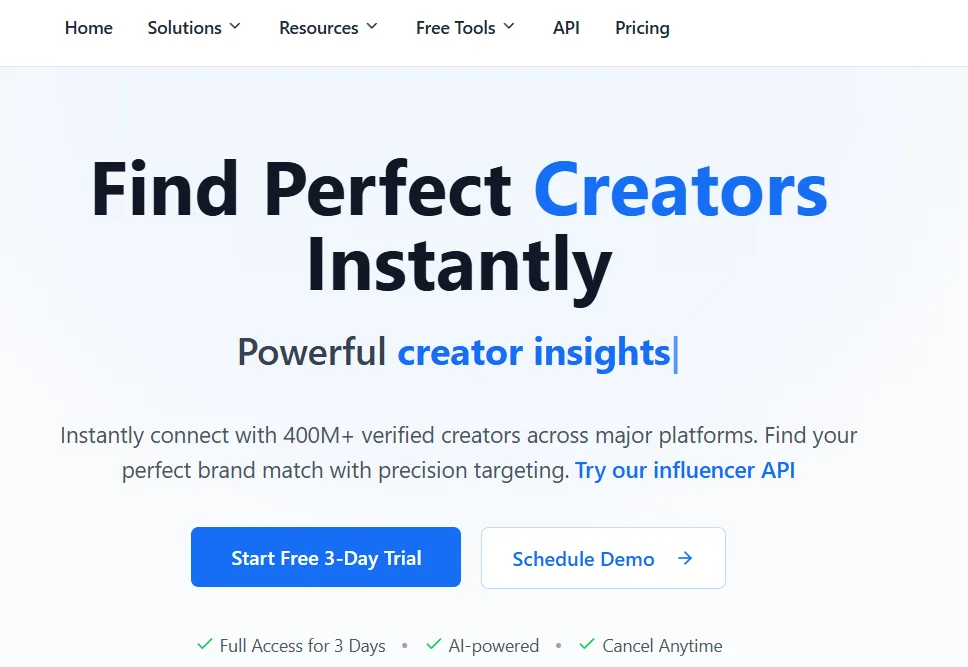
Wobb is a Gurugram-based influencer marketing platform that combines a creator database with a marketplace where influencers apply to your campaigns. It sits at the budget end of the market, targeting small and mid-sized eCommerce brands that want discovery, campaign management, and payouts without an annual contract. The company reports 600+ brands on the platform, including Emami, Colorbar, BIBA, and HDFC Life, which tells you a lot about where its creator data is strongest.
Its differentiator is the marketplace plus pixel tracking combination. Instead of only cold-outreaching creators, you post a campaign and pre-qualified creators apply — which is why it works so well for barter and gifting programs.
Wobb doesn't publish its full pricing table on the site — you see it once you create an account. Based on the plan structure and publicly reported figures, here's what the tiers look like.
The entry point, aimed at small and mid-sized brands testing influencer marketing. You get discovery, campaign creation, marketplace access, and basic reporting, with caps on active hired influencers, search pages, profile views, and contact reveals. The constraint is the credit ceiling, not the feature list — you'll hit limits on searching and unlocking contacts long before you run out of things to do.
Built for growing brands and agencies running multiple campaigns at once. Higher credit allowances across searches, profile views, and email or phone reveals, plus more concurrent active creators. This is the tier most brands actually land on once they leave the trial.
For teams managing high-volume campaigns. Removes most of the usage friction from the lower tiers, which is the point — at $499 you're paying to stop thinking about credits.
Multi-brand management, custom limits, and advanced features. Quote-based, so you'll need to talk to sales.
Wobb offers a 14-day free trial with no credit card, and trial users sit on the Growth plan with reduced credits. If you're running barter or gifting rather than paid placements, that low entry price stretches further than it looks — the same logic applies to most gifting platforms, where your real cost is product, not software.
The credit system is the big one. Searches, profile views, and contact reveals all consume credits, and agencies running high-volume outreach report burning through them fast enough that the effective cost climbs well above the sticker price. There's also no pause option — you downgrade or cancel, and cancelling locks you out of the platform entirely.
Wobb sits at 4.8/5 on G2, though the review count is small enough that the number carries less weight than it looks. The praise is consistent on two things: price-to-value and support. One Software Advice reviewer summed up the whole appeal by noting it <cite index="2-1">"Offers the same discovery as Modash at 1/3rd cost."</cite>
The frustrations are just as consistent. Credits come up constantly, and a G2 reviewer put it bluntly:"Credit system. It eats up credits pretty fast."That same reviewer flagged the UI as clunky and noted Wobb gets expensive for agencies running affiliate campaigns.
Across Capterra and G2, the pattern is clear — brands who found Wobb through a Modash or GRIN comparison and stayed for the price are happy. Brands who tried to scale global outreach on it left.
Wobb is a strong fit for small and mid-sized D2C brands in beauty, fashion, food, or consumer electronics running barter and UGC programs in India or the broader APAC region. If your creators are there and your budget is under $500/month, nothing else in the category gives you discovery, a marketplace, and sales attribution for that money.
It also works for early-stage brands with no influencer headcount who want to test the channel. The 14-day trial and monthly billing mean you can find out whether creator marketing works for you without signing anything.
Where it falls short: brands targeting Western markets, teams running high-volume outreach that will torch credits, and anyone building a commission-based program. If your model depends on ongoing relationships rather than one-off campaigns, you'll want to think about brand ambassadors and the tooling that supports them, which Wobb doesn't really have.
Budget-wise, Wobb makes sense from $99 to roughly $500/month. Past that, you're better off comparing against platforms in the $650–$1,000 range that include real CRM depth and affiliate automation rather than paying Wobb enterprise rates for a tool with known data gaps.
For its target user, yes. If you're a lean D2C team running gifting or UGC campaigns with creators concentrated in India or APAC, Wobb delivers more per dollar than anything else in the category — and the pixel tracking alone justifies the $99. The marketplace genuinely saves time, and the managed services option at 10% is a fair deal.
It stops being worth it the moment your program scales or moves West. The credit system turns a $99 plan into an unpredictable line item, the search filters get shaky under load, and the missing affiliate infrastructure means you'll bolt on another tool anyway. If you're evaluating Wobb because you want cheap, that's a valid reason. If you're evaluating it because you want to build a serious program across brand deals on multiple platforms, look at the next tier up.
If Wobb's data depth or credit model is the sticking point, here are five alternatives worth a look — each solving a different one of its gaps.
A micro-influencer marketplace for Instagram and TikTok, priced at $99/month (Essentials), $199/month (Performance), and $299/month (Pro). Best for small brands running gifting and UGC collaborations with manually vetted creators. You'd pick it over Wobb if you want the same budget range but with a Western creator pool and usage rights included in every plan. The tradeoff is hard caps on monthly collaborations and no ROI tracking. Our full breakdown of Social Cat alternatives covers where it fits.
Discovery-first platform with a 350M+ profile database, at $199/month (Essentials) and $499/month (Performance) billed annually. Best for eCommerce brands on Shopify who need reliable global creator data. You'd pick it over Wobb specifically for data depth in the US and Europe — this is the gap Wobb can't close. Downside: Shopify-only integration and a thinner CRM.
An all-in-one platform covering creator discovery across eight social platforms, an influencer CRM, automated outreach and follow-ups, campaign management, gifting, affiliate tracking, payments, and reporting. Pricing is publicly listed — not demo-gated — at $649/month (Standard), $1,049/month (Pro), and $2,490/month (Business), with custom agency plans. Best for D2C brands and agencies that want to run the entire program in one tool instead of stitching Wobb together with a spreadsheet and an affiliate app.
You'd pick it over Wobb when the credit model and missing commission tracking start costing you more than the price difference — and it integrates with WooCommerce and Magento, not just Shopify. Worth noting the entry price is more than 6x Wobb's, so it's a step up, not a swap.
Marketplace plus campaign management, with quote-based pricing typically starting around $2,000/month on annual terms. Best for brands with strong inbound creator interest who want applications and outbound discovery in the same workflow. You'd pick it over Wobb if the marketplace model appeals but you need it to work in Western markets at scale.
Full-stack platform for DTC eCommerce, starting around $2,500/month with a 12-month minimum. Best for brands shipping products to hundreds of creators and managing UGC rights alongside sales data. You'd pick it over Wobb only if gifting logistics and media rights are your bottleneck and you have the budget to match — this is the opposite end of the market.
Wobb does one thing very well: it makes influencer marketing cheap enough to test. The marketplace, the pixel tracking, and the 10% managed service option all punch above the $99 entry price. The limits are just as clear — credits that drain, search that wobbles at scale, creator data that thins outside APAC, and no native affiliate tracking. It's a strong starting point that most growing brands will outgrow.
If the whole model of buying software, running campaigns, and chasing creators sounds like more overhead than you want, there's a different approach. Creator Hero flips it: creators build commission-based storefronts and sell your products to their audience, with no upfront campaign spend and no platform to learn. Brands sit in a directory of 55,000+, creators earn 20–50% commission, and the selling happens without a campaign manager in the middle.
Let the creators do the selling for you, so you can focus on developing new products and scaling your brand. Explore Creator Hero for brands or book a free demo to see how it works.


_logo.svg.png)


