Scaling a product seeding program in 2026 requires a move away from manual spreadsheets and fragmented DM outreach. As consumer trust shifts toward authentic creator recommendations, brands are increasingly relying on automated gifting platforms to manage high-volume influencer relations. This guide identifies the top-tier tools designed to help your marketing team streamline logistics and secure high-quality user-generated content (UGC).
Whether you are a DTC startup or a global enterprise, these platforms offer the data-driven insights needed to track performance and vet potential partners.
Why Use Gifting Tools in 2026
To effectively scale a product seeding program in 2026, brands must transition from manual tracking to a "gift-to-scale" model that prioritizes data and logistics.
Key Benefits of Gifting Tools
Scalable Fulfillment: Integrated e-commerce features automate the entire shipping process, allowing your team to send hundreds of products with a single click rather than manual address entry.
Vetted Creator Discovery: Access massive influencer databases with verified engagement rates and audience demographics to ensure your products aren't being wasted on "bot" accounts.
Rights Management and UGC: These tools often include built-in licensing agreements, giving your brand the legal right to repurpose creator content for your own social ads and product pages.
Performance Tracking: Moving beyond "likes," 2026 platforms track actual conversion data, coupon code usage, and link clicks to measure the true ROI of every gifted item.
Streamlined Communication: Centralizing all creator interactions in one dashboard ensures no follow-up is missed and helps maintain a professional, consistent brand voice at scale.
Why It Matters for Your Brand
In an era where consumer trust is the ultimate currency, getting your products into the hands of authentic creators is the fastest way to build social proof and authority. Implementing a sophisticated gifting strategy ensures your brand remains top-of-mind, turning one-off shipments into a continuous engine for high-quality content and measurable growth.
Top 10 Influencer Gifting Platforms in 2026
1. Influencer Hero
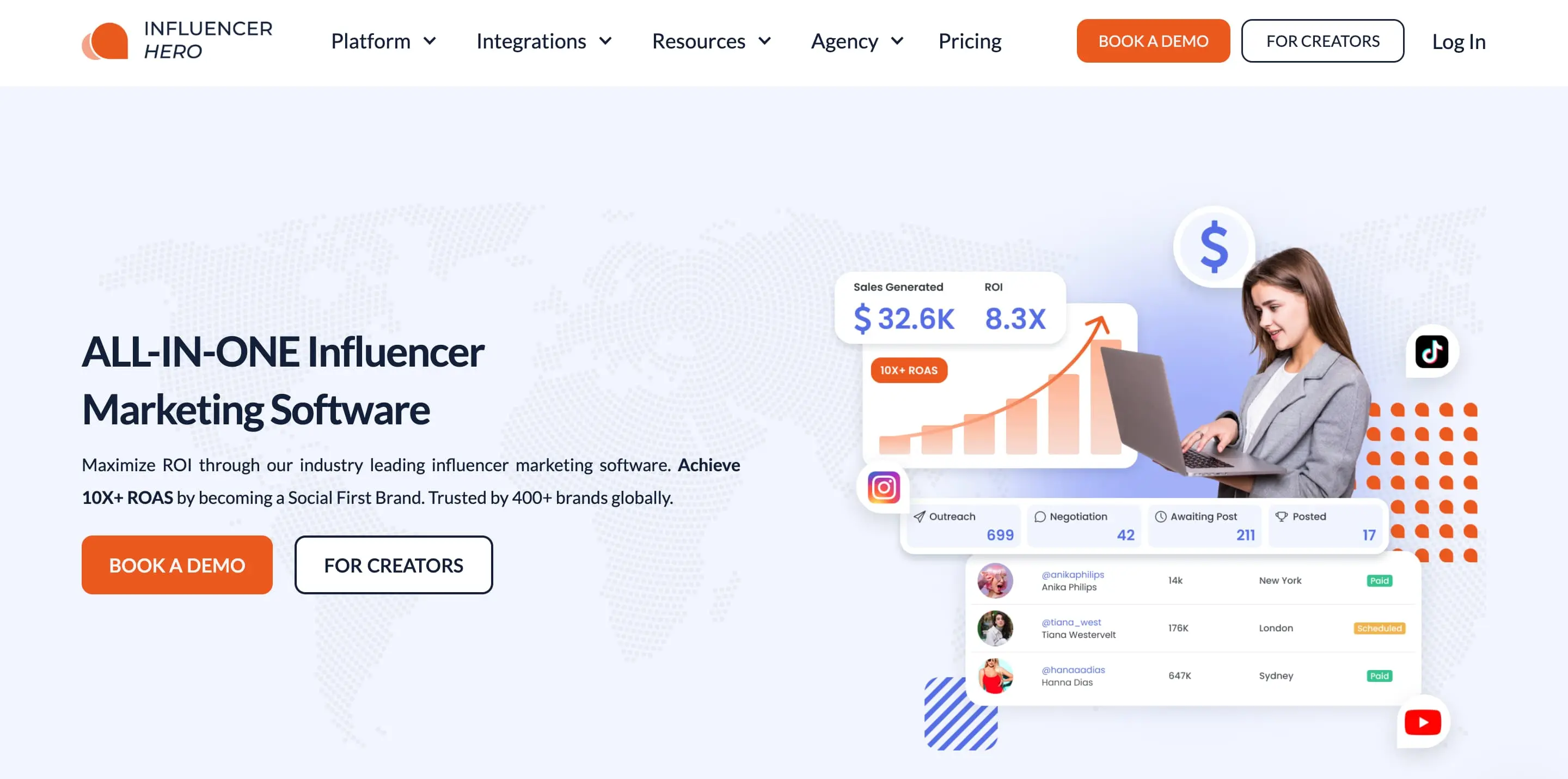
Influencer Hero is an all-in-one influencer marketing software designed to handle the entire lifecycle of a creator partnership. It excels at converting your existing Shopify customers into brand ambassadors while providing powerful automated outreach to new prospects.
Pricing: starting price range of $649 – $2,490+ per month
Best For: Scaling DTC brands and agencies that need an affordable but powerful alternative to enterprise software.
Why it stands out for gifting: It features a dedicated gifting CRM that syncs directly with your store, eliminating the need for manual order entry and tracking spreadsheets.
End-to-End Fulfillment Automation: Dispatch products directly from the CRM by simply selecting a SKU. The platform automatically creates a $0 order in Shopify/WooCommerce, keeping your sales analytics clean while triggering your warehouse to ship.
Self-Serve Creator Selection: To ensure higher posting rates, you can send creators a link where they choose their own products and variants, ensuring they receive something they actually want to promote.
Real-Time Tracking & Notifications: Tracking numbers are automatically pulled into the CRM and shared with the influencer. This allows the system to trigger automated follow-ups based on delivery status.
Unified Campaign Management: Manage discovery, automated email outreach, shipping, UGC collection, and affiliate payouts in one single tab.
Pros:
Native Shopify and Klaviyo integrations for seamless logistics.
High-volume automated email sequences that improve reply rates.
Built-in affiliate and payout tools to transition gifted creators to paid partners.
Cons:
Higher starting price point compared to entry-level social listening tools.
Advanced features may be restricted to higher-tier plans.
2. Modash
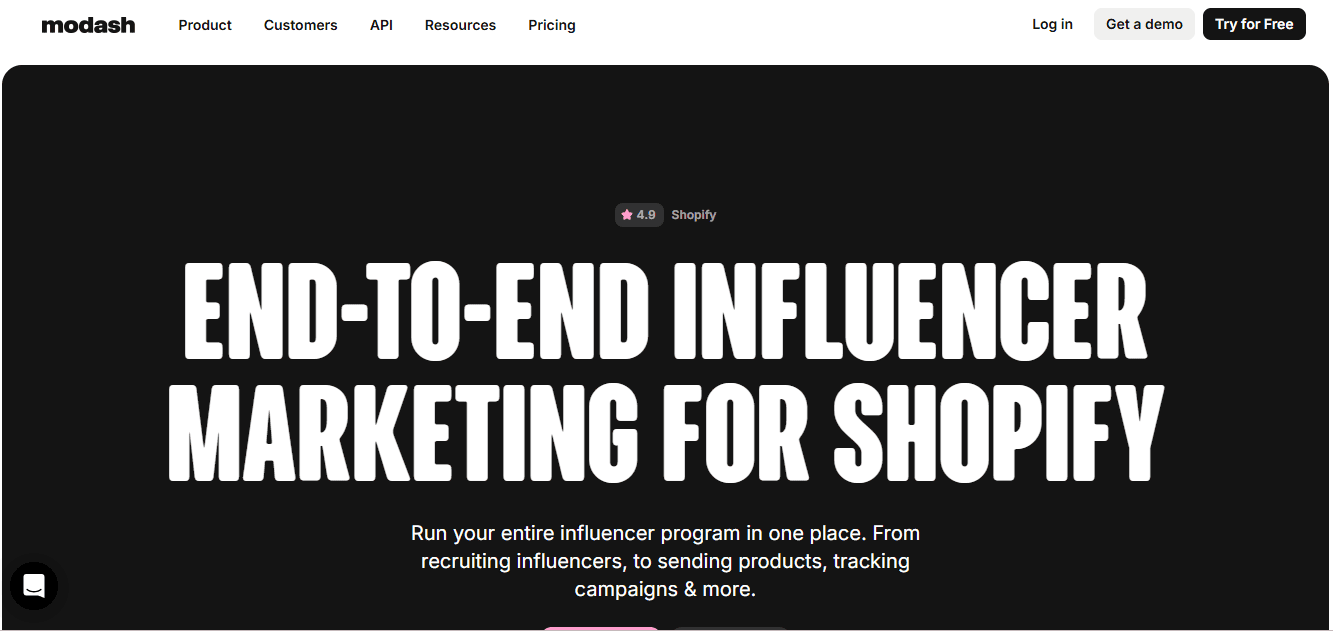
Modash is a data-first platform that boasts one of the largest influencer databases on the market, covering nearly every public creator on Instagram, TikTok, and YouTube. It is built for brands that prioritize finding the "perfect match" through granular audience filters and fraud detection.
Pricing: Starts at $199/month (billed annually) or $299/month (monthly).
Best For: Performance-driven brands that need to vet influencer audiences and track content at a massive scale.
Why it stands out for gifting: Its "Shopify Gifting" integration allows you to send products directly from your store and automatically tracks when a creator mentions your brand or posts a story.
Pros:
Massive database of 350M+ profiles with deep audience demographics.
Highly accurate "fake follower" detection to protect your gifting budget.
Creators do not need to log into a portal or authenticate to be tracked.
Cons:
Pricing scales quickly based on the number of profiles analyzed per month.
Lacks a built-in email inbox on the lowest "Essentials" tier.
Data for very small niche creators in specific local cities can sometimes be limited.
3. Skeepers
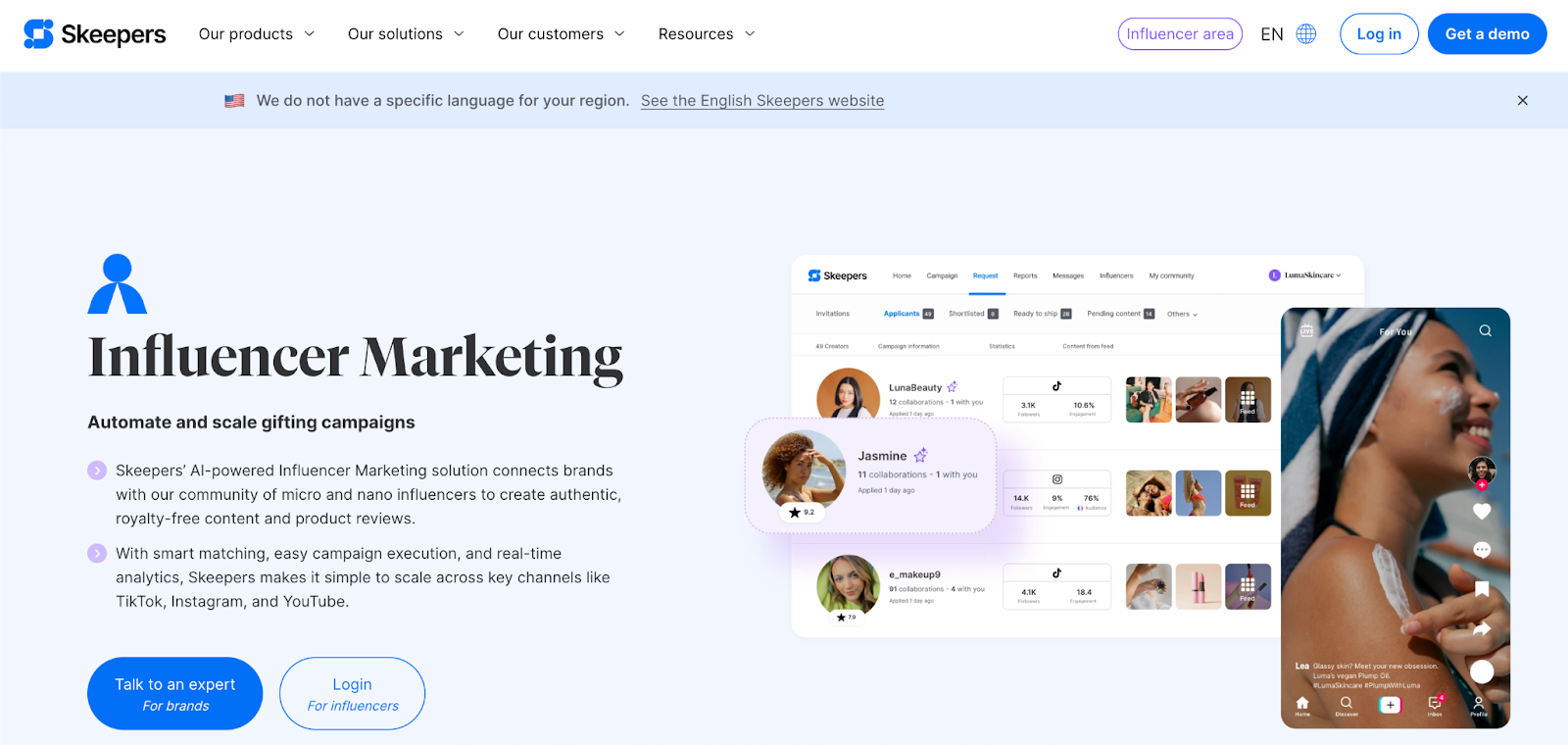
Skeepers focuses heavily on the "User-Generated Content" (UGC) and micro-influencer side of gifting. It functions as a managed marketplace where brands can offer products in exchange for high-quality reviews, photos, and videos that are rights-cleared for marketing use.
Pricing: Starts around $1,250/month; custom enterprise quotes available.
Best For: Retail and beauty brands that need a high volume of authentic ratings, reviews, and social content.
Why it stands out for gifting: It utilizes a "credit-based" gifting system where vetted influencers apply to receive your products, ensuring you only gift to creators who are genuinely interested.
Pros:
Access to a network of 100,000+ pre-vetted nano and micro-influencers.
Automated collection of reviews that can be pushed directly to your product pages.
"Smart matching" AI pairs your brand with creators most likely to enjoy the product.
Cons:
No free trial is available to test the platform before a significant investment.
Pricing is less transparent than other SaaS models, requiring a sales call.
Primarily optimized for micro-influencers rather than large-scale celebrity talent.
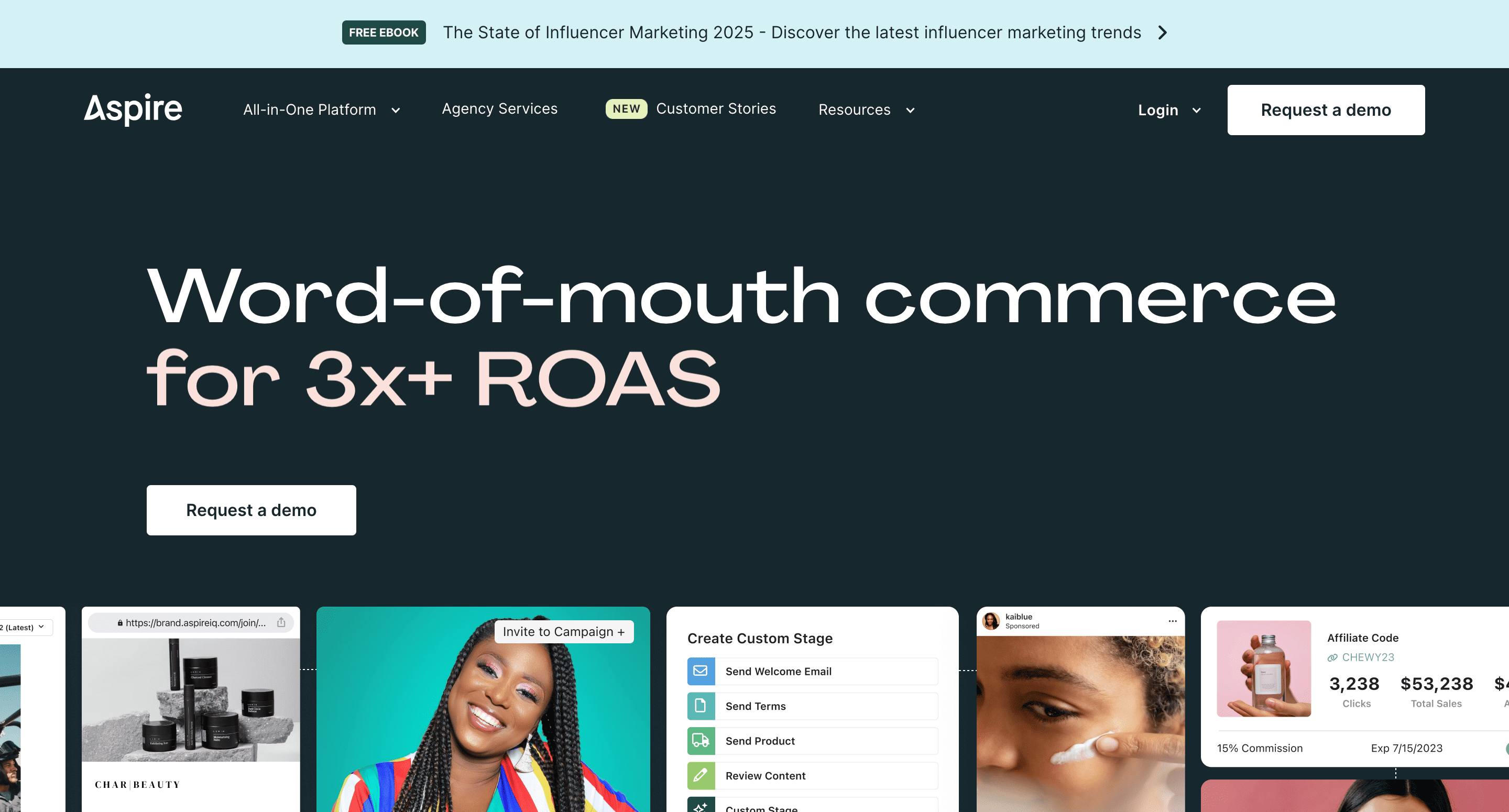
4. Aspire
Aspire is an enterprise-grade platform that treats influencer marketing like a community-building exercise. It is a premium solution for large brands that want to manage high-touch relationships and complex campaign workflows in one place.
Pricing: Generally requires an annual commitment starting at $20,000–$30,000+/year.
Best For: Established enterprise brands with dedicated influencer teams and large marketing budgets.
Why it stands out for gifting: It offers a "Reverse Marketplace" where creators apply to your brand, combined with a creator storefront where influencers can pick their own gift items.
Pros:
Highly customizable workflows that accommodate complex team approvals.
Robust social listening tools to track organic brand mentions.
Automated digital term sheets to secure usage rights for all gifted content.
Cons:
Prohibitively expensive for early-stage startups or small businesses.
Long implementation and onboarding period (often 6–8 weeks).
Requires a 12-month mandatory contract, offering less flexibility than monthly tools.
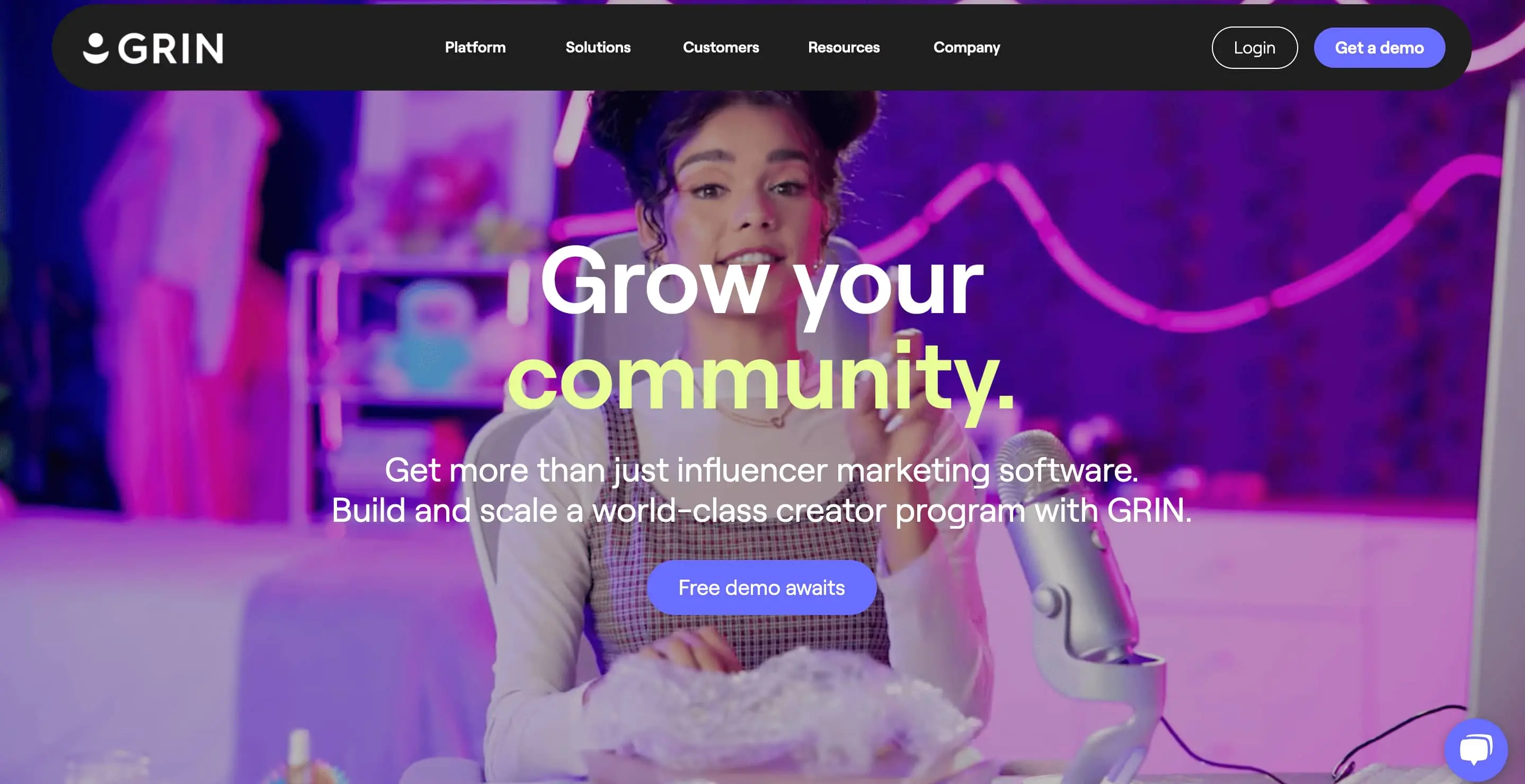
5. GRIN
GRIN is widely considered the gold standard for e-commerce-heavy influencer programs. Its primary philosophy is that "creators are your customers," and it builds its entire interface around managing those relationships without ever making the creator feel like they are "in a database."
Pricing: Custom pricing only; typically starts at $2,500+/month with an annual commitment.
Best For: Fast-growing e-commerce brands that are deeply integrated into the Shopify ecosystem.
Why it stands out for gifting: It features a "Gia" AI assistant to help automate the most tedious parts of gifting, such as tracking down shipping addresses and confirming product arrivals.
Pros:
Seamless end-to-end logistics that integrate with Shopify, WooCommerce, and Magento.
Influencer-friendly experience as creators don't need to log into a separate platform.
Deep revenue attribution that connects gifting campaigns directly to sales.
Cons:
Very high cost of entry makes it inaccessible for many brands.
Search functionality for finding new creators is often reported as less accurate than Modash.
Does not offer a mobile app for creators or brands, which can slow down real-time management.
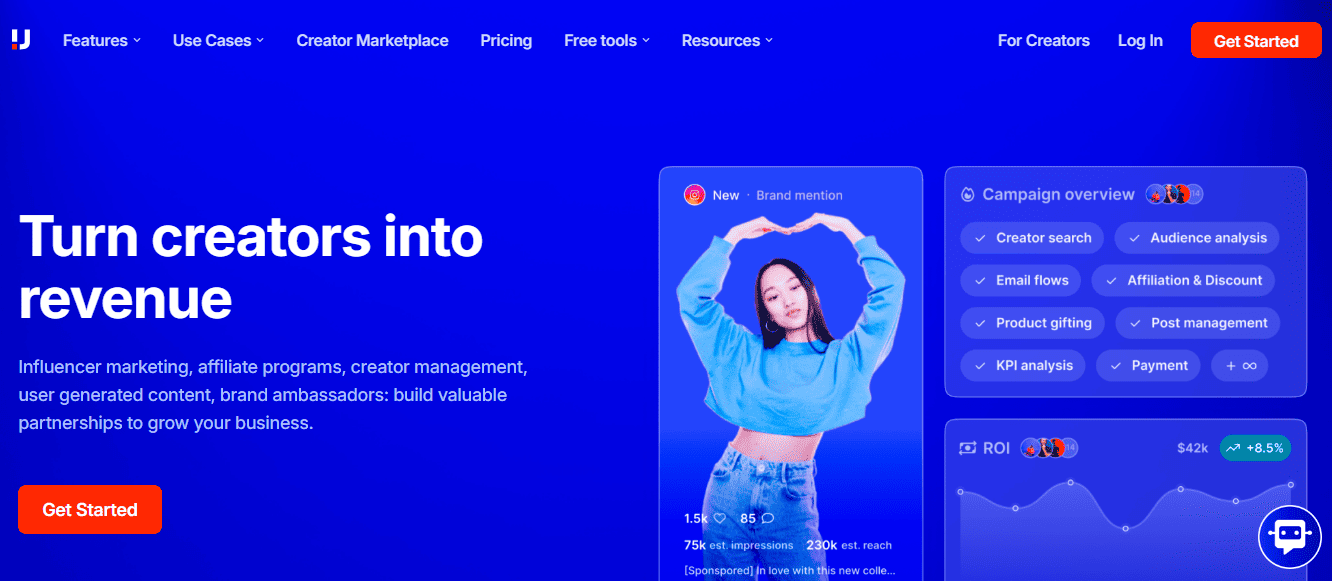
6. Upfluence
Upfluence is a powerful choice for brands that want to turn their existing customer base into an army of influencers. It uses unique software to identify which of your past purchasers have the largest social followings.
Pricing: Undisclosed, but typically around $2,000 per month.
Best For: E-commerce brands on Shopify or Amazon that want to prioritize customer-to-creator identification.
Why it stands out for gifting: It offers strong e-commerce synergy by identifying your own customers as influencers, making the gifting process feel more like a reward for loyalty.
Pros:
Strong Amazon and Shopify integrations for direct sales tracking.
AI-powered outreach assistant (Juce) to streamline communication.
Seamless workflow for converting customers into brand ambassadors.
Cons:
Pricing often scales based on the number of influencers stored in your CRM.
Contracts can be less flexible than newer SaaS competitors.
Higher entry cost compared to automated outreach-first platforms.
7. Captiv8
Captiv8 is an enterprise-level data science platform that provides deep insights into audience sentiment and brand safety. It is designed for massive organizations that need to mitigate risk while managing thousands of creator relationships.
Pricing: Approximately $25,000 per year base, with affiliate/storefront add-ons ranging from $20,000 – $30,000 per month.
Best For: Global enterprises requiring deep data science, sentiment analysis, and high-level brand safety scores.
Why it stands out for gifting: It provides "Enterprise Insights," utilizing deep data science to ensure gifted products are only sent to creators who align perfectly with brand values.
Pros:
Highly sophisticated audience filters and sentiment analysis tools.
Custom KPI reports tailored to specific corporate goals.
Comprehensive brand safety and "integrity" scoring for every creator.
Cons:
High complexity requires dedicated staff to manage the platform effectively.
Very high entry price point, making it inaccessible for smaller brands.
Can feel "data-heavy" and less focused on quick ROI compared to leaner tools.
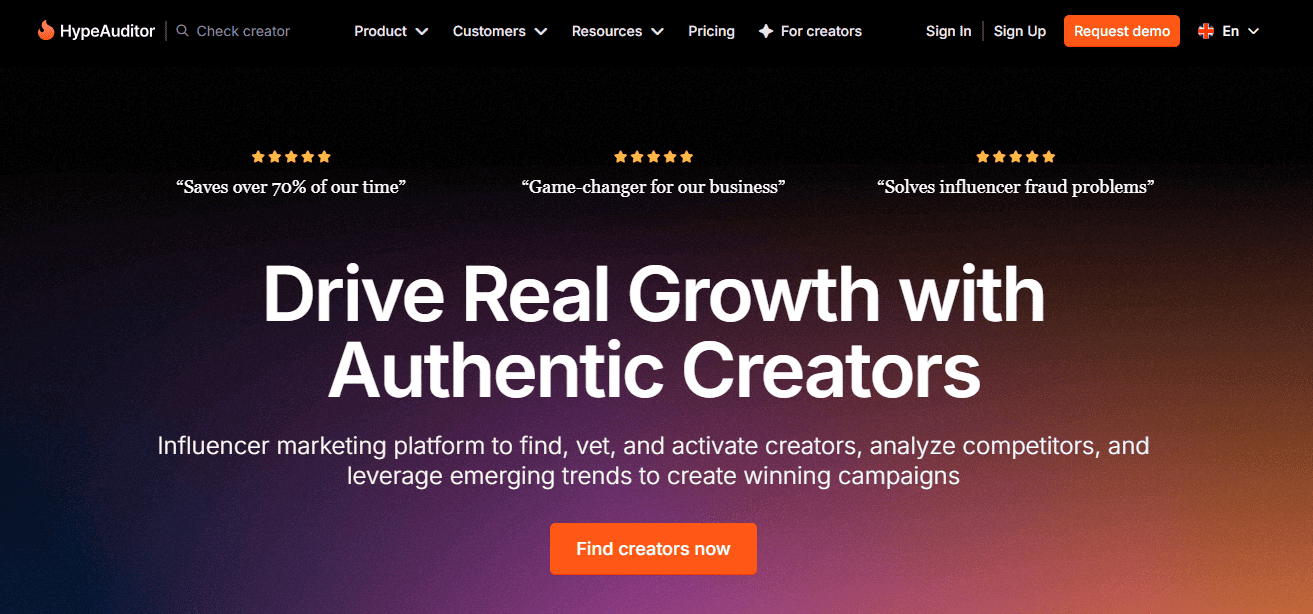
8. HypeAuditor
HypeAuditor is the industry standard for fraud detection and audience quality vetting. It is primarily used by brands that want to ensure their gifting budget isn't being wasted on influencers with fake or inflated followings.
Pricing: Undisclosed, estimated between $10,000 – $60,000 per year.
Best For: Brands that prioritize audit integrity and want to vet creator quality before sending any products.
Why it stands out for gifting: It excels at "Audit Integrity," allowing brands to verify that the recipients of their gifts have real, engaged audiences.
Pros:
World-class authenticity scoring and fraud detection analytics.
Advanced AI category search for finding niche-specific creators.
Detailed competitor tracking to see which creators your rivals are gifting.
Cons:
Outreach and CRM features are generally less automated than campaign-centric tools.
The interface is more focused on analytics than on the logistics of shipping.
Full feature access requires a significant annual investment.
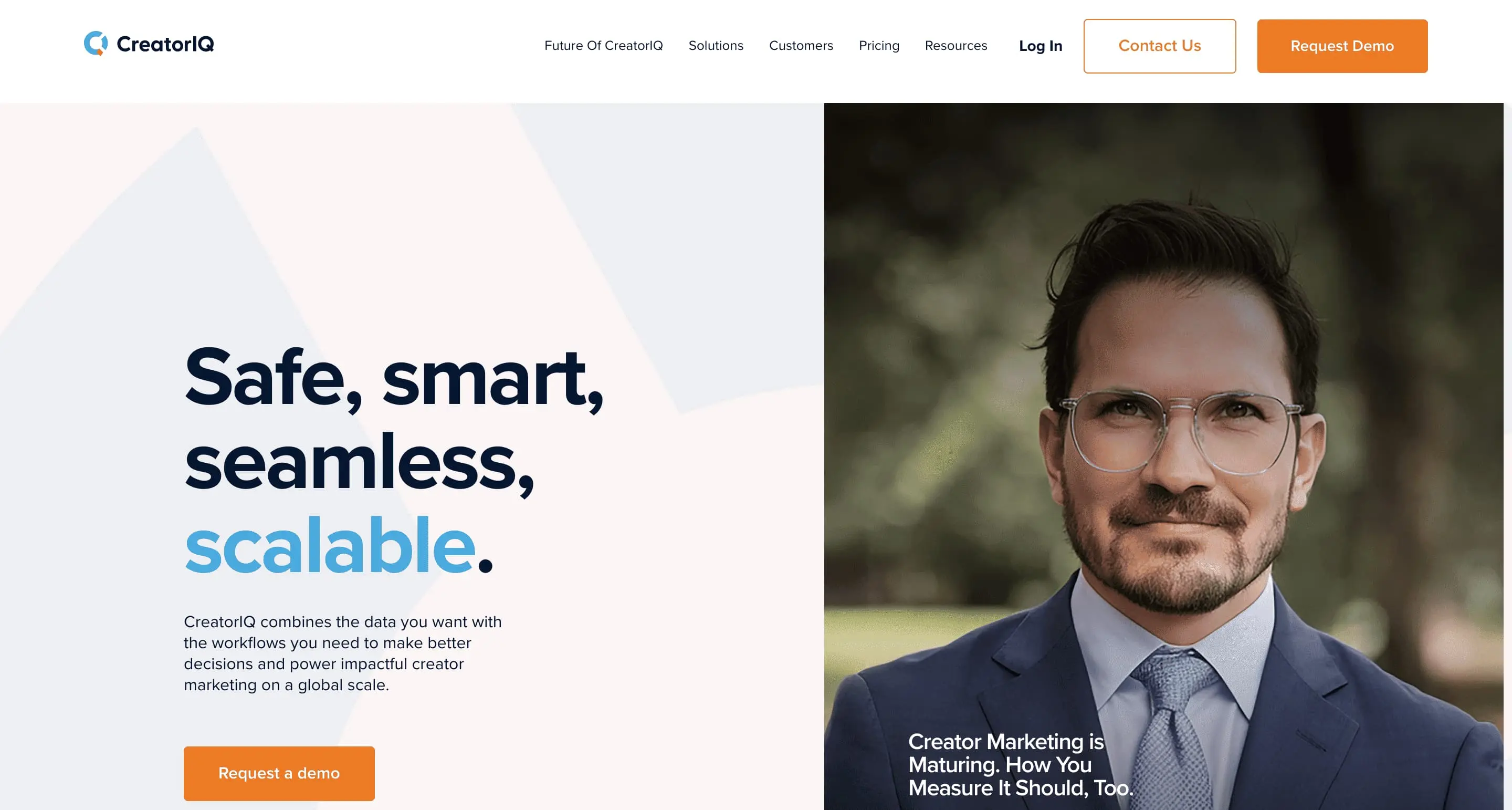
9. CreatorIQ
CreatorIQ is a global governance platform built for massive, multi-departmental ecosystems. It provides the infrastructure needed for large teams to coordinate gifting and campaigns across different regions and product lines.
Pricing: Undisclosed, ranging from $35,000 to over $200,000 per year.
Best For: Massive corporations needing a global system for multi-departmental creator management.
Why it stands out for gifting: It is built for "Global Governance," offering API-based real-time reporting and one-sheet approvals for large-scale gifting logistics.
Pros:
Industry-leading reporting and data visualization for executive teams.
Robust payment compliance features for international creator sets.
Unified CRM that manages complex approval workflows across teams.
Cons:
Features a steep learning curve that requires significant training.
Rigid annual contracts that do not allow for month-to-month scaling.
High cost makes it overkill for brands just starting their gifting journey.
10. Later
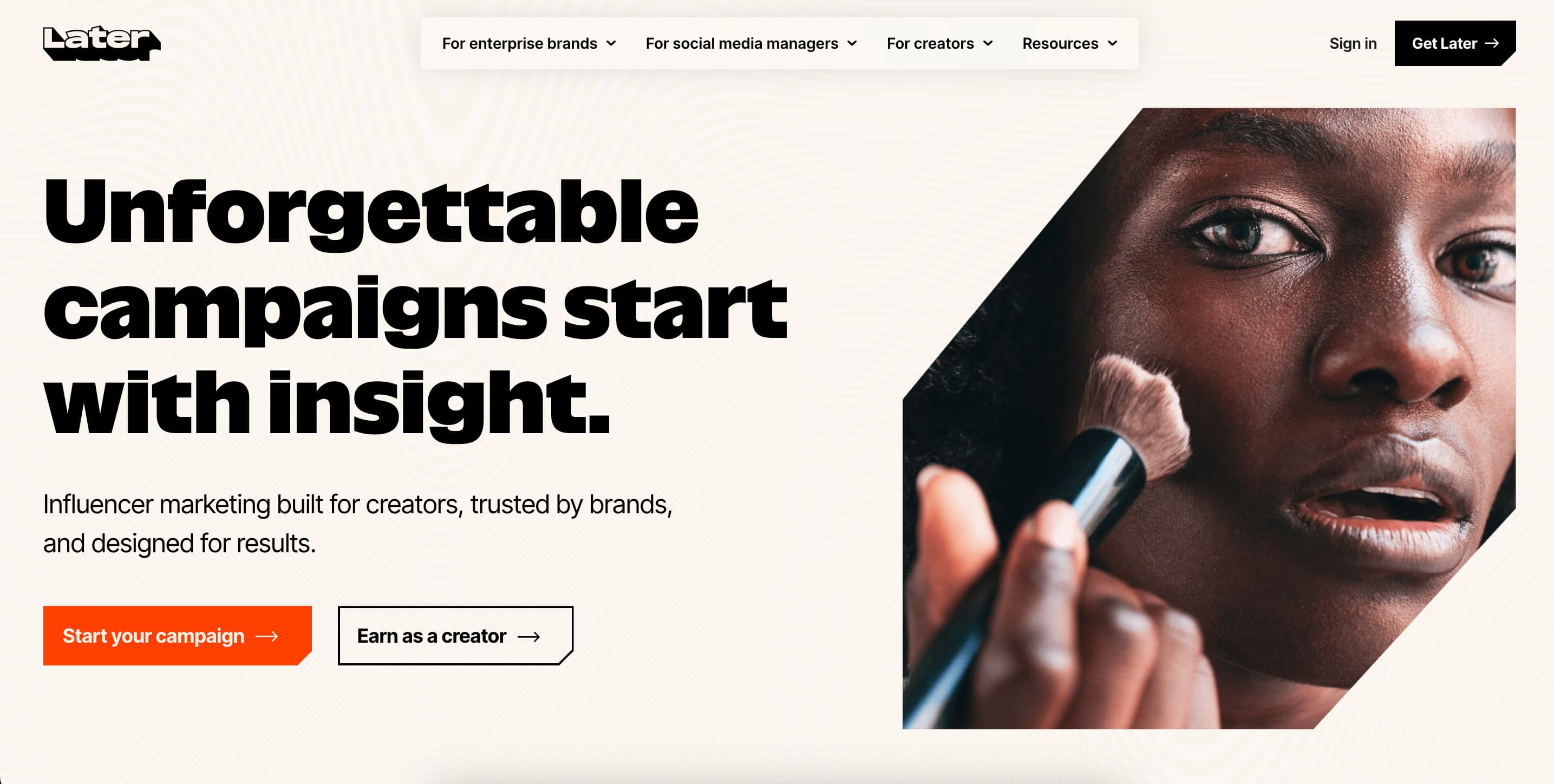
Later combines social media scheduling with an influencer marketing ecosystem. It allows brands to manage their own social presence and their creator partnerships from the same centralized dashboard.
Pricing:$28,500 to $60,000 per year, plus a $5,000 onboarding fee.
Best For: Mid-to-large brands that want to unify social media posting and influencer gifting in one suite.
Why it stands out for gifting: Its "Social Sync" capability allows you to easily turn gifted creator content directly into scheduled posts for your brand’s own social channels.
Pros:
Seamless integration between influencer campaigns and social media scheduling.
Broad suite of tools covering discovery, management, and publishing.
Strong focus on visual content and aesthetics.
Cons:
Influencer-specific tools can sometimes feel secondary to the core scheduling features.
High onboarding fees and annual commitments.
ROI tracking is less granular than platforms built specifically for e-commerce gifting.
Final Thoughts
In 2026, influencer gifting has shifted from simple product exchanges to a data-driven strategy for brand growth. Choosing the right platform depends on your scale, whether you need the CRM efficiency of Influencer Hero or the massive database of Modash.
The ideal platform removes friction between discovery and fulfillment while protecting your bottom line. While enterprise giants like CreatorIQ provide global governance, more agile tools empower DTC brands to turn gifted products into high-performing assets. Focus on automation and transparency to ensure your gifting strategy remains a competitive advantage in a crowded marketplace.
FAQs
What is the best influencer gifting platform for Shopify brands in 2026?
The best platforms are those that offer native e-commerce integration to automate logistics. Influencer Hero and GRIN are currently the top choices, as they sync directly with your Shopify store to handle automated product fulfillment, inventory tracking, and shipping updates without manual entry.
How do I track the ROI of influencer gifting campaigns?
Tracking ROI in 2026 involves using platforms that generate unique affiliate links and discount codes for every gifted creator. Advanced tools like Influencer Hero go a step further by providing deep revenue attribution dashboards, allowing you to see exactly how many sales each gifted product generated.
Are there free influencer gifting platforms for small brands?
While many professional tools require a subscription, some platforms offer "freemium" models or marketplace access with low entry costs. Platforms like Collabstr or Afluencer allow brands to browse creators or post campaigns for free, though they often charge a percentage fee per successful collaboration.
Can I automate influencer outreach for product seeding?
Yes, automation is a key trend for 2026. High-performance CRM tools allow you to send automated, personalized email sequences to hundreds of creators at once, tracking opens and replies in a centralized inbox to ensure no partnership opportunity is missed.
How do I verify if an influencer’s audience is real before gifting?
To protect your gifting budget, you should use platforms with built-in "Audit" features. Tools like Modash and HypeAuditor analyze creator profiles for fake followers and engagement bots, providing an authenticity score so you only send products to influencers with genuine reach.
Related Posts
The incredible power of team collaboration is evident in the remarkable outcomes it can achieve
Influur pricing explained: no brand subscription, pay-as-you-go fees, real pros and cons, and our verdict on whether this creator marketplace is worth it in 2026.
Tagbox looks cheap at $19/month — but the feature most brands actually need is hidden behind an Enterprise quote. Here's the full pricing breakdown and our honest verdict.
Word on the Block charges no subscription — but its pricing page never tells you the fee. Here's what the model actually costs brands, what's included, and our honest verdict.
Build your own business without having to manage all the operational aspects of an e-commerce. Focus on creating content, driving sales and maximise your earnings!


.svg)


%201.png)




_logo.svg.png)


