As the creator economy continues to thrive, creators are looking for innovative ways to monetize their content and turn their audiences into loyal customers. One of the most powerful tools for achieving this is having a personalized storefront.
A storefront allows creators to sell products directly to their audience, whether it’s physical merchandise, digital products, memberships, or exclusive content. With the right platform, creators can grow their income while building deeper connections with their followers.
In this article, we’ve compiled the top 10 best platforms for creators’ storefronts, considering their features, pricing, and suitability for different creator types. Whether you’re an influencer selling merchandise or a content creator offering digital products and services, these platforms will help you turn your passion into profit.
Top 10 Best Platforms for Creators’ Storefronts:
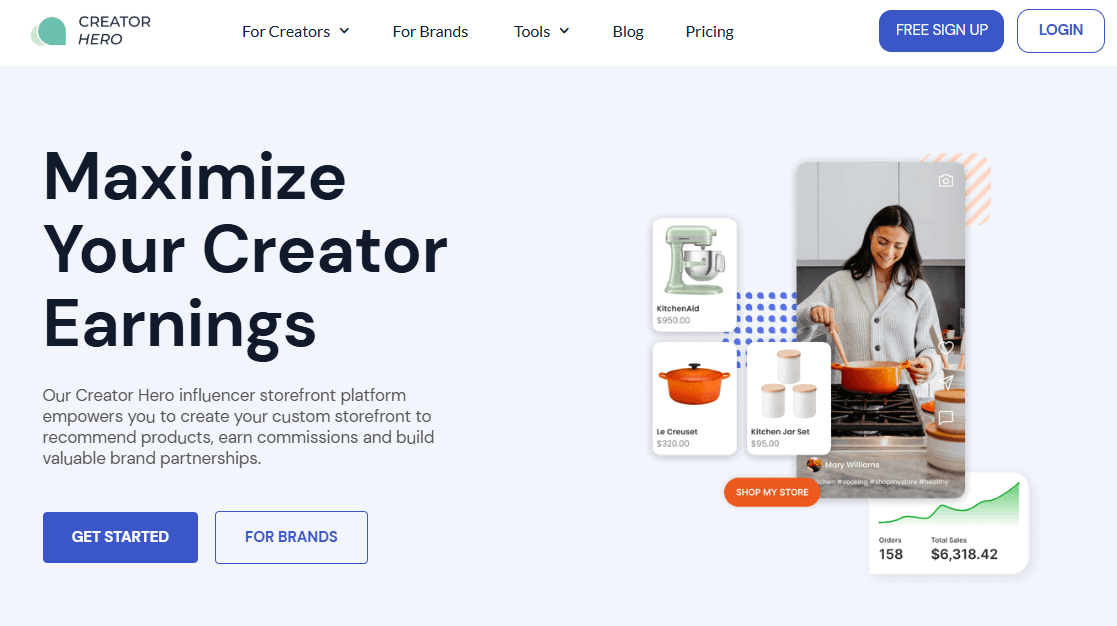
Creator Hero
Shopify
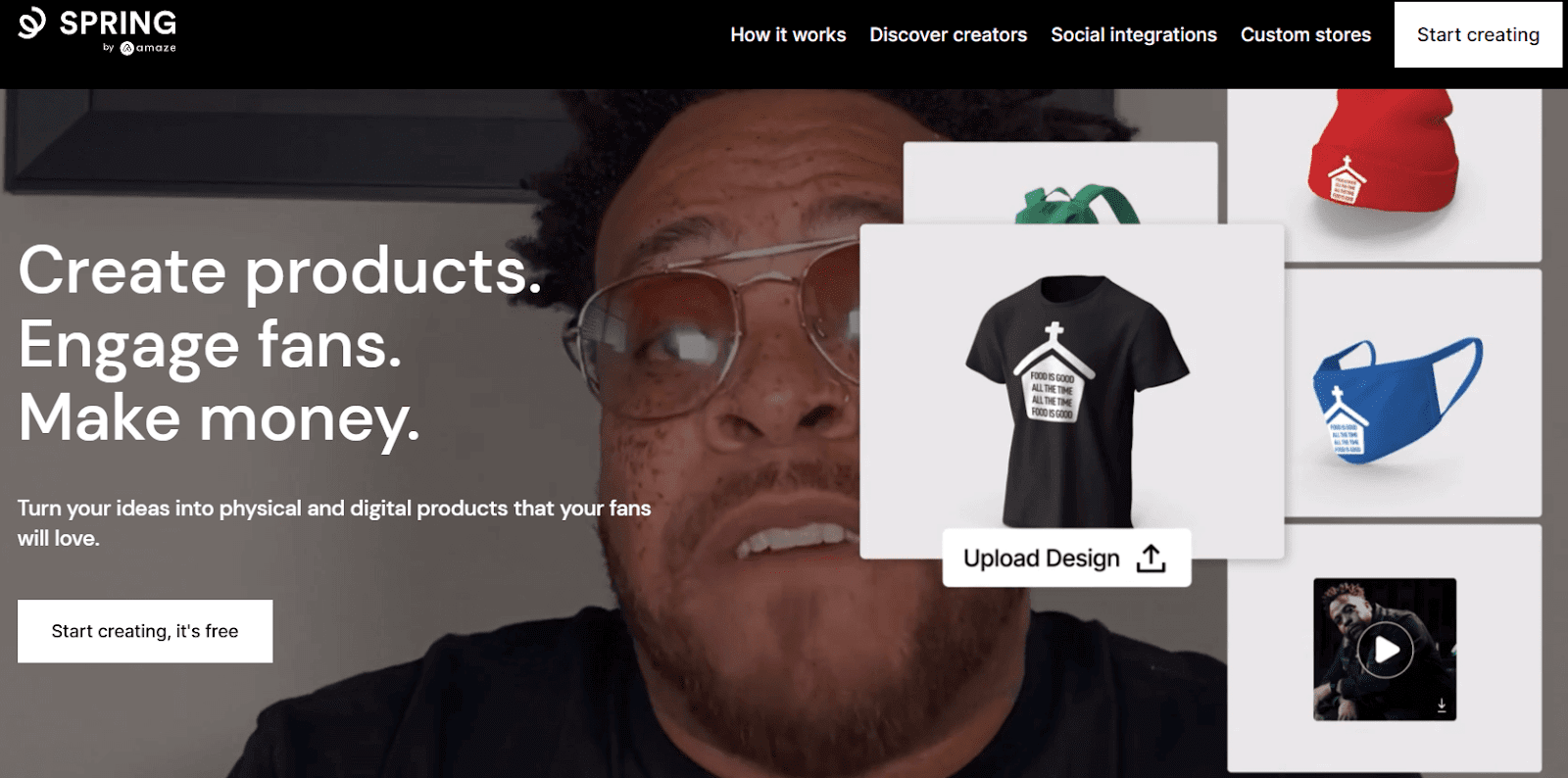
Spring (formerly Teespring)
Fourthwall
Sellfy
Stan Store
Gumroad
Payhip
Big Cartel
Spreadshop
Why Use Creator Storefront Platforms
Creator storefront platforms enable creators to monetize their content, manage their products, and engage with their audience, all from one central location. Instead of managing multiple tools, platforms, and third-party services, storefront platforms provide an integrated solution that makes it easier for creators to run their businesses efficiently.
These platforms offer a range of customizable features designed to simplify the selling process, letting creators focus on what they do best—creating content—while seamlessly generating revenue.
Key Reasons to Use Creator Storefront Platforms
Simplified Monetization: Creator storefront platforms allow you to sell products directly to your audience—whether it's physical merch, digital downloads, or memberships. With an all-in-one solution, you can manage your sales without needing third-party tools, making the entire process more streamlined.
Customizable Branding: These platforms offer extensive customization options to make your storefront align with your brand’s unique identity. From personalized URLs to custom product pages and designs, you can ensure your storefront matches your content and personal style, enhancing the overall user experience.
No Upfront Costs: Many creator storefront platforms, such as Spring or Gumroad, operate on a commission or transaction-based fee structure, so there are no large upfront costs.
Integrated Sales Tools: Creator storefront platforms often come with built-in sales tools like email marketing, discount management, and affiliate programs. These features allow you to drive sales directly from your storefront, track your performance, and build relationships with your audience, all in one place.
Easy Integration with Social Media: Many storefront platforms are designed to seamlessly integrate with platforms like Instagram, TikTok, and YouTube, enabling you to sell directly through your social media accounts.
Secure Payment Processing: Creator storefront platforms handle secure payment processing, meaning creators don’t need to worry about the complexities of managing transactions or integrating with third-party payment gateways.
Analytics and Performance Tracking: Most platforms provide detailed analytics to track sales, conversions, and customer behavior. This data helps you understand what’s working, where you can improve, and how to better cater to your audience, leading to more effective sales strategies.
Why It’s Crucial For Your Brand
As a creator, having a dedicated storefront allows you to build a sustainable business around your brand. Rather than relying on third-party platforms or merch drops, your storefront gives you direct control over your revenue streams. By using a platform designed for creators, you can focus on growing your community while managing sales, performance, and branding all in one place.
With no upfront costs and the ability to scale your business effortlessly, creator storefront platforms provide a crucial advantage in the competitive creator economy. They allow you to monetize your passion in a way that aligns with your brand, freeing up more time to engage with your audience and build long-term success.
Top 10 Best Platforms for Creators Storefronts
1. Creator Hero
Pricing
Free: $0/month – Get started for free and begin selling your favorite brands.
Pro: $19/month – For growing influencers, offering higher visibility, customization, and more audience insights.
Premium: $65/month – For content creators and businesses, with priority access to new brand partnerships and a dedicated talent manager.
Best For
Creators looking for a simple, customizable storefront with the flexibility to scale. Ideal for influencers, content creators, and small businesses looking to manage their online shop, build brand partnerships, and enhance monetization through affiliate marketing and product sales.
Why It Stands Out:
Free Plan: Creator Hero offers a free plan for creators to get started with no upfront costs, making it accessible for creators at all stages.
Customizable Storefronts: Build your fully personalized storefront with drag-and-drop tools for easy setup and product management.
Affiliate Marketing: Creators can access 20-50% commission through affiliate marketing, providing an opportunity for increased earnings.
Brand Partnerships: Gain access to 55K+ brands for potential partnerships beyond traditional affiliate marketing, increasing revenue streams.
Creator-Driven Sales: The platform simplifies sales by allowing creators to sell directly through their own stores without needing to go through extensive campaign briefs and email exchanges.
Pros
Affordable: Free plan available, with low-cost Pro and Premium plans for growing creators.
Seamless Integration: Integrates directly with social media platforms like TikTok, Instagram, and YouTube for easy product promotion and sales.
Ease of Use: Quick and easy storefront setup with drag-and-drop tools.
Brand Access: 55K+ brands available for partnerships, creating new revenue opportunities for creators.
Affiliate Earnings: Creators can monetize through affiliate programs with commissions ranging from 20-50%.
Cons
Limited Advanced Features on Free Plan: The free plan is basic, and more advanced features are locked behind the Pro and Premium plans.
Less Control for Brands: Brands may have less control over individual creator relationships and campaign management since creators manage their own stores.
2. Shopify
Pricing
Basic: Starting at $1/month for the first 3 months, then $19/month with annual billing.
Grow: Starting at $49/month with annual billing.
Advanced: Starting at $299/month with annual billing.
Plus: Starting at $2,300/month with a 3-year commitment.
Best For
Creators who want to build a fully-fledged ecommerce business, especially for selling physical products like merch, prints, or other merchandise. Shopify is ideal for scaling your brand and expanding into new markets.
Why It Stands Out:
Scalability: Shopify offers a robust platform that can grow with your business, making it suitable for both small creators and large enterprises.
Customizable Ecommerce Solutions: Highly customizable storefronts with thousands of templates and themes, ensuring your brand stands out.
Integrations: Works seamlessly with a variety of apps, payment processors, and shipping solutions, providing an all-in-one platform for managing your store.
Multi-Channel Selling: Shopify allows creators to sell not only on their own store but also across multiple platforms like Instagram, Facebook, and Amazon.
Advanced Analytics: Detailed insights into sales, traffic, and customer behavior to help optimize your store’s performance.
Pros
Fully Customizable: Create a personalized store with complete control over design and features.
Comprehensive Integrations: Integrates with a wide array of third-party apps to enhance store functionality.
Multi-Channel Sales: Sell your products across various online channels, including social media platforms.
Strong Customer Support: Excellent support options, including 24/7 live chat and phone assistance.
Cons
Higher Cost: Monthly fees can be higher compared to some other platforms, especially if using advanced features.
Learning Curve: The platform may be complex for beginners due to its extensive customization options.
Transaction Fees: If not using Shopify Payments, additional transaction fees may apply.
3. Spring (formerly Teespring)
Pricing
Free to use with a 20% fee per sale.
Best For
Creators interested in selling print-on-demand products like t-shirts, hoodies, mugs, and other merchandise without upfront costs. Spring is great for creators looking to monetize their brand without inventory management.
Why It Stands Out:
No Upfront Costs: Spring allows creators to design and sell products without any inventory or fulfillment fees.
Integrated with Social Platforms: Direct integration with platforms like YouTube, Instagram, and TikTok, enabling creators to sell their products directly through their social media channels.
Easy-to-Use Platform: Simple setup process with no technical knowledge required, making it ideal for creators starting their merch business.
Global Reach: Spring handles worldwide shipping, enabling creators to sell their products to audiences around the world.
Customizable Designs: The platform provides various design templates and tools, helping creators create high-quality, branded merchandise. A lot of creators imitate Pinterest’ vision boards on this platform.
Pros
No Inventory Management: Spring handles all aspects of product creation and fulfillment.
Seamless Integration with Social Media: Easily link your storefront to social media profiles, making it simple to promote products.
Customizable Merch: Variety of customizable products with full design flexibility.
Global Shipping: Ships worldwide without additional hassle.
Cons
Higher Base Prices: The cost of merchandise may be higher compared to other print-on-demand services.
Limited to Print-on-Demand: Mainly for creators interested in physical products like clothing and accessories.
Fees per Sale: The platform takes a commission on each sale, which can eat into profits.
4. Fourthwall
Pricing
Free plan available. Pro plan starting at $15/month.
Best For
Creators looking for a highly customizable storefront to sell physical merchandise, digital products, and offer memberships. Fourthwall is ideal for creators who want to integrate various monetization strategies.
Why It Stands Out:
Customizable Storefronts: Fully customizable storefronts with flexible design options for showcasing your brand.
Diverse Product Options: Ability to sell both physical products and digital downloads, making it ideal for creators with a variety of content.
Built-in Memberships: Features for creating exclusive content and building a membership program, adding another revenue stream.
Seamless Brand Partnerships: Easy integration with brand partners for collaborations and co-branded products.
Creator-Centric Tools: Provides tools designed specifically for creators, such as the ability to track earnings and manage inventory.
Pros
Fully Customizable: Design your store exactly how you want it, with unlimited creative control.
Digital and Physical Products: Sell a variety of products beyond just physical goods.
Integrated Memberships: Build a community with paid memberships and exclusive content.
Creator-Friendly: Focuses specifically on providing creators with the tools they need to succeed.
Cons
Cost: The Pro plan may be too expensive for creators just starting out.
Learning Curve: Customization options may be overwhelming for new users.
Limited Integrations: Fewer integrations compared to larger ecommerce platforms like Shopify.
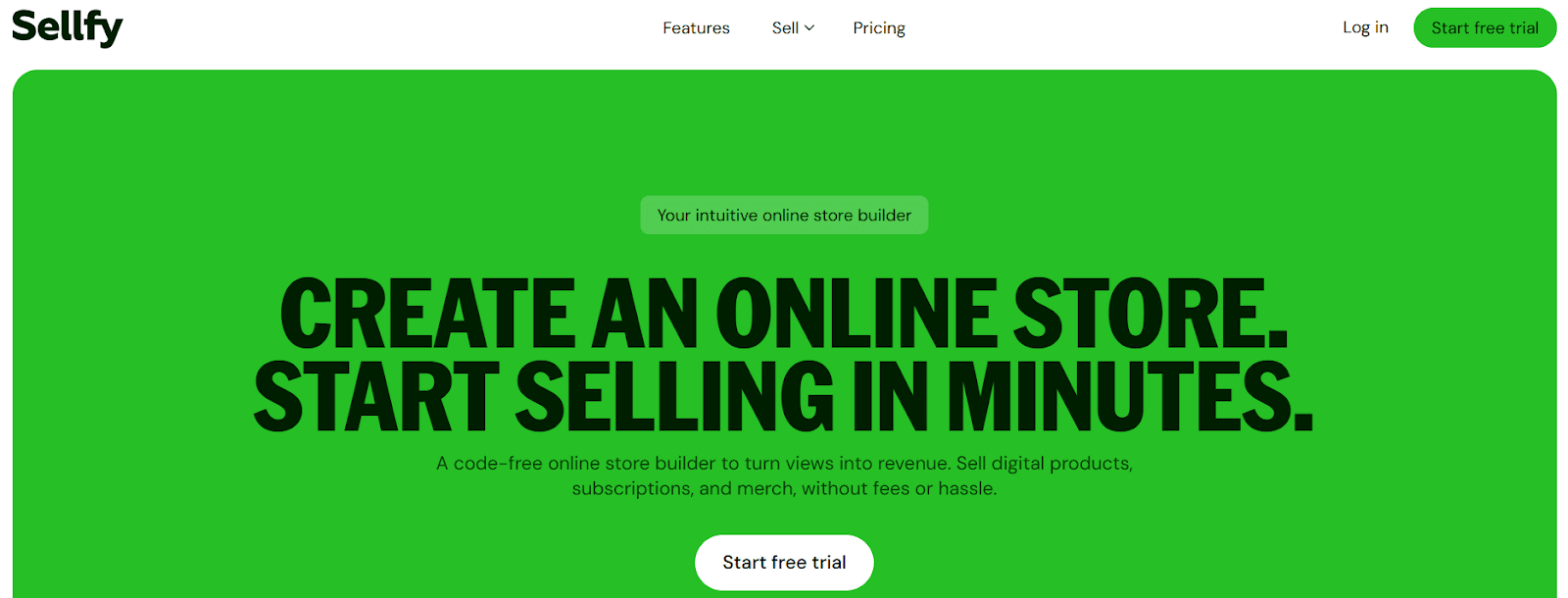
5. Sellfy
Pricing
Starter: $22/month – For creators starting to sell online, with up to $10k in sales per year.
Business: $59/month – For growing brands scaling online sales, with up to $50k in sales per year.
Premium: $119/month – For pros needing priority support and features, with up to $200k in sales per year.
Best For
Creators looking for a simple and affordable ecommerce solution to sell physical products, digital downloads, and subscriptions. Sellfy is perfect for creators who want a straightforward store setup without complicated features.
Why It Stands Out:
Easy Setup: Quick and easy store creation, no technical knowledge required.
Digital and Physical Products: Sell digital items (ebooks, music, videos) or physical goods (merch, prints).
Customizable Checkout: Personalize the checkout experience to match your brand’s identity.
Subscription Features: Offers built-in subscription services for creators to offer recurring content or products.
Integrated Marketing: Email marketing tools to promote your store and boost sales.
Pros
Affordable: Low-cost plans with no additional fees for selling digital or physical products.
No Transaction Fees: Unlike some competitors, Sellfy does not charge additional fees for sales.
Straightforward Platform: Simple interface with easy-to-use tools for beginners.
Subscription Support: Ability to sell subscriptions for recurring revenue.
Cons
Limited Customization: Fewer customization options compared to platforms like Shopify.
Basic Analytics: Analytics tools are fairly basic and may not provide in-depth insights.
Limited Integrations: Fewer third-party integrations compared to larger platforms.
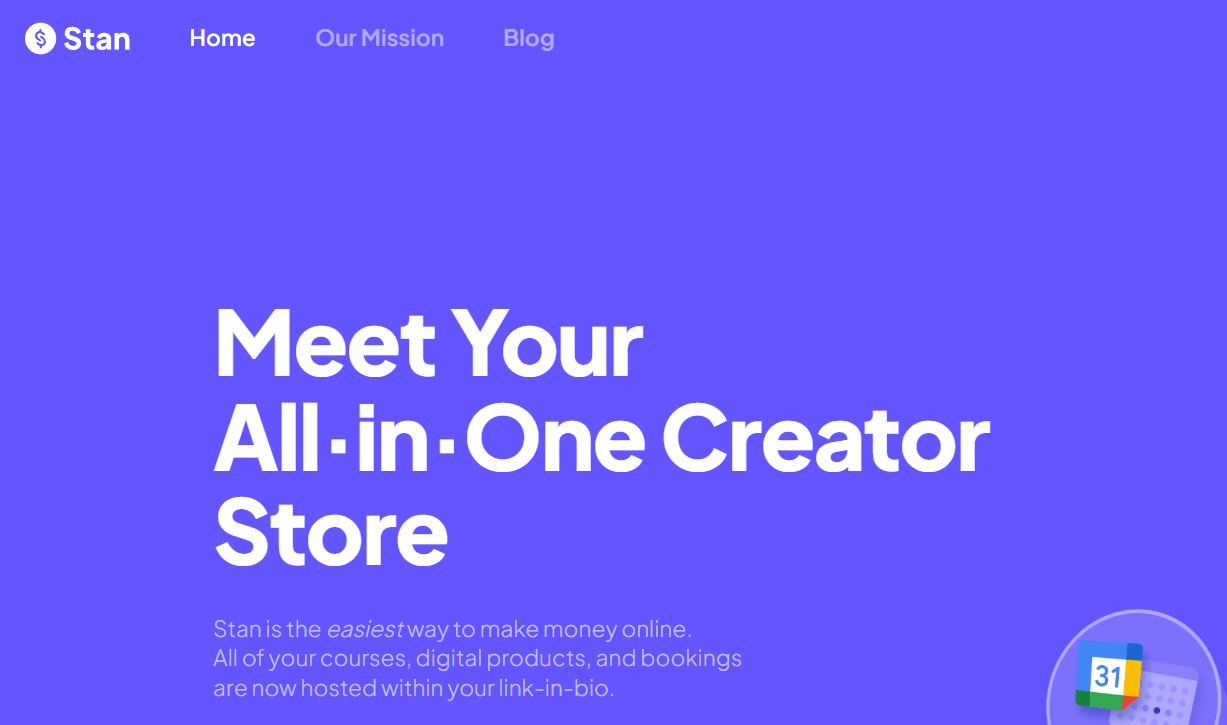
6. Stan Store
Pricing
Free Plan: $0/month – Start selling with no upfront costs, with transaction fees applied per sale.
Creator Plan: $29/month (or $300/year) – For creators looking to grow their store with enhanced features.
Creator Pro Plan: $99/month (or $948/year) – For pro creators needing advanced tools and premium support.
Best For
Creators who want an easy-to-use platform to sell digital products and services directly to their audience with no upfront costs. Stan Store is ideal for those who prefer a minimalistic setup with straightforward features.
Why It Stands Out:
No Upfront Costs: Free to start, with the option to upgrade for more features.
Simple Store Setup: Extremely easy to set up with no technical skills required.
One-Click Payment Integration: Accept payments easily through integrated payment gateways.
Focus on Digital Products: Primarily designed for digital creators selling content like courses, ebooks, and exclusive media.
Creator-Focused Tools: Simple tools tailored to the needs of creators, like custom links and content delivery.
Pros
Free to Start: No upfront fees, making it accessible for new creators.
Simple and Minimalistic: Clean, easy-to-navigate interface.
Direct Content Delivery: Simple process for delivering digital content to customers.
Low Fees: Transaction fees are relatively low compared to competitors.
Cons
Limited Product Types: Primarily focused on digital products, with fewer options for physical goods.
Basic Design Options: Limited customization for the storefront design.
Limited Integrations: Lacks integrations with more advanced third-party apps.
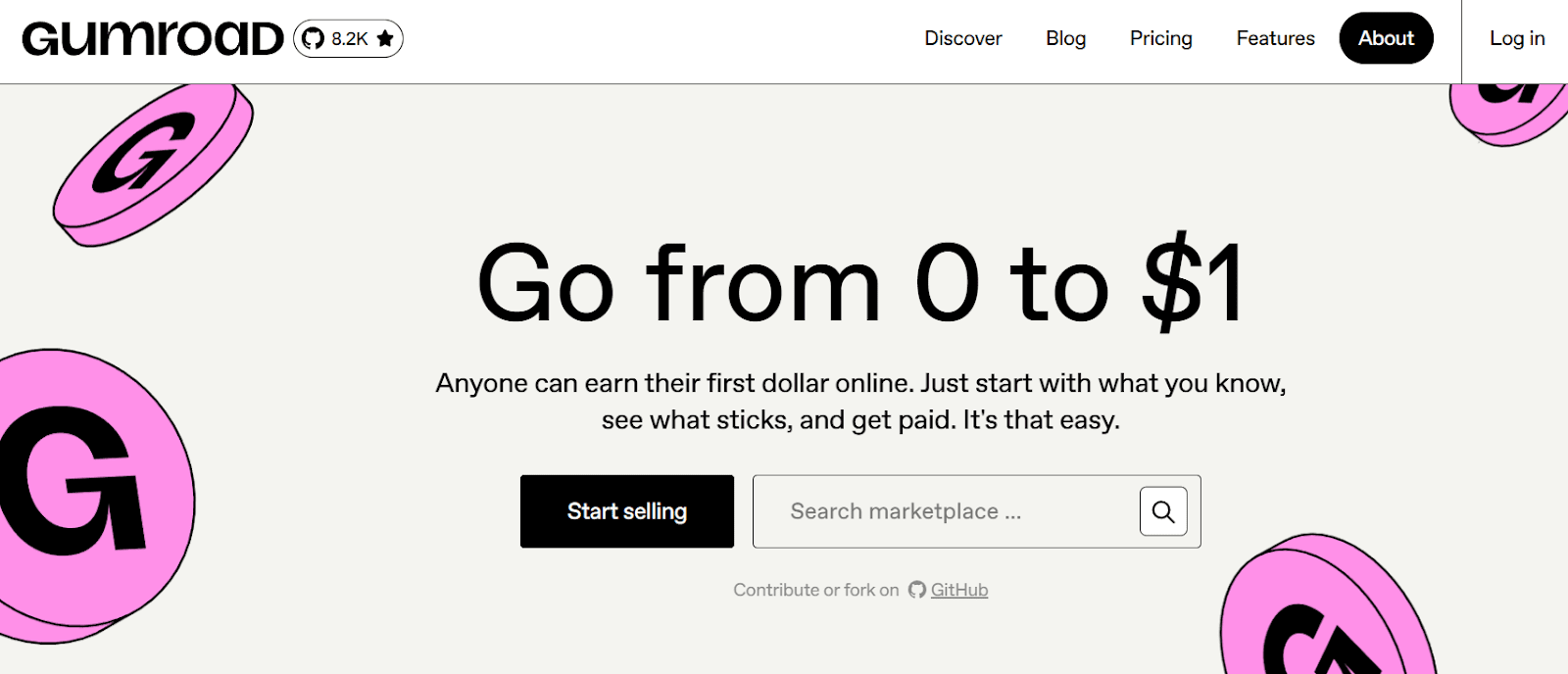
7. Gumroad
Pricing
Gumroad pricing is based on Transaction Fees:
10% + $0.50 per transaction for all sales through your profile or direct links to your customers.
30% per transaction when new customers find and buy from you through Gumroad's discover marketplace.
Best For
Creators who want a no-frills platform to sell digital goods, memberships, or services. Gumroad is perfect for creators who need a simple solution with low fees and easy-to-use tools.
Why It Stands Out:
Simple Interface: Similar to Etsy stores, this platform has a clean and minimalist design, ideal for creators who just want to sell without distractions.
Low Fees: Low transaction fees on sales, making it cost-effective for creators.
Sell Multiple Product Types: Offers digital product sales as well as subscriptions and memberships.
Built-in Marketing Tools: Provides tools like discount codes and email collection to boost sales.
Easy Payment Setup: Accept payments through Stripe or PayPal with no hassle.
Pros
Minimal Fees: Low transaction fees with a free plan to get started.
Straightforward Setup: Extremely easy to set up and start selling products.
Built-in Payment Processing: No need for external payment processors.
Ideal for Digital Products: Perfect for creators selling ebooks, courses, and other digital goods.
Cons
Limited Customization: Very basic storefront customization options.
Limited Features: Lacks some of the advanced features found in larger platforms.
Transaction Fees: The 10% transaction fee on free accounts is higher compared to other platforms.
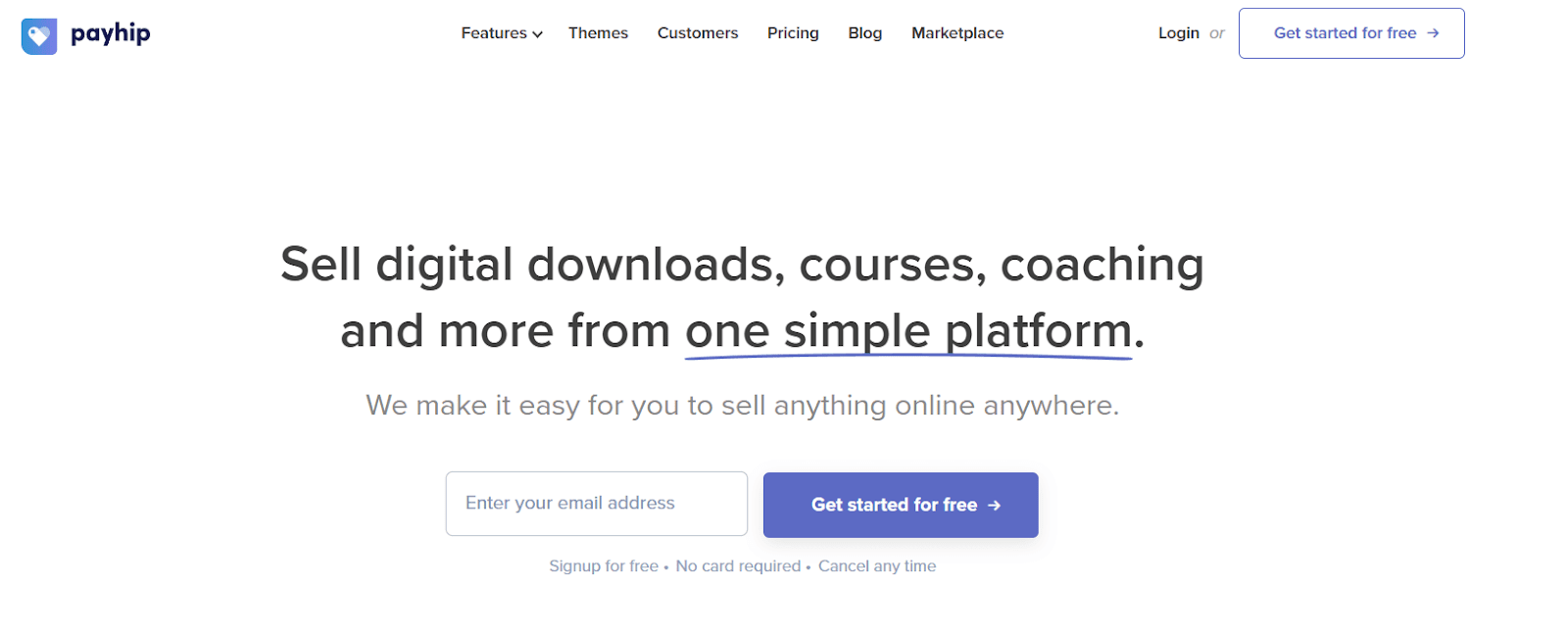
8. Payhip
Pricing
Free Plan: $0/month + 5% transaction fee – Access all features, unlimited products, and unlimited revenue.
Plus Plan: $29/month + 2% transaction fee – Includes all features, unlimited products, and unlimited revenue.
Pro Plan: $99/month – No transaction fee, with all features, unlimited products, and unlimited revenue.
Best For
Creators who want to sell digital downloads, memberships, and subscriptions with minimal upfront costs. Payhip is great for those looking to easily monetize digital content.
Why It Stands Out:
Simple Setup: Set up your store in minutes without any technical knowledge.
Built-in Payment Processing: Accept payments easily with PayPal or Stripe.
Recurring Payments: Ability to offer subscriptions or membership models for ongoing revenue.
No Monthly Fees: Free plan available with only a small transaction fee per sale.
Download Protection: Ensures secure delivery of digital products.
Pros
Easy to Use: Simple setup process with no complicated features.
Free Plan: Get started without any upfront costs.
Flexible Payment Options: Ability to accept one-time payments or set up recurring payments.
Global Reach: Accept payments globally with PayPal and Stripe integration.
Cons
Transaction Fees: The 5% fee on the free plan may be considered high by some creators.
Limited Customization: The design options for storefronts are basic and limited.
Fewer Integrations: Lacks integrations with a wide variety of third-party apps.
9. Big Cartel
Pricing
Free for up to 5 products; paid plans starting at $9.99/month.
Best For
Independent creators, artists, and small businesses looking to sell merchandise or art products without the complexity of larger platforms. Big Cartel is ideal for creators with small product lines.
Why It Stands Out:
Low-Cost Plans: Big Cartel’s pricing is accessible, with a free plan for creators with small inventories.
Easy-to-Use Interface: Simple, intuitive platform with a clean design that focuses on product sales.
Customizable Storefronts: Basic yet effective design customization to match your branding.
No Transaction Fees: Unlike some competitors, Big Cartel does not charge transaction fees on sales.
Focus on Creators: Tailored specifically to independent creators looking to sell unique or small-batch products.
Pros
Low-Cost and Free Plan: Ideal for small businesses or creators just starting out.
No Transaction Fees: You keep all of your sales revenue without additional fees.
Great for Artists: Ideal for artists and creators selling limited inventory.
Cons
Limited Features: Lacks some of the advanced features of more comprehensive platforms.
Basic Analytics: The analytics tools are limited and basic.
Limited Integrations: Few integrations with third-party tools compared to larger platforms.
10. Spreadshop
Pricing
Free to use with a percentage of sales taken.
Best For
Creators looking to sell customizable print-on-demand merchandise through a platform with minimal setup. Spreadshop is ideal for those who want to offer high-quality products without handling inventory.
Why It Stands Out:
No Upfront Costs: Free to start with no upfront fees or inventory management.
Wide Product Selection: Offers a range of customizable products from apparel to accessories.
Global Shipping: Ships worldwide, allowing creators to reach audiences around the world.
Easy Integration: Easily integrates with social media platforms for direct selling.
Flexible Design Options: Simple tools to design your own products and storefront.
Pros
Free to Start: No upfront costs or inventory required to get started.
Customizable Products: A wide range of print-on-demand products to choose from.
Global Reach: Ships to multiple countries without additional hassle.
Social Media Integration: Directly sell through social media platforms.
Cons
Transaction Fees: Spreadshop takes a percentage of each sale, which can reduce profits.
Limited Customization: Basic customization options compared to larger platforms.
Basic Analytics: Limited reporting and analytics features for performance tracking.
Final Thoughts on the Top 10 Best Influencer Marketing Agencies
Choosing the best creator storefront platform comes down to your goals, budget, and the type of products or services you want to sell. For creators just starting out, platforms like Stan Store and Spring provide easy-to-use, free plans that allow creators to quickly launch their merchandise or digital products with minimal upfront investment. If you're looking for a more robust, scalable solution with advanced features, Shopify offers full control over your e-commerce store, but at a higher cost.
For creators who want to grow and manage their own store, Creator Hero offers a powerful, all-in-one solution that combines easy storefront setup with built-in affiliate marketing and access to brand partnerships.
Ready to start selling and building your brand with your very own storefront? Sign up for free on Creator Hero today and unlock a world of possibilities with customizable store features, affiliate marketing, and access to over 55K+ brands for partnerships. Whether you're just starting or ready to scale, Creator Hero provides the tools you need to monetize your content and maximize your earnings.
FAQs
Which creator storefront platform is right for my brand?
It depends on your needs and goals. If you’re looking for a simple, no-cost solution to start selling, platforms like Stan Store and Spring are ideal. For those wanting more customization and scalability, Shopify or Fourthwall might be a better fit.
What’s the best option for creators selling digital products?
Platforms like Gumroad and Payhip work well for digital product sales, offering tools for selling ebooks, courses, or downloadable content. These platforms also provide recurring revenue options like memberships and subscriptions.
Which platforms suit creators with physical products?
For creators who want to sell merchandise or physical goods, Shopify is the go-to option due to its extensive customization and ecommerce tools. Sellfy and Spring also offer print-on-demand services with minimal upfront costs.
Do creator storefront platforms handle everything for me?
Most platforms provide tools for storefront setup, product listing, and payment processing. However, some—like Creator Hero—go a step further by offering affiliate marketing and brand partnership opportunities, while others focus primarily on product sales.
Are creator storefront platforms worth the cost?
Yes, especially for creators looking to monetize their content. While free plans are available, investing in a paid plan often unlocks more customization options, advanced features, and marketing tools to increase your sales and grow your business.
Related Posts
The incredible power of team collaboration is evident in the remarkable outcomes it can achieve
Influur pricing explained: no brand subscription, pay-as-you-go fees, real pros and cons, and our verdict on whether this creator marketplace is worth it in 2026.
Tagbox looks cheap at $19/month — but the feature most brands actually need is hidden behind an Enterprise quote. Here's the full pricing breakdown and our honest verdict.
Build your own business without having to manage all the operational aspects of an e-commerce. Focus on creating content, driving sales and maximise your earnings!


%201.png)


.svg)




_logo.svg.png)


