NeoReach pricing starts at around $399/month for entry-level software access, climbs to roughly $1,500/month for full platform access, and managed campaigns begin at $25,000 — with enterprise annual contracts reportedly running anywhere from $50K into the six figures.
In this review, we cover NeoReach's pricing tiers, standout features, real user feedback, and whether it's worth it for your team. It's a platform with a serious enterprise pedigree, but the cost structure puts it out of reach for a lot of brands.
If you're a brand or agency running or scaling an influencer program and trying to figure out whether NeoReach fits your budget and use case, this breakdown is for you.
Best for: Large brands and agencies with enterprise budgets running macro and celebrity campaigns
Starting price: ~$399/month (software); managed campaigns from $25,000
Free trial: Reported (no card), but most access is quote-based
G2 rating: 4.5/5 (small review sample)
Our verdict: Powerful data and managed-services pedigree, but priced for Fortune 500 budgets and weak on micro-influencer discovery
What Is NeoReach?
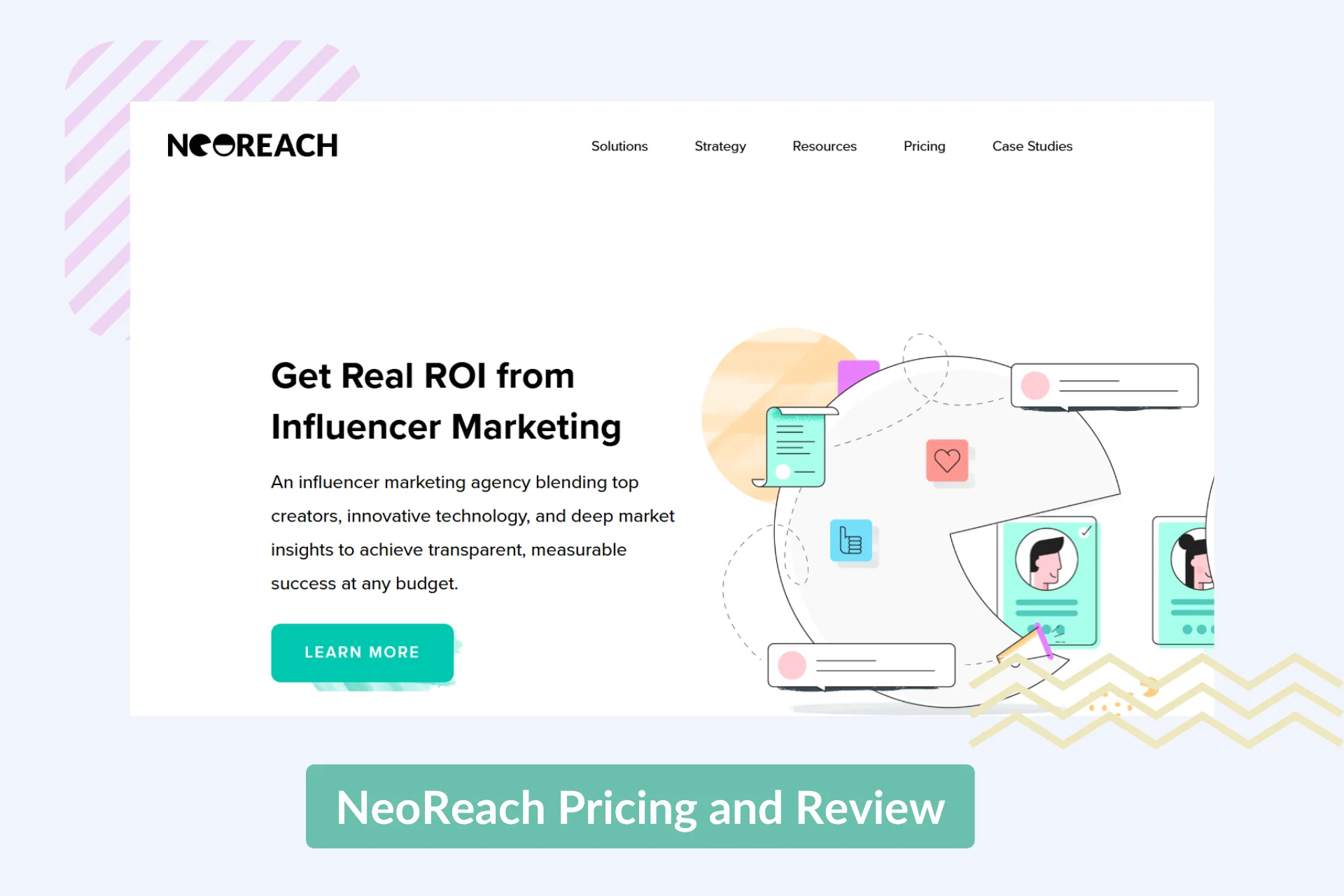
NeoReach is a US-based influencer marketing platform and tech-enabled agency that started life as a Stanford University project pitched by founder and CEO Jesse Leimgruber, landing over $1.5M in seed funding by 2014. It's since grown into an enterprise suite serving Fortune 500 clients like Sam's Club, NVIDIA, and A&E.
The company runs a dual model: you can license the software to run campaigns yourself, or hand the whole thing to NeoReach's team as a managed service. Its core strength has always been deep, data-rich influencer discovery and proprietary ROI measurement built for big-budget marketing departments.
NeoReach Key Features
• Large influencer database with 40+ search filters. NeoReach has a large database, where it indexes millions of creator profiles by mining the social web rather than relying on opt-ins. You can filter by age, gender, location, language, income, brand affinity, marital status, and more.
• Multi-platform coverage. The database spans Instagram, TikTok, YouTube, Facebook, X (Twitter), Twitch, Snapchat, and Pinterest. That breadth makes it useful for brands running cross-channel campaigns beyond the usual Instagram/TikTok focus.
• Influencer Media Value (IMV). This is NeoReach's proprietary ROI metric, similar to Earned Media Value but tuned for influencer campaigns. It's a real differentiator for teams that need to justify spend to leadership with a defensible number rather than guesswork.
• Campaign management and AI recommendations. You can message creators, manage contracts, track deadlines, review posts, and monitor performance from one dashboard. An AI recommendation engine surfaces creators based on your past campaign data and improves the more you use it.
• Fraud detection and integrations. NeoReach analyzes engagement patterns and follower growth to flag fake audiences. It connects to Google Analytics, CRMs, eCommerce platforms, and ad networks, and reviewers note scheduling integration with Google Meet for working with their team.
NeoReach Pricing
NeoReach doesn't publish standardized tiers. Pricing is custom and quote-based, scaled by number of users, feature access, and whether you want managed services on top. Here's what the public signals show.
Software access — from ~$399/month
The entry point gets you into the platform for self-serve discovery and basic campaign management. It's the most affordable way in, but several users report this tier feels limited and you end up paying for capabilities you don't use, especially if your focus is micro-influencer campaigns.
Full platform access — up to ~$1,500/month
Higher software tiers unlock the complete feature set — advanced filters, deeper reporting, IMV, and more seats. This is where the platform earns its reputation, but it's a meaningful monthly commitment for a tool that's still software-only at this level.
Managed campaigns — from $25,000
This is NeoReach's agency side: their team runs your campaigns end to end. One reported tier carries a $25,000 annual commitment plus a $3,000 onboarding fee, and enterprise annual contracts have been cited as high as $50K–$500K depending on scope.
Hidden costs to watch:
Onboarding/setup fees on managed tiers, annual commitments rather than month-to-month flexibility, and the gap between the advertised ~$399 entry and what you actually need to spend to get full value. The real cost of using NeoReach properly sits well above its headline starting price.
NeoReach Pros & Cons
Pros
• Deep demographic and psychographic filtering — the 40+ filters genuinely help narrow large creator pools to relevant matches.
• IMV gives marketing teams a credible ROI metric to report upward, which most cheaper tools don't offer.
• Optional managed services mean brands without in-house influencer expertise can outsource execution to NeoReach's team.
• Strong on macro, celebrity, and Fortune 500-grade campaigns where data depth and brand safety matter most.
Cons
• Pricing is high and opaque — quote-based with annual commitments, putting it out of reach for small and most mid-market brands.
• Weak on micro and nano influencers. Users consistently report the database skews toward macro and celebrity creators, which is a problem if you want authentic, lower-cost micro campaigns.
• The UI is frequently described as outdated, with slow load times and occasional glitches.
• Search filters and outreach tools can feel too broad, and finding the right creator is sometimes compared to digging through a haystack.
What NeoReach Users Say
NeoReach holds a 4.5/5 on G2, though the review sample is small (around a dozen reviews) and it isn't listed on Trustpilot or TrustRadius, so the public feedback pool is thin compared to bigger platforms.
What users praise consistently: the all-in-one dashboard, detailed real-time analytics, and how much manual work it removes once you're set up. One G2 reviewer noted the intuitive interface makes finding the right influencers for a campaign straightforward and that managing everything in one place saves significant time. Another highlighted how easy it was to get started, thanks to scheduling integration with their team via Google Meet.
The recurring frustrations are just as clear: a clunky, slow interface, search filters that could be sharper, and pricing that's tough to justify on a tight budget. One reviewer flagged that the high cost isn't great if you're working with limited spend. The broader sentiment is that the platform is capable but better suited to brands that can absorb both the price and the learning curve.
Who Is NeoReach Best For?
NeoReach genuinely suits large brands and agencies with dedicated marketing teams and enterprise budgets — the kind running macro and celebrity-tier campaigns where data depth, fraud screening, and defensible ROI reporting are non-negotiable. If you're a Fortune 500 or a brand that wants the option to hand campaigns to a managed team, it fits.
Where it falls short is the lower and middle of the market. If you're a smaller D2C brand testing influencer marketing, leaning on micro and nano creators, or working with Shopify-centric tooling, NeoReach is likely overkill — expensive, macro-skewed, and missing the eCommerce-native integrations you'd want.
The budget reality: NeoReach makes sense once you're spending five figures and up on influencer programs. Below that, there are better-value tools built for self-serve teams.
Is NeoReach Worth It?
For enterprise brands and agencies that need rich creator data, brand-safe macro partnerships, and the safety net of a managed team, NeoReach is a defensible choice — the IMV metric and demographic depth are real advantages, and the dual software-plus-agency model is rare.
But if you're a small or mid-market brand, the math gets hard fast. The opaque pricing, annual commitments, macro-influencer skew, and dated interface mean most growing brands will get more value — and more flexibility — from a modern self-serve platform. If your program lives on micro-influencers or eCommerce conversions, keep looking.
NeoReach Alternatives
If NeoReach's price tag or macro-heavy database isn't the right fit, here are five alternatives worth a look — each closing a specific gap NeoReach leaves open.
GRIN
The most-cited NeoReach alternative and a strong pick for eCommerce brands. It integrates natively with Shopify, Klaviyo, PayPal, and other commerce tools, and it's purpose-built for product seeding, affiliate tracking, and creator payments. Choose it over NeoReach if you're a D2C brand that wants influencer marketing wired directly into your sales stack rather than a managed agency model.
CreatorIQ
An enterprise platform in the same Fortune 500 tier as NeoReach, with heavy emphasis on analytics, compliance, and large-scale creator program management. Pricing is enterprise quote-based and comparable to NeoReach's upper range. Pick it if you want NeoReach-level scale but with a more modern interface and deeper reporting infrastructure.
Influencer Hero
Is the best influencer marketing software for brands that want to run programs in-house instead of paying for managed services. It combines creator discovery across Instagram, TikTok, and YouTube with an influencer CRM, automated outreach and follow-ups, campaign management, affiliate and gifting tracking, payments, and reporting — plus Shopify and Amazon integrations.
The reason to choose it over NeoReach: you run the whole program end to end in one tool, at a fraction of the cost, without micro-influencer blind spots.
Upfluence
Another eCommerce-focused all-in-one, with customer-based influencer discovery that surfaces creators already buying from your store. It starts higher (around $2,000/month billed annually) but bakes in AI outreach, affiliate tracking, and sales attribution. Pick it over NeoReach if direct sales attribution and Shopify/Amazon integration matter more than managed agency support.
Traackr
An enterprise-grade platform built around influencer relationship management and long-term program analytics. It's data-heavy like NeoReach and similarly priced for larger teams. Choose it if your priority is measuring and managing always-on creator relationships over time rather than one-off campaign bursts.
Final Thoughts
NeoReach is a capable, data-rich platform with a genuine enterprise pedigree and a useful managed-services option. Its strengths — deep demographic filtering, IMV reporting, and macro/celebrity reach — are real, but they come with opaque, high pricing, a dated interface, and a weak spot in micro-influencer discovery that makes it a poor fit for most growing brands.
If the managed-campaign overhead and enterprise price tag feel like more than you need, there's a fundamentally different approach worth considering. Creator Hero lets brands connect with creators who sell their products through commission-based storefronts — no upfront campaign spend, no managing a roster of macro influencers, and creators earning 20–50% commission only when they actually drive sales.
Let the creators do the selling for you, so you can focus on developing new products and scaling your brand. Explore Creator Hero for brands orbook a free demo to see how it works.
FAQs
How much does NeoReach cost?
Software access starts around $399/month and runs up to roughly $1,500/month for full access. Managed campaigns begin at $25,000, and enterprise annual contracts have been reported much higher. Most pricing is custom and quote-based.
Does NeoReach have a free trial?
Some sources report a free trial with no card required, but access is largely quote-based and tied to annual commitments. You'll typically need to go through a demo to see real pricing.
Is NeoReach worth it for small brands?
F or most small brands, no. The pricing, annual commitments, and macro-influencer skew make it a better fit for enterprise teams. Smaller brands usually get more value from self-serve tools like Influencer Hero or GRIN.
What is NeoReach best for?
Large brands and agencies running macro and celebrity influencer campaigns who want deep creator data, fraud screening, ROI measurement via IMV, and the option of managed services.
What's a good alternative to NeoReach?
Influencer Hero is a strong all-in-one option for teams that want to run programs in-house without enterprise pricing.
Related Posts
The incredible power of team collaboration is evident in the remarkable outcomes it can achieve
Influur pricing explained: no brand subscription, pay-as-you-go fees, real pros and cons, and our verdict on whether this creator marketplace is worth it in 2026.
Tagbox looks cheap at $19/month — but the feature most brands actually need is hidden behind an Enterprise quote. Here's the full pricing breakdown and our honest verdict.
Word on the Block charges no subscription — but its pricing page never tells you the fee. Here's what the model actually costs brands, what's included, and our honest verdict.
Build your own business without having to manage all the operational aspects of an e-commerce. Focus on creating content, driving sales and maximise your earnings!


.svg)


%201.png)



_logo.svg.png)


