Choosing the right influencer marketing software for a Shopify store depends on whether your primary goal is brand awareness or direct revenue. While some platforms excel at high-volume creator discovery and social listening, others are built specifically to manage the logistics of product seeding, affiliate tracking, and conversion attribution. For eCommerce brands, the most effective tools are those that bridge the gap between creative storytelling and measurable sales performance.
In this guide, we compare the top influencer marketing platforms based on their integration depth with Shopify, their ability to scale creator relationships, and their tracking capabilities. Whether you are launching your first seeding campaign or managing a mature ambassador program with thousands of affiliates, these tools provide the infrastructure needed to turn creator content into a predictable growth channel.
What to Look For in Influencer Marketing Software
Not every influencer platform is designed to solve the same problem. Some prioritize deep database discovery for brand awareness, while others focus on the technical logistics of affiliate payouts and Shopify integration. Identifying your primary bottleneck, whether it’s finding new talent or managing existing attribution, will dictate which software category fits your workflow.
1. Database Depth vs. Relationship CRM
If your goal is rapid expansion, you need a platform with robust discovery filters to find creators who align with your niche. However, for brands with an established roster, a CRM-focused tool is more valuable, as it centralizes communication, contract management, and historical performance data in one place.
2. Native Shopify Integration
For eCommerce teams, manual data entry is a significant friction point. Look for software that syncs directly with Shopify to automate product seeding, generate unique discount codes, and track "Add to Cart" actions. This level of integration ensures that your influencer efforts are tied directly to your store's inventory and revenue data.
3. Automated Affiliate and Commission Tracking
Platforms that prioritize performance marketing often include built-in affiliate modules. These tools automatically calculate commissions based on verified sales, handle multi-currency payouts, and provide creators with their own dashboards. This is essential for brands that treat influencers as a scalable sales channel rather than a one-off media buy.
4. Content Rights and Asset Management
High-growth brands often use influencer content for paid social ads (whitelisting) or product pages. Software that includes automated content stays and rights-management workflows allows your team to legally repurpose high-performing creator assets without manual back-and-forth emails.
5. Conversion Attribution and Reporting
While engagement metrics like likes and comments provide a baseline, ROI-driven brands require granular attribution. Look for platforms that offer "link-plus-code" tracking and sophisticated reporting suites. These features help you distinguish between creators who drive top-of-funnel awareness and those who consistently generate direct revenue.
Best Influencer Marketing Software for Shopify (Top Picks)
1. Influencer Hero – Best for All-in-One Workflow Automation
Influencer Hero is a comprehensive influencer marketing software designed for brands that want to manage the entire creator lifecycle within a single dashboard. By centralizing discovery, CRM, and performance tracking, it allows small-to-medium eCommerce teams to operate with the efficiency of a much larger department. It is particularly well-suited for Shopify brands that need to transition away from fragmented spreadsheets and into a structured, scalable program.
What makes Influencer Hero one of the best influencer marketing software for Shopify is its ability to tie every creator interaction directly to store data:
Native Shopify Integration: Automatically syncs your product catalog for gifting and generates unique discount codes and affiliate links without leaving the app.
Automated Outreach & Sequences: Features a built-in email automation tool that allows you to send personalized reach-outs and follow-up sequences at scale.
Integrated Creator CRM: A dedicated workspace to manage relationships, store contracts, and track communication history across your entire influencer roster.
Performance & ROI Tracking: Real-time dashboards provide visibility into clicks, sales, and total revenue generated by each creator.
UGC Library Management: Automatically collects and organizes high-quality posts and stories from your campaigns for use in other marketing channels.
Pros
Streamlines the end-to-end workflow from discovery to payout.
Deep integration with Shopify simplifies the logistics of product seeding.
Highly effective for scaling high-volume outreach campaigns.
Cons
The pricing structure may be a significant jump for very small brands.
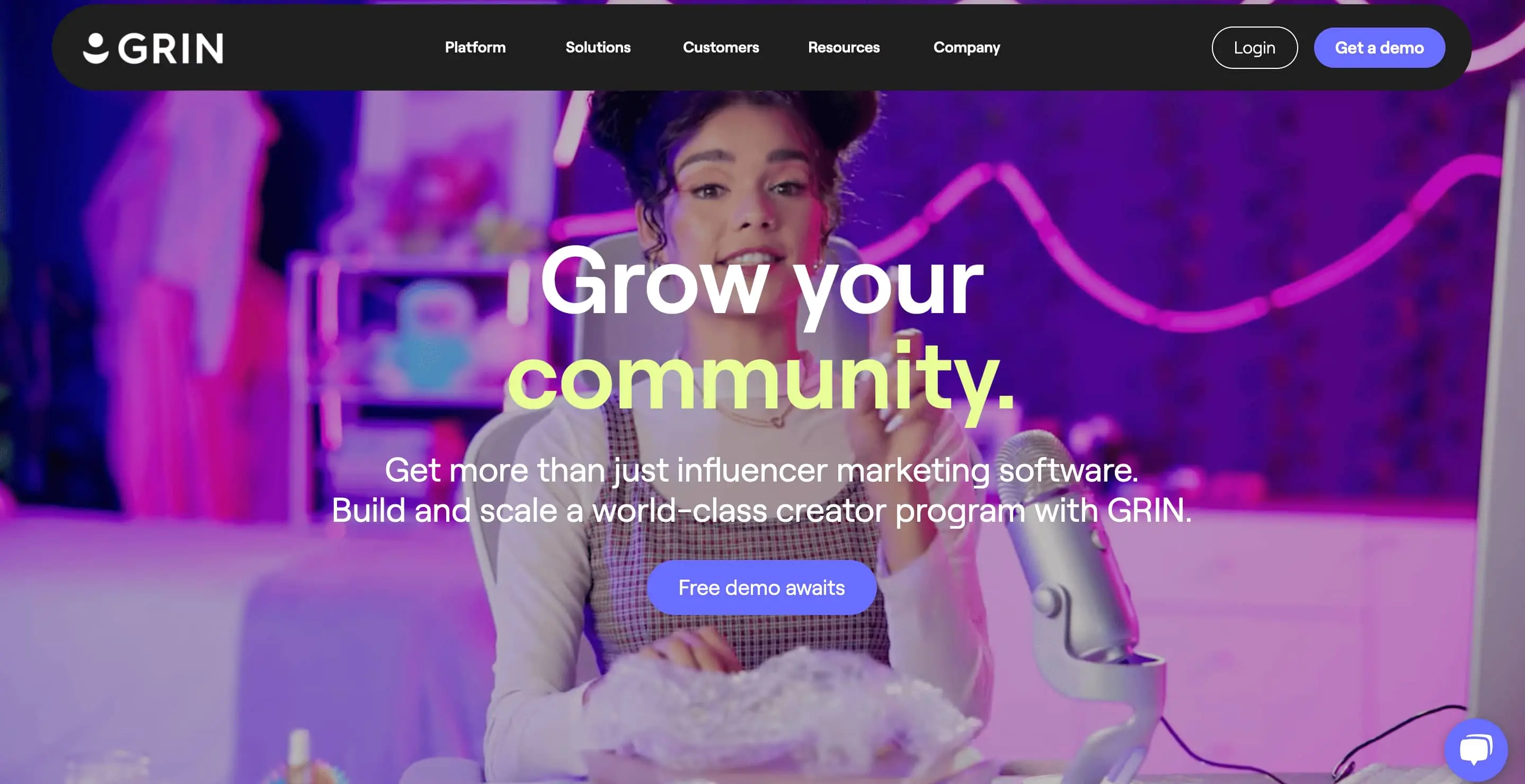
2. GRIN – Best for Relationship Management and Product Seeding
GRIN is an enterprise-grade creator management platform designed for DTC brands that prioritize direct relationships over marketplace transactions. Its architecture treats influencers like a private sales force, providing deep CRM capabilities that integrate directly with your Shopify backend. This is the preferred choice for mature brands that have outgrown spreadsheets and need a "system of record" for every creator interaction.
What makes GRIN highly effective for Shopify merchants is its ability to automate the heavy lifting of physical product fulfillment:
Automated Product Gifting: Influencers can select their preferred products, sizes, and colors through a branded portal, which then triggers a zero-dollar order directly in Shopify.
Real-time Inventory Sync: Prevents "over-gifting" by ensuring creators only see and select items that are currently in stock.
Email Integration (Gmail/Outlook): Connects to your actual brand email so all creator communication happens within GRIN but looks like a personal 1-to-1 thread.
Whitelisting & Ad Management: Streamlines the process of obtaining content rights and gaining access to creator social accounts for paid amplification.
Custom Reporting Suites: Allows teams to build granular reports that tie creator content directly to Shopify's "Add to Cart" and "Checkout" data.
Pros
Most robust product seeding and fulfillment automation on the market.
Centralizes all communication, contracts, and content rights in one place.
High-touch customer support and extensive training resources.
Cons
Higher price point makes it inaccessible for many early-stage startups.
Steep learning curve due to the complexity of the enterprise features.
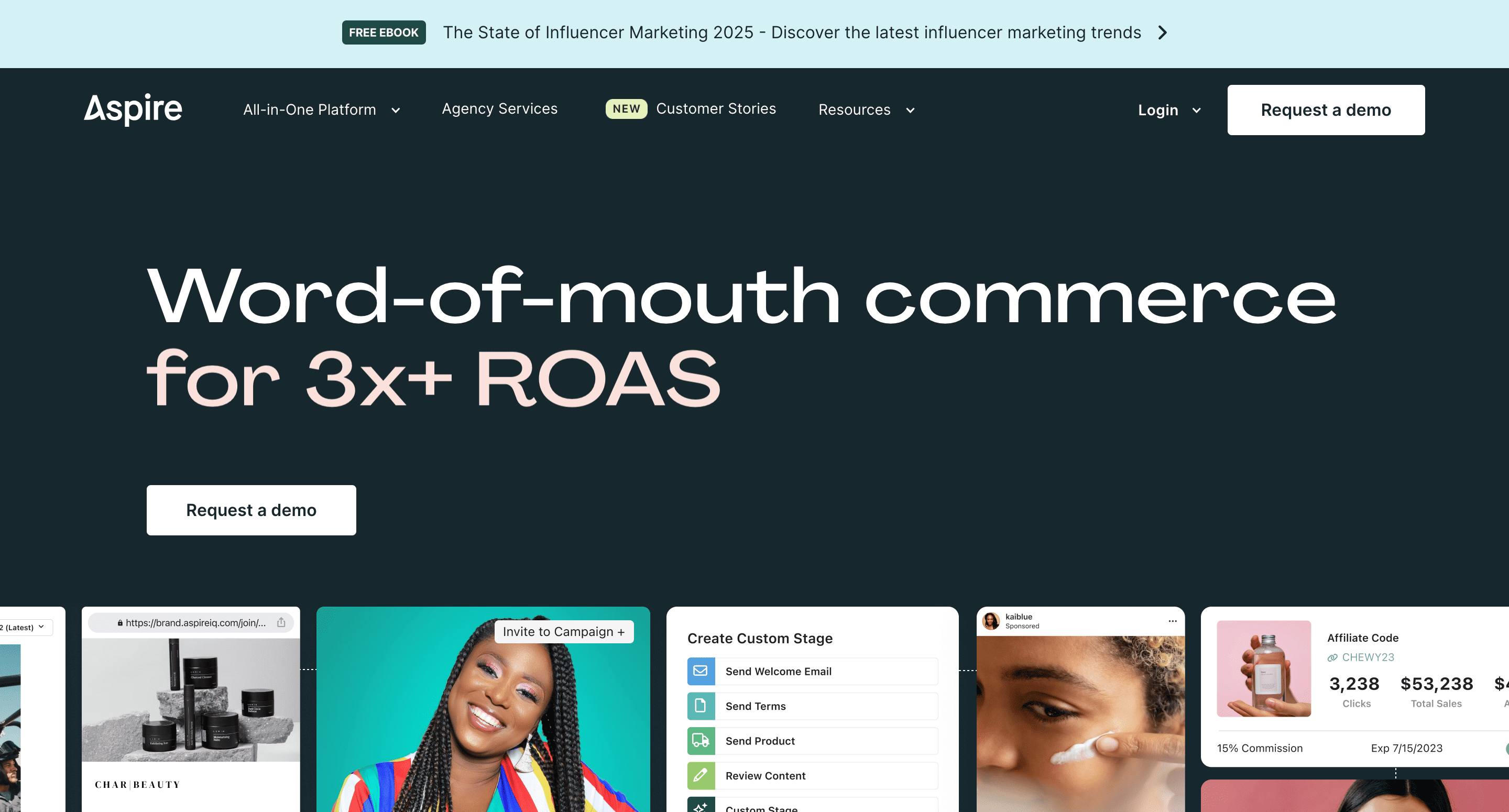
3. Aspire – Best for Content Generation and UGC-at-Scale
Aspire (formerly AspireIQ) focuses on the "community" aspect of influencer marketing, leaning heavily into content creation and user-generated content (UGC). It is built for brands that view influencers not just as a distribution channel, but as a source of high-quality creative for their own marketing. The platform is particularly strong for high-volume campaigns where managing thousands of content assets is the primary challenge.
What makes Aspire a standout choice for Shopify users is its focus on the creative lifecycle and asset rights:
Creator Marketplace: Brands can post "campaign briefs" to a public marketplace where vetted creators apply, simplifying the discovery process for specific niches.
Automated Briefing & Contracts: Uses a highly automated workflow to send briefs and legal agreements to creators the moment they are onboarded.
Image & Video Content Library: Automatically pulls in every piece of content a creator posts, allowing your team to tag and organize assets for future use.
Ad-Vantage Whitelisting: Simplifies the technical setup required to run "dark posts" or Spark Ads using creator handles.
Shopify Data Ingestion: Analyzes your store's customer data to identify "influential customers" who have already purchased from your brand.
Pros
Excellent for brands that need to generate a high volume of UGC for social ads.
Simplifies the legal side of content usage rights and licensing.
Strong marketplace for finding creators who are actively looking for work.
Cons
The marketplace can occasionally lead to lower-quality "professional influencer" applications.
Reporting features are strong but can be less intuitive than dedicated affiliate tools.
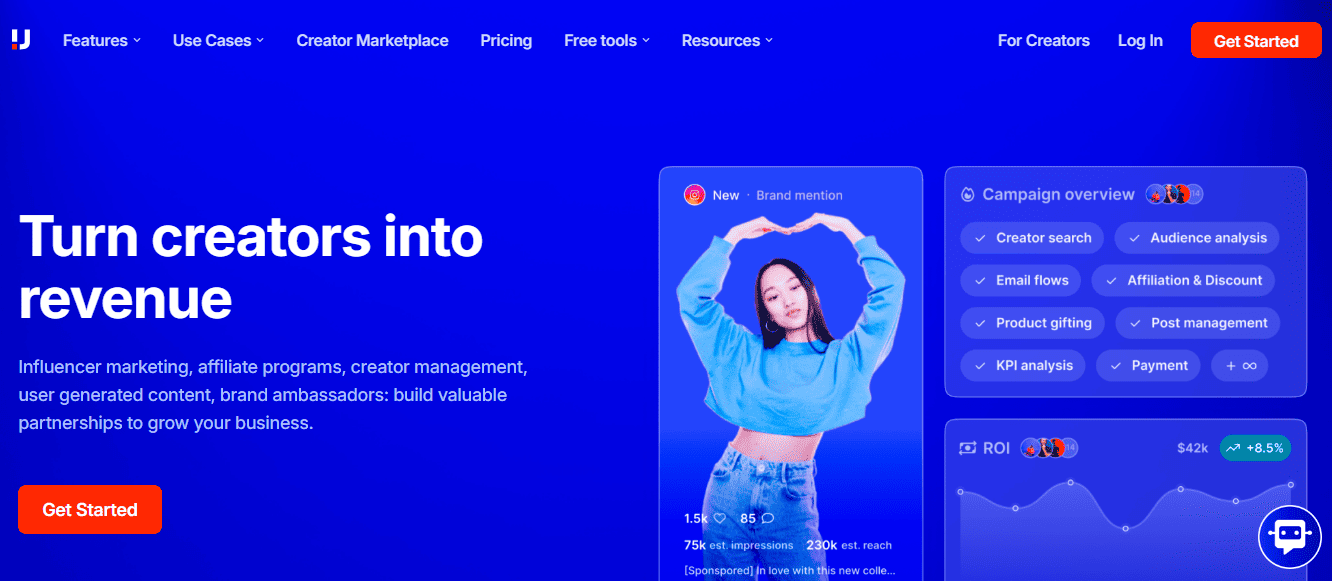
4. Upfluence – Best for Identifying Influential Customers
Upfluence stands out by helping brands turn their own customers and subscribers into brand ambassadors. Rather than just searching a cold database, Upfluence analyzes your Shopify customer list and website visitors to find people who already have a significant social following. This "organic-first" approach often leads to higher conversion rates because the creators already have a genuine affinity for the brand.
What makes Upfluence practical for Shopify stores is its data-driven approach to recruitment:
Social Reach Analysis: Automatically scans your Shopify customer database to find individuals with high follower counts on Instagram, TikTok, or YouTube.
Live Capture Tool: A website widget that collects social handles from visitors in exchange for a discount, helping you identify influencers as they shop.
AI-Powered Discovery: Includes a massive global database with 20+ advanced filters for when you need to look outside your existing customer base.
Multi-Currency Payouts: Supports global affiliate programs with the ability to pay creators in multiple currencies via PayPal or Stripe.
Chrome Extension: Allows your team to view an influencer’s engagement metrics and audience demographics directly while browsing their social profiles.
Pros
Exceptional for identifying "organic" influencers who are already your customers.
Robust search filters for discovering new talent across multiple platforms.
Flexible, module-based pricing that allows brands to pay for only what they need.
Cons
The user interface can feel cluttered and technical for new users.
Some automated features require significant setup time to align with Shopify workflows.
5. Impact.com – Best for Performance-Based Affiliate Programs
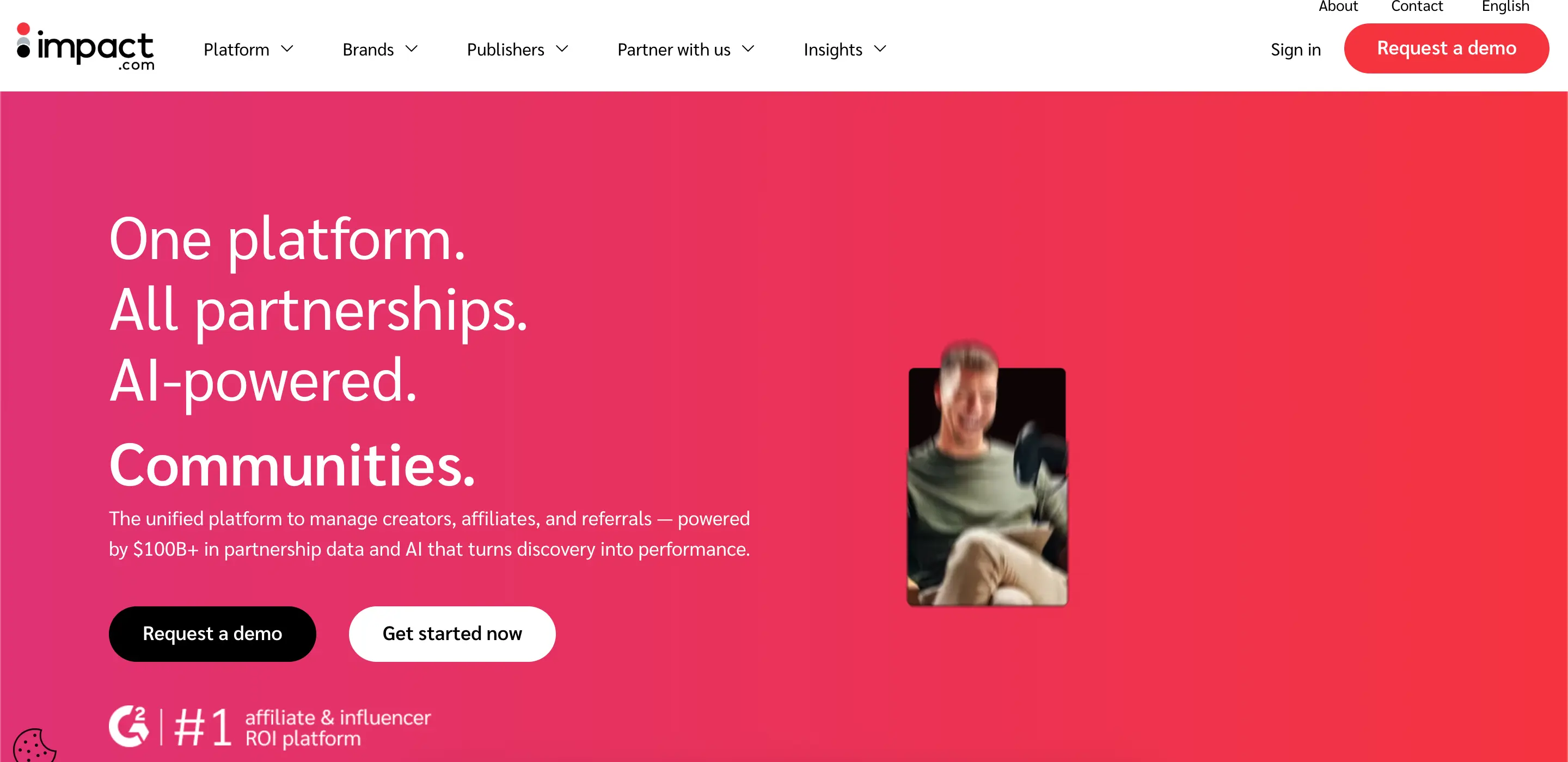
Impact.com is a leading partnership management platform that treats influencer marketing as a sophisticated branch of affiliate marketing. While other tools focus on "brand vibes," Impact is built for "brand math." It is the ideal solution for eCommerce companies that want to scale their influencer efforts using a pay-on-performance model, managing influencers alongside traditional affiliates and media partners.
What makes Impact.com great for Shopify is its enterprise-level attribution and payout engine:
Sophisticated Attribution: Goes beyond simple discount codes to track "last-click" vs. "multi-touch" attribution, ensuring fair credit for sales.
Automated Global Payouts: Handles the complex logistics of paying thousands of partners in 70+ currencies while managing tax documentation.
Partner Discovery Marketplace: Provides access to a massive network of not just influencers, but also review sites, publishers, and loyalty apps.
Contract Automation: Allows brands to set different commission rates for different influencers or even different product categories within the same campaign.
Fraud Detection: Includes built-in tools to identify and block suspicious affiliate traffic or "coupon-stuffing" behavior.
Pros
The gold standard for performance tracking and ROI-focused marketing.
Can manage all types of partnerships (influencers, affiliates, publishers) in one tool.
Highly scalable for brands with global reach and massive partner lists.
Cons
Can feel overly "corporate" or technical for brands focused on creative relationships.
The learning curve is steep compared to more influencer-centric CRM tools.
6. Creator.co – Best for Small Teams and Managed Services
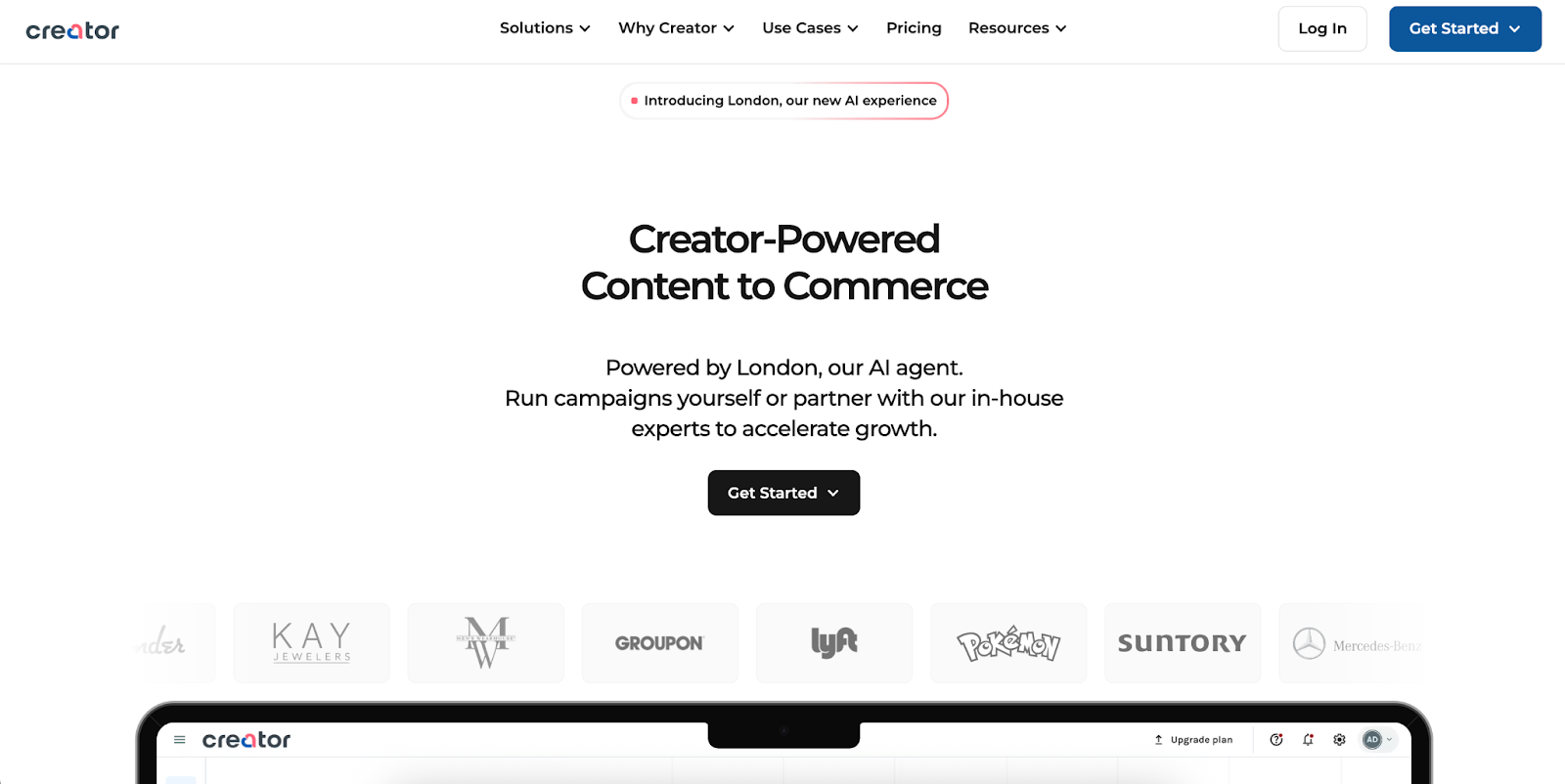
Creator.co is designed for brands that want the power of a professional platform but lack the internal resources to manage it full-time. It offers a unique "Collaborations Hub" where the platform does much of the heavy lifting in terms of creator matching and campaign management. It is a highly efficient choice for Shopify brands that are just starting to scale and need a mix of software and expert guidance.
What makes Creator.co a strong fit for Shopify brands is its balance of automation and human support:
Automated Matching: Brands post campaigns, and the system uses data to invite the creators most likely to deliver results.
Managed Services Option: Offers an "agency-lite" experience where their team helps manage your campaigns and creator relationships.
Deep Social Insights: Provides comprehensive audience demographic data, including ghost follower detection and audience "interest" profiles.
Affiliate Tracking: Includes a native Shopify app that generates links and tracks sales in real-time.
Content Approval Workflow: A simple, linear process for reviewing and approving creator posts before they go live.
Pros
One of the most user-friendly interfaces for small marketing teams.
Managed service options are great for brands without a dedicated influencer manager.
Very efficient at generating high-volume micro-influencer campaigns quickly.
Cons
The database is smaller than some of the enterprise-level competitors.
Less customization available for complex, multi-stage outreach workflows.
7. Shopify Collabs – Best for Early-Stage Stores
Shopify Collabs is the platform’s own native solution, built directly into the Shopify admin. It is the most accessible tool on this list, specifically designed for merchants who are moving from manual DMs to their first structured affiliate program. Because it lives inside the Shopify ecosystem, the data flow is seamless and the barrier to entry is almost non-existent.
What makes Shopify Collabs great for Shopify stores is its native simplicity:
Direct Admin Integration: Manage your entire influencer program from the same place you manage your orders and inventory.
Collabs Network: A directory where creators can find your brand and apply to join your affiliate program directly.
Automated Commissions: Payments are handled through Shopify Bill Pay, simplifying the accounting process for small business owners.
Instant Discount Code Creation: Generate and track codes for hundreds of creators simultaneously with a few clicks.
Gift Tracking: Send products to creators as "gifts" and track them as orders within your standard Shopify fulfillment flow.
Pros
Completely free to use for Shopify merchants (excluding transaction fees).
Zero technical setup required; it works out of the box with your store data.
Perfect for managing "low-touch" affiliate programs at scale.
Cons
Lacks the deep CRM and outreach automation of the standalone platforms.
Discovery features are limited primarily to the creators within the Shopify Collabs network.
How to Choose the Right Influencer Marketing Software
The most effective tool for your Shopify store depends on your current scaling goals, your team's internal bandwidth, and whether you prioritize creative content or direct sales attribution.
Need a centralized, all-in-one workflow for Shopify → Influencer Hero
Prioritize high-volume product seeding and CRM logistics → GRIN
Scaling user-generated content (UGC) for social ads → Aspire
Identifying influencers within your existing customer base → Upfluence
Managing complex, multi-channel affiliate and partner ROI → Impact.com
Small teams requiring managed services and matching → Creator.co
Influencer marketing platforms vary widely, from discovery tools to affiliate tracking systems, so the right choice depends on your Shopify store’s growth stage and operational needs. For many brands, moving from manual outreach and spreadsheets to a centralized platform is the key step toward scalable, predictable campaigns.
As programs mature, native tools may suit early testing, while advanced platforms enable automation and accurate attribution at scale. For brands seeking a more integrated commerce approach, Creator Hero offers custom creator storefronts that turn influencers into dedicated, trackable revenue channels.
FAQs
Which influencer marketing software has the best integration with Shopify?
For deep technical integration, Influencer Hero and GRIN are top choices as they sync directly with your Shopify backend to automate product gifting, discount code generation, and sales tracking. If you are looking for a native, entry-level option, Shopify Collabs is built directly into the Shopify admin.
How do I track influencer ROI and sales on Shopify?
The most accurate way to track ROI is through a combination of unique affiliate links and integrated discount codes. Professional platforms like Influencer Hero automate this by pulling real-time conversion data from your store, allowing you to see exactly which creators are driving revenue versus just engagement.
Is there a free influencer marketing tool for Shopify?
Yes, Shopify Collabs is a free native app for Shopify merchants. It is excellent for basic affiliate management and discovery. However, as your program scales, you may need more robust automation and CRM features found in comprehensive platforms like Influencer Hero or Upfluence.
How can I find influencers who are already my customers?
Tools like Upfluence and Influencer Hero offer features that scan your Shopify customer database to identify shoppers with significant social followings. This "organic-first" approach allows you to recruit brand advocates who already know and love your products.
What is the best software for managing influencer product gifting?
GRIN and Influencer Hero lead the market in gifting logistics. They allow creators to select their own products via a portal, which then automatically creates a $0 order in your Shopify admin, tracking the shipment and fulfillment process without manual data entry.
Related Posts
The incredible power of team collaboration is evident in the remarkable outcomes it can achieve
Influur pricing explained: no brand subscription, pay-as-you-go fees, real pros and cons, and our verdict on whether this creator marketplace is worth it in 2026.
Tagbox looks cheap at $19/month — but the feature most brands actually need is hidden behind an Enterprise quote. Here's the full pricing breakdown and our honest verdict.
Word on the Block charges no subscription — but its pricing page never tells you the fee. Here's what the model actually costs brands, what's included, and our honest verdict.
Build your own business without having to manage all the operational aspects of an e-commerce. Focus on creating content, driving sales and maximise your earnings!


.svg)


%201.png)

.jpg)
%2010.00.30%E2%80%AFa.%C2%A0m..png)


_logo.svg.png)


