DreamInfluence pricing starts at around €675/month, but that's only the entry tier — every plan also carries a one-time onboarding fee and a 12-month minimum contract, so the real first-year cost is meaningfully higher than the sticker price suggests.
In this review, we break down DreamInfluence's pricing tiers, standout features, real user feedback, and whether it's worth it for your team. We'll also flag the costs that don't show up in the headline number.
If you're a D2C brand or agency evaluating influencer software and trying to figure out where DreamInfluence fits, this breakdown is for you.
Quick Summary
Best for: European and mid-market ecommerce brands that want a curated creator network plus campaign management in one place
Our verdict: Solid, tidy platform with a quality-first creator network — but onboarding fees and a 12-month lock-in make it a bigger commitment than the entry price implies.
What Is DreamInfluence?
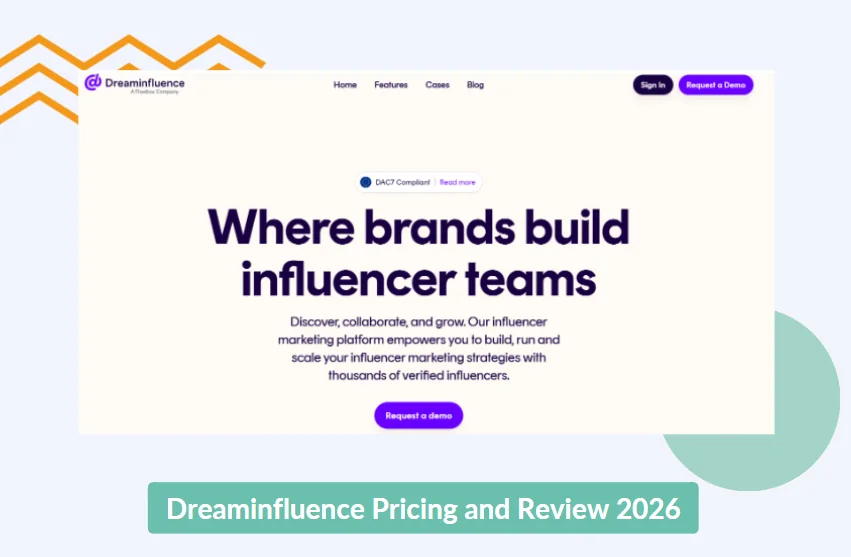
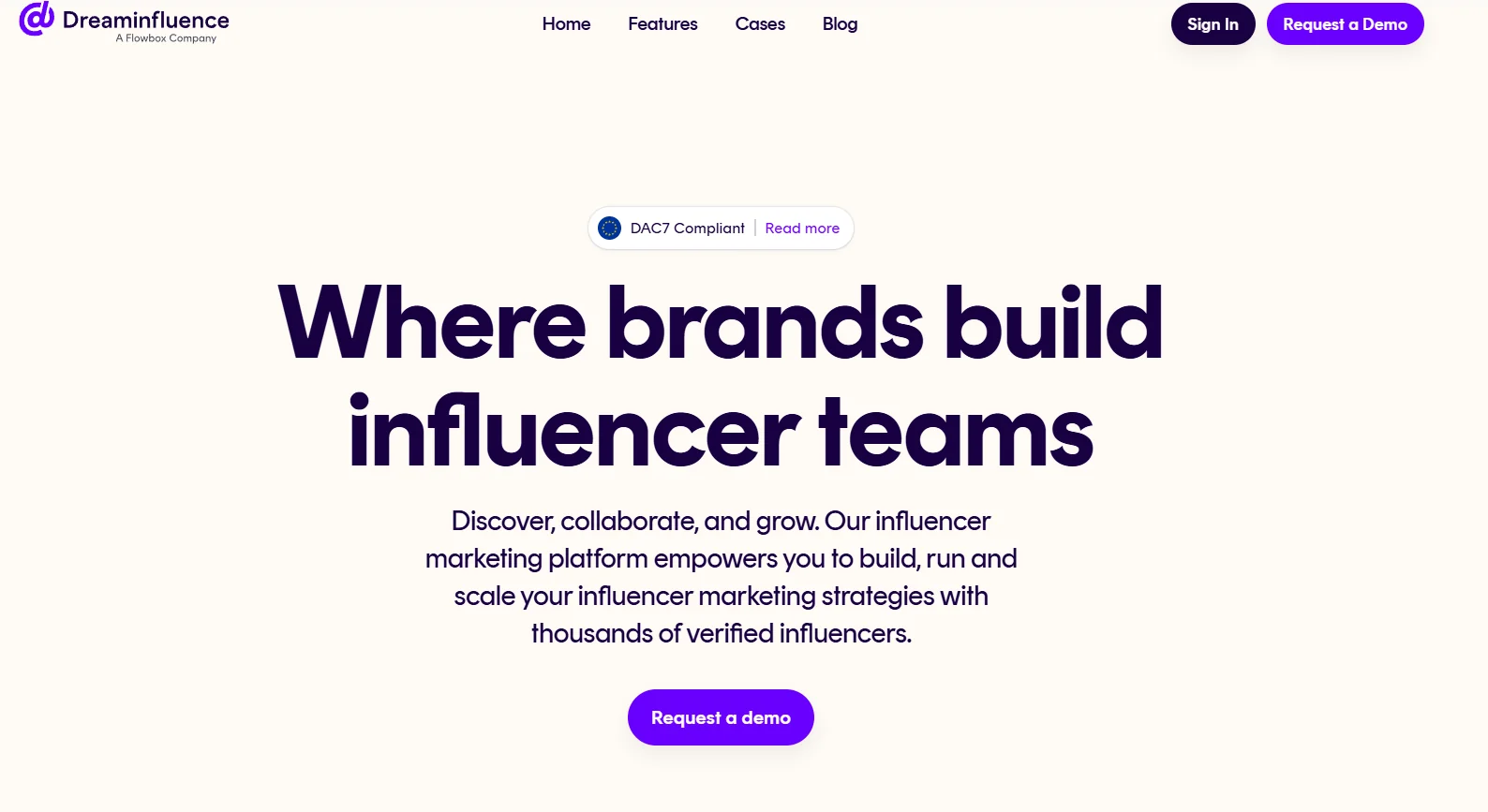
DreamInfluence is a Danish-built influencer marketing platform (run by DreamInfluencers ApS) designed to help brands discover creators, run campaigns, and track performance from one dashboard. Its angle is quality over quantity: instead of a giant open database, it gives brands access to a curated network of 25,000+ verified creators.
It sits in the mid-market tier alongside other all-in-oneinfluencer marketing software, leaning toward ecommerce brands that want matchmaking, campaign tracking, and payments without stitching together separate tools.
DreamInfluence Key Features
Curated creator network. Rather than handing you millions of profiles, DreamInfluence vets and curates its roster to push brands toward better-fit matches. This is genuinely useful if you'd rather not wade through low-quality accounts — but it also means a smaller pool than database-first tools like Modash.
Campaign management. You can organize, manage, and track campaigns end to end in one place, pulling data, insights, and status into a single view instead of juggling spreadsheets. It covers the core workflow most brands need without trying to be an enterprise suite.
Content Library. All creator content gets collected in one place for review, download, and reuse across your own channels. For brands repurposing UGC into ads or organic posts, having it centralized saves real time.
Wallet (payments & invoicing). The Wallet feature handles campaign spend, invoicing, and influencer payouts inside the platform, so budgeting and paying creators don't live in a separate system. Automated discount tracking also ties creator activity to actual sales.
Analytics overview. DreamInfluence tracks engagement, clicks, views, and reach in one reporting view, plus a messaging tool to keep brand–creator communication in the platform. It's clean and readable, though not as deep as analytics-first tools like Traackr.
DreamInfluence Pricing
DreamInfluence doesn't publish a simple public pricing table, but the tiers reported across review sites are consistent. Note that every plan is billed annually and adds a one-time onboarding fee on top of the monthly rate.
The entry plan for brands starting a structured influencer program. It covers core discovery, campaign management, and a capped number of influencers. The main constraint is volume — it's built for smaller programs, and you'll outgrow the influencer limit as you scale.
Growth — ~€810/month + ~€1,350 onboarding
Aimed at brands running campaigns more consistently, with a higher influencer allowance and more of the advanced features unlocked. The jump in onboarding fee (nearly double Basic) is worth noting when you budget year one.
Professional — ~€2,000/month + ~€2,700 onboarding
Built for larger programs managing more creators at once, with the fuller feature set and higher quotas. At this tier you're competing directly with platforms like GRIN and Upfluence on price, so the curated-network advantage needs to carry its weight.
Enterprise — Custom pricing
Quote-based for high-volume brands and agencies needing custom limits and support. As with most custom tiers, clarify exact creator caps and what's gated before signing.
For context on where this lands versus other ecommerce-focused tools, it helps to compare it against the broader set ofstorefront software options before committing.
Watch for these hidden costs:
The onboarding fees (€670–€2,700 depending on tier), the mandatory 12-month commitment with no monthly option, and VAT for Danish companies. Charges can also be billed in USD, so factor in currency fluctuation if you're budgeting in another currency.
DreamInfluence Pros & Cons
Pros
Quality-first creator network. The curated, vetted roster means less time filtering junk accounts and a higher hit-rate on brand-fit creators.
Genuinely all-in-one. Discovery, campaign management, content collection, payments, and analytics live in one tidy platform — no tool-stitching required.
Clean, approachable interface. Reviewers consistently describe it as easy to use, which matters for smaller teams without a dedicated influencer manager.
Strong fit for European brands. Its Nordic roots and EUR-native billing make it a natural choice for EU-based ecommerce teams.
Cons
Onboarding fees on every paid tier. Adding €670–€2,700 upfront meaningfully changes the year-one math, especially on lower plans.
12-month lock-in with no monthly plan. You commit for a full year before you've really tested whether the platform fits your workflow.
Smaller creator pool. The curated approach is a feature, but database-first brands wanting massive reach will find the network limiting.
Thin public review volume. Compared to GRIN, Aspire, or Modash, there's relatively little independent feedback to pressure-test claims.
What DreamInfluence Users Say
DreamInfluence holds a 4.2/5 score on Tekpon, which lands it solidly in "well-liked but not category-leading" territory. The honest caveat: public review volume is thin compared to bigger platforms, so the sample is smaller than you'd get researching GRIN or Aspire.
Where users are positive, the recurring themes are ease of use and the quality of the curated creator network — brands appreciate that matches feel relevant rather than random. The platform's all-in-one tidiness also gets credit for keeping campaigns out of spreadsheets.
The friction points that surface most often are commercial rather than technical: the upfront onboarding fees and the 12-month commitment are the parts brands hesitate on, particularly smaller teams testing influencer marketing for the first time. Because independent feedback is limited, we'd recommend asking for references in your exact vertical during the demo.
Who Is DreamInfluence Best For?
DreamInfluence is a strong fit for European and mid-market ecommerce brands that value a curated, vetted creator network over a sprawling database, and that want discovery, campaigns, content, and payments in one clean system. If you'd rather have fewer, better-matched creators than millions of profiles to sift through, that's the core appeal.
It starts to fall short for two types of team. High-volume brands that need to source creators at massive scale will feel boxed in by the curated network, and small brands or first-timers may balk at committing to a full year — plus onboarding fees — before proving ROI.
On budget: once you factor in onboarding and the annual lock-in, the realistic entry point is higher than the ~€675 headline. Brands at that spend level should weigh it againstmicro-influencer centered strategies and more flexible, monthly-billed tools before signing.
Is DreamInfluence Worth It?
For the right brand, yes. If you're an EU-based ecommerce team that wants a quality-first creator network and an all-in-one workflow — and you're confident enough to commit for a year — DreamInfluence delivers a clean, capable platform that does what it promises.
Where it gets harder to justify is for brands that want to test before they commit, or that need maximum creator volume. The 12-month lock-in and onboarding fees raise the stakes on a decision you're making before you've used the product daily. If that flexibility matters to you, a monthly-billed platform — or even outsourcing to one of the bettermarketing agencies — may be the smarter first step.
DreamInfluence Alternatives
If DreamInfluence isn't the right fit — whether it's the lock-in, the onboarding fees, or the network size — here are five alternatives worth a look, framed around the specific gap you might be trying to fill.
Modash
A discovery-first platform built on one of the largest creator databases in the market, with transparent, self-serve pricing. Pick it over DreamInfluence when your bottleneck is finding creators at scale rather than managing a curated few, and when you want to start without a 12-month commitment.
Influencer Hero
An all-in-one platform covering creator discovery across Instagram, TikTok, and YouTube, an influencer CRM, automated outreach and follow-ups, campaign management, affiliate and gifting tracking, payments, and reporting.
The big differentiator for budget-conscious brands: pricing is public, not quote-gated — plans start at $649/month (Standard), with Pro at $1,049 and Business at $2,490, plus custom agency pricing. It also runs on a 3-month commitment rather than DreamInfluence's full year, so you can prove value before locking in. Best for D2C brands and agencies that want to run the whole program end to end in one tool.
GRIN
An ecommerce-native platform with deep Shopify, WooCommerce, and Magento integrations, built for brands running large product-seeding and ambassador programs. Choose it over DreamInfluence when fulfillment automation and revenue attribution at scale matter more than a curated network — though expect a higher price point (~$2,500/month) and an annual contract.
Aspire
A community-and-marketplace platform focused on long-term creator relationships and inbound applications, with a 1M+ creator marketplace. Pick it over DreamInfluence if you want creators applying to you and a stronger ambassador-program backbone rather than pure outbound matchmaking.
Upfluence
A discovery-plus-ecommerce platform with live customer-matching (it can identify influencers among your existing customers and newsletter subscribers). Choose it over DreamInfluence when turning buyers into affiliates is central to your strategy — just note it also requires an annual commitment.
Final Thoughts
DreamInfluence is a clean, well-built platform with a genuinely useful curated creator network, and it does the all-in-one job well for European mid-market ecommerce brands. The main thing to go in with eyes open about is the commercial structure: onboarding fees plus a 12-month commitment make the real cost higher and the decision bigger than the entry price suggests.
If the campaign-management overhead is the part you'd rather skip entirely, there's a different model worth considering. Creator Hero flips the approach — instead of you running outbound campaigns, creators build commission-based storefronts and sell your products for you, with no upfront campaign spend and affiliate commissions in the 20–50% range across 55,000+ brands.
Plans start at roughly €675/month on the Basic tier (billed annually) and rise to ~€810 (Growth) and ~€2,000 (Professional), with custom Enterprise pricing. Each tier also adds a one-time onboarding fee of €670–€2,700.
Does DreamInfluence have a free trial?
No. There's no free trial or free plan, and all plans require a 12-month minimum commitment, so you're committing before you can test it hands-on.
Is DreamInfluence worth it for small brands?
It can be, but the onboarding fee plus the annual lock-in make it a heavier first commitment than monthly-billed tools. Small brands testing influencer marketing for the first time may prefer a more flexible option.
What is DreamInfluence best for?
It's best for European and mid-market ecommerce brands that want a curated, vetted creator network plus discovery, campaigns, content, and payments in one tidy platform.
What's a good alternative to DreamInfluence?
For flexible, publicly-priced all-in-one management, Influencer Hero is a strong pick; for discovery at scale with self-serve pricing, Modash is the closest match.
Related Posts
The incredible power of team collaboration is evident in the remarkable outcomes it can achieve
Influur pricing explained: no brand subscription, pay-as-you-go fees, real pros and cons, and our verdict on whether this creator marketplace is worth it in 2026.
Tagbox looks cheap at $19/month — but the feature most brands actually need is hidden behind an Enterprise quote. Here's the full pricing breakdown and our honest verdict.
Word on the Block charges no subscription — but its pricing page never tells you the fee. Here's what the model actually costs brands, what's included, and our honest verdict.
Build your own business without having to manage all the operational aspects of an e-commerce. Focus on creating content, driving sales and maximise your earnings!


.svg)


%201.png)



_logo.svg.png)


