Best Influencer Marketing Software for Storefronts
Choosing influencer marketing software is less about finding the “best” tool and more about finding the right fit for how your brand sells. For storefront-driven businesses, the challenge isn’t just managing creators—it’s connecting their content directly to product discovery, checkout, and revenue tracking.
This guide compares leading platforms based on how they support real workflows, from discovery and outreach to affiliate tracking and storefront integration. The goal is to help you understand what each tool does well, where it fits, and how to choose based on your team’s priorities and stage.
What to Look For in Influencer Marketing Software
Not all influencer marketing softwares are built with the same purpose. Some focus on discovery, others on relationship management, and others on affiliate-driven revenue. The right choice depends on whether your priority is awareness, scalability, or direct sales through storefronts.
Creator Discovery and Vetting Capabilities
A strong platform should offer reliable ways to search, filter, and evaluate creators based on audience data, engagement, and niche relevance. This is particularly important for brands that need to consistently source new partners or expand into different markets.
Relationship Management and CRM Functionality
As influencer programs grow, managing conversations and partnerships manually becomes difficult. Platforms with built-in CRM capabilities help centralize communication, track collaboration history, and maintain organized creator relationships over time.
Campaign and Gifting Management Features
For brands running structured campaigns, the ability to coordinate product seeding, approvals, and timelines from one place becomes critical. These features help reduce operational friction, especially when working with multiple creators simultaneously.
Affiliate Tracking and Performance Measurement
Platforms that support performance-focused workflows should include tracking for clicks, conversions, and revenue. This allows brands to understand which creators are contributing to sales and make more informed decisions about partnerships.
Storefront (CMS) and Commerce Integration
For storefront-based brands, some platforms provide the ability to connect creators directly to product catalogs through shoppable pages or curated product selections. This capability supports a more direct path from content to purchase while maintaining visibility into how creator-driven traffic converts.
Best Influencer Marketing Software for Storefronts (Top Picks)
Influencer marketing platforms approach storefronts in different ways. Some prioritize discovery, while others focus on performance tracking or workflow automation. Below is a breakdown of tools that stand out based on how they support storefront-driven influencer programs.
1. Influencer Hero – Best for End-to-End Influencer Management
Influencer Hero is an all-in-one influencer marketing platform designed to centralize discovery, outreach, gifting, and affiliate tracking. It is particularly suited for DTC brands that want to manage large creator programs while maintaining clear visibility into performance and revenue.
For brands evaluating the best influencer marketing software for storefronts, Influencer Hero stands out for combining operational efficiency with built-in commerce features that connect creators directly to product sales.
What Makes Influencer Hero Great for Storefronts
Influencer Hero is built to connect influencer workflows with revenue generation through storefront integrations.
Custom Creator Storefronts: Enables creators to build dedicated pages where they can curate and showcase products directly from your catalog.
Automated Product Gifting: Syncs with your store to streamline product seeding, allowing creators to select variations while tracking shipments automatically.
Integrated Affiliate Tracking: Generates trackable links and codes tied to each storefront, providing clear attribution for clicks, conversions, and revenue.
Centralized CRM and Outreach: Combines creator discovery, communication, and relationship management in one dashboard, reducing the need for external tools.
UGC Content Management: Aggregates content created by influencers into a single library, making it easier to reuse assets across marketing channels.
Pros
Centralizes multiple workflows (CRM, outreach, tracking) in one platform
Designed for scaling structured influencer programs efficiently
Strong visibility into performance and revenue attribution
Cons
Initial setup may require time when syncing large product catalogs
Advanced customization may be needed for highly technical products
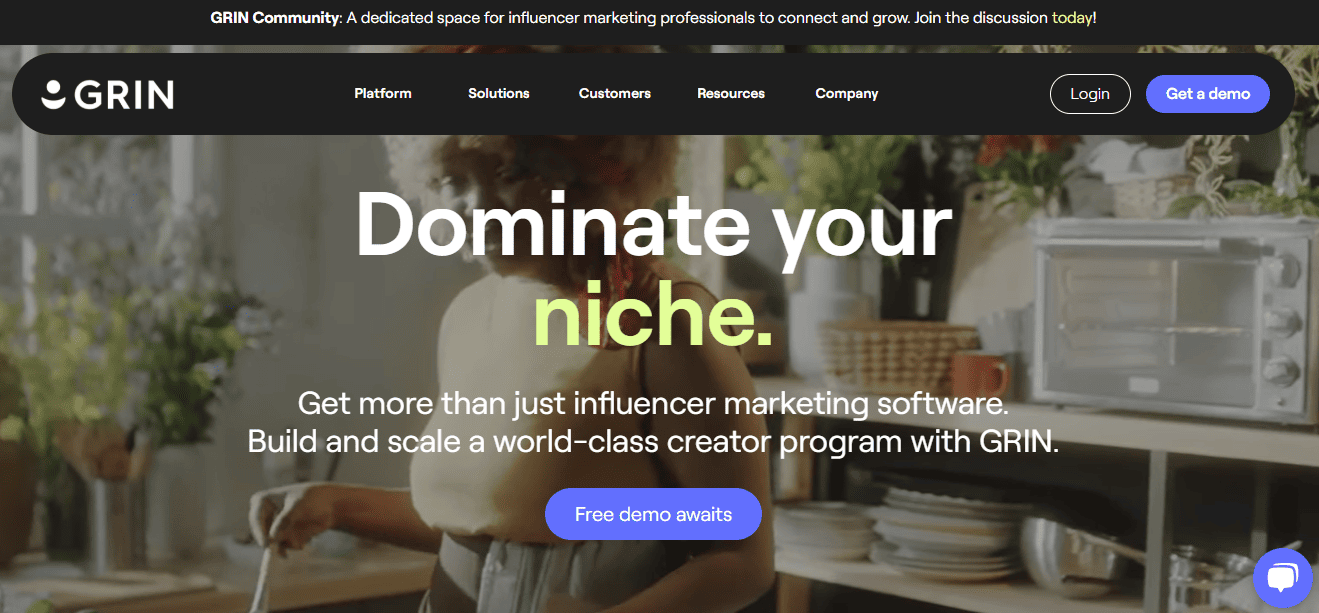
2. GRIN – Best for Enterprise eCommerce Brands Managing Creator Relationships
GRIN is an influencer marketing platform built for large eCommerce brands that need to manage high volumes of creator relationships. It focuses on treating influencers as long-term partners, with strong integrations into store operations and backend workflows.
It is best suited for brands with established teams that require a centralized system to manage complex logistics, communications, and performance tracking at scale.
What Makes GRIN Great for Storefronts
GRIN is designed to connect creator relationships with structured eCommerce operations.
Creator Shops Integration: Enables brands to build co-branded storefronts directly within their eCommerce ecosystem. These pages allow creators to showcase curated products while maintaining consistent brand experience.
Deep eCommerce Sync: Integrates closely with platforms like Shopify to sync products, orders, and inventory. This reduces manual work and ensures storefronts reflect real-time product availability.
Relationship-Centric CRM: Focuses on long-term creator management rather than one-off campaigns. Teams can track communication history and build structured partnerships over time.
Affiliate and Attribution Tracking: Tracks sales generated through storefronts with detailed reporting. This helps teams understand which creators are driving consistent revenue.
Integrated Payments and Logistics: Handles payouts, contracts, and product seeding in one place. This simplifies operations for brands managing large creator networks.
Pros
Strong integration with eCommerce systems and workflows
Built for managing long-term creator relationships at scale
Comprehensive backend tools for logistics and payments
Cons
Higher cost compared to most platforms
Steeper learning curve for new users
May be too complex for smaller teams
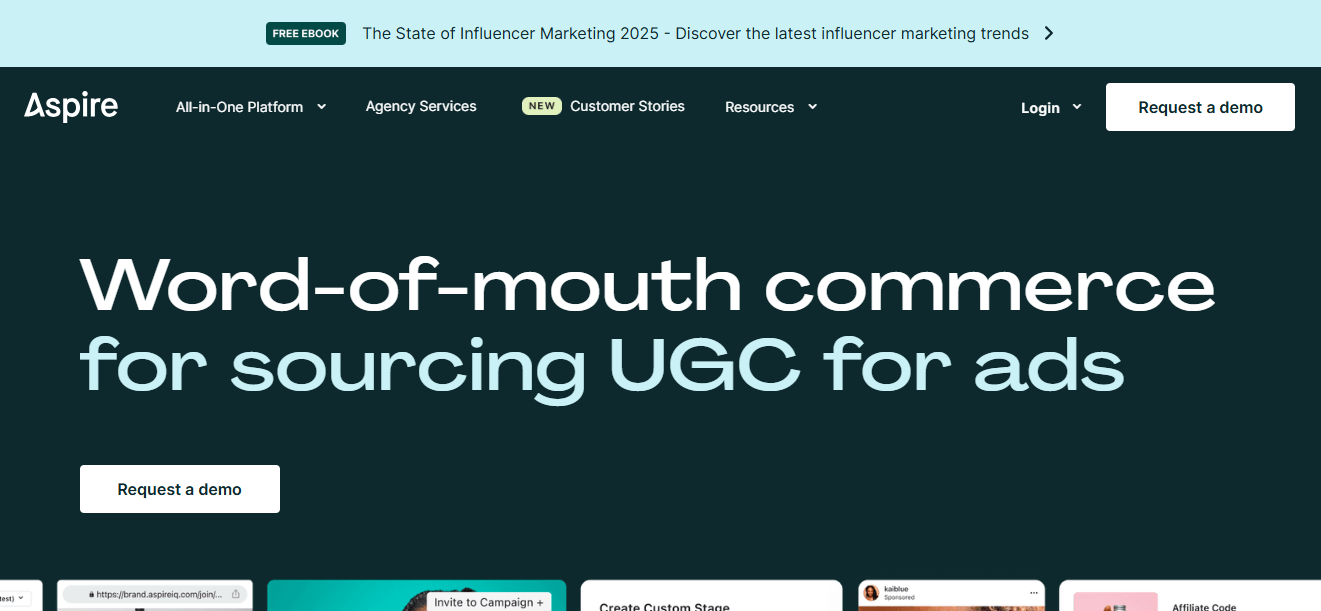
3. Aspire – Best for Managing High-Volume Creator Applications
Aspire is an influencer marketing platform that combines outbound discovery with a strong inbound creator marketplace. It allows brands to receive and manage applications from creators, making it easier to scale partnerships without relying solely on outreach.
It is best suited for mid-to-large brands that want to balance structured campaigns with ongoing creator acquisition.
What Makes Aspire Great for Storefronts
Aspire connects creator applications with structured storefront-driven campaigns.
Creator Marketplace: Allows influencers to apply directly to campaigns, reducing reliance on outbound sourcing. This helps brands build a steady pipeline of interested creators.
Creator Stores: Enables influencers to curate product collections in dedicated storefronts. These storefronts keep users within the brand ecosystem and support conversion-focused journeys.
Content and Commerce Integration: Supports turning creator content into paid ads and on-site assets. This is especially relevant for Instagram collaborations where content reuse is common.
Workflow Automation: Automates approvals, contracts, and campaign steps across multiple creators. This reduces manual coordination for large-scale programs.
Performance Tracking: Provides visibility into conversions and campaign results tied to storefront activity. This helps teams evaluate which creators deliver consistent outcomes.
Pros
Strong inbound creator marketplace
Balanced approach between discovery and campaign management
Good integration between content and commerce workflows
Cons
Requires annual commitment in most cases
Can feel complex for smaller teams
Higher starting price point
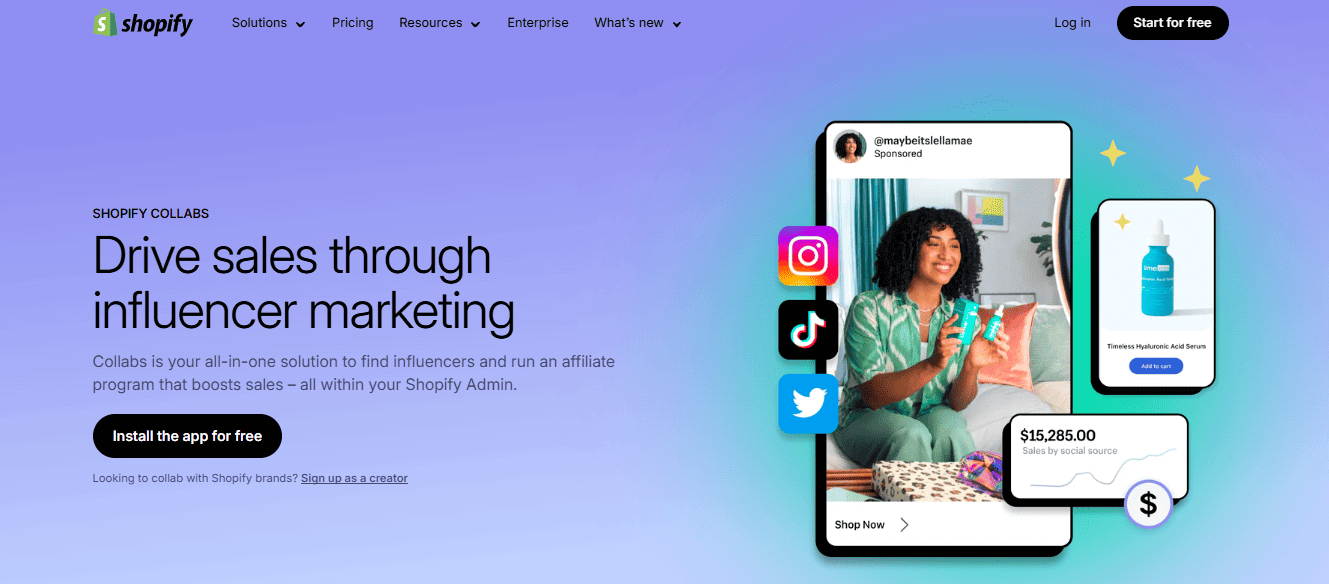
4. Shopify Collabs – Best for Affiliate Recruitment and Creator Storefronts
Shopify Collabs is an influencer and affiliate marketing tool built directly into Shopify, allowing brands to create a dedicated recruitment “storefront” where creators can discover the brand, apply to collaborate, and access affiliate opportunities.
It is best suited for Shopify brands that want to scale creator partnerships and manage affiliates without relying on external tools.
What Makes Shopify Collabs Great for Storefronts
Shopify Collabs connects your eCommerce store with a creator-facing hub designed for discovery, recruitment, and monetization.
Custom Recruitment Page: Create a branded storefront page on your website where creators can apply to join your affiliate program. This page matches your brand aesthetic and acts as a central entry point for partnerships.
Open Access Programs: Enable public affiliate programs where creators can instantly join, receive links, and start promoting your products. This helps increase discoverability within the Collabs network.
Creator Management System: Manage applications, approve creators, assign commissions, and track performance all within Shopify. This centralizes your influencer and affiliate workflows.
Product Discovery for Creators: Creators can browse your available products directly within the platform, making it easier to select items for promotion or gifting collaborations.
Built-in Affiliate Tracking: Automatically generate affiliate links and track sales, commissions, and performance without needing third-party integrations.
Pros
Native integration with Shopify for seamless setup
Free to use for Shopify merchants
Easy affiliate tracking and commission management
Cons
Limited to Shopify ecosystem (not cross-platform)
Basic influencer CRM compared to dedicated platforms
Limited customization for advanced workflows
5. CreatorIQ – Best for Large-Scale Enterprise Programs with Advanced Data Needs
CreatorIQ is an enterprise-level influencer marketing platform built for global brands that require advanced reporting, governance, and scalability. It focuses heavily on data infrastructure and long-term creator program management.
It is best suited for corporations managing multiple markets, teams, and large creator networks.
What Makes CreatorIQ Great for Storefronts
CreatorIQ supports storefronts through enterprise-grade data and infrastructure.
Creator Store Infrastructure: Allows influencers to create curated product destinations connected to your eCommerce store. These storefronts support structured, large-scale campaigns.
Advanced Data and Reporting: Provides detailed insights into performance across channels. This is particularly useful for tracking revenue from TikTok and other commerce integrations.
Global Program Management: Supports multiple teams, regions, and brand accounts within one system. This helps maintain consistency across large operations.
API and Tech Stack Integration: Connects with tools like analytics platforms and BI systems. This allows deeper customization of reporting workflows.
Brand Safety and Compliance Tools: Includes vetting and monitoring features for creator partnerships. This is important for brands operating in regulated or high-risk industries.
Pros
Strong data and reporting capabilities
Built for large, global influencer programs
High level of customization and integration
Cons
Expensive compared to most platforms
Requires technical setup and onboarding
Not suited for small or mid-sized teams
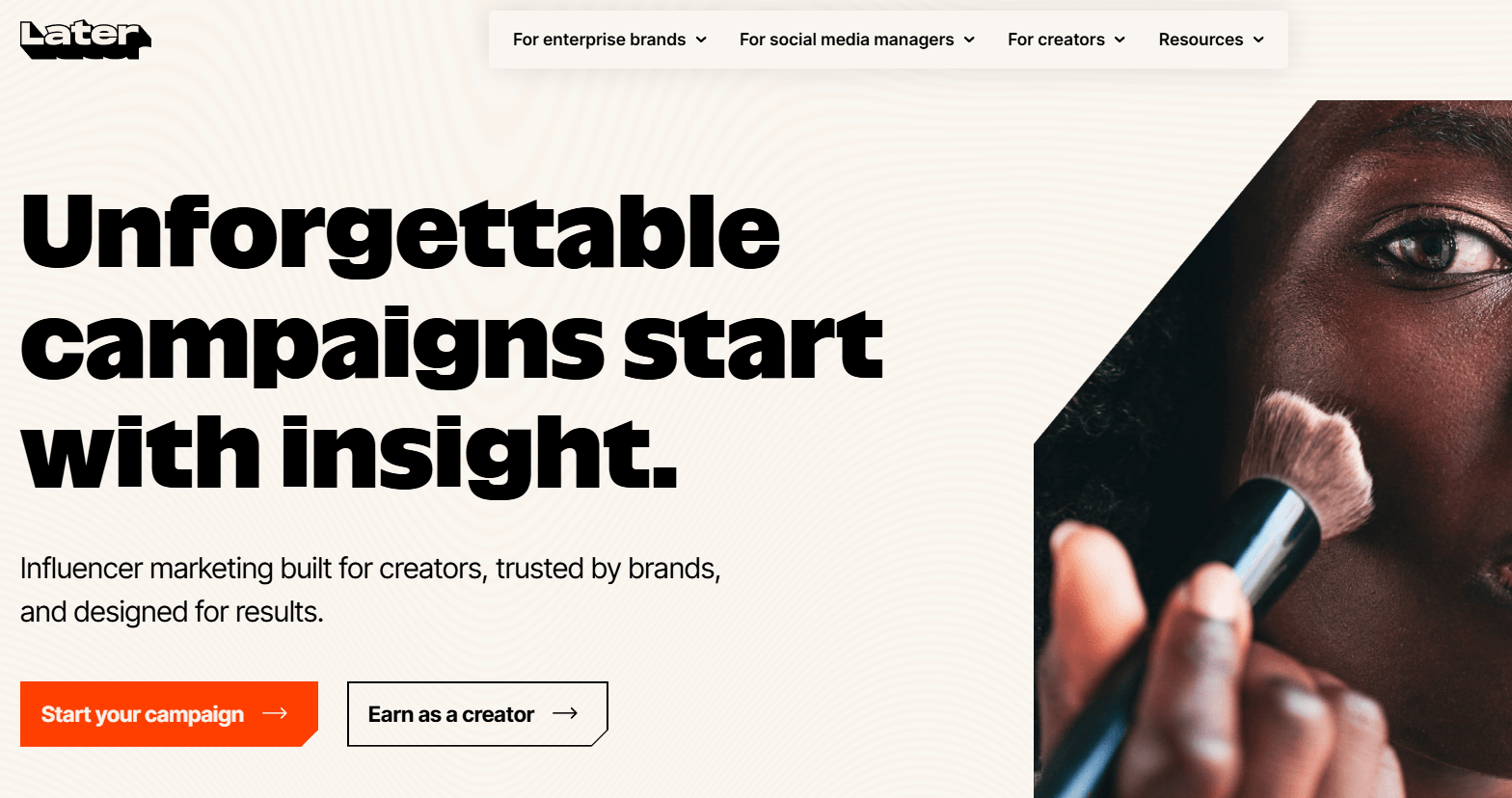
6. Later – Best for Social Media–Driven Storefronts
Later is a social media management platform that includes storefront-like functionality through its Linkin.bio feature, turning your Instagram, TikTok, or even Pinterest feed into a clickable, shoppable landing page. It focuses on helping brands and creators convert social traffic into sales without needing a full eCommerce setup.
It is best suited for brands that prioritize social commerce and want to monetize content directly from their social profiles.
What Makes Later Great for Storefronts
Later connects social media content with simple, conversion-focused storefront experiences.
Linkin.bio Pages: Create a branded landing page that mirrors your Instagram or TikTok feed. Each post becomes clickable, allowing users to shop products or visit specific pages directly.
Custom Buttons & Links: Add multiple custom links and call-to-action buttons to drive traffic to your website, product pages, or campaigns.
Shopify Integration: Connect your Shopify store to tag products directly in posts, making it easier for users to move from content to purchase.
Affiliate Link Support: Add trackable affiliate links to posts, enabling creators and brands to generate revenue from their content.
Content-to-Commerce Workflow: Plan, schedule, and publish content while linking each post to a conversion destination, streamlining the path from discovery to purchase.
Pros
Strong social-to-commerce integration through Linkin.bio
Easy to set up and use for non-technical teams
Works well for Instagram and TikTok-driven strategies
Cons
Not a full eCommerce or storefront builder
Limited CRM and influencer management features
Less advanced tracking compared to dedicated affiliate platforms
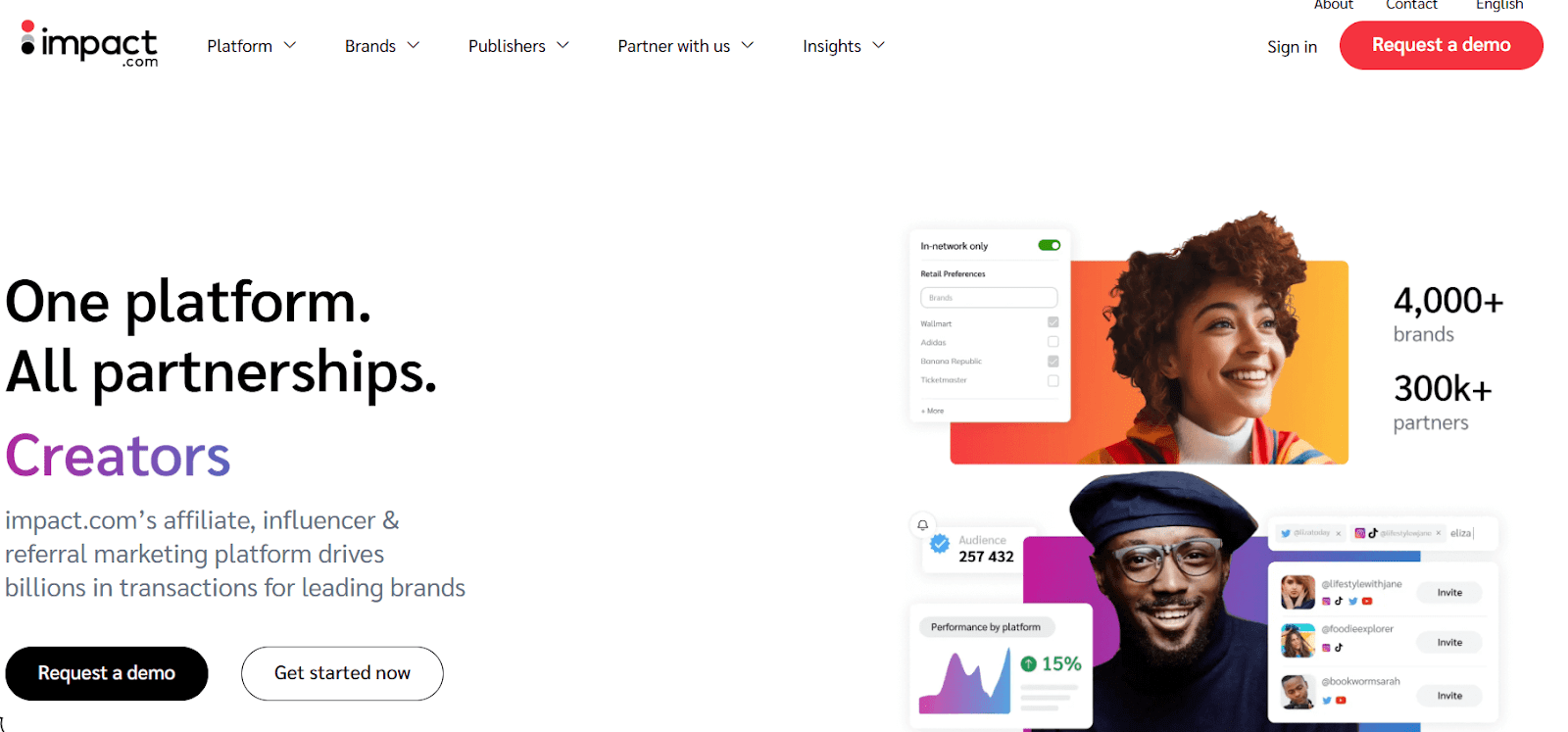
7. Impact.com – Best for Affiliate-Driven Influencer Programs
Impact.com is a partnership management platform that combines influencer marketing with affiliate and performance marketing. It is designed to help brands manage all types of partnerships within a single system.
It is best suited for brands that treat influencers as part of a broader affiliate and revenue strategy.
What Makes Impact.com Great for Storefronts
Impact.com focuses on performance tracking and scalable partnership workflows.
Creator Pages: Allows influencers to build personalized, shoppable pages featuring curated products. These pages act as storefront extensions tied to each creator.
Advanced Attribution Technology: Tracks user journeys across devices and channels. This ensures accurate credit for conversions driven by creators.
Automated Contracts and Payments: Manages commissions, payouts, and agreements in one place. This reduces manual work for finance and operations teams.
Marketplace for Partnerships: Provides access to a network of influencers and affiliates. This supports both discovery and recruitment at scale.
Performance-Based Optimization: Offers detailed reporting on clicks, conversions, and revenue. This helps brands refine their storefront strategies over time.
Pros
Strong affiliate and performance tracking capabilities
Scalable infrastructure for partnership programs
Comprehensive automation for contracts and payouts
Cons
Interface can feel complex for new users
Less focused on social-first workflows
Setup may require technical support
How to Choose the Right Influencer Marketing Software
The right tool depends on your goals, internal workflows, and how advanced your influencer program is.
Want an all-in-one platform for scaling structured programs → Influencer Hero
Managing large creator relationships at enterprise level → GRIN
Need a strong inbound creator marketplace → Aspire
Turning existing customers into influencers → Upfluence
Require advanced data and global program management → CreatorIQ
Focused on large-scale influencer discovery → Modash
Running affiliate-first or performance-driven programs → Impact.com
Key Takeaways
Influencer marketing platforms differ widely in terms of capabilities, workflows, and scale. Some are built for discovery, others for relationship management, and others for performance tracking tied to revenue.
The right choice depends on how your program is structured, what you prioritize (awareness vs conversions), and how much you need to automate as you move away from manual processes. For early-stage brands, simpler tools may be enough to test collaborations and manage a small number of creators.
As programs grow, more advanced platforms become necessary to handle scale, automate workflows, and track performance more precisely. For brands specifically exploring creator storefronts and looking to turn influencer activity into measurable revenue, Creator Hero is one option to consider within that approach.
FAQs
What is the best influencer marketing software for storefronts?
The best option depends on your goals and how you structure your influencer program. Platforms like Influencer Hero are suited for brands that want an all-in-one system with storefronts, CRM, outreach, and revenue tracking, while tools like GRIN or CreatorIQ are better aligned with enterprise teams managing large-scale creator relationships.
Do all influencer marketing platforms support storefronts?
No, not all platforms offer storefront functionality. Some focus primarily on discovery or outreach, while others provide affiliate tracking without storefront experiences. Tools like Influencer Hero, Aspire, and Impact.com include features that connect creators to shoppable product pages.
What’s the difference between affiliate marketing and influencer marketing software?
Affiliate marketing platforms focus on tracking links, commissions, and conversions, while influencer marketing tools often include discovery, outreach, and campaign management. Some platforms, such as Influencer Hero and Impact.com, combine both approaches to support performance-driven influencer programs.
Which platform is best for small or growing eCommerce brands?
Smaller brands often benefit from tools that are easy to use and don’t require large teams to operate. Influencer Hero and Modash are commonly considered accessible options for growing brands, while more complex platforms like CreatorIQ may be better suited for larger organizations.
How do storefronts improve influencer marketing performance?
Storefronts create a more direct path from content to purchase by allowing creators to showcase curated product selections. This helps improve conversion rates and gives brands better visibility into which influencers are driving sales, especially when using platforms like Influencer Hero or Aspire.
Related Posts
The incredible power of team collaboration is evident in the remarkable outcomes it can achieve
Influur pricing explained: no brand subscription, pay-as-you-go fees, real pros and cons, and our verdict on whether this creator marketplace is worth it in 2026.
Tagbox looks cheap at $19/month — but the feature most brands actually need is hidden behind an Enterprise quote. Here's the full pricing breakdown and our honest verdict.
Build your own business without having to manage all the operational aspects of an e-commerce. Focus on creating content, driving sales and maximise your earnings!


%201.png)


.svg)






_logo.svg.png)


