Influencer marketing has become a core growth channel for brands that want to build trust, drive demand, and reach audiences in a way traditional ads often can’t. But running effective creator campaigns isn’t as simple as sending a few DMs or gifting products. From finding the right creators to managing contracts, content approvals, timelines, and performance tracking, influencer marketing quickly becomes complex—especially as campaigns scale.
That’s where influencer marketing agencies come in. The right agency brings structure to the process, connects you with creators who actually fit your brand, and helps turn influencer collaborations into repeatable, measurable campaigns. Whether you’re focused on brand awareness, performance, UGC, or long-term creator partnerships, agencies remove the guesswork and help you avoid costly trial and error.
To help you find the right partner, we’ve reviewed the top 10 best influencer marketing agencies based on their services, pricing transparency, strengths, and ideal use cases. This list covers everything from enterprise agencies running global campaigns to more flexible options designed for DTC and growth-focused brands—so you can choose an agency that matches your goals, budget, and stage of growth.
Top 10 influencer marketing agencies for brands of all sizes:
Viral Nation
The Influencer Marketing Factory
HireInfluence
Ubiquitous
Influencer Hero
The Shelf
inBeat Agency
Moburst
Obviously
9AM
Why Use Influencer Marketing Agencies
Influencer marketing agencies help brands plan, execute, and scale creator campaigns without the complexity of managing everything in-house. Instead of spending weeks sourcing creators, negotiating rates, and tracking performance manually, agencies bring proven processes, creator networks, and strategic expertise to deliver consistent, measurable results faster.
Key Reasons to Use Influencer Marketing Agencies
Access to vetted creators: Agencies work with pre-qualified creators across niches, platforms, and regions, reducing the risk of poor-fit partnerships.
Strategic campaign planning: From defining goals to selecting the right creators and formats, agencies build campaigns around performance—not guesswork.
Time and resource savings: Outsourcing influencer sourcing, outreach, and coordination frees your internal team to focus on growth and strategy.
Negotiation and contract expertise: Agencies handle pricing, deliverables, usage rights, and contracts to protect your brand and budget.
Campaign execution at scale: Run dozens—or hundreds—of creator collaborations simultaneously without operational bottlenecks.
Performance tracking and reporting: Agencies provide structured reporting on reach, engagement, conversions, and ROI.
Platform and trend expertise: Deep knowledge of TikTok, Instagram, YouTube, and emerging platforms ensures your campaigns stay relevant.
Creative guidance: Many agencies support content strategy, briefs, and optimization to improve creator output and performance.
Why It’s Crucial For Your Brand
As influencer marketing becomes more competitive and performance-driven, working with an influencer marketing agency helps your brand stay efficient, strategic, and scalable. Agencies reduce trial and error by applying proven frameworks, creator insights, and platform expertise—allowing you to launch stronger campaigns, protect your budget, and turn creator partnerships into predictable growth rather than one-off experiments.
Top 10 Influencer Marketing Agencies
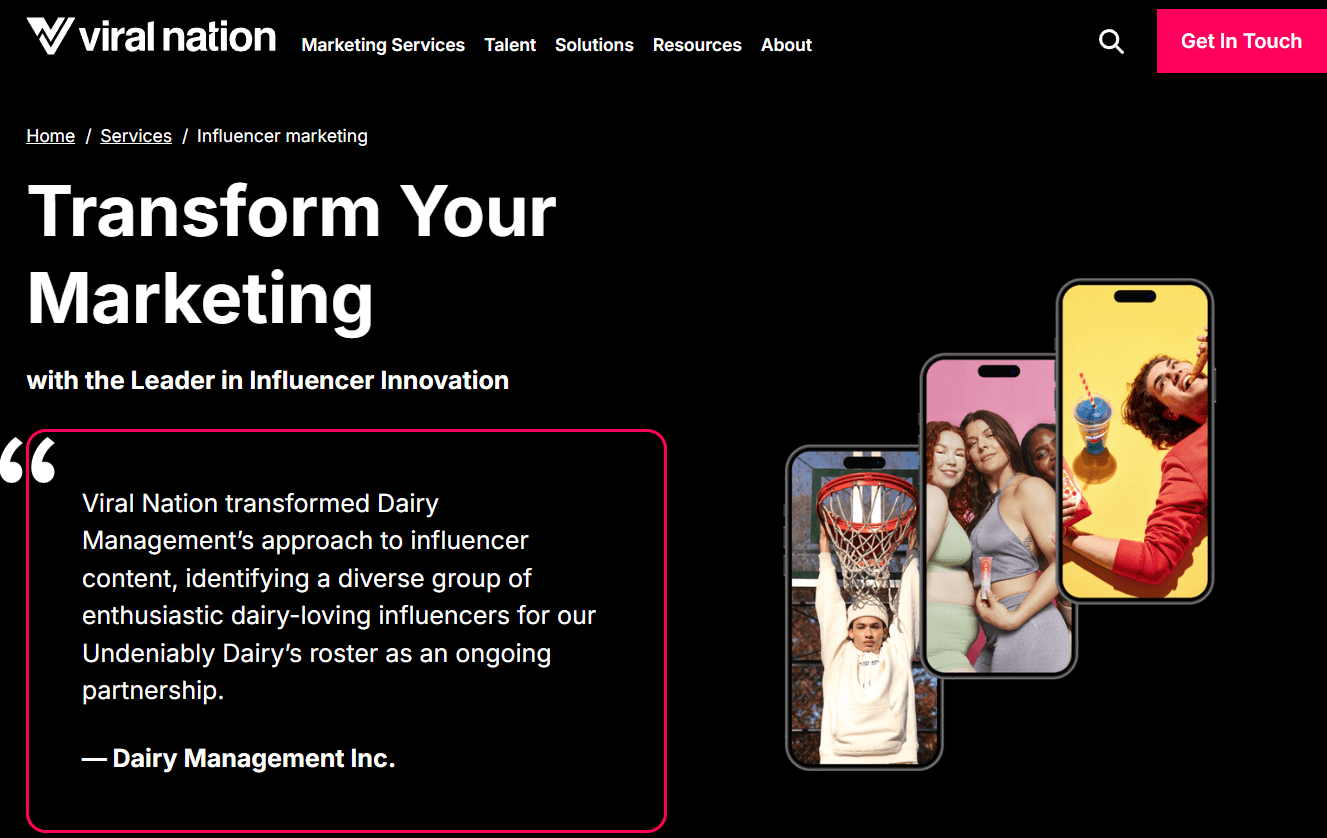
1. Viral Nation
Pricing
Viral Nation’s pricing starts at a minimum budget of $50,000 per month, reflecting their focus on comprehensive and high-impact campaigns. This pricing model is structured to accommodate the extensive services they offer, from strategy development to post-campaign analysis.
Best For
Large and enterprise brands looking to run global, high-impact influencer campaigns that combine creator marketing, paid media, and brand safety at scale.
Why It Stands Out:
Global Creator Network: Works with creators across TikTok, Instagram, YouTube, Twitch, and emerging platforms, enabling brands to activate campaigns across multiple regions simultaneously.
Integrated Paid Media Amplification: Combines influencer content with paid social distribution to extend reach, improve performance, and drive measurable results.
Brand Safety & Compliance Tools: Offers advanced brand safety, fraud detection, and compliance processes to protect enterprise brands.
Talent Management Capabilities: Operates both as an influencer agency and talent management company, giving direct access to top-tier creators.
Data-Driven Campaign Execution: Uses proprietary data and analytics to optimize creator selection, content formats, and campaign performance in real time.
Pros
Enterprise-Ready Campaigns: Built to support large-scale, multi-market influencer programs.
Global Reach: Suitable for international brands expanding into multiple markets.
Brand Safety Focus: Robust compliance and fraud prevention measures.
Cons
High Minimum Budgets: Not accessible for small or early-stage brands.
Longer Onboarding Process: Enterprise workflows can slow initial launch timelines.
Less Flexibility for Small Tests: Not ideal for short-term or experimental campaigns.
Agency-Led Execution: Brands may have less hands-on control over creator relationships.
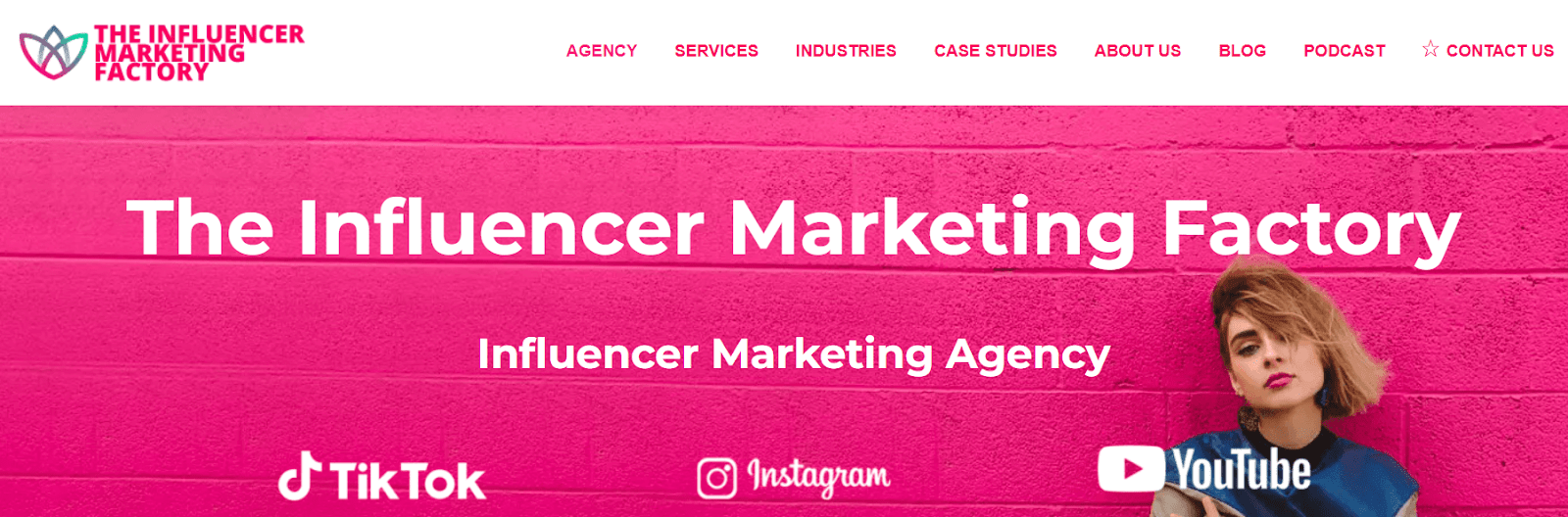
2. The Influencer Marketing Factory
Pricing
Pricing is customized based on campaign scope, platforms, regions, and creator volume. The platform requires campaign minimums starting in the $15,000 to $20,000 range, including their management fees.
Best For
Mid-sized to enterprise brands looking to execute data-driven influencer campaigns on TikTok, Instagram, and YouTube with a strong performance focus.
Why It Stands Out:
Performance-Driven Strategy: Campaigns are built around measurable KPIs such as reach, engagement, conversions, and ROI rather than vanity metrics.
Strong TikTok Expertise: Known for executing high-performing TikTok-first influencer campaigns across multiple industries.
Global Campaign Execution: Supports international influencer activations across North America, Europe, and other key markets.
Audience-Centric Creator Selection: Uses data insights to match brands with creators whose audiences align with campaign goals.
Pros
Strong Focus on ROI: Ideal for brands that want measurable outcomes.
TikTok Specialization: Excellent choice for short-form video campaigns.
International Reach: Capable of running global influencer programs.
Full-Service Execution: Minimal internal effort required from brands.
Cons
Pricing Not Publicly Available: Requires direct consultation to understand costs.
Less Ownership of Creator Relationships: Influencer relationships typically stay with the agency.
Limited Long-Term CRM Access: Brands don’t retain influencer data post-campaign.
Not Ideal for Small Brands: Budget requirements may be too high for startups.
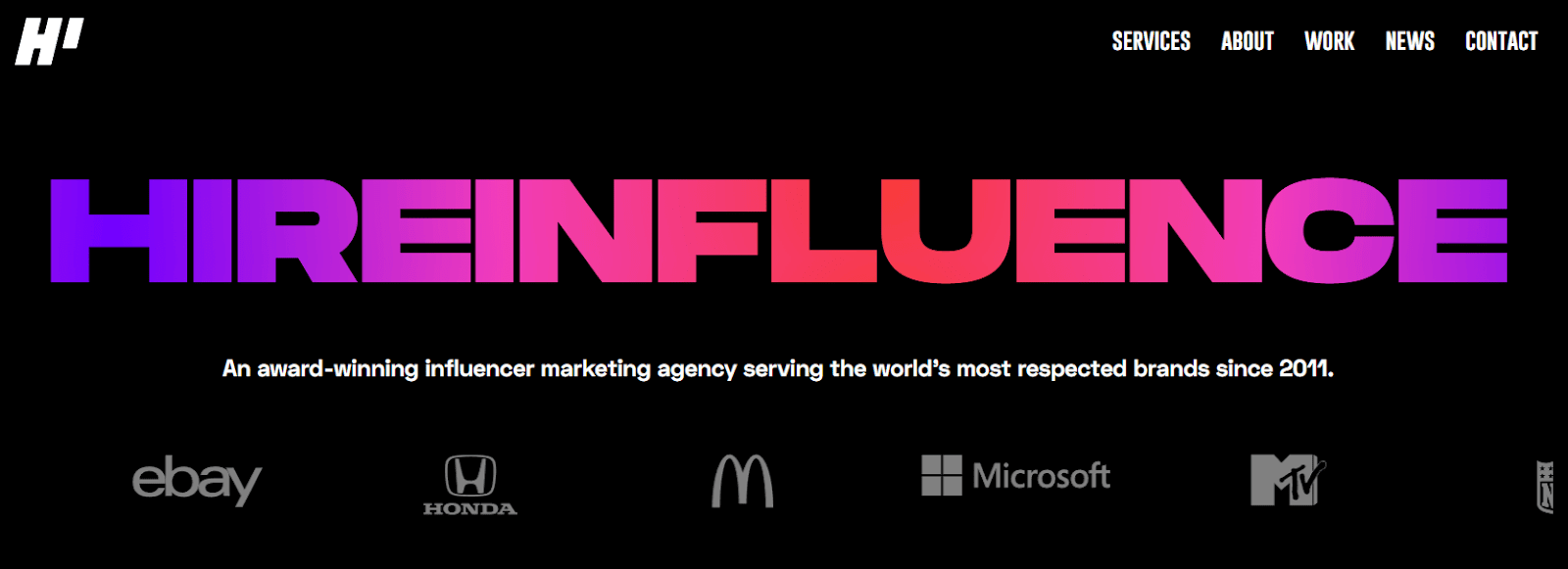
3. HireInfluence
Pricing
Custom pricing based on campaign complexity, creative requirements, and creator tier. Actual costs are highly variable, with minimum project sizes often starting at $75,000+
Best For
Brands seeking high-touch, white-glove influencer campaigns with a strong emphasis on storytelling, brand alignment, and premium creator partnerships.
Why It Stands Out:
Bespoke Campaign Strategy: Every campaign is custom-built around brand goals rather than pre-packaged influencer solutions.
Creative-Led Execution: Strong focus on campaign concepts, storytelling, and content quality.
Premium Creator Access: Works with top-tier creators across lifestyle, fashion, tech, and entertainment.
End-to-End Management: Handles influencer sourcing, negotiations, contracts, execution, and reporting.
Award-Winning Experience: Recognized for delivering polished, high-impact influencer activations.
Pros
Highly Customized Campaigns: Ideal for brands that want unique activations.
Strong Creative Direction: Excellent for branding-focused campaigns.
Experienced Team: Proven track record with major brands.
Hands-Off for Brands: Agency manages all operational aspects.
Cons
High Minimum Budgets: Not suitable for cost-conscious brands.
Less Performance-Focused: Stronger on branding than conversion-driven campaigns.
Longer Planning Timelines: Custom concepts require more preparation.
Limited Scalability for Seeding: Not designed for high-volume influencer outreach.
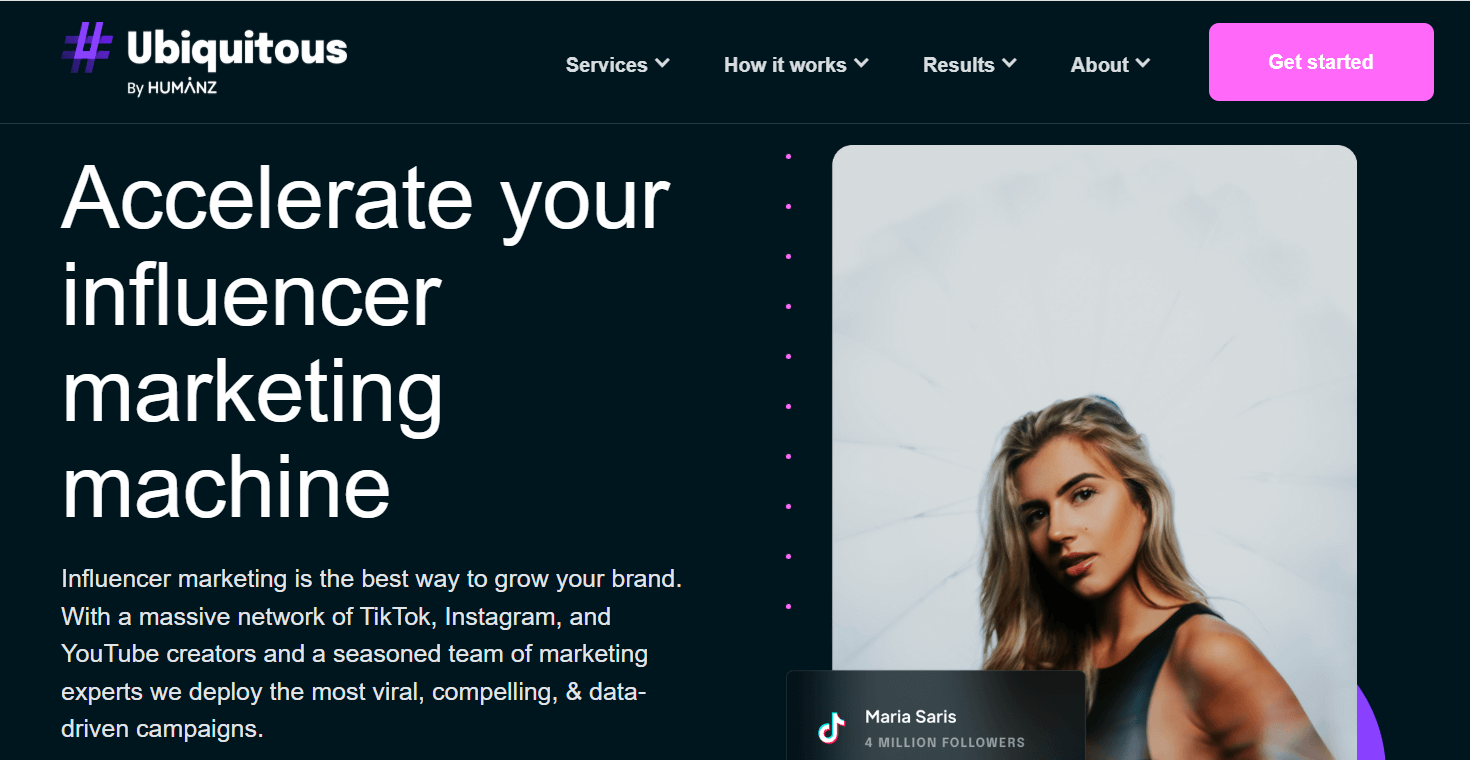
4. Ubiquitous
Pricing
Pricing varies depending on campaign scope, creator volume, and platforms. Most sources and verified reviews indicate a minimum project size of $21,000 to $25,000.
Best For
Brands looking for creator-first influencer campaigns that balance authenticity, performance, and scalable execution across multiple verticals.
Why It Stands Out:
Creator-First Philosophy: Prioritizes authentic creator partnerships over transactional influencer deals.
Cross-Industry Experience: Works across B2C, B2B, SaaS, and consumer brands.
Flexible Campaign Structures: Supports both short-term activations and long-term creator partnerships.
Data-Informed Creator Selection: Uses engagement and audience data to guide influencer selection.
Hands-On Campaign Support: Provides strategic guidance throughout campaign execution.
Pros
Strong Creator Relationships: Leads to more authentic content.
Industry-Agnostic: Works well across many niches.
Flexible Engagement Models: Suitable for different campaign goals.
Balanced Approach: Mixes creative and performance considerations.
Cons
Pricing Transparency Lacking: Costs are not publicly disclosed.
Smaller Global Footprint: Less international scale than enterprise agencies.
Limited Paid Media Services: Less emphasis on amplification.
Reporting Depth Can Vary: Analytics sophistication depends on campaign scope.
5. Influencer Hero
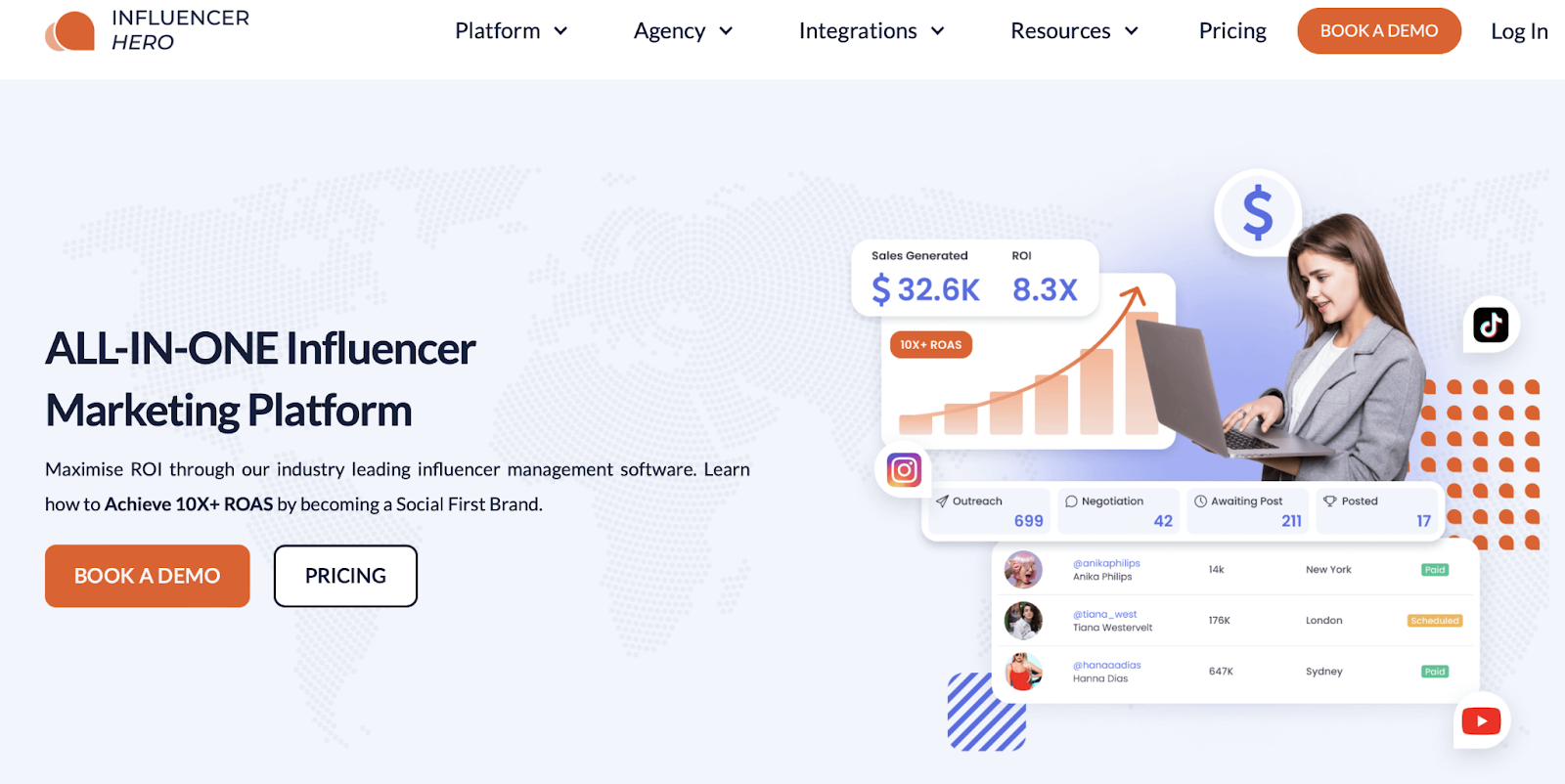
Pricing: Influencer Hero offers flexible pricing plans that grow with your brand. Each tier includes all core features, such as influencer discovery, CRM integration, and campaign analytics.
Standard: $649/month — up to 1,000 creators
Pro: $1,049/month — up to 5,000 creators
Business: $2,490/month — up to 10,000 creators
Custom & Agency: Tailored pricing based on specific brand or agency needs
Best For: Brands and agencies seeking an all-in-one influencer marketing platform designed to simplify influencer discovery, automate outreach, and track campaign performance from a single dashboard.
Why It Stands Out:
Agency + Software Hybrid Model: Combines influencer marketing services with proprietary influencer discovery, CRM, and outreach technology.
Full Influencer CRM Access: Brands retain influencer data, relationships, and performance history long-term.
Automated Outreach & Tracking: Streamlines influencer sourcing, communication, and follow-ups at scale.
Affiliate & Sales Tracking: Tracks creator-driven revenue, discount codes, and conversions in one dashboard.
Built for Scale: Ideal for brands running ongoing influencer seeding, affiliate, and performance campaigns.
Pros
Unique Hybrid Approach: Agency execution plus in-house platform access.
Data Ownership: Brands keep full control of influencer relationships.
Strong eCommerce & Affiliate Tracking: Ideal for ROI-focused campaigns.
Scales Long-Term Programs: Built for repeatable influencer growth.
Cons
Not Focused on Talent Representation: With Influencer Hero you have access to a +450M database of content creators, but the platform itself doesn’t focus on talent representation.
Requires Onboarding to Fully Leverage the Platform: Influencer Hero has a wide ecosystem of free tools, but to keep track of your campaigns you should onboard the platform.
6. The Shelf
Pricing
Typically mid-market to enterprise pricing, depending on campaign scope.
Best For
Brands looking for data-backed influencer storytelling with a consultative, strategy-first agency partner.
Why It Stands Out:
Data-Informed Creator Matching: Uses audience and engagement data to align creators with brand goals.
Higher Budget Requirements: Not ideal for small brands.
Pricing Not Transparent: Requires direct consultation.
Less Automation: More manual compared to platform-driven solutions.
Not Designed for Rapid Scaling: Slower for high-volume outreach.
7. inBeat Agency
Pricing
Growth Plan: ~$99/month (flat-rate)
Agency Plan: ~$200/month
Business Plan: ~$400/month
Best For
Brands focused on micro-influencer and UGC-driven campaigns, especially those prioritizing performance marketing, paid social testing, and content reuse.
Why It Stands Out:
Micro-Influencer Specialization: Focuses on nano and micro creators who typically deliver higher engagement and more authentic audience interactions.
UGC-First Campaigns: Produces creator content designed to be repurposed across paid ads, landing pages, and organic social channels.
Performance-Oriented Structure: Campaigns are often built around measurable outcomes like CTR, conversions, and creative testing.
Creator Vetting Process: Emphasizes audience quality, engagement authenticity, and brand fit to reduce wasted spend.
Fast Campaign Turnaround: Lean execution allows brands to launch and iterate quickly.
Pros
Strong Micro-Influencer Network: Ideal for authenticity-driven campaigns.
UGC for Paid Ads: Excellent for brands running performance marketing.
High Engagement Rates: Smaller creators often outperform macro influencers.
Efficient Creative Testing: Well-suited for testing multiple content angles.
Cons
Limited Macro-Influencer Access: Not ideal for celebrity-led campaigns.
Smaller Global Scale: Less international reach than enterprise agencies.
Not Ideal for Pure Brand Awareness: More performance-focused than branding-led.
Pricing Not Publicly Available: Requires consultation to assess fit.
8. Moburst
Pricing
Moburst pricing isn't fixed; it's project-based, starting from around $5,000/month but potentially reaching millions, with typical engagement sizes often falling between $50k-$200k
Best For
Startups and enterprise brands looking to integrate influencer marketing into a broader growth, paid media, and digital acquisition strategy.
Why It Stands Out:
Growth-Focused Approach: Influencer marketing is positioned as part of a wider performance and acquisition strategy.
Cross-Channel Execution: Combines influencer campaigns with paid media, creative strategy, and digital growth initiatives.
Performance Measurement: Strong focus on tracking outcomes rather than just content delivery.
Startup-to-Enterprise Experience: Works with both fast-growing startups and established global brands.
Strategic Creative Support: Helps guide messaging, formats, and content direction.
Pros
Performance-Oriented Execution: Ideal for growth-focused brands.
Cross-Channel Expertise: Influencer marketing doesn’t live in a silo.
Strong Analytics Mindset: Emphasis on attribution and outcomes.
Scalable Campaigns: Suitable for brands planning to grow quickly.
Cons
Not Influencer-Exclusive: Influencer marketing is part of a broader service mix.
Higher Budget Thresholds: May be costly for smaller brands.
Less Focus on Creator Relationships: More performance-led than relationship-led.
Overkill for Small Campaigns: Better suited for larger growth initiatives.
9. Obviously
Pricing
Custom pricing based on campaign scope, creator volume, and platforms.
Best For
Brands looking to execute high-volume influencer campaigns with strong operational support and consistent delivery across platforms.
Why It Stands Out:
High-Scale Campaign Execution: Designed to manage large influencer activations across multiple platforms efficiently.
Custom pricing based on campaign scope, creator volume, and platforms.
Best For
Brands looking to combine creator partnerships with paid amplification to turn influencer content into a measurable, performance-driven growth channel.
Why It Stands Out:
Large Creator Network: Connects brands with a pool of over 50,000 creators spanning micro to macro influencers across TikTok, Instagram, and YouTube.
Whitelisting & Licensing: Runs creator content through paid social channels via whitelisting, extending reach well beyond organic posting.
Performance-Driven Structure: Campaigns are built to be measured against engagement and ROI, not just content delivery.
Full-Service Management: Handles the entire process from creator discovery and vetting to campaign execution and reporting.
Cross-Platform Flexibility: Supports both micro-influencer seeding and larger-scale brand partnerships depending on campaign goals.
Wide Creator Pool: Access to a large, varied network of micro-to-macro influencers.
ROI-Focused: Built around measurable outcomes rather than vanity metrics.
End-to-End Execution: Reduces the operational lift required from in-house teams.
Cons
Pricing Not Publicly Available: Requires direct consultation to assess cost.
Newer Market Presence: Smaller public track record compared to more established enterprise agencies on this list.
Best Results Require Paid Budget: Whitelisting/amplification component works best when paired with ad spend, not just organic seeding.
Final Thoughts on the Top 10 Best Influencer Marketing Agencies
The best influencer marketing agency depends on your brand’s size, budget, and campaign goals. Enterprise brands running large, global activations may lean toward agencies like Viral Nation or HireInfluence, which specialize in high-touch execution, brand safety, and premium creator partnerships. Mid-sized brands often find a strong fit with agencies such as The Influencer Marketing Factory or Ubiquitous, which balance performance, creativity, and scalability.
For brands that want to move faster and keep tighter control over their creator programs, Influencer Hero stands out. Its hybrid approach combines agency-led execution with an in-house platform for influencer discovery, outreach, CRM, and ROI tracking.
Ultimately, there’s no one-size-fits-all solution. The right choice comes down to how much control, scalability, and performance visibility your brand needs as influencer marketing becomes a core growth channel.
FAQs
Which influencer marketing agency is right for my brand?
It depends on your budget, campaign size, and goals—enterprise brands often need full-service agencies, while growth-focused brands may benefit from hybrid or performance-driven partners.
What’s the best option for DTC and eCommerce brands?
Agencies that combine execution with performance tracking and affiliate attribution—like Influencer Hero—tend to work best for eCommerce.
Which agencies suit large enterprises?
Viral Nation and HireInfluence are strong options for global, high-budget campaigns with strict brand safety requirements.
Do influencer marketing agencies handle everything for you?
Most full-service agencies manage strategy, creator sourcing, contracts, and reporting, while hybrid models allow brands to stay more hands-on.
Are influencer marketing agencies worth the cost?
When campaigns are run consistently and measured properly, agencies can reduce trial and error and turn influencer marketing into a predictable growth channel.
Related Posts
The incredible power of team collaboration is evident in the remarkable outcomes it can achieve
Influur pricing explained: no brand subscription, pay-as-you-go fees, real pros and cons, and our verdict on whether this creator marketplace is worth it in 2026.
Tagbox looks cheap at $19/month — but the feature most brands actually need is hidden behind an Enterprise quote. Here's the full pricing breakdown and our honest verdict.
Build your own business without having to manage all the operational aspects of an e-commerce. Focus on creating content, driving sales and maximise your earnings!


%201.png)


.svg)




_logo.svg.png)


