Best Influencer Marketing Software for Online Stores
If you’re running an online store, influencer marketing isn’t just about finding creators—it’s about driving measurable sales. The right software should connect directly to your store data, helping you manage creators, track performance, and understand which partnerships are actually generating revenue. Without that connection, you’re left piecing together results across multiple tools.
This is where online store integrations become critical. Features like syncing orders, generating discount codes, tracking affiliate links, and attributing revenue to specific creators are what turn influencer campaigns into a scalable growth channel. Without these capabilities, it’s difficult to measure ROI or manage campaigns efficiently, especially as you grow.
This guide compares the best influencer marketing software for online stores, focusing on platforms that support these workflows so you can choose based on how your business actually operates.
What to Look For in Influencer Marketing Software
Influencer marketing tools are designed with different priorities in mind. Some are built for discovering creators, others for managing campaigns, and some focus mainly on affiliate tracking and performance. The right platform depends on how your team operates and what you expect from your influencer program.
Creator Discovery & Audience Insights
Some platforms are built around helping you identify creators that match your brand. These tools typically offer large databases, advanced filters, and audience analytics to evaluate fit before outreach. This is especially useful for teams that need to source creators consistently across different campaigns.
Outreach & Relationship Management
Platforms with CRM capabilities help you organize communication and maintain long-term creator relationships. Features like email sequencing, contact history, and campaign tracking make it easier to manage multiple collaborations at once. This becomes more important as your program scales beyond one-off partnerships.
Online Store Integration & Revenue Tracking
For eCommerce brands, the ability to connect influencer activity directly to store performance is key. This includes syncing orders, generating discount codes, tracking affiliate links, and attributing revenue to individual creators. Platforms that support this are better suited for teams focused on measurable ROI rather than just content output.
Multi-Platform & Social Channel Coverage
Not all tools support the same social platforms. Some focus heavily on Instagram, while others include TikTok, YouTube, or even Pinterest. If your strategy spans multiple channels, it’s important to choose a platform that gives you visibility and tracking across the platforms where your audience is most active.
Automation & Workflow Efficiency
Managing influencer campaigns can quickly become time-consuming without the right systems in place. Platforms that offer automation for outreach, campaign management, and reporting can reduce manual work and improve consistency. This is particularly valuable for lean teams or brands managing a high volume of creators.
Best Influencer Marketing Software for Online Stores (Top Picks)
Choosing the best influencer marketing software for online stores depends on how you manage creators, track performance, and connect campaigns to revenue. Some platforms focus on discovery, while others are built to handle the full workflow from outreach to sales tracking. Below, we break down the top options based on how they support real eCommerce operations.
1. Influencer Hero – Best for End-to-End Influencer Management
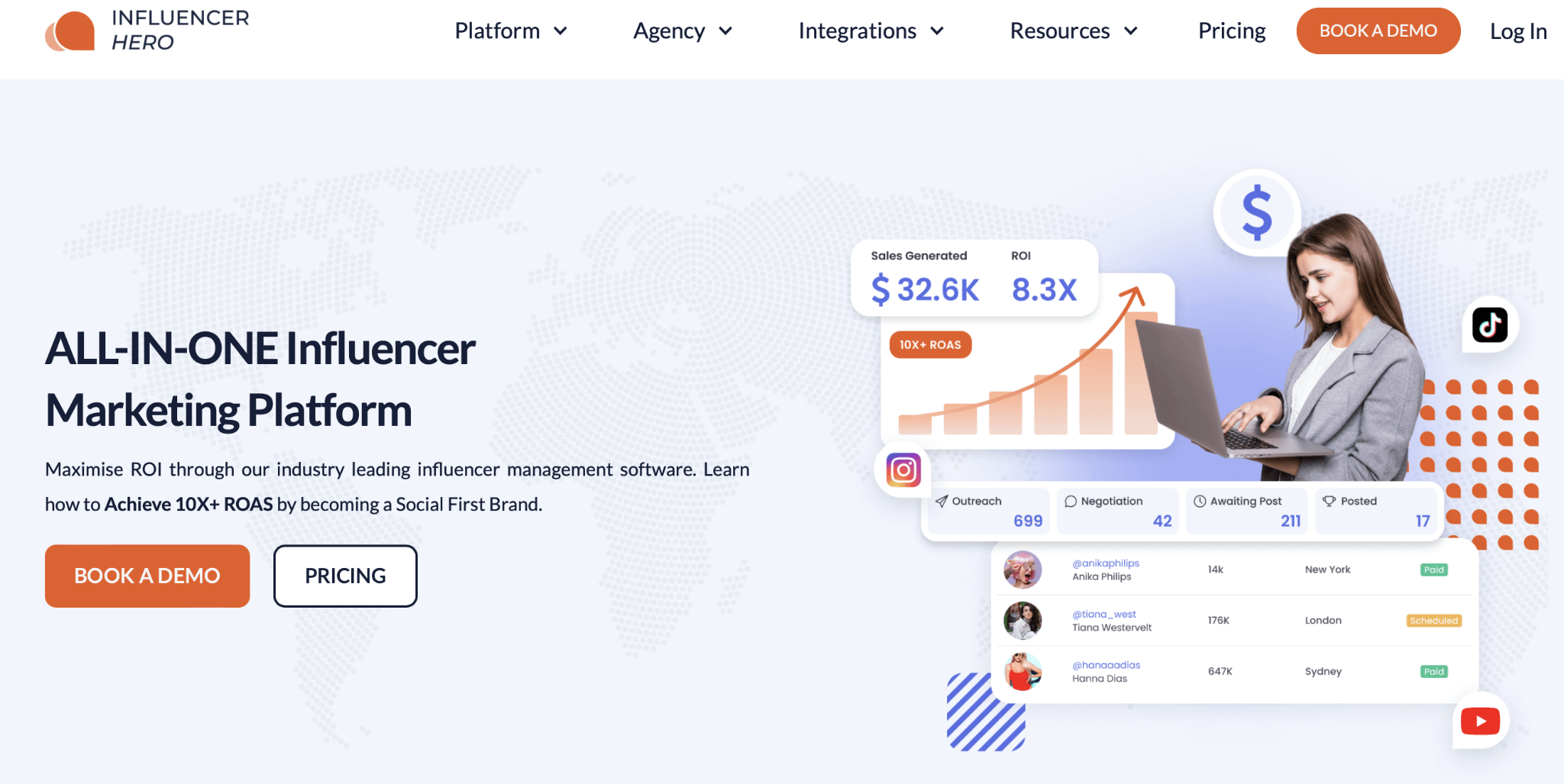
Influencer Hero is an all-in-one influencer marketing platform designed for eCommerce brands that want to manage the full lifecycle of influencer campaigns in one place.
It combines creator discovery, outreach, gifting, and affiliate tracking with direct online store integrations. This makes it particularly suited for DTC brands focused on measuring performance and scaling campaigns efficiently.
What Makes Influencer Hero Great for Online Stores
Influencer Hero is built to connect influencer activity directly to store performance, allowing brands to manage campaigns and track revenue without relying on multiple tools.
Native Online Store Integration: Influencer Hero connects directly with platforms like Shopify and WooCommerce to sync orders, discount codes, and affiliate data. This allows brands to track creator-driven revenue without exporting data or using separate systems.
Centralized Campaign & CRM Management: The platform organizes influencer relationships, outreach, and campaign workflows inside a single CRM. This helps teams manage communication, track progress, and maintain long-term creator relationships without fragmentation.
Automated Gifting & Product Seeding: Brands can send products to creators directly through their connected store. Shipping status and gifting history are tracked alongside campaign performance, keeping operations aligned.
Affiliate & Discount Code Tracking: Unique links and promo codes can be generated and assigned to each creator. Sales and conversions are automatically attributed, making it easier to measure ROI and manage payouts.
Bulk Outreach & Workflow Automation: Influencer Hero supports large-scale outreach through automated email sequences and templates. This allows teams to contact thousands of creators while maintaining structured workflows.
Pros
All-in-one platform covering discovery, outreach, gifting, and tracking
Strong integration with online stores for accurate revenue attribution
Designed for scalable, structured influencer programs
Cons
Initial setup may require onboarding to configure workflows properly
May offer more features than needed for very small or early-stage teams
2. Modash – Best for Data-Driven Influencer Discovery
Modash is a discovery-focused platform built for brands that prioritize finding and evaluating creators using performance data. It’s commonly used by teams that want to validate influencer quality before launching campaigns, rather than relying on marketplace-style sourcing.
What Makes Modash Great for Online Stores
Modash helps brands identify high-quality creators and connect their performance to store-level results through tracking tools.
Large Creator Database: Modash provides access to a large global pool of creators without requiring opt-in. This allows brands to explore a wider range of potential partners across niches.
Advanced Audience Analytics: The platform offers detailed insights into audience demographics and engagement quality. This helps brands assess whether a creator aligns with their target customer profile.
Conversion Tracking Integration: Affiliate links and tracking tools connect influencer activity to store conversions. This allows teams to measure which creators are actually driving revenue.
Visual Search Capabilities: Brands can search creators based on content style and imagery. This is useful for aligning influencer output with product positioning and branding.
Lightweight Campaign Tools: Modash includes basic outreach and campaign tracking features. This supports smaller teams that need execution without a full CRM system.
Pros
Strong discovery and analytics capabilities
Easy-to-use interface with fast filtering
Transparent and flexible pricing
Cons
Limited CRM and automation features
Not built for complex campaign workflows
Gifting and fulfillment require external tools
3. Aspire – Best for Ambassador & Inbound Creator Programs
Aspire is designed for brands that want to build long-term creator relationships through structured campaigns and inbound applications. It combines influencer discovery with a marketplace model where creators can apply directly to collaborate.
What Makes Aspire Great for Online Stores
Aspire supports campaigns that combine product seeding, affiliate tracking, and inbound creator sourcing in one workflow.
Inbound Creator Marketplace: Creators can apply directly to brand campaigns. This helps brands scale creator acquisition without relying only on outbound outreach.
Product Sync for Campaigns: Products from your online store can be added to campaigns. This keeps gifting and fulfillment aligned with influencer activity.
Affiliate & Discount Tracking: Each creator can be assigned unique links or promo codes. Store conversions are tracked to measure campaign performance.
Content Approval Workflows: The platform includes structured review and approval processes. This is useful for brands repurposing influencer content across channels.
Campaign Lifecycle Management: Aspire organizes creators through different stages of a campaign. This improves visibility into progress and performance.
Pros
Strong for building long-term ambassador programs
Combines inbound and outbound sourcing
Structured campaign workflows
Cons
Pricing increases with scale
Requires onboarding to fully utilize features
Less automation for outreach compared to CRM-heavy tools
4. Afluencer – Best for Marketplace-Style Influencer Collaborations
Afluencer is a marketplace-based influencer marketing platform that connects brands and creators through direct applications. It’s designed for smaller eCommerce brands that want to find and collaborate with influencers without managing complex workflows or systems.
What Makes Afluencer Great for Online Stores
Afluencer focuses on simplifying influencer collaborations by combining discovery and campaign management into a marketplace-style experience.
Marketplace-Based Creator Discovery: Brands can post collaboration opportunities and receive applications from influencers. This reduces the need for manual outreach and speeds up creator sourcing.
Shopify Integration Support: Afluencer offers integration options for Shopify-based stores. This helps connect influencer collaborations with store operations and basic tracking.
Affiliate & Discount Code Tracking: Brands can assign promo codes and affiliate links to creators. Sales generated through these are tracked to measure campaign performance.
Simple Collaboration Management: Campaigns are managed through a centralized dashboard with status tracking. This keeps communication and execution organized without complex workflows.
Profile-Based Creator Evaluation: Influencers create detailed profiles including audience and niche information. This helps brands assess fit before approving collaborations.
Pros
Easy to use and beginner-friendly
No complex setup or onboarding required
Good entry point for small online stores
Cons
Limited automation and CRM capabilities
Not built for large-scale influencer programs
Tracking and reporting are relatively basic
5. GRIN – Best for Large-Scale Product Seeding & Creator Management
GRIN is an influencer marketing platform focused on managing high-volume creator relationships and product gifting workflows. It’s widely used by eCommerce brands running ongoing seeding campaigns and structured ambassador programs.
What Makes GRIN Great for Online Stores
GRIN is built to connect influencer campaigns with product fulfillment and long-term creator management.
Product Seeding Integration: GRIN allows brands to pull products directly from their store and send them to creators. This keeps gifting and inventory aligned with campaign execution.
Affiliate & Discount Code Tracking: Unique links and promo codes can be assigned to each creator. Store transactions are tracked back to individual influencers for performance visibility.
Creator Relationship Management: The platform supports managing long-term influencer relationships. This is useful for brands building ambassador programs or repeat collaborations.
Content Library & Media Rights Management: GRIN includes tools for storing and organizing influencer-generated content. This helps brands reuse content across marketing channels.
Integrated Creator Payments: Payments can be managed directly within the platform. This simplifies compensation for brands working with a large number of creators.
Pros
Strong product seeding and fulfillment workflows
Built for managing large creator networks
Includes content management and payment tools
Cons
Requires annual contract commitment
Higher pricing compared to many platforms
Can be complex for smaller teams to use
6. Impact.com – Best for Affiliate-Driven Influencer Programs
Impact.com is a partnership platform that combines affiliate marketing and influencer collaborations in one system. It’s commonly used by brands treating influencers as part of a broader performance channel.
What Makes Impact.com Great for Online Stores
Impact.com focuses on tracking and managing revenue-driven partnerships tied directly to store performance.
Affiliate-Based Influencer Tracking: Influencers are managed as partners with trackable links. This allows brands to measure results based on actual sales.
Automated Commission Management: The platform calculates and processes payouts automatically. This reduces manual workload for large programs.
Store Integration for Revenue Attribution: Impact.com connects directly to online store data. This enables detailed tracking of conversions and revenue.
Multi-Channel Partnership Management: Brands can manage affiliates and influencers together. This centralizes performance tracking across acquisition channels.
Advanced Attribution Modeling: The platform provides insights into how different touchpoints contribute to conversions. This helps understand the role of influencers in the funnel.
Pros
Strong affiliate and revenue tracking
Scales well for large programs
Centralized partner management
Cons
Limited influencer discovery features
Complex setup and implementation
Less suited for smaller teams
7. Refersion – Best for Affiliate-First Influencer Tracking
Refersion is an affiliate marketing platform often used by online stores to manage influencer partnerships through referral tracking. It focuses on commission-based collaborations rather than full influencer campaign management.
What Makes Refersion Great for Online Stores
Refersion is designed to track referral sales and automate commissions directly through your store.
Direct Store Integration: Refersion connects with platforms like Shopify and WooCommerce. Orders are automatically attributed to the correct affiliate.
Commission Automation: The platform calculates commissions based on transactions. This simplifies payout management for influencer programs.
Affiliate Portal for Creators: Influencers can track their own performance and earnings. This improves transparency and reduces reporting requests.
Coupon Code Attribution: Unique promo codes can be assigned to each influencer. Sales are tracked directly through these codes.
Performance Reporting Dashboard: Refersion provides insights into clicks, conversions, and revenue. This supports performance-based decision making.
Pros
Easy to set up and use
Strong affiliate tracking capabilities
Flexible pricing for smaller brands
Cons
No influencer discovery tools
Limited campaign management features
Not suited for full influencer CRM workflows
How to Choose the Right Influencer Marketing Software
The right platform depends on your goals, how you manage workflows, and how much you need to scale.
Want an all-in-one platform with store integration and revenue tracking → Influencer Hero
Prioritize data-driven influencer discovery and analytics → Modash
Building ambassador programs with inbound creator applications → Aspire
Managing large-scale product seeding and creator relationships → GRIN
Looking for a simple marketplace to connect with influencers → Afluencer
Running affiliate-driven influencer programs at scale → Impact.com
Prefer a simple marketplace to connect with creators → Refersion
Key Takeaways
Influencer marketing software varies widely in how it supports discovery, campaign execution, and performance tracking. Some platforms focus on sourcing creators, while others are built to manage full workflows or connect influencer activity directly to revenue.
The right choice depends on where you are today—simpler tools may be enough when testing collaborations, while more advanced platforms become important as you scale campaigns and track performance more closely.
If you’re also exploring ways to turn creators into direct sales channels through storefronts, platforms like Creator Hero offer a different approach focused on monetization and performance tracking beyond traditional influencer workflows.
FAQs
What is the best influencer marketing software for online stores?
The best platform depends on your goals. Some tools focus on discovery (like Modash), others on affiliate tracking (like Impact.com or Refersion), while all-in-one platforms like Influencer Hero combine outreach, gifting, and revenue tracking in a single system.
Do I need influencer marketing software if I already run an online store?
If you’re managing more than a few creators, software becomes important for tracking performance and staying organized. It helps automate outreach, manage relationships, and connect influencer activity directly to sales through your store.
How do influencer marketing platforms track sales from creators?
Most platforms use affiliate links, discount codes, or direct integrations with your online store to track conversions. Tools like Influencer Hero, Impact.com, and Refersion connect these actions to actual orders, allowing you to measure revenue and ROI.
What features should I prioritize when choosing a platform for online stores?
Key features include store integration, affiliate tracking, campaign management, and reporting. If your goal is revenue, platforms that connect directly to your store and provide clear attribution—like Influencer Hero—are typically more useful than discovery-only tools.
What are some alternatives to traditional influencer marketing platforms?
In addition to standard influencer tools, some platforms focus more on monetization and creator-driven sales. For example, Creator Hero allows brands to turn creators into storefront-driven revenue channels, offering a different approach compared to traditional campaign-based platforms like Aspire or GRIN.
Related Posts
The incredible power of team collaboration is evident in the remarkable outcomes it can achieve
Influur pricing explained: no brand subscription, pay-as-you-go fees, real pros and cons, and our verdict on whether this creator marketplace is worth it in 2026.
Tagbox looks cheap at $19/month — but the feature most brands actually need is hidden behind an Enterprise quote. Here's the full pricing breakdown and our honest verdict.
Build your own business without having to manage all the operational aspects of an e-commerce. Focus on creating content, driving sales and maximise your earnings!


%201.png)


.svg)







_logo.svg.png)


