Best Influencer Marketing Software for Marketplaces
Influencer marketing software has become a core part of how brands manage creator partnerships, but many teams now need more than just discovery and outreach. As marketplaces play a bigger role in eCommerce, there’s a growing need to connect influencer activity directly to product sales, affiliate links, and measurable revenue.
While there are many strong influencer marketing platforms available, not all are built to support marketplace-style workflows or performance tracking tied to actual transactions.
This guide focuses on the tools that do, helping you understand how they differ and which one fits your setup depending on how you manage creators, campaigns, and revenue attribution.
What to Look For in Influencer Marketing Software
Influencer marketing platforms vary widely in what they’re built to do. Some focus on discovery, others on managing campaigns, and a smaller group prioritizes affiliate tracking and revenue attribution. The right choice depends on your goals, how you run campaigns, and how closely you need to connect influencer activity to marketplace performance.
Influencer Discovery & Data Quality
Discovery is a core feature in most platforms, but the depth and reliability of data can differ. Some tools provide large databases with detailed audience filters, while others focus on smaller, opt-in creator networks. This matters most when you’re actively sourcing new creators at scale.
Outreach & Relationship Management (CRM)
Platforms with built-in outreach and CRM features help organize communication, track conversations, and manage long-term creator relationships. This is especially useful for teams running ongoing campaigns or working with repeat creators, rather than one-off collaborations.
Campaign & Workflow Management
All-in-one platforms often include structured workflows for managing campaigns, from creator approval to content delivery. These features help teams stay organized as campaigns grow, but may be less critical for brands running smaller or more flexible influencer programs.
Affiliate Tracking & Revenue Attribution
Some platforms go beyond engagement metrics and allow you to track clicks, conversions, and sales tied to individual creators. This is particularly important if your goal is to measure performance through affiliate links, discount codes, or marketplace transactions.
Ease of Use & Scalability
User experience can vary significantly depending on how complex the platform is. Simpler tools are easier to adopt for smaller teams, while more advanced platforms offer deeper functionality but may require onboarding and setup. Choosing the right balance depends on how quickly you need to launch and how much you plan to scale.
Best Influencer Marketing Software for Marketplaces (Top Picks)
Not all influencer marketing tools are built to support marketplace-driven workflows. While many platforms focus on discovery or campaign management, fewer are designed to connect creator activity directly to sales, affiliate performance, and product-level tracking. Below are the platforms that stand out when evaluating the best influencer marketing software for marketplaces, starting with one of the most complete all-in-one solutions.
1. Influencer Hero – Best for all-in-one influencer and affiliate management
Influencer Hero is an all-in-one influencer marketing platform that combines discovery, outreach, CRM, gifting tools, and affiliate tracking in a single system. It’s designed for eCommerce teams that want to manage creator relationships while also tracking performance tied to revenue.
The platform is best suited for brands running structured influencer programs where operational efficiency and visibility across campaigns and sales are key.
What Makes Influencer Hero Great for Marketplaces
Influencer Hero is built to centralize influencer operations while connecting creator activity to measurable outcomes, which is especially relevant for brands using marketplace features.
Centralized influencer CRM: All creator data, conversations, and campaign history are stored in one place, making it easier to manage relationships at scale. This reduces the need for external tools and keeps teams aligned across campaigns.
End-to-end workflow automation: The platform supports automated outreach, follow-ups, and campaign stage management through rule-based workflows. This helps teams handle large volumes of creators without increasing manual work.
Affiliate tracking and revenue attribution: Influencer Hero allows brands to generate trackable links and discount codes tied to individual creators. This makes it easier to connect influencer activity to conversions and sales across marketplace environments.
Product seeding and gifting management: Brands can manage product shipments, track delivery status, and monitor participation within the same system. This simplifies logistics for campaigns that rely on sending products to creators.
Performance reporting and visibility: Campaign performance, including clicks, conversions, and revenue, is tracked in a unified dashboard. This gives teams a clearer view of which creators and campaigns are driving results.
Pros
All-in-one influencer marketing platform
Strong for end-to-end workflows
Built for scaling structured influencer programs
Cons
Initial setup may require onboarding for full workflow customization
More features than needed for very small or early-stage programs
2. Heepsy – Best for influencer discovery and outreach at scale
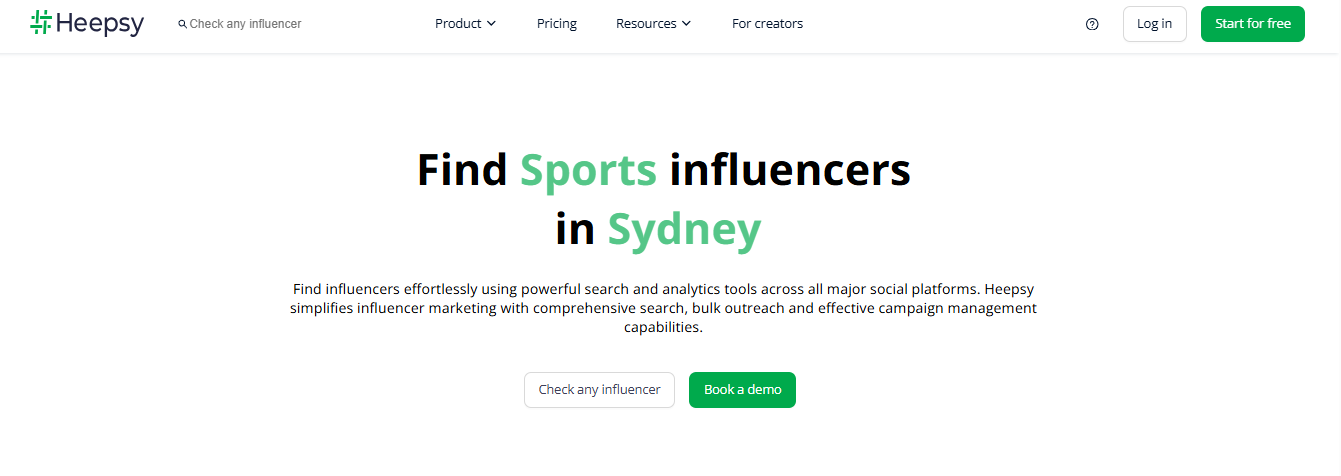
Heepsy is an influencer marketing platform focused on helping brands find and contact creators efficiently. It offers a large database with filtering tools and basic campaign tracking, making it suitable for teams prioritizing creator sourcing and outreach.
It’s best suited for small to mid-sized brands that want to build influencer pipelines quickly and manage outreach without complex workflows.
What Makes Heepsy Great for Marketplaces
Heepsy supports marketplace-related workflows by helping brands recruit creators and connect collaborations to trackable promotions like discount codes and links.
Advanced influencer search filters: Heepsy provides detailed filters based on audience demographics, engagement, and niche. This helps brands find creators aligned with specific products or marketplace categories.
Bulk outreach capabilities: The platform allows sending outreach messages at scale using templates and follow-ups. This is useful for marketplace strategies that rely on activating a large number of creators.
Audience quality analysis: Heepsy includes tools to estimate fake followers and audience authenticity. This helps reduce risk when selecting creators for performance-driven campaigns.
Basic campaign tracking: Campaigns can be tracked through a visual pipeline, helping teams monitor progress across different creator stages. This adds structure to otherwise manual workflows.
Sales tracking (advanced plans): Higher-tier plans allow tracking links and discount codes tied to influencer activity. This enables basic visibility into marketplace-related conversions.
Pros
Strong influencer discovery capabilities
Easy-to-use interface for outreach
Flexible pricing without long-term contracts
Cons
Limited automation compared to all-in-one platforms
Advanced tracking features restricted to higher plans
Less suited for complex or large-scale workflows
3. Aspire – Best for structured campaign workflows and creator applications
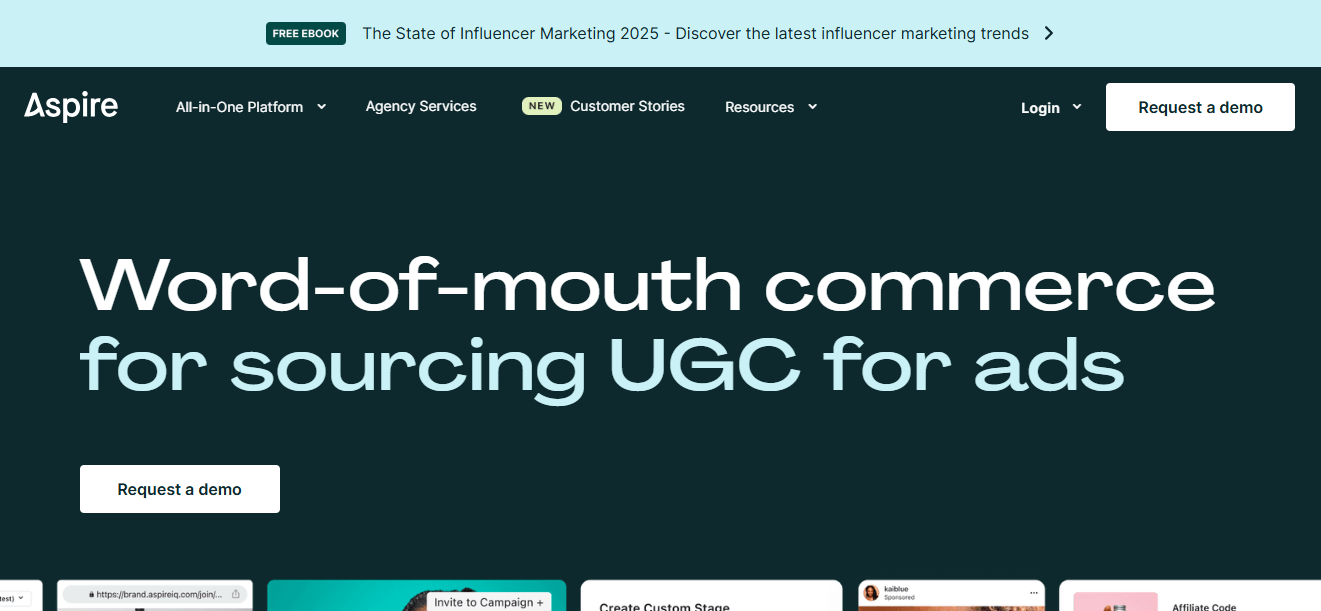
Aspire is a full-suite influencer marketing platform that focuses on managing the entire creator lifecycle. It combines discovery, inbound applications, product seeding, and campaign tracking in one system.
It’s best suited for brands running structured influencer programs that rely on repeat campaigns and ongoing creator recruitment.
What Makes Aspire Great for Marketplaces
Aspire supports marketplace workflows by connecting creator recruitment, product selection, and performance tracking into a unified campaign structure.
Inbound creator marketplace: Brands can publish campaigns where creators apply directly. This reduces reliance on outbound outreach and helps maintain a steady pipeline of creators.
Product catalog integration: Creators can select products from connected catalogs under brand-defined rules. This streamlines product seeding for marketplace-driven campaigns.
Campaign workflow automation: Aspire automates stages like invitations, approvals, and follow-ups. This helps teams manage complex campaigns with multiple creators and deliverables.
Affiliate tracking and attribution: The platform supports tracking through links, discount codes, and creator storefront-style experiences. This enables measurement of conversions tied to marketplace promotions.
Content management and reuse: All creator content is stored in a centralized library with usage rights tracking. This helps brands reuse assets across marketplace listings and ads.
Good balance between campaign management and tracking
Cons
Higher pricing compared to simpler tools
Requires onboarding for full use of features
Payment workflows less centralized
4. Captiv8 – Best for advanced analytics and enterprise reporting
Captiv8 is an enterprise-level influencer marketing platform focused on analytics, reporting, and competitive intelligence. It supports large-scale campaigns with customizable dashboards and deep performance insights.
It’s best suited for large teams that need detailed reporting and data-driven decision-making across influencer programs.
What Makes Captiv8 Great for Marketplaces
Captiv8 supports marketplace-related strategies by providing deeper visibility into creator performance and campaign outcomes.
Advanced performance analytics: The platform tracks metrics like conversions, engagement, and ROI-style performance indicators. This helps brands evaluate the impact of influencer campaigns on marketplace sales.
Customizable reporting dashboards: Reports can be tailored to business KPIs and exported for internal use. This supports structured reporting for marketplace-driven campaigns.
Competitive creator insights: Captiv8 identifies creators working with competitors and tracks their performance. This helps brands refine partnership strategies based on proven results.
Global content and mention tracking: The platform scans content across platforms to identify brand mentions and trends. This expands discovery beyond traditional search filters.
Collaboration across teams: Multiple stakeholders can review and approve creators within the platform. This is useful for large organizations managing complex campaigns.
Pros
Strong analytics and reporting capabilities
Useful competitive intelligence features
Built for large-scale, multi-team operations
Cons
High cost with annual contracts
Complex interface for new users
Additional cost for advanced commerce features
5. Afluencer – Best for simple influencer recruitment
Afluencer is a lightweight platform designed to connect brands with creators through collaboration listings. It focuses on matchmaking rather than full campaign management.
It’s best suited for early-stage brands looking to recruit influencers quickly without complex workflows.
What Makes Afluencer Great for Marketplaces
Afluencer supports marketplace workflows by simplifying how brands find creators for product promotion and affiliate-style collaborations.
Collab-based recruitment model: Brands post collaboration offers and creators apply directly. This makes it easier to source creators without manual outreach.
Flexible collaboration types: Campaigns can include gifting, affiliate, or paid partnerships. This allows brands to test different marketplace promotion strategies.
Direct creator communication: Brands can message and negotiate with creators within the platform. This centralizes early-stage collaboration discussions.
Verified creator profiles: Creators join the platform voluntarily, which improves profile reliability. This reduces risk when selecting partners.
Basic Shopify integration: Afluencer connects with Shopify to support affiliate-style collaborations. This helps link creator activity to marketplace promotions.
Pros
Simple and easy to use
Low-cost entry point
Good for testing influencer collaborations
Cons
Limited automation and campaign management
Minimal performance tracking
Not suited for scaling large programs
6. Insense – Best for UGC-driven marketplace campaigns
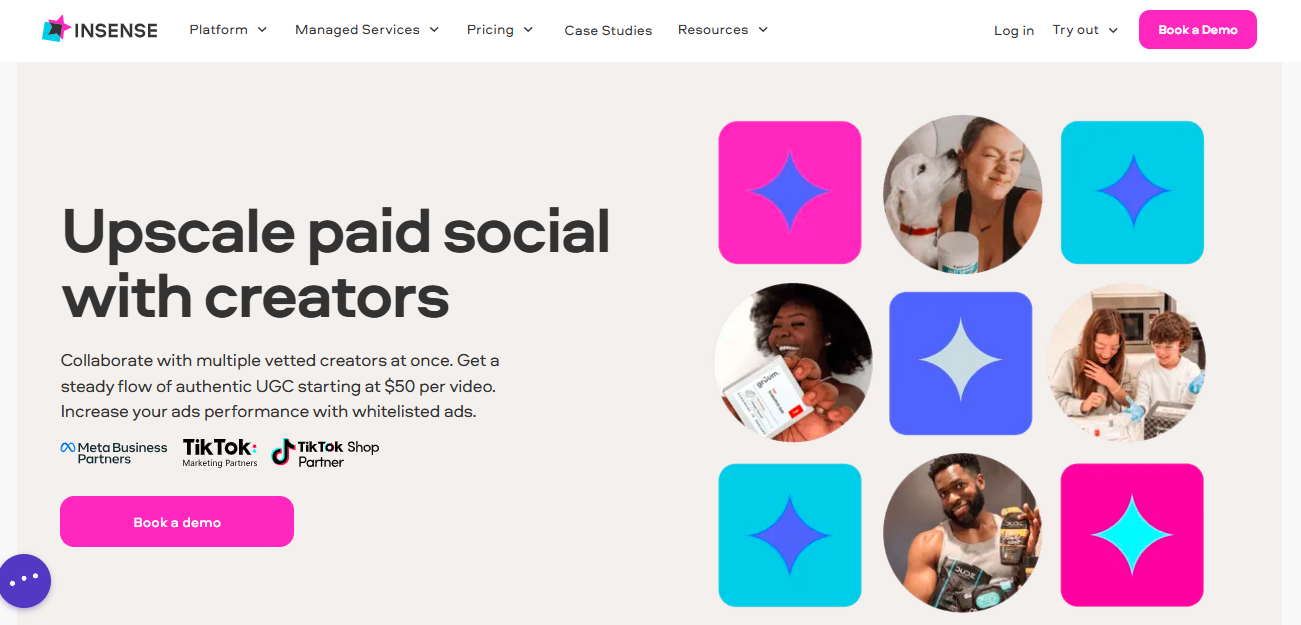
Insense is a creator marketplace focused on producing user-generated content (UGC) through structured campaign workflows. It combines creator sourcing with content approvals and deliverable management.
It’s best suited for brands prioritizing content production for ads, listings, and marketplace assets.
What Makes Insense Great for Marketplaces
Insense supports marketplace strategies by helping brands generate and manage creator content tied to product promotion.
Application-based creator sourcing: Brands launch campaigns and receive creator applications. This creates a consistent pipeline for marketplace-focused content production.
Content approval workflows: Creators submit drafts that brands can review and request revisions on. This ensures content aligns with product and listing requirements.
Flexible content deliverables: Brands can request specific formats like unboxings or testimonials. This supports content needs for marketplace listings and ads.
Product seeding support: The platform helps coordinate product shipments to creators. This simplifies logistics for UGC campaigns tied to physical products.
Centralized content library: All creator content is stored in one place for reuse. This makes it easier to repurpose assets across different channels.
Pros
Strong focus on UGC creation
Structured content approval workflows
Easy to launch campaigns quickly
Cons
Limited outreach capabilities
Basic reporting compared to other platforms
Requires external tools for deeper analytics
7. Modash – Best for affiliate-driven influencer programs
Modash is a data-driven influencer marketing platform focused on discovery, outreach, and affiliate tracking. It emphasizes measurable performance through links, codes, and conversion tracking.
It’s best suited for brands running affiliate-heavy influencer programs where revenue tracking is a priority.
What Makes Modash Great for Marketplaces
Modash supports marketplace workflows by connecting influencer activity directly to tracked sales and performance data.
Large public creator database: Modash has one of the best influencer databases, as it provides access to a wide pool of creators without opt-in limitations. This helps brands scale discovery across different markets and niches.
Affiliate tracking via Shopify: The platform connects links and discount codes to Shopify data. This enables tracking of conversions and revenue tied to each creator.
Bulk outreach workflows: Brands can send outreach messages at scale using templates. This supports affiliate programs that require volume to succeed.
Audience and performance analysis: Modash includes metrics on engagement, demographics, and audience quality. This helps brands select creators more effectively.
Commission and payout management: The platform supports commission setup and tracks creator earnings. This simplifies affiliate program operations tied to marketplace sales.
Pros
Strong affiliate tracking capabilities
Large creator database
Efficient discovery and outreach workflows
Cons
Limited integrations outside Shopify
No built-in content licensing tools
Fewer features for campaign management
How to Choose the Right Influencer Marketing Software
The right influencer marketing software for your brand depends on your goals, how you run campaigns, and how much you need to scale.
Want an all-in-one platform for managing campaigns and tracking revenue → Influencer Hero
Focus on influencer discovery and outreach at scale → Heepsy
Prefer structured campaigns with inbound creator applications → Aspire
Need advanced analytics and enterprise-level reporting → Captiv8
Looking for a simple way to recruit creators → Afluencer
Prioritize UGC creation and content workflows → Insense
Influencer marketing platforms differ based on what they prioritize—some focus on discovery, others on campaign management, and a smaller group on affiliate tracking and revenue attribution.
The right choice depends on your stage and how you operate. Simpler tools can work well for testing and early campaigns, while more advanced platforms are better suited for scaling structured programs tied to measurable outcomes.
If you’re specifically exploring ways to connect creators to storefronts and turn influencer activity into direct revenue channels, it may be worth looking into platforms like Creator Hero as part of your evaluation.
FAQs
What is the best influencer marketing software for marketplaces?
The best influencer marketing software for marketplaces depends on your goals. All-in-one platforms like Influencer Hero are designed to connect influencer campaigns directly to sales through affiliate links and tracking, while tools like Modash focus more on affiliate-driven programs and Heepsy on discovery and outreach.
Do all influencer marketing platforms support marketplace integrations?
No, not all platforms are built for marketplace workflows. Many tools focus on influencer discovery or campaign management but rely on external systems for tracking sales. Platforms like Influencer Hero and Modash offer stronger support for connecting influencer activity to marketplace transactions.
How do influencer marketing tools track sales from creators?
Most platforms use trackable links, discount codes, or integrations with eCommerce systems to attribute sales to specific creators. This allows brands to measure conversions and revenue generated through influencer campaigns, which is especially important for marketplace-driven strategies.
Which platform is best for affiliate-based influencer marketing?
Platforms like Modash and Influencer Hero are commonly used for affiliate-focused programs, as they support link tracking, commission setups, and performance reporting. The best choice depends on whether you need a dedicated affiliate workflow or a broader all-in-one system.
Are there alternatives to Influencer Hero for marketplace-focused influencer marketing?
Yes, alternatives include Aspire for structured campaign workflows, Modash for affiliate-heavy programs, and Insense for UGC-driven campaigns. However, not all alternatives offer the same level of centralized tracking and workflow management for marketplace-based strategies.
Related Posts
The incredible power of team collaboration is evident in the remarkable outcomes it can achieve
Influur pricing explained: no brand subscription, pay-as-you-go fees, real pros and cons, and our verdict on whether this creator marketplace is worth it in 2026.
Tagbox looks cheap at $19/month — but the feature most brands actually need is hidden behind an Enterprise quote. Here's the full pricing breakdown and our honest verdict.
Build your own business without having to manage all the operational aspects of an e-commerce. Focus on creating content, driving sales and maximise your earnings!


%201.png)


.svg)







_logo.svg.png)


