Finding the right influencer marketing software for an Ecwid store depends largely on your primary goal: brand awareness or direct sales. While many platforms offer vast databases for creator discovery, eCommerce brands using Ecwid often require deeper functionality, such as automated product seeding, discount code generation, and precise revenue attribution to track which partnerships actually move inventory.
This guide compares seven of the top influencer marketing platforms compatible with Ecwid. We evaluate each based on its ability to manage the end-to-end creator lifecycle helping you identify the best fit for your current scale and budget.
What to Look for in Influencer Marketing Software
The "best" platform depends entirely on whether your brand prioritizes top-of-funnel discovery, high-volume affiliate sales, or automated relationship management. Most tools specialize in one of these areas, so your choice should align with your current infrastructure and your specific goals for the Ecwid storefront.
1. Robust Creator Discovery and Filtering
If your primary hurdle is finding new faces, look for platforms with deep database indexing and advanced search filters (e.g., audience demographics, interest categories, and engagement rates). These tools are essential for brands that have exhausted their current network and need to scale by reaching niche communities that align with their product catalog.
2. CRM and Outreach Automation
For brands managing dozens of active relationships, a dedicated Influencer CRM is vital for tracking conversation history, contract statuses, and shipping addresses. This capability is most relevant for teams that want to move away from messy spreadsheets and standardize their communication workflows to ensure no creator follow-up falls through the cracks.
3. Automated Product Seeding and Fulfillment
ECommerce brands on Ecwid often benefit from platforms that streamline the logistics of sending physical samples. Look for software that allows you to manage "seeding" campaigns—where creators can select their preferred size or color—reducing the manual back-and-forth typically required to get products into the hands of influencers.
4. Direct Affiliate and Revenue Tracking
If your goal is direct ROI, prioritize platforms that offer native affiliate link generation and discount code tracking. These tools are designed for performance-focused brands that need to see exactly how much revenue each creator generates, allowing you to move beyond "likes" and "comments" toward a commission-based model.
5. Content Rights and Asset Management
If you plan to use influencer content for your own social media ads or Ecwid product pages, look for built-in content libraries and usage rights management. This feature is crucial for brands that view influencer marketing as a "content factory," providing a central hub to download high-resolution assets and track the legal permissions for each piece of media.
Best Influencer Marketing Software for Ecwid (Top Picks)
While many tools offer basic discovery, the best influencer marketing software for Ecwid should integrate your marketing efforts directly with your store's backend. The following selection focuses on platforms that bridge the gap between initial creator contact and final revenue attribution.
1. Influencer Hero – Best for All-in-One Workflow Automation
Influencer Hero is a comprehensive creator management platform that connects influencer workflows directly with your store data. With its Ecwid integration, it centralizes everything from creator discovery and outreach to sales attribution and performance analysis—ensuring that every influencer activity is tied back to real revenue, not just engagement.
What Makes Influencer Hero Great for Ecwid:
By integrating directly with your Ecwid store, Influencer Hero eliminates manual tracking and “spreadsheet juggling” by syncing store data (clicks, orders, and revenue) into your influencer workflows. This allows Ecwid merchants to scale campaigns with full visibility into what actually drives sales, not just traffic.
Store-Level Revenue Attribution: Automatically track clicks from influencer links and match them to Ecwid orders, attributing revenue to specific creators and campaigns without manual validation.
Trackable Influencer Links: Generate product, category, and landing page links tied directly to Ecwid URLs, and assign them to creators for precise campaign tracking.
Real-Time Performance Tracking: View creator-level metrics such as clicks, orders, and revenue inside Influencer Hero, with the ability to filter by campaign or date range.
Campaign & ROI Reporting: Use synced Ecwid sales data to generate performance reports, compare campaigns, and clearly measure ROI based on actual purchases.
Data-Driven Payouts: Leverage accurate order and revenue data from Ecwid to calculate commissions, validate influencer performance, and make informed renewal decisions.
Pros
Eliminates the need for multiple subscriptions by combining discovery, CRM, and tracking.
Strong focus on performance-based marketing and direct revenue attribution.
The broad feature set may have a steeper learning curve for smaller teams.
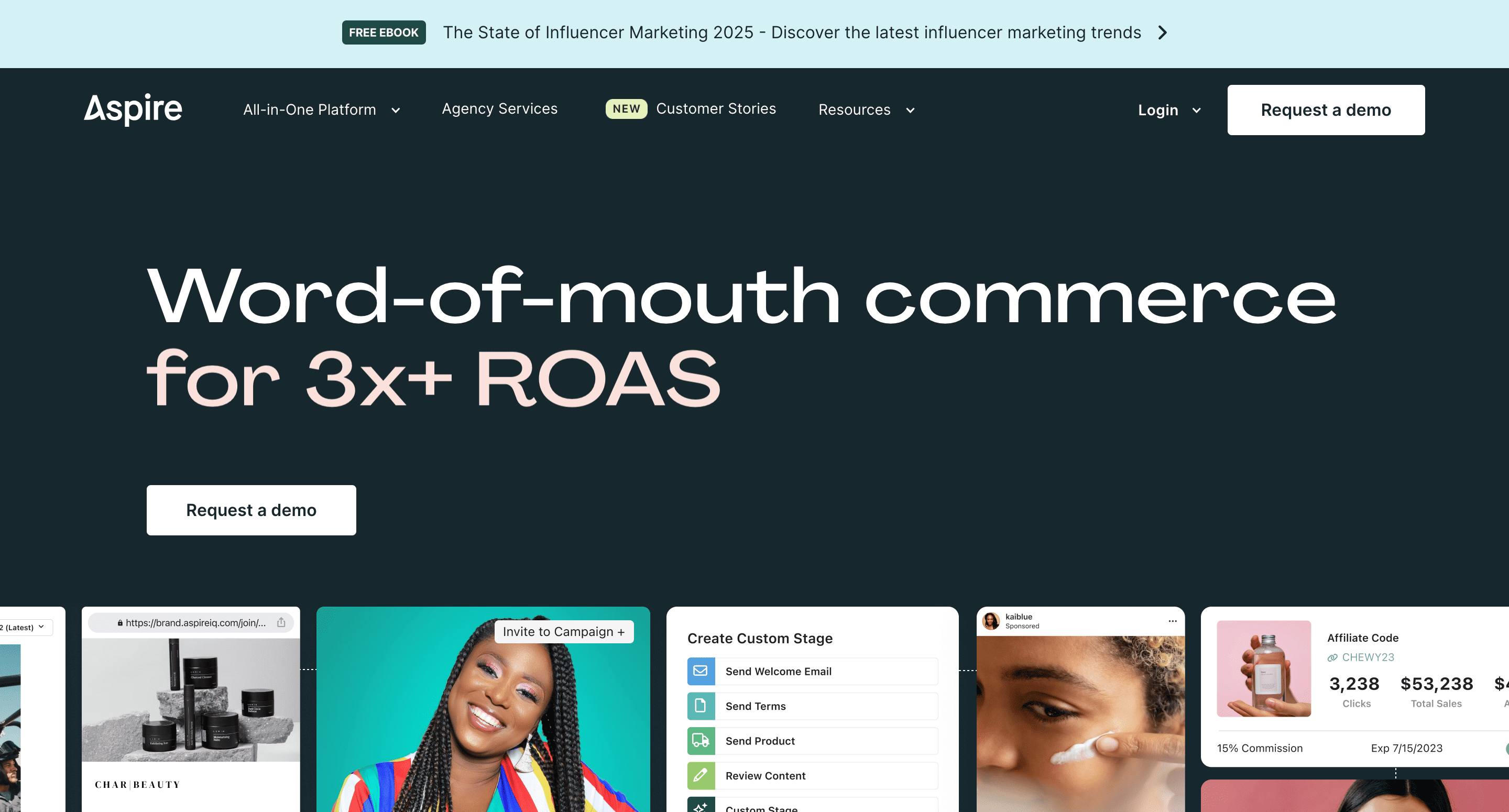
2. Aspire – Best for Community Building and UGC
Aspire focuses on the "community" aspect of influencer marketing, treating creators as long-term partners rather than one-off transactional assets. It is particularly effective for brands that prioritize high-quality User-Generated Content (UGC) for their marketing channels.
What Makes Aspire Great for Ecwid:
It provides a structured environment for managing the creative lifecycle and repurposing influencer assets.
Creator Marketplace: An inbound hub where influencers can apply directly to your active campaign briefs.
Content Approval Workflows: A step-by-step system for reviewing and approving drafts before they go live.
Influencer Tiers: Tools to organize partners into different categories, such as ambassadors, affiliates, or VIPs.
Legal and Rights Management: Built-in contract templates and digital signatures for content usage rights.
Brand Community Hub: A centralized portal where creators can access brand assets and campaign guidelines.
Pros
Excellent for sourcing high-quality UGC for social ads and product pages.
Flexible enough to support both small seeding campaigns and large-scale activations.
Strong focus on long-term relationship building over transactional deals.
Cons
The marketplace model can sometimes lead to a high volume of lower-quality applications.
Reporting features are robust but may require manual customization.
3. Impact – Best for Enterprise Affiliate and Partnership Management
Impact is a partnership automation platform designed to manage large-scale affiliate, influencer, and referral programs within a single ecosystem. It is best suited for established brands focused on performance-driven growth.
What Makes Impact Great for Ecwid:
It excels at tracking and optimizing revenue from partnerships through advanced attribution and automation.
Affiliate Tracking Engine: Robust link and code tracking for precise revenue attribution.
Partner Marketplace: Access to a wide network of affiliates, publishers, and influencers.
Contract and Payment Automation: Streamlines partner onboarding, payouts, and compliance.
Custom Commission Structures: Flexible rules for different partner tiers and campaigns.
Advanced Analytics: Deep reporting on customer journeys and conversion paths.
Pros
Industry-leading affiliate tracking and attribution capabilities.
Scalable for global, multi-partner programs.
Strong automation for contracts and payments.
Cons
Can be complex to set up for smaller teams.
Higher cost compared to lightweight influencer tools.
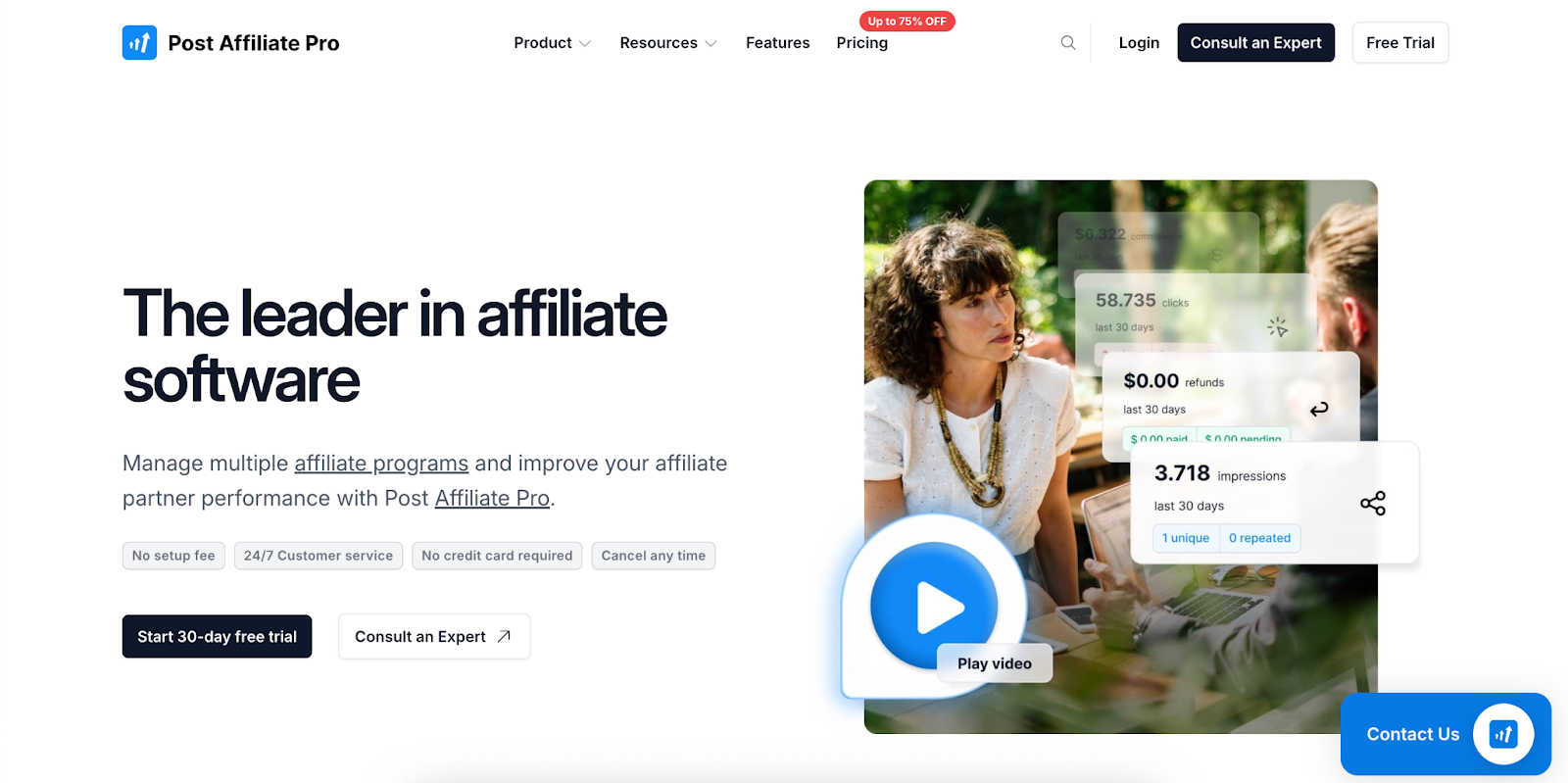
4. Post Affiliate Pro – Best for Custom Affiliate Program Management
Post Affiliate Pro is a dedicated affiliate marketing software that allows brands to build and manage fully customizable affiliate programs. It is ideal for businesses that want full control over their tracking and commission structures.
What Makes Post Affiliate Pro Great for Ecwid:
It integrates with eCommerce platforms to provide detailed affiliate tracking without relying on external marketplaces.
Custom Affiliate Tracking: Tracks clicks, conversions, and commissions with high accuracy.
Multiple Commission Types: Supports pay-per-sale, pay-per-click, and recurring commissions.
Fraud Protection: Built-in tools to detect suspicious or duplicate activity.
Affiliate Management Dashboard: Centralized system to manage partners and performance.
Integration Flexibility: Works with a wide range of shopping carts and payment systems.
Pros
Highly customizable for unique affiliate strategies.
Strong tracking accuracy and fraud prevention.
One-time cost options available vs. subscription-heavy tools.
Cons
Lacks influencer discovery features.
Interface can feel outdated compared to newer platforms.
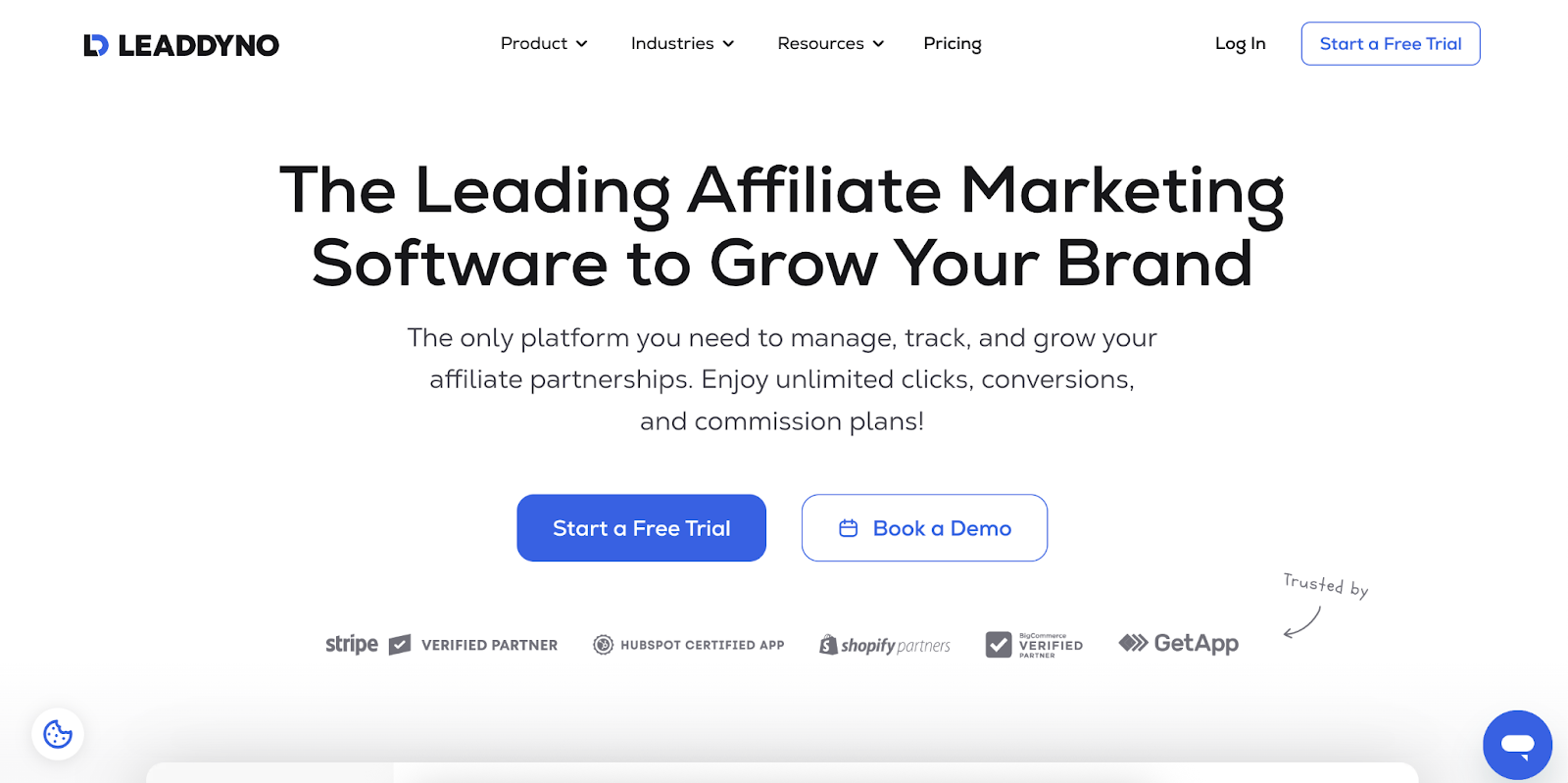
5. LeadDyno – Best for Simple Affiliate Tracking for Small Businesses
LeadDyno is a beginner-friendly affiliate tracking platform designed for small to mid-sized eCommerce brands. It focuses on simplicity and quick setup rather than complex workflows.
What Makes LeadDyno Great for Ecwid:
It enables brands to quickly launch and manage affiliate programs without needing technical expertise.
Easy Setup: Fast integration with eCommerce platforms for quick deployment.
Automated Affiliate Onboarding: Simple sign-up process for new partners.
Social Media Promotion Tools: Helps affiliates share links directly across platforms.
Email Marketing Integration: Built-in tools to communicate with affiliates.
Real-Time Tracking: Monitor clicks, leads, and sales from a simple dashboard.
Pros
Very easy to use, even for non-technical users.
Fast implementation with minimal setup required.
Affordable pricing for small businesses.
Cons
Limited scalability for large or complex programs.
Basic reporting compared to enterprise platforms.
Key Takeaways
Influencer marketing platforms vary by their core focus, ranging from discovery engines and CRM-heavy management to performance-driven affiliate systems. The right choice for an Ecwid merchant depends on your current scale and specific operational bottlenecks. While manual tracking may work for a small roster, scaling a structured program requires transitioning to a centralized system that handles recruitment, logistics, and data attribution.
Smaller brands may benefit from lean discovery tools, while established stores often require all-in-one platforms to manage complex relationships. For brands aiming to turn creators into direct revenue channels, Creator Hero offers specialized custom storefronts that simplify tracking and enhance the shoppable experience for influencers.
FAQs
How do I track influencer sales in my Ecwid store?
Most brands use unique discount codes or affiliate tracking links. While Ecwid tracks order sources, tools like Influencer Hero or Upfluence automate this by generating individual pixels and codes to provide real-time ROI without manual spreadsheets.
Does Ecwid have a native influencer marketing tool?
Ecwid does not have a built-in marketplace, but it supports third-party integrations. Professional setups typically use all-in-one platforms like Influencer Hero to bridge the gap between the Ecwid product catalog and creator management.
Can I automate product gifting for influencers on Ecwid?
Yes, by using platforms that sync with your inventory. Software such as GRIN or Influencer Hero allows creators to select their own items (size/color), which then automatically generates a $0 order in your Ecwid backend.
What is the best influencer software for a small Ecwid business?
SARAL or Modash are popular for lower-tier entry points. However, for managing the full lifecycle—discovery, gifting, and sales tracking—Influencer Hero is often the most cost-effective as it replaces multiple fragmented subscriptions.
How do I find influencers who are already my customers?
Tools like Upfluence scan your Ecwid customer lists to identify shoppers with significant social followings. Alternatively, Influencer Hero offers discovery filters to find creators already posting in your niche, making them ideal brand ambassadors.
Related Posts
The incredible power of team collaboration is evident in the remarkable outcomes it can achieve
Influur pricing explained: no brand subscription, pay-as-you-go fees, real pros and cons, and our verdict on whether this creator marketplace is worth it in 2026.
Tagbox looks cheap at $19/month — but the feature most brands actually need is hidden behind an Enterprise quote. Here's the full pricing breakdown and our honest verdict.
Word on the Block charges no subscription — but its pricing page never tells you the fee. Here's what the model actually costs brands, what's included, and our honest verdict.
Build your own business without having to manage all the operational aspects of an e-commerce. Focus on creating content, driving sales and maximise your earnings!



.svg)


%201.png)

.jpg)



_logo.svg.png)


