Top 10 Sprout Social Alternatives: Features, Pricing and Review
Sprout Social is well-recognized for its unified social media dashboard, publishing tools, collaboration workflows, and AI-assisted listening capabilities. However, many brands explore alternatives when they require lower pricing, richer influencer discovery tools, advanced CRM pipelines, or deeper creator content tracking and affiliate reporting. With the rapid growth of influencer tech, brands now have more specialized and budget-friendly platforms to choose from.
This guide highlights the best influencer marketing platforms that function as highly effective replacements for Sprout Social — including Influencer Hero, Modash, Social Snowball, Traackr, and more. Each option is compared by features, pricing, strengths, and ideal user fit, helping brands pinpoint which solution best matches their goals for creator sourcing, outreach at scale, CRM, campaign reporting, UGC management, and influencer revenue attribution.
Top 10 Sprout Social alternatives:
CreatorIQ
Aspire
Influencer Hero
Wednesday.App
Traackr
Afluencer
HypeAuditor
Glewee
Social Snowball
Modash
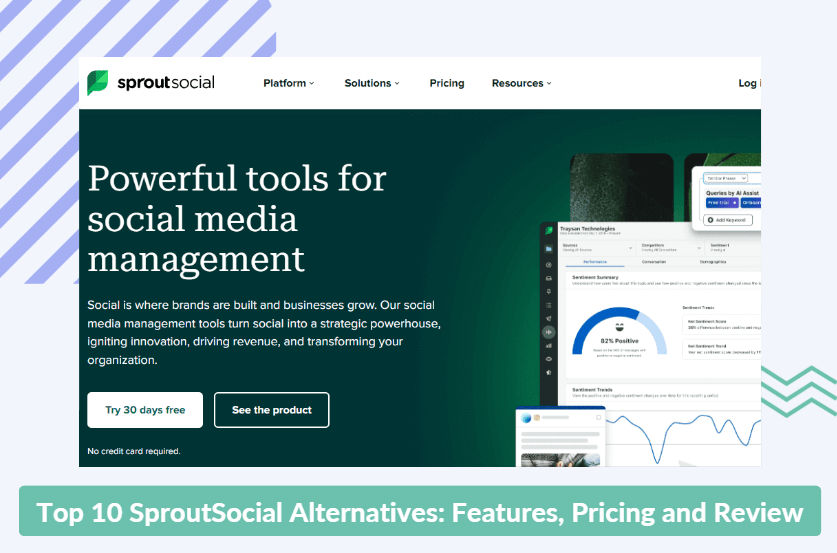
What Sprout Social Does (And Its Limitations)
Sprout Social is a powerful social media management suite built for brands that want to schedule content, monitor conversations, manage community engagement, and track cross-channel performance in a single interface. Beyond publishing tools, Sprout includes influencer discovery, content approvals, and basic creator analytics—making it a popular all-in-one solution for social teams that also run influencer campaigns.
With reporting dashboards, listening features, inbox management, and team collaboration, Sprout Social caters strongly to mid-sized and enterprise organizations aiming to centralize social posting and creator workflows under one roof.
Why Some Brands Look for Sprout Social Alternatives
While Sprout Social is highly capable for social media management, there are several reasons brands begin exploring influencer-focused alternatives that offer more campaign depth, automation, or cost flexibility:
Expensive Licensing Model & Annual Contracts — Plans for influencer tools start around $1,599 per user/month (billed annually), with extra seats costing roughly $600 each. For growing teams, this quickly becomes cost-prohibitive, especially compared to influencer-first platforms with usage-based pricing.
Influencer Database Size is Limited — Discovery works well for broad categories, but lacks the depth and scale offered by platforms with larger opt-out databases or more granular filters — particularly for niche creators and micro-influencer sourcing.
Analytics Focused More on Social Content Than Influencers — Reporting is strong for social metrics like engagement or brand listening, but lacks advanced attribution, revenue tracking, gifting automation, and affiliate data that dedicated creator tools provide.
No Built-In UGC Licensing or Whitelisting — Brands must handle usage rights and paid amplification externally, adding extra manual steps for teams running UGC-heavy campaigns and ad boosting workflows.
Influencer Workflow Depth Is Limited — While campaigns can be coordinated in Sprout, teams managing large creator pipelines may find CRM, content tracking, and outreach automations less robust than end-to-end influencer platforms.
Top Sprout Social Alternatives in 2026
Platform
Notable Features
Starting Price
Sprout Social
Unified social media management + influencer discovery; scheduling, listening, reporting & competitor creator tracking
$1,599/user/month (annual)
CreatorIQ
Enterprise influencer OS; identity-verified creator data; global workflows; cross-platform integrations & BI reporting
~$35,000/year
Aspire
Full creator workflow automation; gifting, UGC approvals & affiliate management for ongoing creator programs
CreatorIQ is one of the most advanced enterprise influencer marketing platforms on the market, designed for global brands that require rigorous data validation, strict workflow governance, and cross-market campaign reporting. It functions like an operating system for large-scale creator programs — centralizing approvals, contracts, payments, analytics, and brand safety checks in one ecosystem.
Notable Features
Enterprise-Grade Identity Graph: CreatorIQ verifies creator identity using machine learning signals, social platform authentication, and audience validation to reduce the risk of fraud or mismatched partnerships.
Cross-Team Collaboration & Permissions: Multi-market organizations can assign roles, approval steps, and access levels to ensure consistent governance across product lines or regions.
Real-Time Campaign Insights: The platform compiles performance metrics into live dashboards, allowing executives to assess reach, engagement, spend, EMV, and ROI at scale.
Deep Integrations & Data Syncing: Native connections to Meta, TikTok, YouTube, Shopify, CRM systems, and analytics suites enable frictionless data flow for complex teams.
Customization & Reporting: Brands can fully customize dashboards to match KPI structures, client needs, or geographic rollouts — ideal for agencies with multiple accounts.
CreatorIQ offers annual contracts only, and pricing varies depending on the plan, number of creators, and seats required. The Creator Connect add-on is available for an additional $15,000/year.
Who It’s For
Best suited for enterprise-level brands and agencies managing global campaigns with strict compliance requirements. CreatorIQ is ideal for teams that need data accuracy, advanced reporting frameworks, approval workflows, and enterprise-level security.
2. Aspire
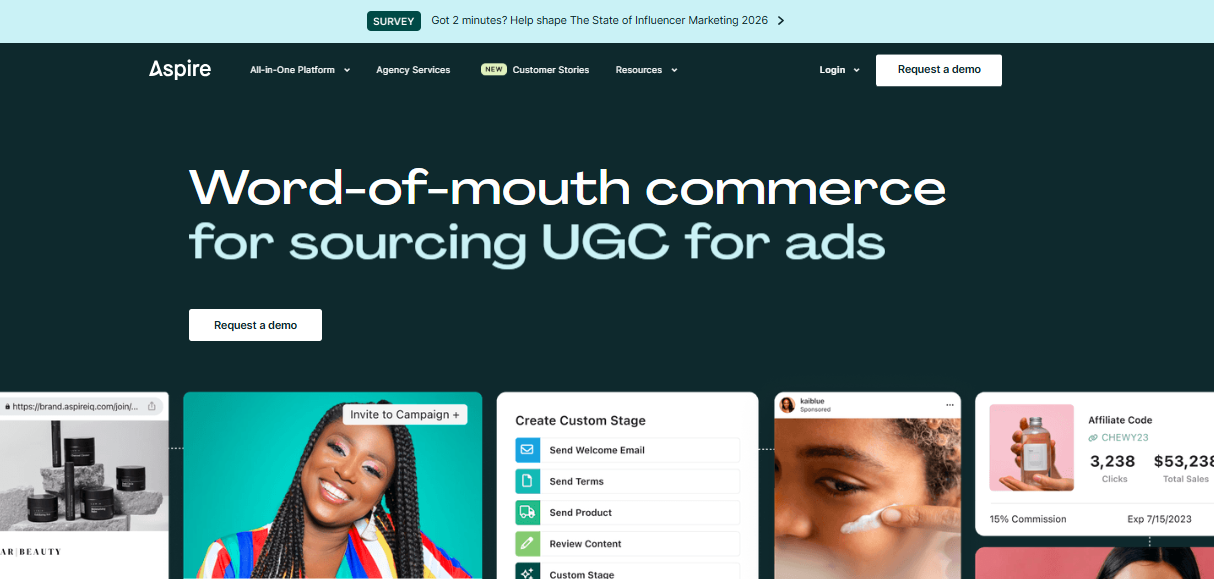
Aspire is a workflow-centric influencer marketing platform built for brands running ongoing collaborations, product gifting, and affiliate programs. With built-in marketplace applications and outreach tools, Aspire helps streamline recruitment and content coordination for always-on influencer pipelines. It excels at gifting, creator payments, UGC approvals, and long-term partnership management.
Notable Features
Dual Creator Sourcing: Brands can search creators directly or receive inbound applicants via campaign pages, expanding talent reach without heavy manual prospecting.
Affiliate & Revenue Tracking: Built-in code generation and commission tracking help brands scale ambassador programs.
Content Review & Approval: Teams can collect, approve, schedule, and reuse content in one place without relying on external file sharing.
CRM-Style Relationship Tracking: Stores communication threads, deliverables, historical performance, and notes for repeat collaborations.
Pricing
Aspire’s pricing generally works on tiered plans tailored to your brand’s needs, so costs may vary depending on your specific requirements.
Essentials Plan: Starts at $2,299 per month on a 12-month contract, totaling $27,588 annually, plus a one-time onboarding fee of $2,000, bringing the first-year investment to $29,588.
Who It’s For
Ideal for mid-market DTC brands running recurring creator campaigns focused on gifting, UGC, and affiliate partnerships. Best for teams that collaborate frequently and require structured management and fulfillment tools.
3. Influencer Hero
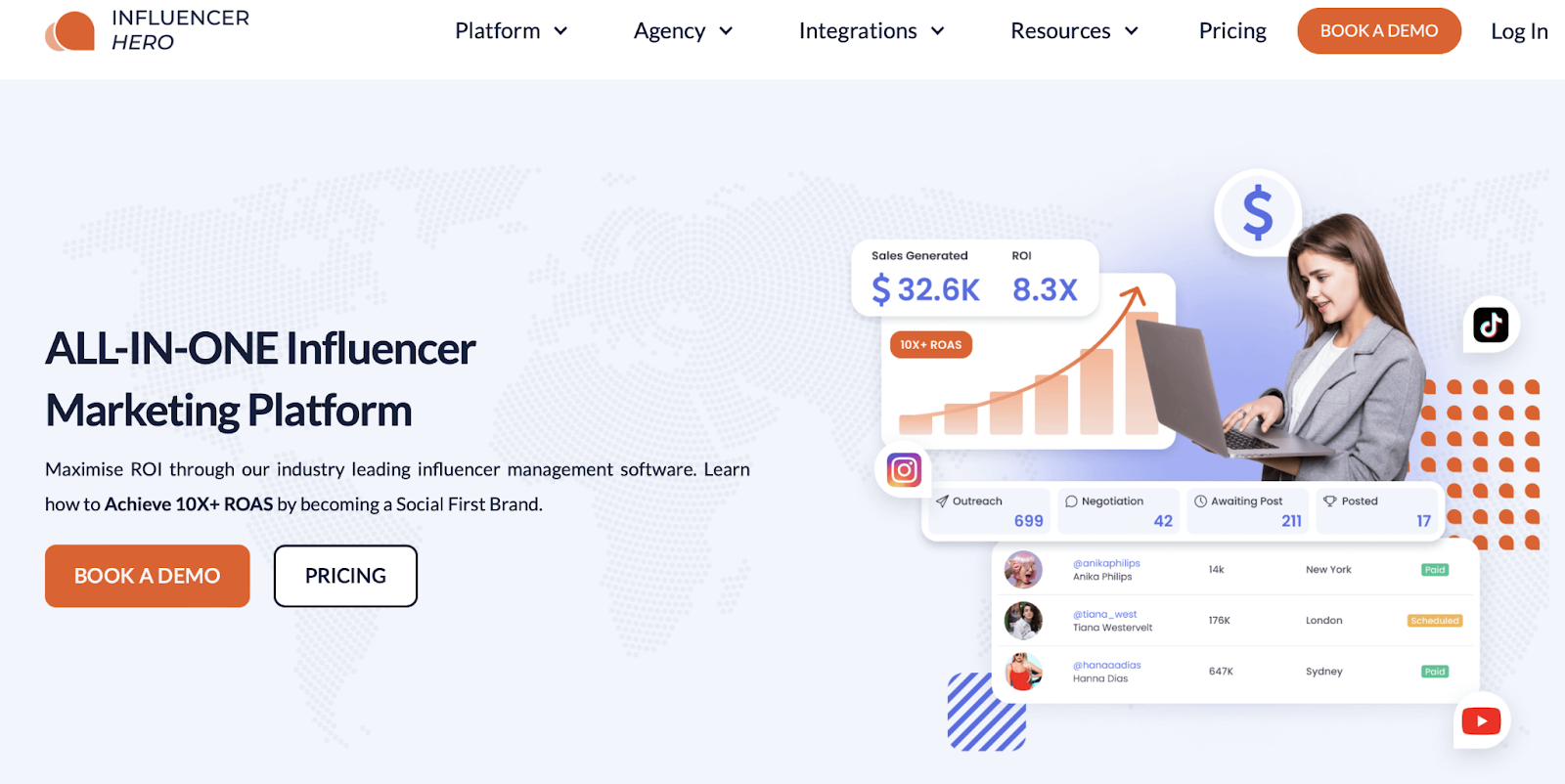
Influencer Hero is an all-in-one influencer marketing platform built for brands and agencies that want to manage the entire creator pipeline without using separate tools. It replaces multiple systems — discovery, outreach, CRM, gifting, UGC management, affiliate tracking, analytics, storefronts — making it one of the most complete alternatives to Sprout Social for creator workflows.
Notable Features
End-to-End Workflow Automation: Influencer Hero covers the entire pipeline from creator sourcing to reporting, meaning teams no longer need separate tools for outreach, CRM, gifting, or performance tracking. This all-in-one approach dramatically reduces operational friction and centralizes campaign visibility.
Automated & Personalized Outreach: Brands can build automated email flows with AI-powered customization to improve response rates while maintaining a human tone. Multi-step sequences and branching rules also make it possible to run large-scale outreach campaigns with minimal manual work.
Creator Application Pages & Storefronts: Public signup pages allow creators to apply directly, automatically syncing applicants into the CRM — saving hours of sourcing time. Storefront pages let influencers browse products and see potential commissions, making campaign onboarding smoother.
Real-Time Revenue Attribution: Sales, coupon codes, clicks, conversions, and top-performing creators are tracked live inside the dashboard, enabling brands to instantly see ROI. This eliminates reliance on delayed reports or third-party tracking spreadsheets.
Content & UGC Library: Every creator post in all social medias -including Pinterest- is collected into a searchable media hub where teams can tag, filter, and reuse content for ads, email campaigns, and organic marketing. It prevents asset loss and removes the need to request files again from creators.
Perfect for brands + agencies managing influencer marketing at scale, especially those wanting automation, CRM pipelines, and sales attribution in one place. Great alternative for teams who want more influencer-focused functionality than Sprout Social offers.
4. Wednesday.app
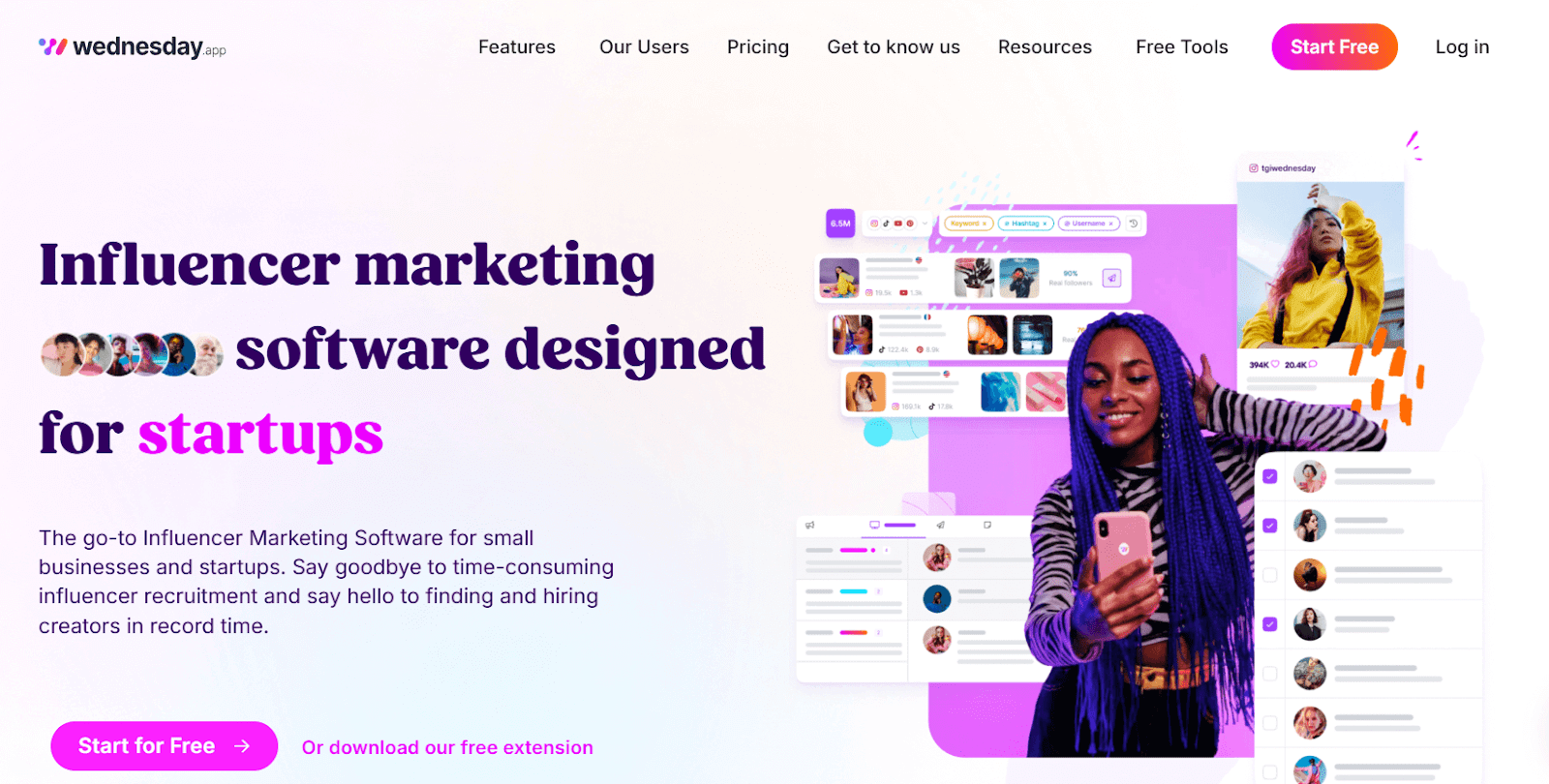
Wednesday.app is a lightweight tool designed for growing brands who want something more advanced than spreadsheets, but without the complexity or pricing of enterprise platforms. It keeps the core essentials — discovery, outreach, and CRM — and removes everything else to deliver a fast, simple workflow.
Notable Features
Influencer Discovery With Useful Filters: Users can search creators by niche, platform, engagement, audience size, and geography, making it easy to build lists without advanced training. It works better if you are looking for micro or small influencers.
Native Outreach Messaging: Messages can be sent directly through Wednesday.app, allowing brands to reach creators without external tools. Conversation history is linked to profiles for easy follow-ups and negotiation tracking.
CRM Pipeline View: A visual board lets teams move creators through stages like contacted → negotiating → confirmed → delivered. This makes campaign management easier for teams working with many creators at once.
Affordable Starter Pricing: Unlike platforms requiring large annual contracts, Wednesday.app offers a functional free plan and low monthly tiers, allowing new teams to begin influencer outreach at minimal cost.
Fast Learning Curve: The interface is built to be user-friendly even for non-marketers, reducing onboarding time and eliminating complexity that slows down progress.
Pricing
Starter — Free forever Discovery — $79/month Outreach — $279/month (advanced CRM + mass outreach, currently waitlist-restricted)
Who It’s For
Wednesday.app is ideal for startups, small DTC brands, and teams new to influencer outreach who need a simple toolkit without enterprise overhead. It's a great fit for businesses testing influencer marketing for the first time before committing to a more advanced system.
5. Traackr
Traackr focuses heavily on analytics, spend forecasting, and performance governance, making it a favorite among enterprise brands running multi-market campaigns. Rather than prioritizing outreach tools, Traackr is built for strategic decision-making, influencer evaluation, and campaign measurement.
Notable Features
ROI Forecasting + Spend Modeling: Brands can forecast performance metrics such as CPM, CPP, and engagement rates before committing budgets, reducing financial guesswork. This supports strategic decision-making and is particularly useful for high-budget campaigns.
Brand Vitality Score (BVS): Traackr’s proprietary scoring model measures brand performance and competitive strength across influencer channels. This helps teams compare brand perception and momentum relative to competitors.
Global Campaign Visibility: Teams across regions can manage campaigns using shared templates, governance rules, and uniform reporting structures. Data flows into dashboards that help executives monitor trends across markets.
Competitive Intelligence Tools: Users can analyze which creators competitors work with, their spending trends, and overlapping partnerships. This helps guide creator selection and brand positioning.
Advanced Reporting Suite: Dashboards are customizable for regions, clients, or KPI formats, making presentation-ready analytics easy to export for stakeholders.
Pricing
Growth Plan: from ≈ $25,000/year (minimum users) according to some sources.
Standard Plan: from $32,500/year (minimum ~5 users) according to published pricing.
Plus Plan: from $55,000/year (minimum ~10 users) for advanced features and support
Enterprise: Custom quote for multi-brand, multi-region setups.
Annual subscription required; no published monthly plan; free trial by case-case only.
Who It’s For
Traackr is best for large brands managing global influencer operations with strict analytics, governance, and reporting needs. Companies needing deep financial insights and competitor benchmarking will get the most value here.
6. Afluencer
Afluencer offers a marketplace-style workflow where brands post collaboration opportunities and creators apply directly. It prioritizes simplicity, human connection, and verified creator profiles rather than heavy automation.
Notable Features
Marketplace Posting With Creator Applications: Brands can publish campaign briefs, compensation details, and requirements. Creators apply based on interest, which saves brands time in outreach.
Verified Creator Listings: Afluencer manually screens creators to reduce fraudulent profiles and ensure genuine content quality. This is especially valuable for small brands without dedicated vetting processes.
In-App Chat + Negotiation Management: All conversation threads remain inside the platform, making it easy to track agreements, creative expectations, and deliverable timelines.
Match Recommendations: The algorithm suggests suitable creators based on niche tags and past interactions, speeding up casting for new campaigns.
Podcast + Newsletter Promotion: Higher tiers include exposure perks where brands or creators can be featured for additional visibility.
Afluencer is ideal for small businesses, boutique brands, and teams who prefer a simple, conversation-first approach to influencer collaborations. It's a great entry tool for brands looking to test influencer marketing without complex analytics.
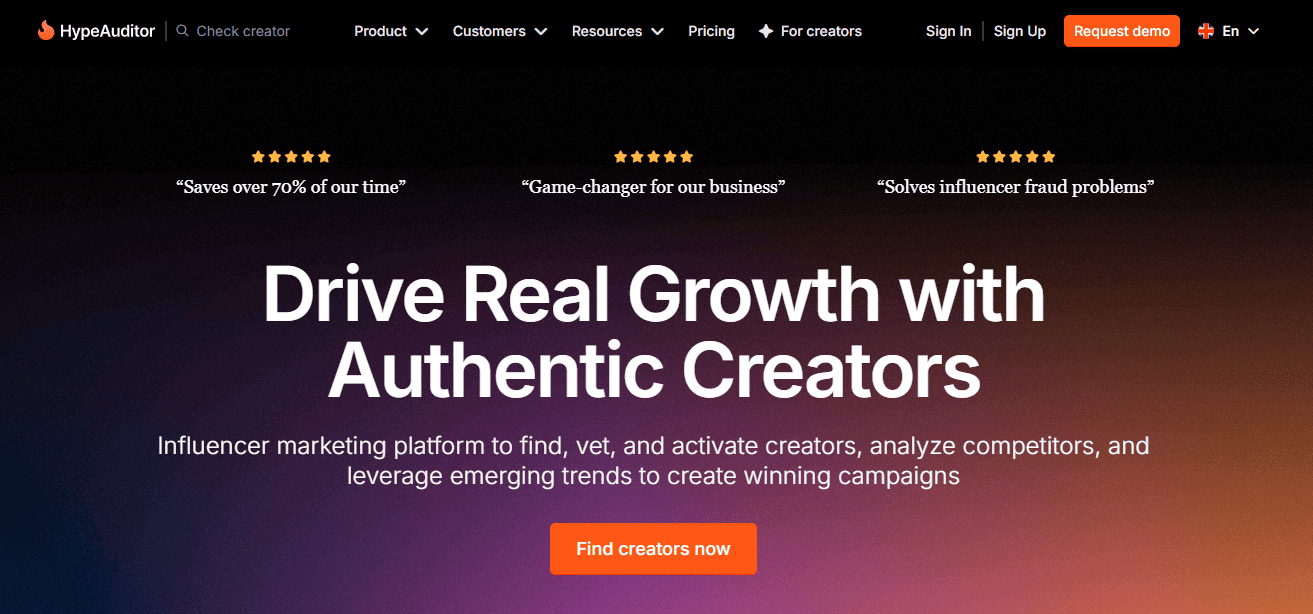
7. HypeAuditor
HypeAuditor is an analytics-first platform used primarily for vetting creators and preventing fraud. It focuses far more on data quality than outreach or relationship management.
Notable Features
Industry-Leading Fraud Detection: The platform identifies fake followers, suspicious activity, bot engagement, and inflated metrics using deep machine learning signals. This protects brands from wasting budget on low-quality creators.
Detailed Audience Demographics: Age, gender, income segments, interests, and follower authenticity metrics can be analyzed before outreach begins. This supports precision targeting for campaigns. It also provides tools to spot fake followers on higher tier plans.
Performance Prediction AI: Algorithms estimate expected performance outcomes so brands can allocate budget with confidence.
Competitor Monitoring Tools: Brands can analyze market share and compare influencer activity across rivals. Trends reveal content strategies and partnership opportunities.
Report Automation: Agencies can produce visually polished client decks with pre-built analytics modules and exportable dashboards.
Pricing
HypeAuditor offers customizable pricing based on usage and needs.
Standard “Business” Plan: ~$10,000/year for 2,000 reports and includes influencer discovery, campaign tracking, and reporting tools.
Enterprise Plan: ~$60,000/year with unlimited reports and additional support for large-scale influencer marketing campaigns.
HypeAuditor provides annual contracts, and the pricing structure is flexible depending on the brand's needs and the number of reports or active campaigns required.
Who It’s For
HypeAuditor is perfect for brands and agencies that prioritize verified audiences, fraud prevention, and data-driven influencer selection. It’s especially useful for regulated industries, premium brands, or performance-sensitive campaigns.
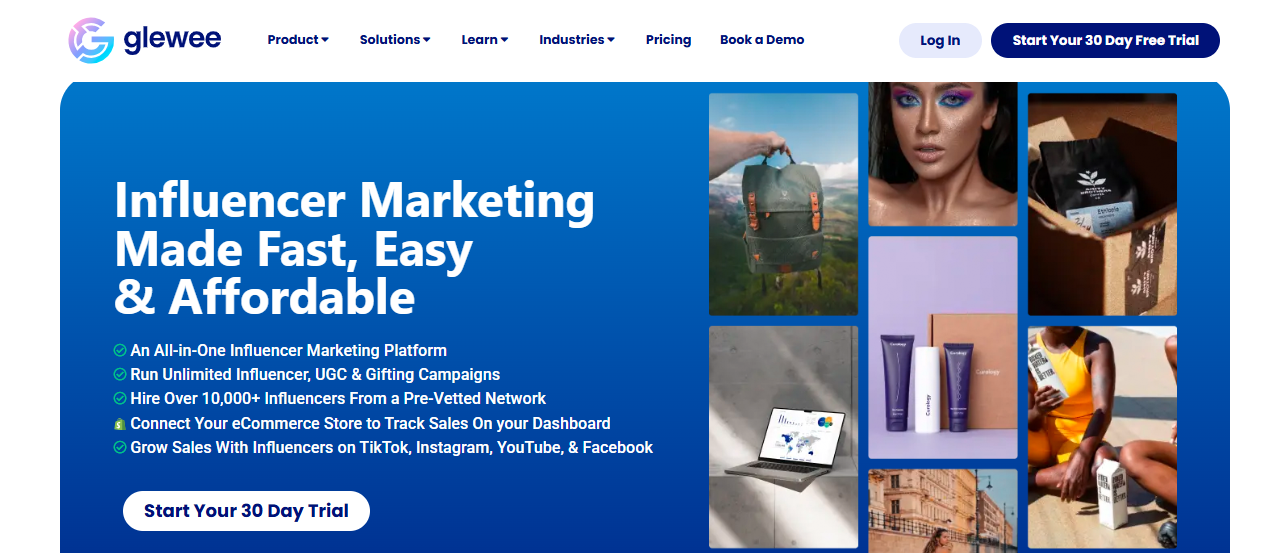
8. Glewee
Glewee operates differently from most platforms — it blends software with done-for-you influencer campaign execution. Brands gain access to a vetted creator network plus a dedicated management team to run campaigns.
Notable Features
Fully Managed Campaign Execution: Glewee’s internal team handles outreach, negotiations, content delivery, and reporting. Brands remain in approval control without doing manual work.
Content Licensing & Usage Rights Included: Assets produced in campaigns come with reuse permissions, minimizing legal negotiation overhead.
Creator App for Collaboration: Influencers apply to campaigns through the Glewee mobile app, creating a pipeline of interested creators.
Revenue Tracking for Shopify Stores: Discount codes and affiliate tracking connect directly to sales dashboards for real-time attribution.
Weekly or Monthly Reporting Cadence: Brands receive breakdowns of engagement, reach, deliverables, and creator performance without pulling spreadsheets.
Pricing
$2,500/month base fee Creator payouts charged separately Minimum engagement is often recommended as 3 months.
Who It’s For
Glewee is ideal for brands who want influencer campaigns managed on autopilot without hiring internal staff. Great for busy teams or brands new to influencer marketing, but less flexible for DIY workflows or gifting-only strategies.
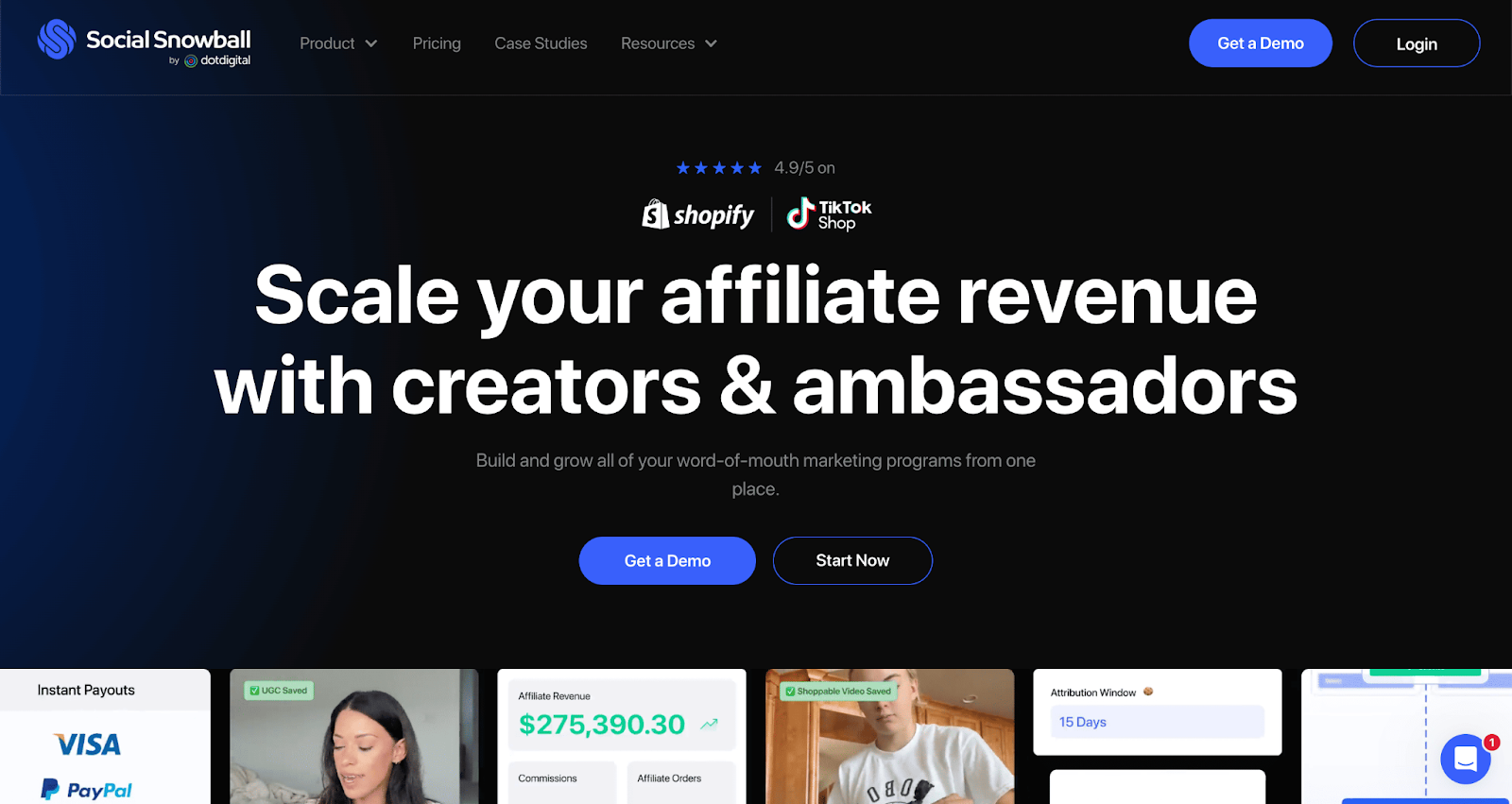
9. Social Snowball
Social Snowball is built for brands prioritizing affiliate and referral-driven growth, especially those operating on Shopify. Instead of focusing on creator discovery, it automates affiliate enrollment and UGC capture.
Notable Features
Automatic Affiliate Enrollment: Every customer can become an affiliate instantly via checkout triggers, email flows, or widgets. This removes manual recruiting friction.
TikTok Shop + DTC Integration: Brands running both TikTok Shop and Shopify campaigns can manage creators, payouts, tracking, and codes in one dashboard.
UGC Auto-Capture Library: Social Snowball collects videos creators post on TikTok so brands don’t need constant manual collection.
Bulk Payouts With Fraud Control: Block self-referrals and pay affiliates globally with 700+ redemption options.
Affiliate Code + Link Automation: Links and discount codes are generated automatically, speeding up onboarding for ambassadors and creators.
Best for Shopify brands focusing on affiliate programs, TikTok creators, and referral-based revenue growth. Great for UGC acquisition — but teams needing deep CRM, outreach, or content approvals will need another platform.
10. Modash
Modash is known for its enormous creator database, audience quality filters, and fast discovery capabilities for brands needing to build lists in bulk. It's a strong sourcing engine for scaling creator outreach.
Notable Features
350M+ Creator Index: One of the largest influencer datasets globally, with no opt-in requirement — making niche and micro creators easier to find.
Audience Authenticity Scoring: Tools detect fake followers, engagement manipulation, audience geography accuracy, and purchasing power signals.
Content Tracking Automation: As creators publish, Modash collects posts into a dashboard without needing manual submissions.
Shopify Affiliate Support: Discount code creation and affiliate tracking allow brands to monetize partnerships easily.
Find-Your-Fans Feature: Surfaces influencers already following or engaging with the brand — often leading to higher response rates.
Pricing
Starts at $199/month (annual billing required) Higher tiers available for larger contact volumes & advanced features.
Who It’s For
Modash is ideal for brands focused on influencer sourcing speed and precise audience vetting. Great for teams building large creator pools or running ongoing outreach at scale.
Final Thoughts on Sprout Social Alternatives
Selecting the right Sprout Social alternative depends on what your brand needs beyond social scheduling, publishing workflows, and unified inbox management. As influencer marketing programs expand, more companies are seeking platforms with strong creator discovery tools, CRM pipelines, advanced UGC tracking, and transparent revenue attribution—capabilities that often sit outside Sprout Social’s primary focus as a social management suite.
By comparing features, costs, automation depth, database scale, and analytics strength, you can pinpoint the software that aligns best with your influencer growth goals. Whether your top priority is sourcing influencers at scale, running gifting or affiliate programs, improving reporting visibility, or reducing manual coordination, the tools in this list provide a wide selection for both fast-growing brands and established teams.
If you’re also looking for a streamlined way to monetize content and turn creators into long-term partners, a Creator Hero storefront can help you generate new revenue without changing your existing workflow. Book a demo with Creator Hero to see how it helps brands scale partnerships, track revenue, and build performance-driven creator communities.
FAQs
What should I consider when choosing a Sprout Social alternative?
Start by identifying which capabilities your team needs beyond social scheduling—such as influencer discovery, outreach automation, CRM workflows, or sales attribution. Many brands switch to platforms that offer deeper creator analytics, gifting operations, and built-in affiliate management instead of relying on manual processes.
Is there a better option for running influencer campaigns with measurable ROI?
Platforms like Influencer Hero stand out for brands that depend on performance-driven results. With automatic discount codes, UTM tracking, real-time revenue dashboards, and affiliate program management, brands can attribute sales directly to creators without external spreadsheets or tracking tools.
Are Sprout Social alternatives more affordable for smaller teams?
Yes. Several platforms on this list—such as Wednesday.app, Afluencer, Social Snowball (for Shopify), and Modash—offer significantly lower entry pricing and monthly plans without required annual commitments. They are ideal for brands building their first influencer system or scaling gradually.
Why do brands move away from Sprout Social for influencer work?
Common reasons include high per-seat pricing, influencer tools being locked behind upper-tier plans, a smaller creator database, and limited automation for outreach or gifting workflows. Teams often prefer platforms designed specifically for influencer operations, rather than general social publishing.
Which Sprout Social alternative provides the most complete all-in-one creator solution?
Influencer Hero is frequently chosen by brands that want the entire workflow in one platform—covering creator sourcing, CRM, automated sequences, product gifting, UGC storage, affiliate sales tracking, and storefront pages. It offers an end-to-end pipeline many brands wish Sprout Social handled natively.
Related Posts
The incredible power of team collaboration is evident in the remarkable outcomes it can achieve
Influur pricing explained: no brand subscription, pay-as-you-go fees, real pros and cons, and our verdict on whether this creator marketplace is worth it in 2026.
Tagbox looks cheap at $19/month — but the feature most brands actually need is hidden behind an Enterprise quote. Here's the full pricing breakdown and our honest verdict.
Build your own business without having to manage all the operational aspects of an e-commerce. Focus on creating content, driving sales and maximise your earnings!


%201.png)

.svg)






_logo.svg.png)


