For brands utilizing Webflow’s high-fidelity design capabilities, the bridge between a custom-built storefront and influencer-driven traffic must be seamless. Success in this environment relies on software that can handle granular data—like custom CMS attributes and specific eCommerce events—without compromising the site's performance or aesthetic.
This guide outlines the top influencer marketing platforms compatible with Webflow workflows. We focus on tools that prioritize performance tracking, automated content collection, and the ability to scale creator programs without the need for heavy manual coding or fragmented spreadsheets.
What to Look For in Influencer Marketing Software
Webflow is a unique environment where the line between a marketing site and a custom application is often blurred. The right influencer software should be flexible enough to integrate with Webflow’s specific CMS structures and the Stripe-backed Webflow eCommerce engine.
1. Seamless CMS and Affiliate Integration
Because Webflow sites often rely on custom collections, your influencer software needs to handle more than just basic URLs. Look for tools that allow for deep-link attribution and can sync directly with your store to track specific orders, ensuring your creators are credited for every conversion.
2. Automated Product Gifting Workflows
If you sell physical goods through Webflow, manual shipping is a major bottleneck. The best platforms offer a creator portal where influencers can select their own products; the system then automatically pushes these "zero-dollar" orders into your Webflow backend for fulfillment.
3. UGC Collection and Visual Consistency
Webflow users prioritize design. Choose a platform that automatically aggregates User-Generated Content (UGC) from Instagram and TikTok, allowing you to easily filter and download high-resolution assets that match your site’s high-end visual standards.
4. Custom Creator Landing Pages
Rather than sending influencers to generic product pages, look for software that supports the creation of co-branded landing pages. Since Webflow is built for custom design, you’ll want a tool that can either host these or provide the tracking data needed to build them directly within the Webflow Designer.
5. Robust CRM and Relationship Tracking
As your program scales from a few "friends of the brand" to a massive affiliate roster, a centralized CRM becomes essential. A good system will track every conversation, contract, and historical performance metric, preventing the data silos that often happen when managing creators through email and Slack.
Best Influencer Marketing Software for Webflow (Top Picks)
The following platforms have been selected for their ability to complement Webflow’s design-centric and performance-focused nature. Each provides specific features meant to bridge the gap between social media content and your Webflow storefront.
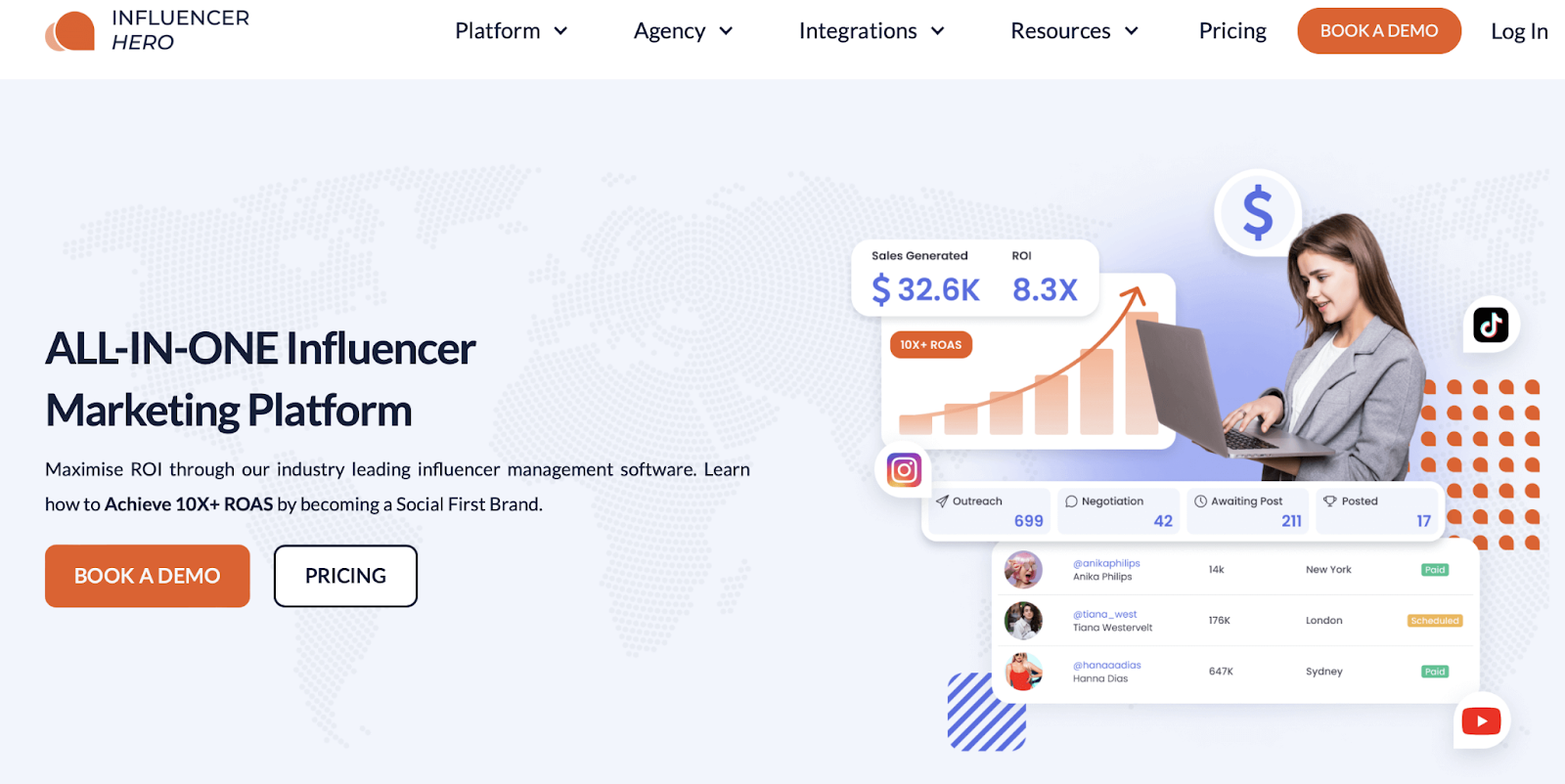
1. Influencer Hero
Influencer Hero is a comprehensive platform built to handle the entire creator lifecycle—from discovery and automated outreach to performance tracking and gifting. It is widely considered the best influencer marketing software for Webflow due to its native ability to track affiliate sales and sync with eCommerce backends, allowing design-heavy brands to automate the "boring" administrative tasks of marketing.
What makes Influencer Hero great for Webflow
Native Webflow Sales Tracking: Connects to your store to provide 1:1 attribution for influencer-driven orders.
Automated Recruitment: Uses personalized email sequences to recruit creators at scale, significantly reducing manual outreach time.
Integrated Product Gifting: Allows creators to select their own samples, which then automatically syncs with your Webflow order management.
Centralized Influencer CRM: Keeps all contracts, communication, and performance data in one searchable hub.
UGC Asset Library: Automatically collects and organizes high-quality creator content for use on your Webflow site.
Pros
Consolidates multiple tools (Discovery, CRM, Tracking) into one subscription.
Built for brands that need to move away from manual spreadsheets.
Exceptional for performance-driven affiliate models.
Cons
The wide array of features may take a few days for a new team to fully master.
Most effective for brands ready to scale beyond 20+ active influencers.
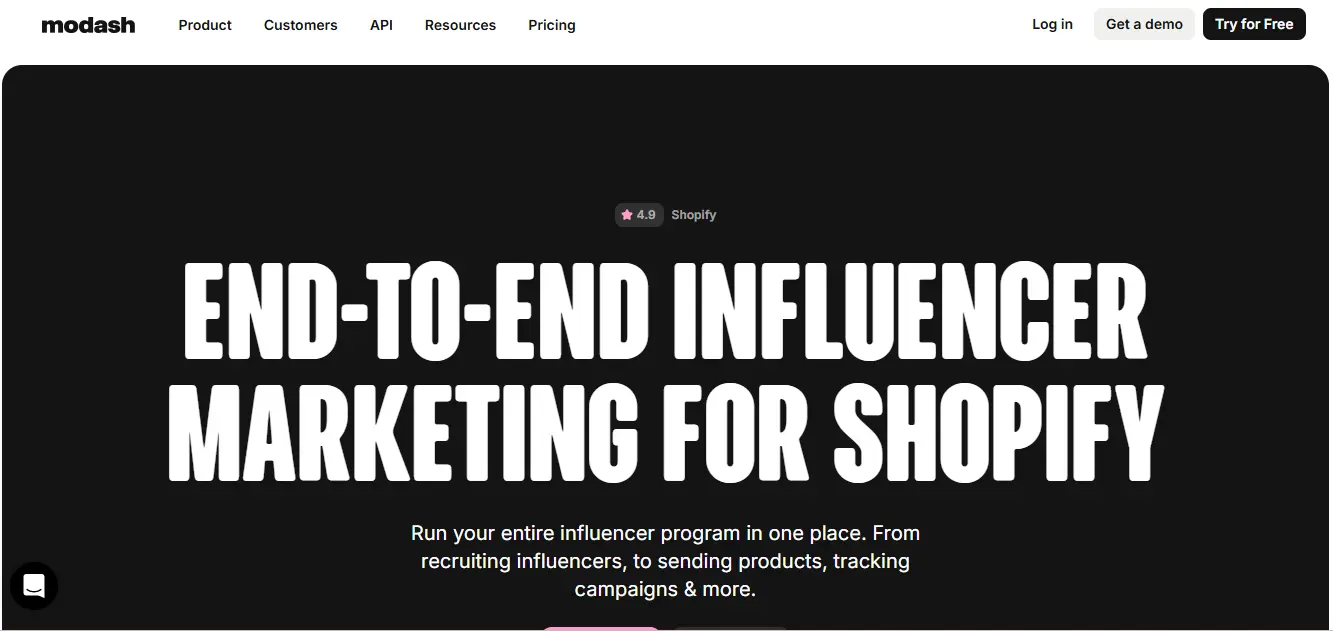
2. Modash
Modash is a powerful discovery engine that allows brands to search through over 450 million creators without requiring them to join a private network. It is built for brands that prioritize finding "the needle in the haystack" and need deep audience data to avoid influencer fraud.
What Makes Modash Great for Webflow
Massive Discovery Database: Search every creator on Instagram, TikTok, and YouTube based on specific audience demographics.
Fake Follower Audits: Real-time fraud detection ensures you only partner with creators who have genuine engagement.
Content Monitoring: Automatically tracks every post, Story, and Reel from your partners, ensuring no content is missed.
Influencer CRM: Provides a centralized space to manage conversations, contact details, and campaign stages.
Affiliate Link Tracking: Monitors clicks and conversions, which can be mapped to Webflow eCommerce goals.
Pros
Largest creator database available without "closed network" restrictions.
Exceptional data transparency for audience vetting.
Simple, flat-rate pricing models.
Cons
Does not offer native automated fulfillment or shipping logistics.
3. Upfluence
Upfluence is a performance-first platform that focuses on turning your existing website visitors and customers into creators. It is ideal for Webflow brands that want to build a high-volume affiliate program with clear ROI tracking.
What Makes Upfluence Great for Webflow
Customer Identification: Integrates with your customer database to find influential people who have already purchased from your site.
Social Listening: Tracks brand mentions across social media to find organic advocates to recruit.
Custom Affiliate Links: Generates unique tracking links for every influencer to measure direct revenue on your Webflow store.
Automated Payments: Handles the financial logistics of paying creators their commissions automatically.
Email Outreach Automation: Connects to your email provider to send personalized recruitment and follow-up sequences.
Pros
Strong focus on "organic" advocacy and customer-led growth.
Robust reporting on the full sales funnel from click to conversion.
Excellent tools for managing ongoing affiliate relationships.
Cons
The interface can be complex for teams who only run occasional campaigns.
4. Aspire
Aspire is designed for brands that view influencer marketing as a way to build a community of brand fans. It is particularly strong at managing the "inbound" side of influencer marketing, such as application pages for brand ambassadors.
What Makes Aspire Great for Webflow
Custom Application Pages: Build branded landing pages where creators can apply to join your program.
UGC Content Library: Automatically collects all content created by your partners, making it easy to repurpose for your Webflow site.
Relationship Lifecycle Management: Tracks the progress of each influencer from "applied" to "contracted" to "completed."
Rights Management: Simplifies the legal process of gaining permission to use creator content in your paid ads.
Influencer Whitelisting: Allows you to run dark posts through a creator’s account to boost conversion rates.
Pros
Best-in-class for managing "always-on" brand ambassador programs.
Strong focus on aesthetic and high-quality content collection.
Highly collaborative environment for teams and creators.
Cons
Higher entry price point targeted at established mid-market brands.
5. GRIN
GRIN is a comprehensive Creator Management Suite built for brands that have outgrown spreadsheets. It operates as a full CRM, managing every aspect of the relationship from initial contact to the final payout.
What Makes GRIN Great for Webflow
Private Creator Portal: A white-labeled space where creators can log in to see their briefs and track their earnings.
Native Fulfillment Integration: Streamlines the process of sending products to creators by linking to your fulfillment center.
First-Party Data Access: Provides direct access to creator metrics, ensuring the data you see is accurate and up-to-date.
Relationship Automation: Automates reminders and follow-ups to keep large campaigns on schedule.
Reporting Dashboards: Offers executive-level reporting on campaign ROI and brand impact.
Pros
The most "complete" CRM for professional influencer teams.
Deeply customizable to fit specific internal marketing workflows.
Excellent at managing large volumes of creator content.
Cons
Requires a significant annual commitment and dedicated management time.
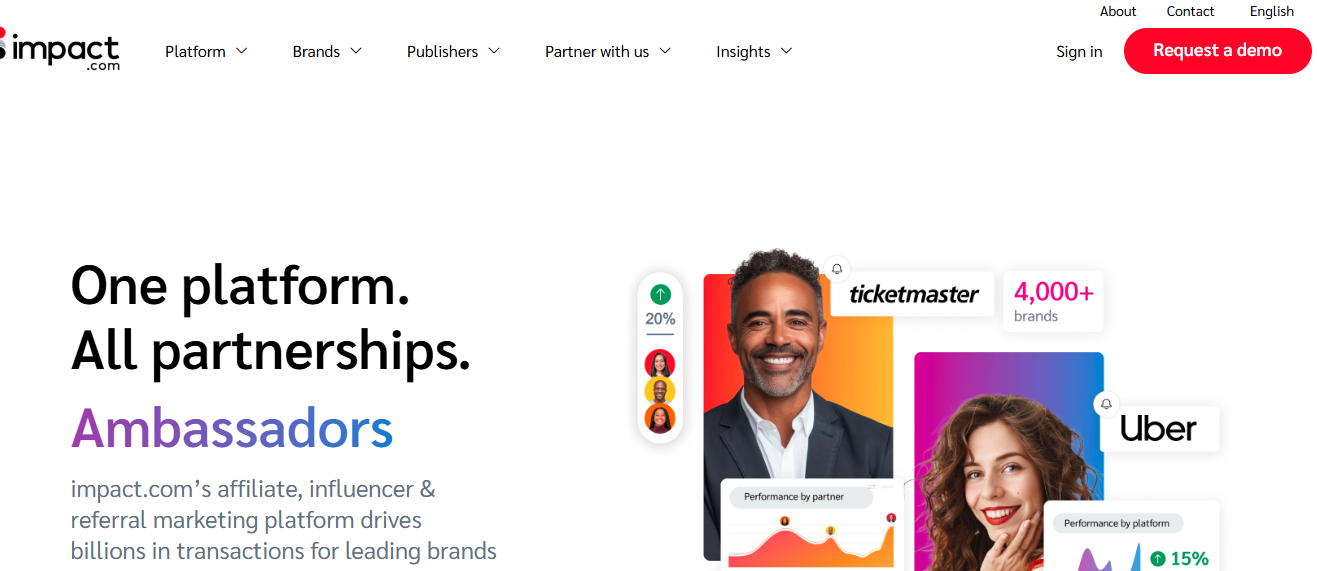
6. Impact.com
Impact is an enterprise-grade partnership platform that treats influencers as part of a broader affiliate and partner ecosystem. It is designed for brands that need to manage complex global campaigns across multiple types of partners.
What Makes impact.com Great for Webflow
Sophisticated Attribution: Uses cross-device tracking to ensure creators are credited even if the customer switches devices before buying.
Custom Payout Rules: Allows you to set highly specific payout triggers, such as "new customer only" or "subscription conversion."
Global Partner Discovery: Access to a massive marketplace of influencers, publishers, and other strategic partners.
Automated Contracting: Standardizes the legal and financial onboarding for hundreds of partners at once.
Compliance Monitoring: Automatically tracks posts to ensure creators are following FTC guidelines and brand standards.
Pros
Exceptional for high-volume, global affiliate programs.
Handles every type of partnership, not just influencers.
Highly reliable financial and legal automation.
Cons
Can feel more like a technical "affiliate tool" than a "creative tool."
7. Creator.co
Creator.co combines a traditional discovery database with a registered marketplace of creators who are actively looking for brand deals. It is perfect for Webflow brands that want to start seeing results quickly without a long onboarding process.
What Makes Creator.co Great for Webflow
Marketplace "Campaigns": Post your brief to the marketplace and let creators apply to work with you.
Automated Recruitment: Uses "Smart Filters" and automated emails to invite high-fit creators to your campaigns.
Deep Performance Insights: Provides clear data on audience demographics and engagement quality for every applicant.
Affiliate Management: Integrated tools for tracking sales and managing commission-based rewards.
Flexible Payouts: Pay creators via flat fees, commissions, or product-only rewards in one dashboard.
Pros
Very fast time-to-market for launching new campaigns.
"Smart matching" features help find influencers who fit your customer persona.
User-friendly interface for small to mid-sized teams.
Cons
CRM features are less robust compared to enterprise tools like GRIN.
How to Choose the Right Influencer Marketing Software
The right tool depends on your specific growth goals.
Scaling an all-in-one revenue and workflow engine: Influencer Hero
Vetting creators with the world’s largest discovery database: Modash
Turning existing customers into high-performing affiliates: Upfluence
Building a community and managing visual UGC rights: Aspire
Managing enterprise-level creator relationships and CRM: GRIN
Rapidly recruiting creators from a ready-to-work marketplace: Creator.co
Key Takeaways
The most effective influencer marketing for Webflow brands in 2026 relies on moving beyond manual campaign management toward integrated, data-driven systems. Because Webflow provides total design freedom, your chosen platform must be flexible enough to track conversions across custom CMS collections and bespoke checkout flows. By centralizing your creator discovery, gifting, and performance analytics, you can treat your influencer program as a scalable sales engine rather than a series of one-off creative collaborations.
As your brand matures, the focus shifts from finding any available creator to building a structured portfolio of partners who drive measurable ROI. For brands ready to move from simple social mentions to a high-performance commerce model, creator-led storefronts offer a powerful way to bridge the gap between inspiration and transaction.
At Creator Hero, we provide the technical infrastructure to help Webflow brands turn their influencers into dedicated revenue channels with full visibility into every sale and conversion.
FAQs
Does influencer software work with custom Webflow CMS pages?
Yes, but you need a platform that supports custom URL tracking. While basic tools struggle with non-standard structures, platforms like Influencer Hero allow you to generate tracking links for any specific Webflow CMS page or slug. This ensures that even if you build unique landing pages for every creator, your attribution remains 100% accurate.
How do I track eCommerce sales from influencers on my Webflow store?
The most reliable method is through a direct API integration or a dedicated tracking script. Since Webflow uses Stripe for its backend, performance-focused tools like Influencer Hero and impact.com can sync with your transaction data. This allows you to track unique discount codes and affiliate links to see exactly which creators are driving revenue.
Can I automate product gifting for my Webflow brand?
Automated gifting is a major time-saver for growing stores. Look for a platform that includes a "Creator Portal." This allows influencers to log in, select the products they want to promote, and enter their shipping details. The software then pushes this as a "zero-dollar" order into your Webflow or fulfillment system, removing the need for manual data entry.
How do I manage the rights for UGC collected through Webflow campaigns?
If you plan to use influencer content on your Webflow site or in paid ads, you need a tool with "Rights Management" features. Platforms like Aspire and GRIN allow you to send digital usage agreements that creators can sign with one click. Once signed, the software automatically stores the content in a high-resolution library for your design team to use.
Is there an "all-in-one" option that handles everything from discovery to payouts?
Yes. For brands that want to avoid a "patchwork" of different tools, Influencer Hero provides a complete end-to-end solution. It covers influencer discovery, automated outreach, CRM management, gifting, and affiliate tracking in a single dashboard, making it the most efficient choice for teams looking to scale their Webflow marketing without increasing their headcount.
Related Posts
The incredible power of team collaboration is evident in the remarkable outcomes it can achieve
Influur pricing explained: no brand subscription, pay-as-you-go fees, real pros and cons, and our verdict on whether this creator marketplace is worth it in 2026.
Tagbox looks cheap at $19/month — but the feature most brands actually need is hidden behind an Enterprise quote. Here's the full pricing breakdown and our honest verdict.
Word on the Block charges no subscription — but its pricing page never tells you the fee. Here's what the model actually costs brands, what's included, and our honest verdict.
Build your own business without having to manage all the operational aspects of an e-commerce. Focus on creating content, driving sales and maximise your earnings!



.svg)


%201.png)





_logo.svg.png)


