Best Influencer Marketing Software for Creator Commerce
As the boundary between social media and e-commerce disappears, "Creator Commerce" has emerged as a model where influencers act as decentralized storefronts rather than just promotional partners. Success in this space requires software that goes beyond basic discovery and vanity metrics; it necessitates a technical infrastructure that can sync live inventory, manage complex affiliate commissions, and track the full customer journey from a social post to a completed sale.
Selecting the right platform depends on whether your priority is building an automated revenue engine or managing a high volume of product-led partnerships. This guide evaluates the best influencer marketing software for creator commerce in 2026, focusing on tools that provide the necessary bridge between content and commerce to help you identify the best fit for your brand's operational scale.
What to Look For in Influencer Marketing Software
The ideal influencer marketing software for a creator commerce model depends entirely on whether your brand prioritizes massive reach, automated logistics, or conversion-based payouts. Most platforms specialize in one of these areas, so your choice should be dictated by your specific campaign goals and operational bottlenecks.
1. Unified Inventory and Catalog Syncing
For brands treating creators as storefronts, a platform must do more than track links; it needs to sync with your product catalog. This ensures that influencers only promote in-stock items and that any changes to pricing or product variants are updated across all creator channels in real time.
2. High-Precision Affiliate Tracking
In a commerce-first model, "vanity metrics" like likes and comments are secondary to "last-click" attribution. Effective software provides creators with unique tracking links or personalized storefronts, giving brands clear visibility into which partners are driving actual revenue and high average order values.
3. Automated Gifting and Sample Management
Managing the logistics of sending physical products to hundreds of creators can be a significant manual burden. Look for platforms that automate this workflow—allowing creators to select their own samples through a portal—which then triggers a fulfillment request in your warehouse without manual data entry.
4. Advanced Discovery and Audience Vetting
If you are focused on building a new roster of partners, a robust discovery database is essential. These tools allow you to filter through millions of profiles based on audience demographics, engagement authenticity, and "lookalike" models to ensure your brand is reaching a relevant, buying audience.
5. Automated Commission and Payment Workflows
As your program scales, manually calculating commissions and processing individual invoices becomes unsustainable. Performance-focused platforms automate the entire payout lifecycle, calculating earnings based on confirmed sales and issuing payments through integrated global gateways.
Best Influencer Marketing Software for Creator Commerce (Top Picks)
The following platforms represent the most reliable options for brands looking to synchronize their creator workflows with their store data. Each solution offers a different balance of discovery, relationship management, and conversion tracking.
1. Influencer Hero
Influencer Hero is a comprehensive, all-in-one platform designed to centralize every stage of the creator lifecycle, from initial discovery to automated affiliate payouts. It is built specifically for mid-market and enterprise brands that need to move away from fragmented spreadsheets and into a structured, high-volume workflow.
Because of its deep data synchronization, many consider it the best influencer marketing software for creator commerce users who prioritize operational efficiency.
What makes Influencer Hero great for Creator Commerce
Automated Product Gifting: Syncs directly with your inventory to handle sample call-outs and shipping labels without manual data entry.
Dynamic Discount Code Generation: Automatically creates and tracks unique codes for every influencer within your store's backend.
Integrated CRM: Centralizes all communication, contracts, and content approvals in a single dashboard to prevent outreach overlap.
Affiliate Revenue Tracking: Provides real-time visibility into which creators are driving actual sales versus just social engagement.
Content Library Management: Automatically aggregates all high-performing UGC (User Generated Content) for use in your own paid social ads.
Pros
Eliminates the need for multiple subscriptions by combining CRM, email automation, and analytics.
Highly scalable for brands managing 50+ active creator relationships simultaneously.
Direct API integration ensures sales data is accurate and reflected in real-time.
Cons
The extensive feature set may have a steeper learning curve for very small teams.
Higher entry price point compared to simple, discovery-only search tools.
2. GRIN
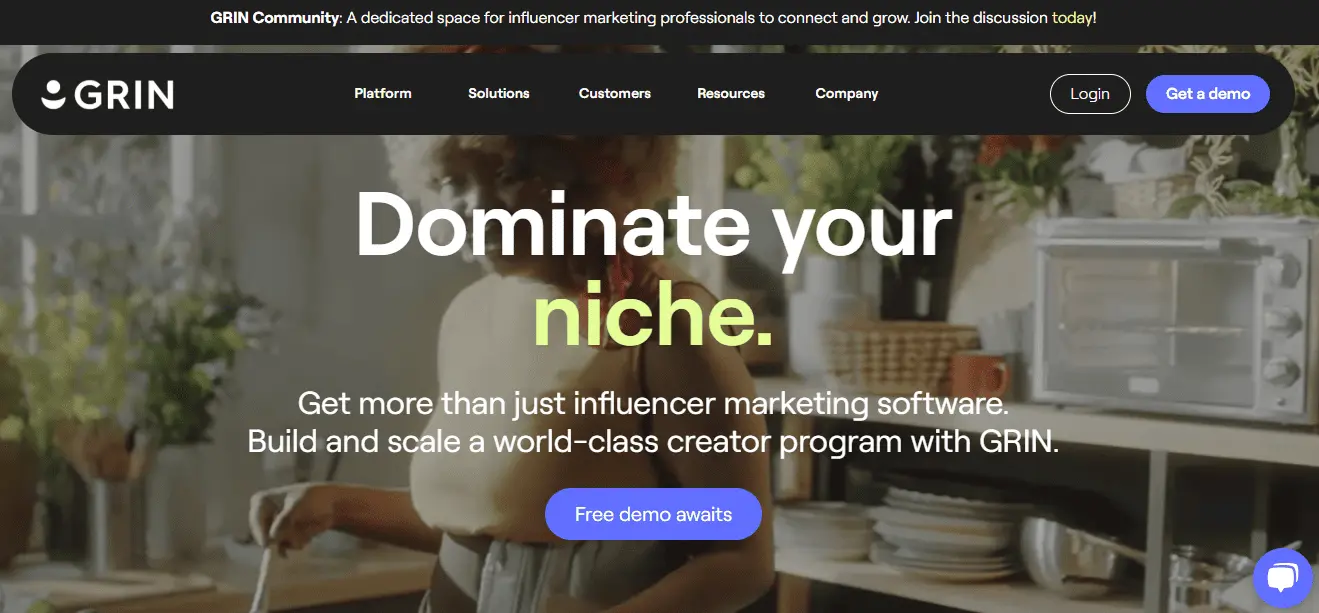
GRIN is a comprehensive creator management platform designed for brands that prioritize direct, long-term relationships over transactional one-off campaigns. It functions as a specialized CRM that integrates with your store’s backend to streamline the logistics of shipping products and managing creator communication.
What makes GRIN great for Creator Commerce
Product Seed Automation: Allows creators to log in and select their own products directly from your live inventory.
Gifting Logistics Tracking: Syncs with your warehouse to provide tracking numbers and delivery updates automatically.
Email Integration: Connects with your existing inbox so all creator communications remain centralized in the CRM.
Content Aggregation: Automatically pulls in high-resolution content from Instagram, TikTok, and YouTube for internal review.
Creator Web Extension: Enables your team to vet influencers and add them to campaigns directly from their social profiles.
Pros
Superior UI that simplifies the management of high-volume influencer rosters.
Strong automation for the logistical "heavy lifting" of product seeding.
Robust reporting on both engagement metrics and store-level sales.
Cons
Higher pricing structure often limits access to larger mid-market and enterprise brands.
Discovery features are less expansive than specialized search databases.
3. Aspire
Aspire (formerly AspireIQ) is built to help brands turn their existing customers and fans into active ambassadors. It excels at managing inbound applications through branded landing pages, making it ideal for commerce brands that want to build a community-driven sales force.
What makes Aspire great for Creator Commerce
Custom Application Pages: Branded forms that allow creators to apply directly to your program.
Automated Workflow Stages: Moves partners through approval, contract, and content stages based on pre-set criteria.
Influencer Whitelisting: Simplifies the process of obtaining rights to run creator content as paid social ads.
Creator Marketplace: A platform where brands can post briefs and creators can pitch for specific campaigns.
UGC Library: A centralized hub to store, tag, and request legal usage rights for all influencer assets.
Pros
Excellent for brands with high organic interest from fans and customers.
Streamlines the legal side of content rights management.
Intuitive "stage-based" workflow tracking.
Cons
Marketplace applications can vary significantly in quality.
Some users find the campaign setup process more rigid than other CRM tools.
4. CreatorIQ
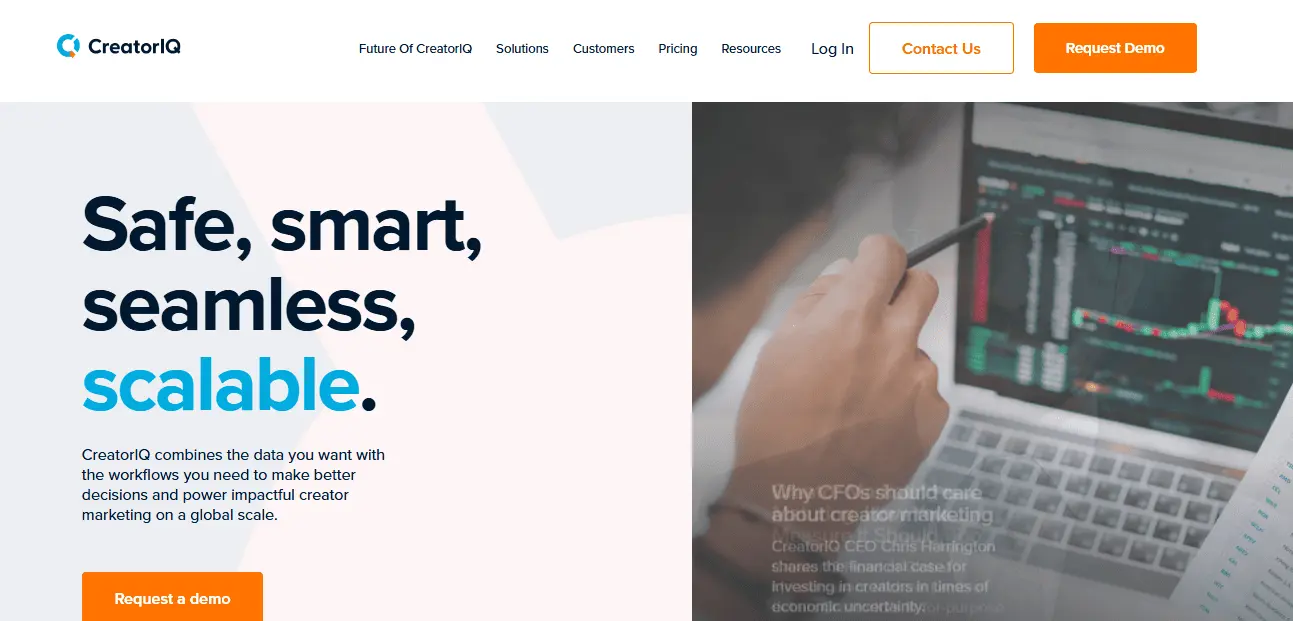
CreatorIQ is a professional-grade platform designed for large organizations that need strict control and unified data across multiple departments or global regions. It focuses on brand safety, fraud detection, and deep data integration for massive influencer ecosystems.
What makes CreatorIQ great for Creator Commerce
Private Creator Network: A white-labeled portal for influencers to manage their own data and campaign status.
Advanced Fraud Detection: Proprietary "Integrity Scores" to identify bot engagement and fake followers.
Custom Reporting API: Allows for the export of influencer data into internal BI tools like Tableau or Looker.
Global Compliance Tools: Built-in features to manage FTC disclosures and GDPR-compliant data handling.
Enterprise Permissions: Granular control over which team members or agencies can access specific campaign segments.
Pros
Unmatched data security and brand safety features.
Highly customizable to fit complex corporate hierarchies.
Deep social platform integrations for accurate data reporting.
Cons
Requires a significant investment in both cost and training time.
May be overly complex for smaller brands with simple workflow needs.
5. Modash
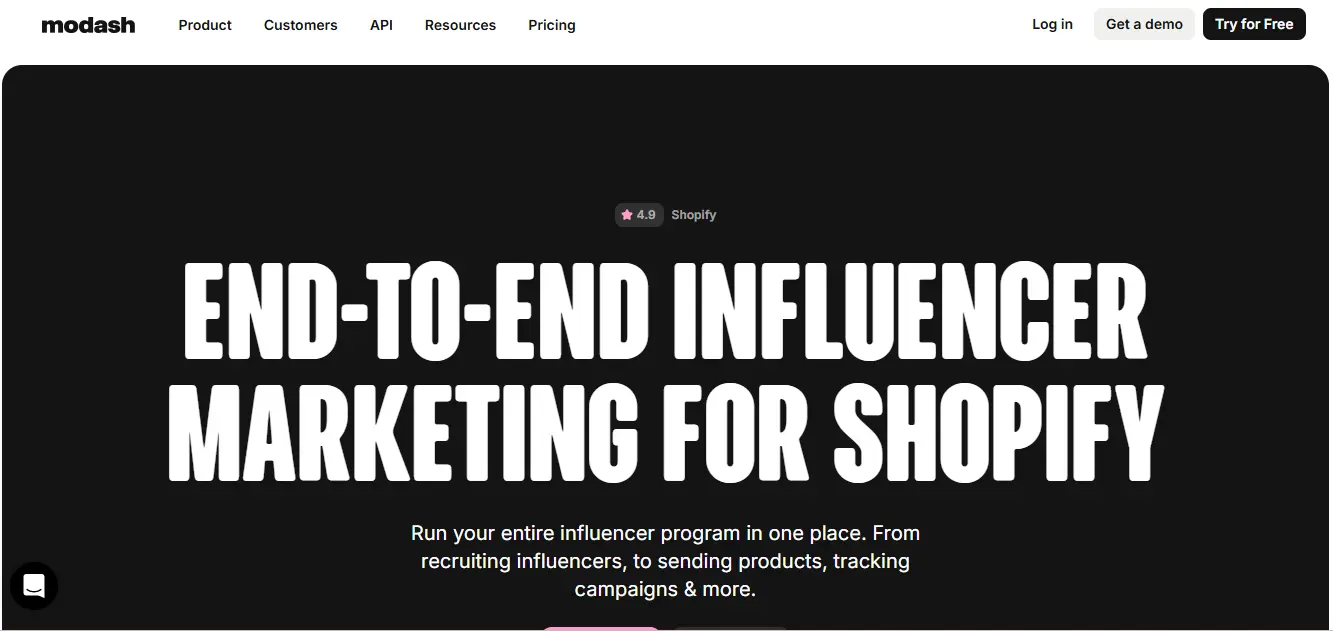
Modash is a specialized search and vetting engine that indexes almost every creator on Instagram, TikTok, and YouTube. It is designed for brands that need to find niche creators quickly and verify their audience demographics without requiring influencers to "sign up" for a platform.
What makes Modash great for Creator Commerce
Massive Creator Database: Search through over 250 million profiles using granular audience filters.
Audience Credibility Checks: Instantly see the percentage of "fake" followers and bot engagement for any creator.
Lookalike Search: Find creators with similar audience profiles to your current top-performing partners.
Content Monitoring: Automatically tracks when creators post about your brand without requiring manual links.
Contact Data Export: Bulk export of creator email addresses for high-volume outreach campaigns.
Pros
One of the most comprehensive discovery databases on the market.
Very straightforward, pay-as-you-go or subscription models for small teams.
No requirement for influencers to "join" a network to be tracked.
Cons
Lacks the deep CRM and gifting automation found in all-in-one platforms.
Relationship management features are more basic compared to GRIN or Influencer Hero.
6. HypeAuditor
HypeAuditor is an AI-powered analytical tool that focuses on data transparency and competitive benchmarking. It is the preferred choice for brands that need to justify their spend through hard metrics and want to see how their share-of-voice compares to competitors.
What makes HypeAuditor great for Creator commerce
Competitor Tracking: Monitor the influencer strategies and spend patterns of your direct competitors.
Account Growth Analytics: View historical growth trends to identify "rising stars" before their rates increase.
Brand Safety Scanning: Automatically flags content that might conflict with your brand values or guidelines.
Market Insights: Access reports on influencer trends across different countries and industry categories.
Engagement Authenticity: Deep-dive analysis into comment-to-like ratios and audience quality.
Pros
Exceptional data visualization and reporting depth.
Highly reliable fraud detection algorithms.
Great for strategic planning and market research.
Cons
The interface can be data-heavy and less focused on "creative" workflows.
Outreach and campaign management features are secondary to its analytical tools.
7. Shopify Collabs
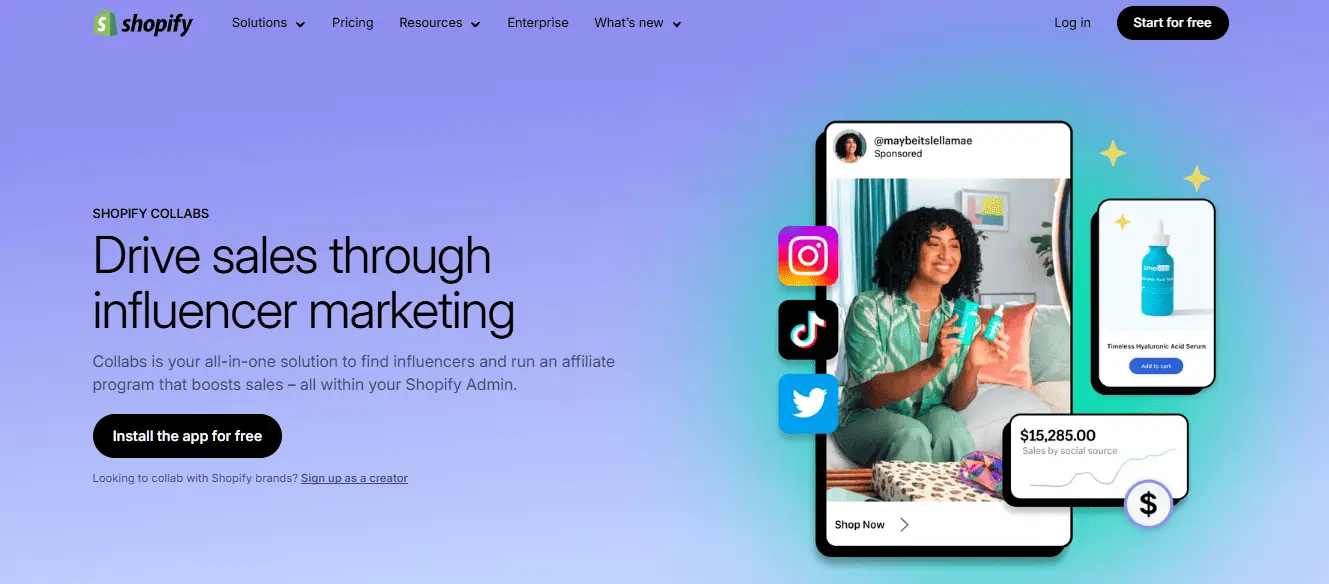
Shopify Collabs is a native tool within the Shopify admin that allows brands to find and manage creators without leaving their store dashboard. It is specifically designed for emerging brands that want a simple, cost-effective way to launch their first affiliate-led creator program.
What makes Shopify Collabs great for Creator Commerce
Native Store Integration: Products and collections are automatically available for creators to select.
Auto-Generated Affiliate Links: Creates tracking links that tie directly into the Shopify analytics engine.
Creator Marketplace: A curated directory where Shopify-specific creators can apply to work with your brand.
Simplified Payouts: Uses the existing Shopify billing infrastructure to manage creator commissions.
Tiered Commission Groups: Set different reward levels based on creator performance or audience size.
Pros
Completely native experience for existing Shopify users.
Low barrier to entry for brands just starting with influencer marketing.
No additional complex API integrations required.
Cons
Limited features for scaling beyond basic affiliate workflows.
Missing the advanced CRM and high-volume discovery tools found in dedicated platforms.
How to Choose the Right Influencer Marketing Software
Selecting the right platform depends on your specific goals—whether you need to find new talent, manage a high volume of product gifts, or track complex affiliate payouts.
Scaling a structured, all-in-one influencer program: Influencer Hero
Automating high-volume product seeding and CRM workflows: GRIN
Turning existing customers into a branded ambassador community: Aspire
Managing global enterprise governance and data security: CreatorIQ
Rapidly discovering and vetting niche creators at scale: Modash
Analyzing competitor strategies and auditing audience authenticity: HypeAuditor
Launching a simple, native affiliate program within your store: Shopify Collabs
Key Takeaways
Choosing the right platform for a creator commerce strategy depends on your specific operational workflows and long-term goals. While capabilities range from simple affiliate tracking to comprehensive CRM systems, the most important factor is how well the tool manages the transition from manual outreach to automated, scalable processes. As programs grow, shifting away from fragmented spreadsheets is essential for maintaining performance visibility and reducing administrative bottlenecks.
The decision ultimately hinges on your stage of growth: simpler, native tools often suffice for early-stage experimentation, while more advanced platforms are necessary for managing high-volume global campaigns. For brands focused on turning influencers into dedicated revenue channels, implementing custom storefronts and precise performance tracking provides a clear competitive edge.
At Creator Hero, we support this transition by helping brands build the infrastructure needed to empower creators as direct sales channels with full transparency into every transaction.
FAQs
How does creator commerce software differ from standard influencer tools?
While standard tools focus on "top-of-funnel" awareness and discovery, creator commerce software is built for "bottom-of-funnel" conversions. It includes specific features like live inventory syncing, automated affiliate link generation, and creator-led storefronts. While platforms like Modash are excellent for discovery, all-in-one systems like Influencer Hero are designed to handle the entire commerce loop from outreach to revenue tracking.
Can I track sales from Instagram and TikTok directly in my dashboard?
Yes, most performance-driven platforms use API integrations to pull data from social commerce features (like TikTok Shop) or use custom affiliate links and discount codes to attribute sales. This allows you to see exactly which creator drove a specific order. Tools like Influencer Hero and GRIN provide real-time dashboards so you can monitor ROI without manually exporting spreadsheets.
Is it possible to automate product gifting for hundreds of creators?
Automation is essential for scaling. Look for software that offers a "creator portal" where influencers can select their own samples. Once selected, the software creates a $0 order in your store, triggering your warehouse to ship the item automatically. This workflow is a core strength of Influencer Hero, ensuring your inventory stays accurate while saving dozens of hours in manual data entry.
Which platform is best for managing a "pay-on-performance" model?
If your goal is to pay creators based on sales rather than flat fees, you need robust affiliate tracking. Shopify Collabs offers a basic version of this for smaller stores, while Influencer Hero provides more advanced features like tiered commission structures and automated payouts for brands running professional, high-volume affiliate programs.
Do I need a separate CRM if I use influencer marketing software?
For most brands, the answer is no. Specialized influencer software acts as a dedicated CRM for your creator relationships, storing conversation history, contracts, and shipping addresses. Using an all-in-one platform like Influencer Hero or Aspire allows you to keep all creator-related data in one place, which is much more efficient than trying to force-fit creator workflows into a general sales CRM like Salesforce or HubSpot.
Related Posts
The incredible power of team collaboration is evident in the remarkable outcomes it can achieve
Influur pricing explained: no brand subscription, pay-as-you-go fees, real pros and cons, and our verdict on whether this creator marketplace is worth it in 2026.
Tagbox looks cheap at $19/month — but the feature most brands actually need is hidden behind an Enterprise quote. Here's the full pricing breakdown and our honest verdict.
Word on the Block charges no subscription — but its pricing page never tells you the fee. Here's what the model actually costs brands, what's included, and our honest verdict.
Build your own business without having to manage all the operational aspects of an e-commerce. Focus on creating content, driving sales and maximise your earnings!

.webp)

.svg)


%201.png)






_logo.svg.png)


