Best Influencer Marketing Software for BigCommerce
Choosing the right influencer marketing software for a BigCommerce store usually comes down to how well the platform handles the transition from brand awareness to trackable sales. While many tools focus strictly on creator discovery, the most effective solutions for eCommerce integrate directly with your store to automate product gifting, generate unique discount codes, and track affiliate commissions in real time.
This guide breaks down the top influencer marketing platforms compatible with BigCommerce, categorized by their core strengths—whether that is high-volume outreach, deep data analytics, or performance-based affiliate management. Our goal is to provide an objective overview of the current market to help you identify which infrastructure aligns with your specific campaign goals and technical requirements.
What to Look For in Influencer Marketing Software
Finding the right influencer marketing software for a BigCommerce store depends entirely on whether your priority is high-volume brand awareness or granular, conversion-based tracking. Most platforms specialize in one of three areas: discovery and recruitment, end-to-end campaign management, or performance-driven affiliate sales.
1. Seamless BigCommerce Integration
For eCommerce brands, a tool is only as good as its connection to your store’s backend. You should look for platforms that can automatically generate unique discount codes, pull real-time sales data, and manage product gifting without requiring manual data entry or external spreadsheets.
2. Advanced Creator Discovery and Filtering
If your goal is to find fresh talent, you need a robust database that goes beyond just follower counts. Look for software that offers "lookalike" search features and deep audience demographics to ensure a creator’s followers actually align with your customer base.
3. Automated Outreach and CRM
When scaling to dozens of partners, managing individual DMs and emails becomes a bottleneck. Effective platforms provide a centralized CRM where you can track every interaction, automate follow-ups, and manage contract approvals in a single dashboard.
4. Performance and Affiliate Tracking
For brands focused on ROI, the ability to track "last-click" conversions is essential. Performance-heavy tools provide creators with unique affiliate links and personalized storefronts, allowing you to see exactly which influencers are driving revenue and which are simply generating "likes."
5. Content Rights and Library Management
If you plan to use influencer content for your own social ads or product pages, you need a way to track usage rights. Many all-in-one platforms include a content library that automatically pulls in tagged posts and tracks legal permissions, saving your creative team hours of manual collection.
Best Influencer Marketing Software for BigCommerce (Top Picks)
The following platforms represent the most reliable options for brands looking to synchronize their creator workflows with their store data. Each solution offers a different balance of discovery, relationship management, and conversion tracking.
1. Influencer Hero
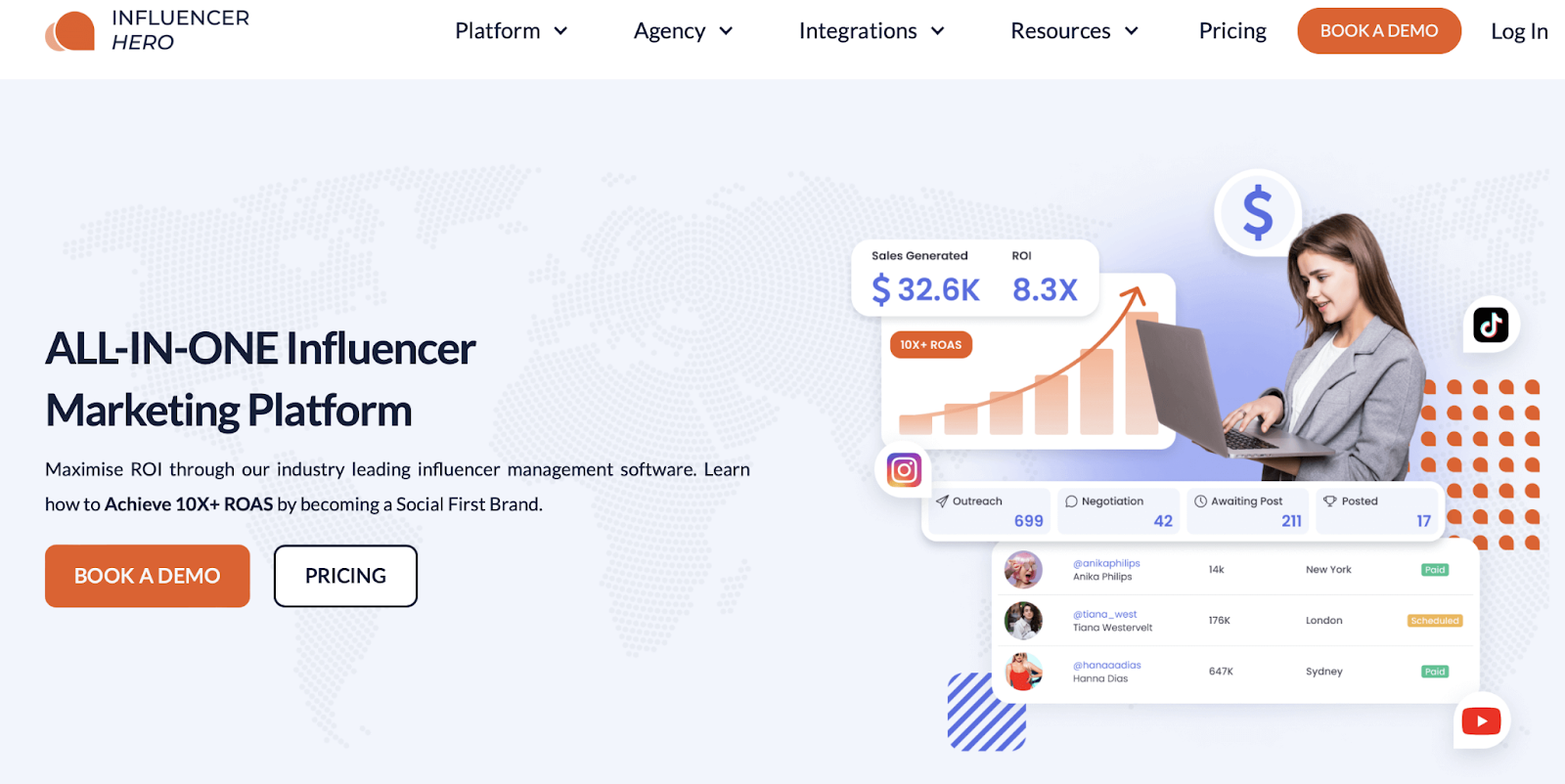
Influencer Hero is a comprehensive, all-in-one platform designed to centralize every stage of the creator lifecycle, from initial discovery to automated affiliate payouts. It is built specifically for mid-market and enterprise brands that need to move away from fragmented spreadsheets and into a structured, high-volume workflow. Because of its deep data synchronization, many consider it the best influencer marketing software for BigCommerce users who prioritize operational efficiency.
What makes Influencer Hero great for BigCommerce
Automated Product Gifting: Syncs directly with your inventory to handle sample call-outs and shipping labels without manual data entry.
Dynamic Discount Code Generation: Automatically creates and tracks unique codes for every influencer within the BigCommerce backend.
Integrated CRM: Centralizes all communication, contracts, and content approvals in a single dashboard to prevent outreach overlap.
Affiliate Revenue Tracking: Provides real-time visibility into which creators are driving actual sales versus just social engagement.
Content Library Management: Automatically aggregates all high-performing UGC (User Generated Content) for use in your own paid social ads.
Pros
Eliminates the need for multiple subscriptions by combining CRM, email automation, and analytics.
Highly scalable for brands managing 50+ active creator relationships simultaneously.
Direct API integration ensures sales data is accurate and reflected in real-time.
Cons
The extensive feature set may have a steeper learning curve for very small teams.
Higher entry price point compared to simple, discovery-only search tools.
2. Impact.com
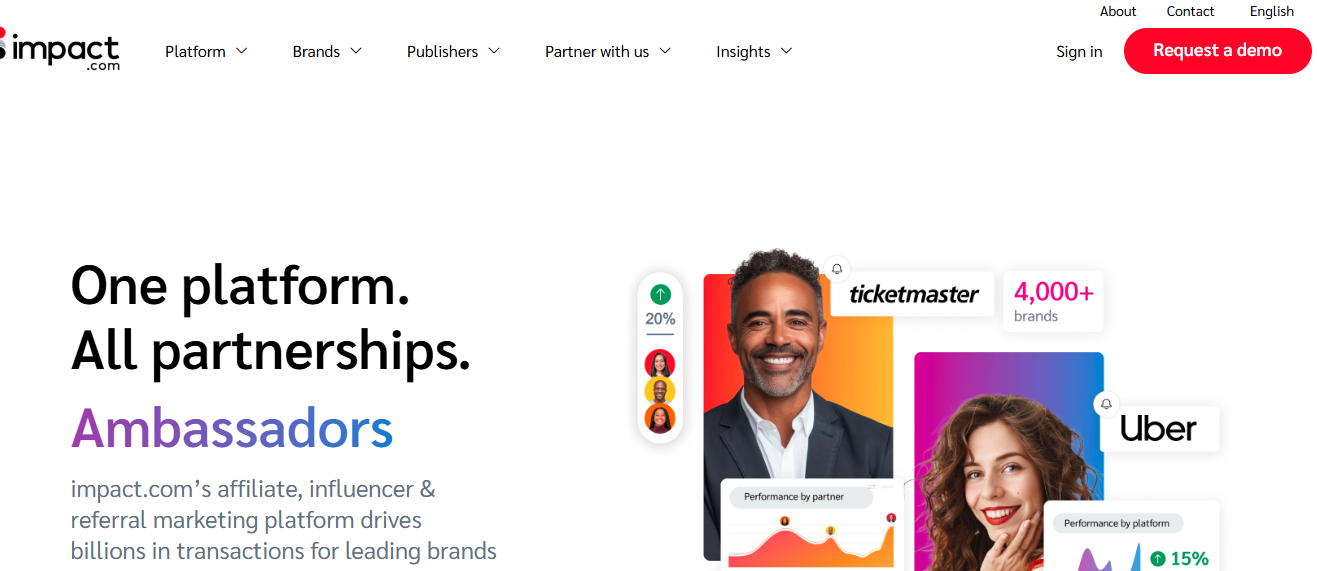
Impact.com is a global partnership management platform that treats influencer marketing as a high-performance affiliate channel. It is designed for enterprise-level brands that need to manage influencers alongside traditional affiliates, ambassadors, and media partners in a single ecosystem.
What makes Impact.com great for BigCommerce
Granular Attribution: Goes beyond "last-click" to show how influencers contribute to the full sales funnel.
Automated Contract Lab: Generates dynamic payout structures based on specific performance milestones.
Global Payments: Handles multi-currency payouts to creators in over 200 countries automatically.
Vanity URL Generation: Creates clean, trackable links that match the influencer’s brand for better click-through rates.
Partner Discovery: Access to a massive marketplace of vetted creators and traditional media publishers.
Pros
Robust reporting that satisfies data-heavy marketing departments.
Highly customizable commission structures (e.g., higher pay for new vs. returning customers).
Scalable for global brands with complex legal and payment requirements.
Cons
The interface is complex and typically requires a dedicated manager to navigate.
Can feel "corporate," lacking some of the aesthetic-focused features found in creative-first tools.
3. GRIN
Grin focuses heavily on the "people" side of influencer marketing, positioning itself as a creator management platform rather than a database. It is best suited for DTC brands that want to build deep, authentic relationships by treating creators as an extension of their internal team.
What makes Grin great for BigCommerce
Product Seed Automation: Allows influencers to log in and select their own products directly from your store's live inventory.
Content Aggregation: Automatically pulls every Story, Reel, and post into a high-resolution library for your team.
Gmail/Outlook Integration: Syncs your actual inbox so all creator communication stays in one place without "platform-only" DMs.
Influencer Web Extension: Allows you to vet creators directly while browsing social media profiles.
Real-time ROI Dashboard: Maps every dollar spent against the revenue generated via BigCommerce orders.
Pros
Excellent user interface that feels like a modern CRM.
Deep focus on "Creator Experience," making the brand look professional to the influencer.
Strong automation for the manual tasks associated with shipping physical goods.
Cons
Historically higher price point, often making it inaccessible for smaller startups.
Limited "cold" discovery features compared to massive database tools.
4. Aspire
Aspire (formerly AspireIQ) is built around the idea of a "community" rather than just a list of names. It excels at managing inbound applications, allowing brands to turn their existing customers and fans into active brand ambassadors through landing pages and application forms.
What makes Aspire great for BigCommerce
Custom Application Pages: Create branded "Join our Team" pages that capture influencer data directly.
Automated Workflow Stages: Moves creators through "Applied," "Approved," and "Sent Product" automatically based on your criteria.
Creator Marketplace: A "Tinder-style" matching system where you can post a brief and let creators come to you.
Influencer Whitelisting: Built-in tools to manage the legal permissions and access for running "Dark Posts."
Great for brands that get a lot of "work with me" requests and need to filter them.
Very visual platform that makes managing creative assets easy.
Simplifies the legal side of usage rights and contracts.
Cons
The marketplace can sometimes lead to lower-quality "mass applications."
Some users find the campaign setup process to be slightly rigid.
5. Traackr
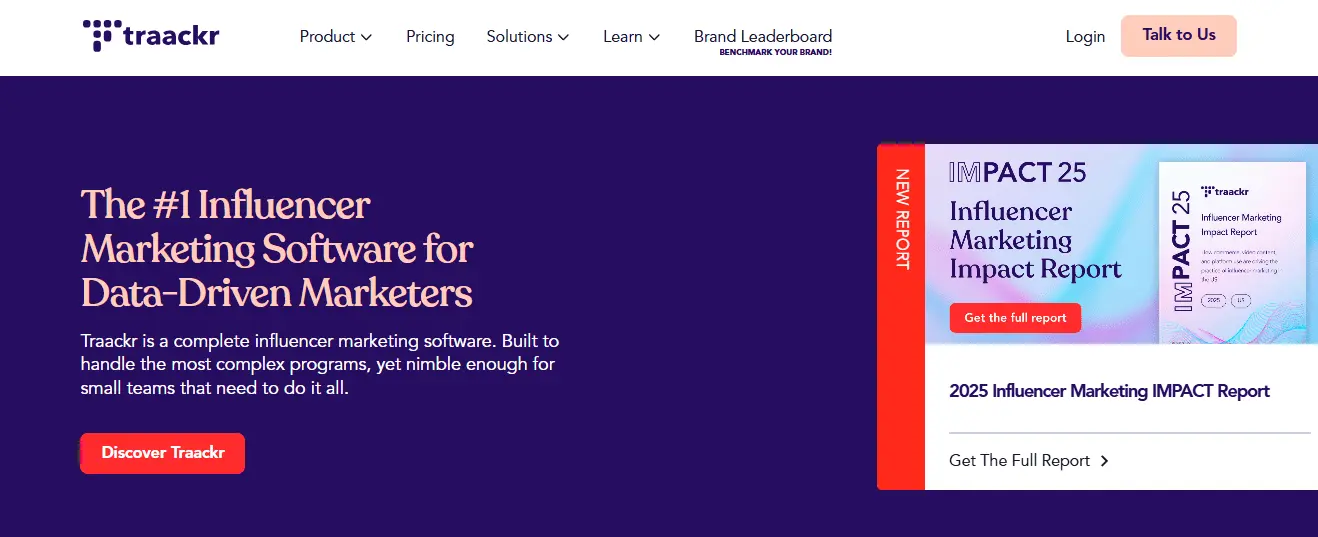
Traackr is an influencer marketing platform that prioritizes deep data analytics and competitive intelligence. It is the go-to for brands that need to justify their spend through hard data and want to see how their "share of voice" stacks up against competitors.
What makes Traackr great for BigCommerce
Audience Quality Scoring: Advanced bot detection and audience authenticity metrics to prevent wasted spend.
Competitive Benchmarking: Track your competitors' influencer activity to see which creators they are hiring.
Budget Optimization: Suggests how to allocate spend across different tiers of influencers for maximum ROI.
Affiliate Link Integration: Syncs link performance data to help identify your most profitable partners.
Brand Safety Filtering: Flags potential issues in a creator’s past content before you hire them.
Pros
Unmatched depth in audience demographics and "true reach" data.
Excellent for long-term strategic planning rather than just "one-off" posts.
Very strong global database covering almost every niche imaginable.
Cons
Can feel more like a research tool than a quick "outreach" tool.
The depth of data can be overwhelming for smaller brands with simple needs.
6. Upfluence
Upfluence stands out for its "Live Capture" feature, which analyzes your BigCommerce customer list to identify people who are already buying your products and have a significant social following. It bridges the gap between traditional influencer marketing and customer advocacy.
What makes Upfluence great for BigCommerce
Customer Social Search: Scans your store’s database to find influencers who are already your customers.
eCommerce Chrome Plugin: See social stats and "add to campaign" buttons directly within your BigCommerce admin panel.
One-Click Payments: Simplifies the tax and payment process for hundreds of creators at once.
Micro-Influencer Discovery: High-precision filters to find niche creators with high engagement rates.
Automated Mailing Flows: Send personalized bulk emails that don't look like "spam" to potential partners.
Pros
Unique ability to turn customers into creators, which usually leads to higher ROI.
Integrated with Google Analytics to track traffic and sales more accurately.
Very efficient for brands focused on "Micro" and "Nano" influencer tiers.
Cons
The database search interface can feel a bit dated compared to newer tools.
Some advanced features require a higher-tier subscription.
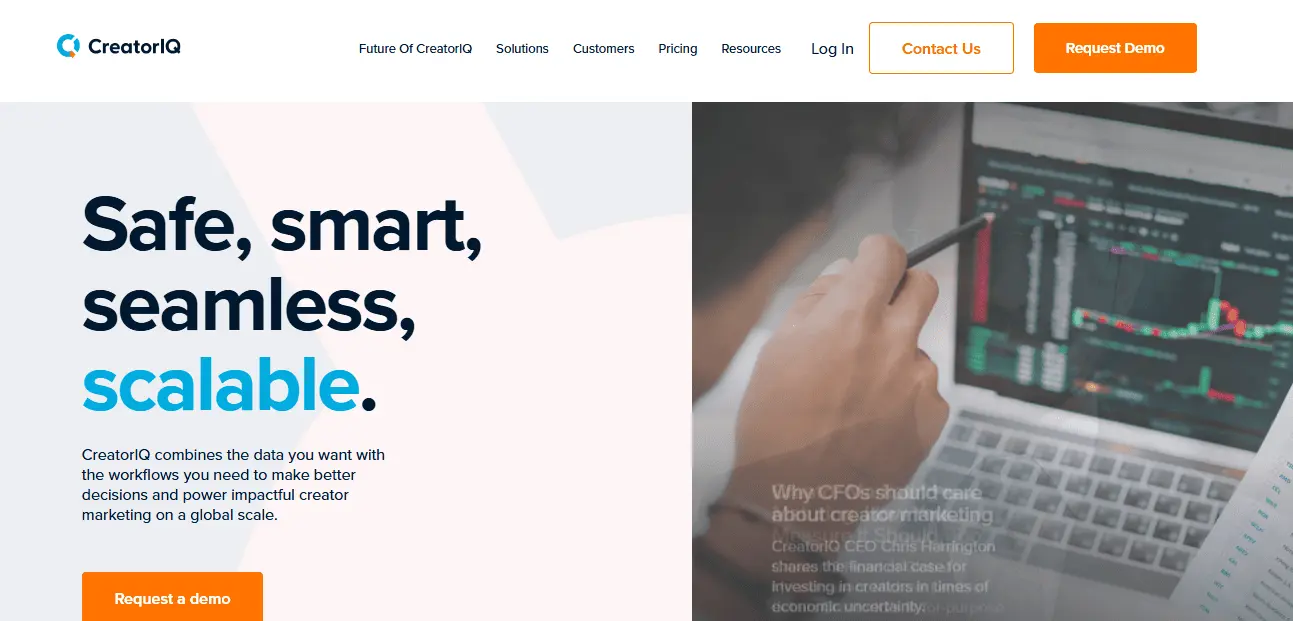
7. CreatorIQ
CreatorIQ is an enterprise-grade platform designed for the world’s largest brands that need strict governance and unified reporting across multiple departments or regions. It is less of a "tool" and more of a "full-stack operating system" for influencer marketing.
What makes CreatorIQ great for BigCommerce
Private Creator Network: Build a completely private, white-labeled portal for your influencers to interact with your brand.
Advanced Fraud Detection: Proprietary "Integrity Score" to ensure every dollar is spent on real human engagement.
Custom Reporting API: Pulls influencer data into your company’s internal BI tools (like Tableau or Looker).
Enterprise Permissions: Control exactly which team members or agencies can access specific campaign data.
Global Compliance: Built-in tools for FTC disclosures and GDPR-compliant data handling.
Pros
The gold standard for security and data integrity.
Extremely customizable to fit very specific corporate workflows.
Used by some of the biggest global brands, ensuring high reliability.
Cons
Significant investment required in terms of both cost and setup time.
Usually too robust for small-to-mid-sized brands that just need to send products and track links.
How to Choose the Right Influencer Marketing Software
Selecting the best platform depends on your specific goals—whether you need to find new talent, manage a high volume of product gifts, or track complex affiliate payouts.
Scaling a structured, all-in-one influencer program: Influencer Hero
Focusing on high-touch creator relationship management: Grin
Building an inbound community of brand ambassadors: Aspire
Prioritizing deep competitive benchmarking and data strategy: Traackr
Identifying and activating your existing BigCommerce customers: Upfluence
Managing enterprise-level governance and global operations: CreatorIQ
Key Takeaways
Choosing the right influencer marketing platform for BigCommerce depends on your specific goals, from brand awareness to direct revenue tracking. As programs grow, moving from manual spreadsheets to automated systems is essential for maintaining efficiency and clear ROI.
The decision ultimately hinges on your scale: simpler tools work for early-stage outreach, while more advanced platforms are necessary for managing high-volume gifting and complex affiliate workflows. If your primary goal is turning creators into direct sales channels, Creator Hero provides the infrastructure to build custom storefronts and track influencer performance with total transparency.
FAQs
How does influencer marketing software typically integrate with BigCommerce?
Most platforms connect via a native app or API to sync your store’s data. This allows the software to automatically generate discount codes, track sales from specific influencer links, and sometimes even manage product gifting by pulling from your live inventory. Influencer Hero, for example, uses this connection to automate the entire fulfillment and attribution loop, so you aren't manually matching orders to creators.
Can I track influencer sales directly in my BigCommerce dashboard?
While BigCommerce tracks coupon usage and UTM parameters, it doesn’t natively "know" which influencer belongs to which code. Influencer marketing software bridges this gap. Tools like Influencer Hero or Upfluence pull that raw data from BigCommerce and organize it by creator, giving you a clear view of which partners are actually driving revenue and what your specific ROI per influencer looks like.
What is the best way to handle product gifting through my store?
Manual gifting is a major time sink. You want a platform that allows creators to select their own products (within your rules) and then automatically creates a "zero-dollar" order in BigCommerce. This ensures your inventory stays accurate and shipping labels are generated through your existing fulfillment process. Influencer Hero and Grin are particularly strong in automating this "seeding" workflow.
Do these platforms help with creator discovery, or just management?
It depends on the tool. Some, like Traackr, are research-heavy databases designed to help you find new faces. Others, like Influencer Hero, are "all-in-one" solutions that provide both a massive discovery database and the CRM tools needed to manage those relationships once they’ve signed on. If you’re starting from scratch, look for a platform that offers both recruitment and management features.
Is there a difference between "Affiliate" and "Influencer" software for BigCommerce?
Yes, though the lines are blurring. Traditional affiliate software (like Refersion) focuses strictly on link tracking and payouts. Influencer software (like Influencer Hero) adds a "human" layer—managing content approvals, creator communication, and product gifting. For most modern brands, an integrated approach that handles both the relationship and the performance tracking is the most efficient way to scale.
Related Posts
The incredible power of team collaboration is evident in the remarkable outcomes it can achieve
Influur pricing explained: no brand subscription, pay-as-you-go fees, real pros and cons, and our verdict on whether this creator marketplace is worth it in 2026.
Tagbox looks cheap at $19/month — but the feature most brands actually need is hidden behind an Enterprise quote. Here's the full pricing breakdown and our honest verdict.
Word on the Block charges no subscription — but its pricing page never tells you the fee. Here's what the model actually costs brands, what's included, and our honest verdict.
Build your own business without having to manage all the operational aspects of an e-commerce. Focus on creating content, driving sales and maximise your earnings!



.svg)


%201.png)





_logo.svg.png)


