Choosing the right influencer marketing software depends largely on how your brand operates on Amazon. Some platforms focus on creator discovery and outreach, while others are built to manage structured campaigns, affiliate programs, and revenue tracking tied directly to Amazon listings.
The right fit comes down to whether you prioritize awareness, content production, or measurable sales.
In this guide, we compare a selection of influencer marketing platforms commonly used by eCommerce and DTC brands selling on Amazon. Each tool is evaluated based on its core capabilities, workflow structure, and how well it supports influencer programs within an Amazon-focused ecosystem.
What to Look For in Influencer Marketing Software
Influencer marketing platforms vary widely in what they prioritize. Some are built for discovering creators at scale, while others focus on campaign management, affiliate tracking, or end-to-end workflows. The right choice depends on your goals, internal processes, and how influencer marketing fits into your overall growth strategy.
Creator Discovery & Vetting
Discovery-focused platforms are designed to help brands find relevant creators based on audience demographics, engagement, and niche alignment. These tools are especially useful in the early stages of a program or when testing new markets. For teams running ongoing campaigns, the ability to quickly vet and shortlist creators becomes a key efficiency driver.
Outreach & Relationship Management (CRM)
Platforms with built-in CRM and outreach tools help structure communication with creators over time. This includes email workflows, negotiation tracking, and maintaining long-term partnerships. Brands managing multiple campaigns or working with repeat creators often prioritize this to avoid fragmented communication across tools.
Campaign Management & Workflow Structure
Some platforms are built around structured campaign execution, with features for product seeding, content approvals, and timeline tracking. These are particularly relevant for brands running coordinated campaigns with multiple creators. A clear workflow helps teams stay organized and maintain visibility across different campaign stages.
Affiliate Tracking & Revenue Attribution
Affiliate-focused platforms prioritize performance tracking, allowing brands to measure clicks, conversions, and revenue generated by each creator, often through creator storefronts. This is essential for teams that treat influencers as sales channels rather than just content partners. Not all platforms offer deep attribution, so this becomes a key differentiator for performance-driven programs.
Automation & Scalability
As influencer programs grow, manual processes become harder to manage. Platforms with automation features—such as bulk outreach, follow-ups, and reporting—help teams scale without increasing operational workload. This is especially important for lean teams or brands managing a high volume of creators across campaigns.
Best Influencer Marketing Software for Amazon (Top Picks)
The platforms below represent some of the best influencer marketing software for [CMS] brands, depending on how they approach creator partnerships. Some tools focus on discovery, while others are built for managing campaigns, affiliate programs, and performance tracking within a structured workflow.
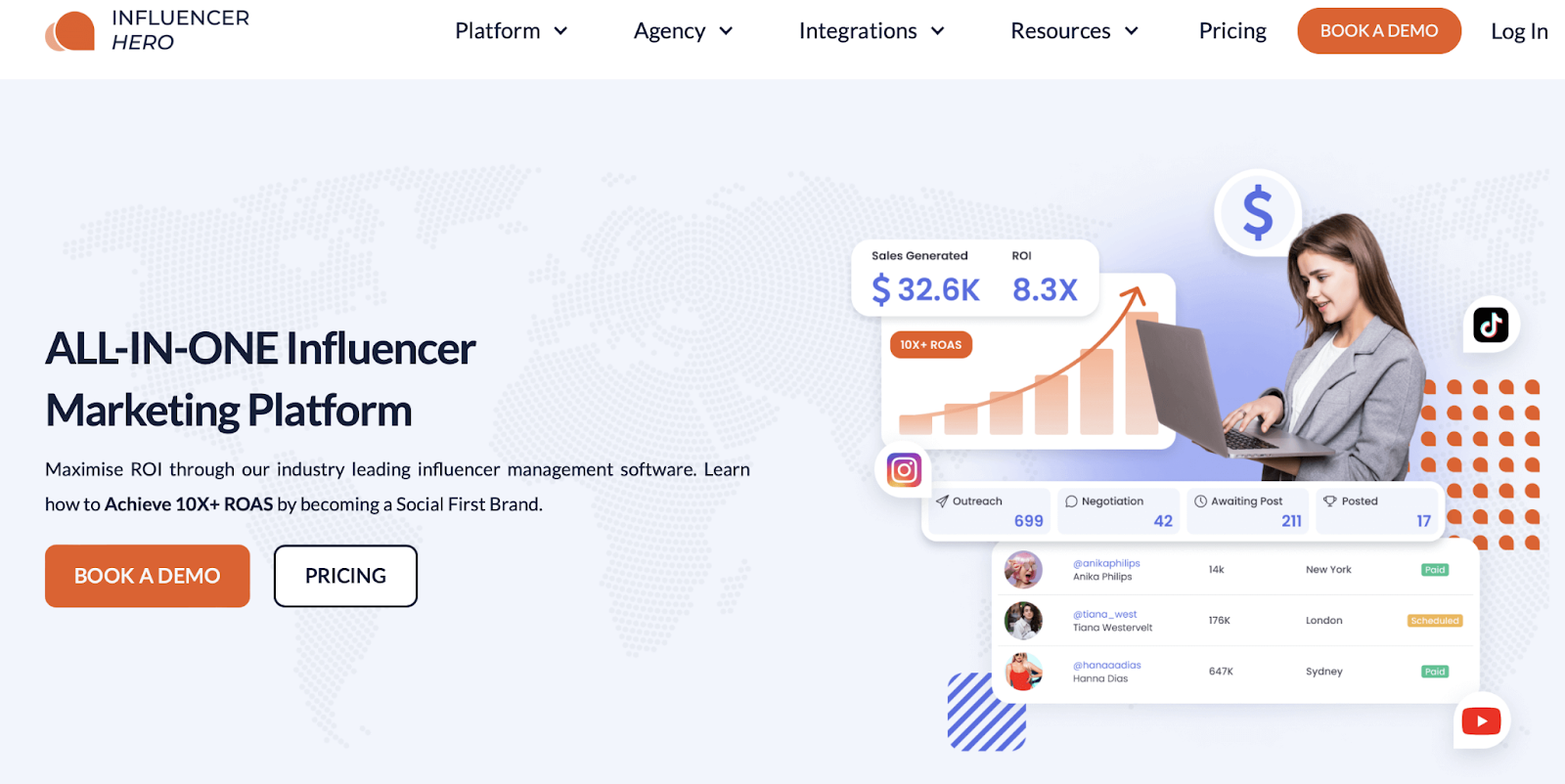
1. Influencer Hero – Best for All-in-One Influencer Campaign Management
Influencer Hero is a comprehensive creator management platform designed for brands that treat influencer marketing as a primary, scalable sales channel. It is particularly effective for Amazon sellers who need to consolidate discovery, automated outreach, and performance tracking into a single, high-efficiency dashboard.
As one of the best influencer marketing software for Amazon, it helps reduce the operational complexity typically associated with managing large-scale creator programs. The platform centralizes every stage of the workflow—from initial outreach to Amazon Attribution tracking—allowing teams to move away from fragmented tools and manual processes.
What Makes Influencer Hero Great for Amazon:
By integrating with Amazon Attribution, Influencer Hero connects influencer activity directly to marketplace performance data, improving visibility and control over campaigns.
Automated Revenue Attribution: Track clicks, conversions, and order-level data from Amazon Attribution links within a centralized dashboard.
Affiliate & Link Tracking: Generate unique tracking links for each creator to measure individual performance and ROI.
Centralized Creator CRM: Organize communication, negotiations, and campaign stages in one place without relying on external tools.
Automated Outreach & Follow-Ups: Use bulk messaging and multi-step email sequences to scale creator recruitment efficiently.
Pros
Comprehensive end-to-end features (discovery, CRM, outreach, gifting, and tracking)
Strong workflow structure for managing influencer programs at scale
Clear visibility into creator-level performance and revenue impact
Cons
Initial setup may require onboarding, especially for Amazon Attribution workflows
Feature depth may be more than needed for very small or early-stage teams
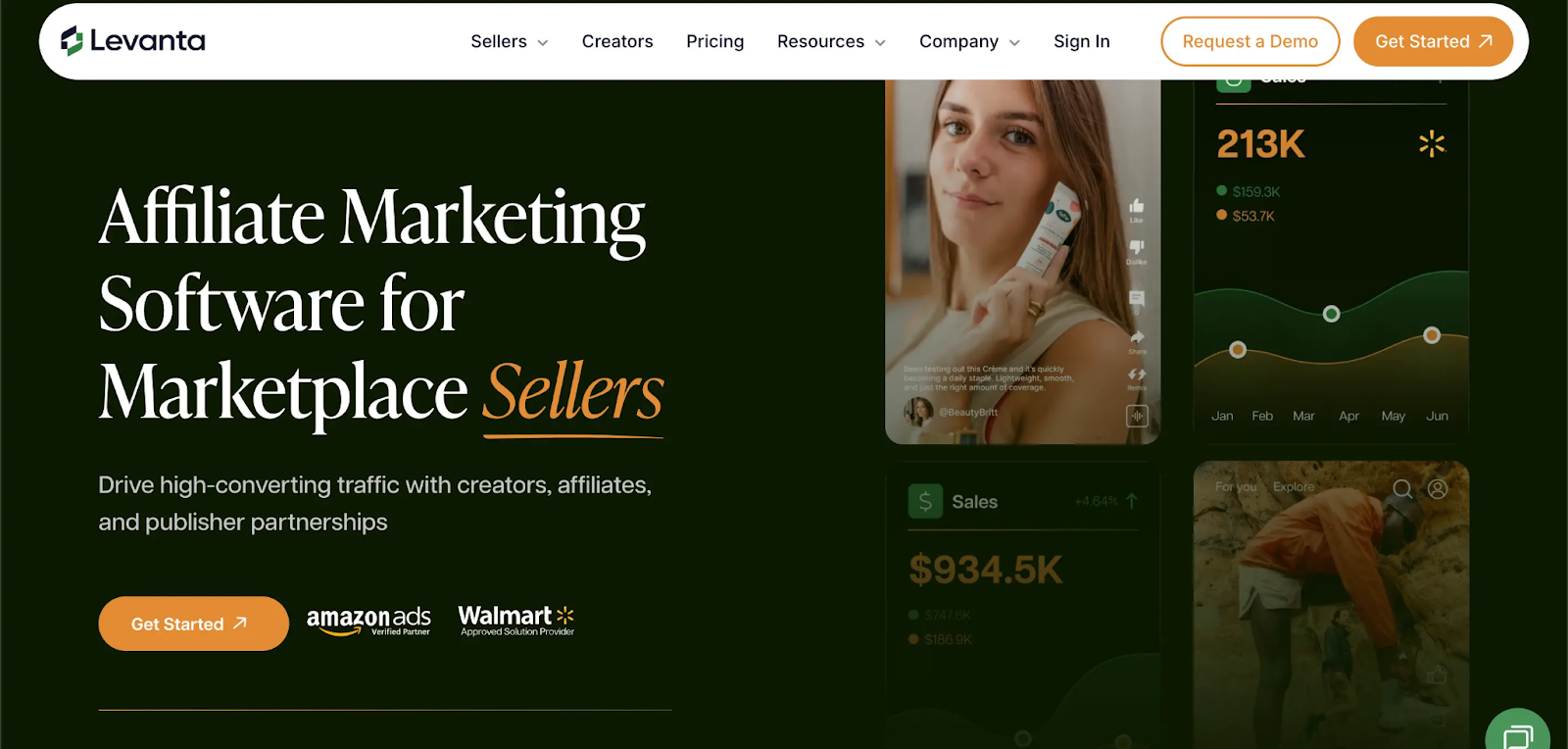
2. Levanta – Best for Amazon-First Affiliate Programs
Levanta is an Amazon-native influencer and affiliate platform built specifically for brands that generate most of their revenue through the marketplace. Rather than functioning as a traditional influencer CRM, it focuses on turning creators into performance-driven affiliates within Amazon’s ecosystem.
For Amazon sellers, Levanta acts as a dedicated layer on top of the platform’s affiliate infrastructure, simplifying how brands recruit creators, assign commissions, and track revenue. It is best suited for brands that prioritize scalable, commission-based partnerships over content-heavy campaign workflows.
What Makes Levanta Great for Amazon
Levanta is built directly around Amazon’s affiliate mechanics, making it highly aligned with marketplace-driven revenue strategies.
Amazon-Native Affiliate Infrastructure: Manage creator partnerships using systems designed specifically for Amazon’s referral and attribution model.
Centralized Performance Dashboard: Track clicks, conversions, and revenue from influencer-driven traffic in one place.
Flexible Commission Structures: Set custom payout rates by product, campaign, or margin requirements.
Creator Marketplace for Amazon Sellers: Connect with influencers already experienced in promoting Amazon products.
Scalable Affiliate Recruitment: Onboard and manage large numbers of creators without relying on manual tracking.
Pros
Built specifically for Amazon-first brands and workflows.
Strong focus on affiliate revenue and performance tracking.
Streamlined interface tailored to marketplace use cases.
Cons
Limited support for broader influencer campaign workflows (e.g., content approvals, UGC management).
Focused exclusively on Amazon, making it less suitable for multi-channel strategies.
Lacks advanced CRM features for long-term relationship management.
3. GRIN – Best for Relationship-Based Influencer CRM
GRIN is widely considered a leading creator management platform for eCommerce brands that treat influencer marketing as a long-term growth channel. It operates as a structured CRM that replaces fragmented communication and manual workflows with a centralized system.
For Amazon sellers, GRIN acts as the operational layer that manages creator relationships while connecting campaigns to marketplace-driven revenue. It is best suited for brands scaling beyond initial campaigns and needing to manage a large volume of ongoing partnerships.
What Makes GRIN Great for Amazon
GRIN connects influencer relationship management with Amazon-driven performance tracking in a unified system.
Direct Amazon Integration: Track influencer-driven sales through affiliate links tied to Amazon listings.
Unlimited Creator Partnerships: Scale influencer programs without restrictions on the number of active collaborators.
Centralized Content Library: Store and manage UGC with built-in usage rights for repurposing.
Integrated Payments & Commissions: Handle payouts and affiliate tracking within the same platform.
Pros
Strong CRM for managing long-term creator relationships.
Comprehensive feature set across the full campaign lifecycle.
Centralized payments and affiliate tracking.
Cons
Higher cost with typical annual commitments.
Learning curve due to platform depth and feature set.
May be overly complex for smaller teams or early-stage programs.
4. Aspire – Best for Structured Campaign Workflows
Aspire is an end-to-end influencer marketing platform designed to manage structured, multi-stage campaigns at scale. It combines creator discovery, inbound applications, workflow automation, and affiliate tracking into a single system.
For Amazon sellers, Aspire provides a clear campaign framework that helps teams coordinate multiple creators while maintaining visibility over deliverables and performance. It is best suited for brands running organized campaigns with defined processes.
What Makes Aspire Great for Amazon
Aspire brings structured workflows and creator sourcing into Amazon-focused influencer programs.
Inbound Creator Marketplace: Allow influencers to apply directly to campaigns, reducing outbound effort.
Campaign Workflow Automation: Manage stages from outreach to approvals and tracking in one pipeline.
Affiliate-Style Tracking: Measure clicks and conversions driven to Amazon listings.
Automated Follow-Ups: Maintain consistent communication without manual intervention.
Centralized Content Management: Store and organize campaign assets for reuse.
Pros
Strong workflow structure for managing campaigns.
Large pool of inbound creators.
Balanced mix of automation and control.
Cons
Requires annual commitment, limiting flexibility.
Less optimized for fully Amazon-native brands without a DTC layer.
Feature set can feel overwhelming during initial setup.
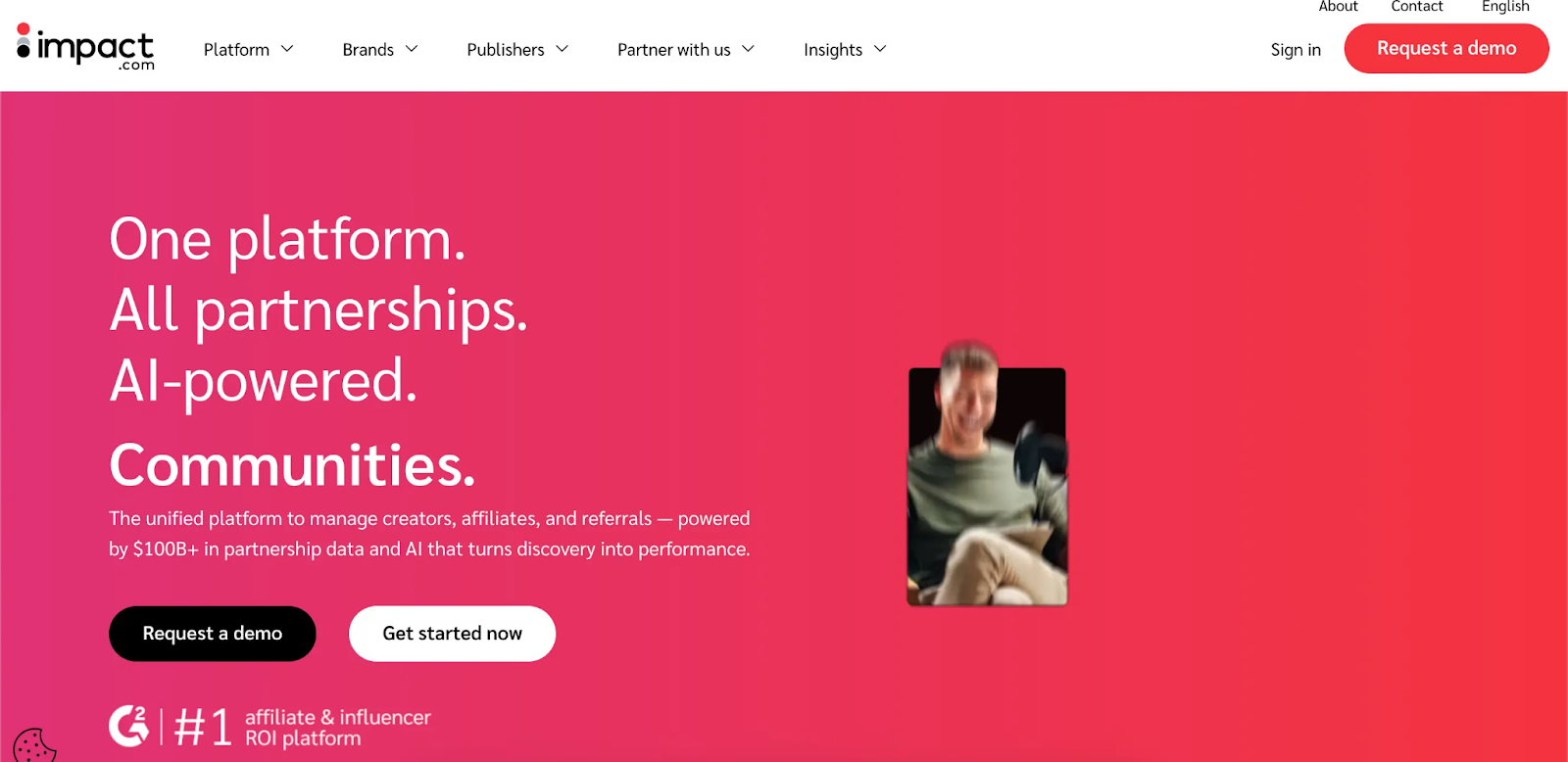
5. Impact.com – Best for Enterprise Partnership Management
Impact.com is a partnership management platform that extends beyond influencer marketing to include affiliates, publishers, and other performance partners. It is designed for brands that treat influencers as part of a broader revenue ecosystem.
For Amazon sellers, Impact acts as a centralized system for managing performance-based partnerships, making it particularly relevant for large brands operating at scale.
What Makes Impact.com Great for Amazon
Impact integrates influencer activity into a broader affiliate and partnership framework tied to Amazon performance.
Affiliate-Based Tracking: Manage influencer links directing traffic to Amazon listings.
Advanced Commission Automation: Customize payouts based on product, region, or performance tiers.
Multi-Touch Attribution: Analyze influencer impact alongside other marketing channels.
Global Payment Infrastructure: Automate payouts across regions and currencies.
Fraud Detection Tools: Monitor traffic quality and ensure compliance.
Higher cost suited primarily for enterprise teams.
More affiliate-focused than influencer-centric in terms of workflows.
6. Upfluence – Best for Customer-to-Creator Conversion
Upfluence is an all-in-one influencer and affiliate marketing platform designed to connect creator campaigns directly with eCommerce revenue. It is particularly known for leveraging first-party data to identify potential influencers within a brand’s existing customer base.
For Amazon sellers, Upfluence provides a way to combine influencer discovery, outreach, and affiliate tracking while tying performance back to marketplace sales.
What Makes Upfluence Great for Amazon
Upfluence links influencer campaigns with customer data and Amazon-driven revenue tracking.
Amazon Integration for Revenue Tracking: Monitor sales generated through influencer-driven traffic.
Customer-to-Creator Identification: Turn existing buyers into potential brand ambassadors.
Built-In Affiliate Management: Create and track commission-based partnerships.
AI-Powered Outreach: Automate messaging and improve response rates.
Social Listening Tools: Identify trends and relevant creators within your niche.
Pros
Strong integration between influencer marketing and revenue tracking.
Unique approach to sourcing creators from existing customers.
All-in-one platform with discovery and CRM features.
Cons
Annual contract required with limited short-term flexibility.
Some campaign elements are difficult to adjust once live.
Interface can feel complex during initial onboarding.
7. Modash - Best for Large-Scale Creator Discovery
Modash is a creator discovery platform built around one of the largest influencer databases available. It focuses on helping brands find, vet, and contact creators rather than managing full campaign workflows.
For Amazon sellers, Modash is typically used at the top of the funnel to identify relevant creators who can drive traffic to product listings through affiliate links or external campaigns.
What Makes Modash Great for Amazon
Modash supports Amazon strategies by enabling high-volume creator sourcing and validation.
Extensive Creator Database: Access a large pool of influencers across multiple platforms.
Advanced Filtering Tools: Search by audience demographics, engagement, and niche.
Lookalike Discovery Features: Find creators similar to top performers.
Outreach & Campaign Tracking: Manage initial communication and track engagement.
Audience Quality Analysis: Detect fake followers and assess credibility.
Pros
Strong discovery capabilities with detailed filtering.
Clean and intuitive interface.
More accessible pricing compared to enterprise tools.
Cons
No native Amazon integration for direct revenue attribution.
Limited campaign management and automation features.
Requires external tools for full affiliate tracking and reporting.
How to Choose the Right Influencer Marketing Software
The right platform depends on your goals, internal workflows, and how you plan to scale your influencer program on Amazon.
Want an all-in-one platform for outreach, CRM, and revenue tracking: Influencer Hero
Running Amazon-first affiliate programs: Levanta
Managing long-term creator relationships at scale: GRIN
Need structured workflows for campaign execution: Aspire
Managing influencers within a broader partnership ecosystem: Impact.com
Turning customers into creators and affiliates: Upfluence
Focused on large-scale creator discovery and vetting: Modash
Key Takeaways
Influencer marketing platforms differ in how they handle discovery, outreach, campaign management, and revenue tracking. Some are built for sourcing creators, while others focus on structured workflows or affiliate-driven performance. The right choice depends on your goals, how your team operates, and whether you need simple tools or a more centralized system to replace manual processes and scale efficiently.
For early-stage programs, lightweight or discovery-focused tools may be enough to test partnerships and build initial workflows. As programs grow, brands often shift toward platforms that provide stronger automation, CRM structure, and performance visibility. For teams specifically exploring creator storefronts and ways to turn influencers into direct revenue channels, Creator Hero is one option to consider alongside traditional influencer marketing tools.
FAQs
What is the best influencer marketing software for Amazon sellers?
The best platform depends on your goals. All-in-one tools like Influencer Hero are suited for brands that want to manage discovery, outreach, and revenue tracking in one place. Amazon-native platforms like Levanta focus more on affiliate-driven sales, while tools like GRIN or Aspire are better for structured campaigns and long-term creator relationships.
Can influencer marketing software track Amazon sales?
Some platforms can track Amazon performance through Amazon Attribution or affiliate links. Tools like Influencer Hero, Levanta, GRIN, and Upfluence allow brands to monitor clicks, conversions, and revenue generated by creators, although the depth of tracking varies by platform.
Do I need an all-in-one platform or a discovery tool?
It depends on your stage. Discovery tools like Modash are useful for finding and vetting creators, especially early on. As your program grows, all-in-one platforms like Influencer Hero or CRM-focused tools like GRIN become more relevant for managing relationships, campaigns, and performance in a structured way.
How do Amazon brands manage influencer affiliate programs?
Amazon brands typically use platforms that support affiliate link generation, commission tracking, and performance reporting. Levanta is built specifically for Amazon affiliate workflows, while platforms like Influencer Hero, Impact.com, and Upfluence offer broader systems that combine influencer management with affiliate tracking.
What features should I prioritize when choosing a platform?
Key features depend on your strategy. For awareness and creator sourcing, discovery tools are often enough. For performance-driven programs, prioritize affiliate tracking and revenue attribution. For scaling operations, look for platforms like Influencer Hero or GRIN that offer CRM, automation, and campaign management in one system.
Related Posts
The incredible power of team collaboration is evident in the remarkable outcomes it can achieve
Influur pricing explained: no brand subscription, pay-as-you-go fees, real pros and cons, and our verdict on whether this creator marketplace is worth it in 2026.
Tagbox looks cheap at $19/month — but the feature most brands actually need is hidden behind an Enterprise quote. Here's the full pricing breakdown and our honest verdict.
Word on the Block charges no subscription — but its pricing page never tells you the fee. Here's what the model actually costs brands, what's included, and our honest verdict.
Build your own business without having to manage all the operational aspects of an e-commerce. Focus on creating content, driving sales and maximise your earnings!



.svg)


%201.png)



_logo.svg.png)


