Top 10 Best Influencer CRM Software
If your brand is still managing influencer partnerships through a mess of spreadsheets, email threads, and scattered notes, you are leaving money on the table. As influencer marketing matures, the difference between "getting lucky" with a campaign and consistently scaling ROI lies in your infrastructure.
That is where an Influencer CRM comes in. It is not just an address book—it is your command center for discovery, relationship management, automation, and performance tracking. In this guide, we break down the top 10 Influencer CRM tools to help you streamline your workflows and professionalize your creator partnerships.
• Influencer Hero
• GRIN
• Upfluence
• Aspire
• Traackr
• HypeAuditor
• Modash
• Influencity
• Meltwater
• CreatorIQ
Why Use Influencer CRM Tools in 2026?
Operating without a dedicated CRM for influencers leads to fragmented data and wasted hours. Here is why you need a dedicated system:
• Unified Communication: Sync every email, WhatsApp message, and DM into one dashboard so your team never misses a beat during negotiations.
• Workflow Automation: Trigger automatic emails, payment reminders, and status updates as influencers move through your campaign pipeline.
• Scalable Product Seeding: Manage inventory, shipping addresses, and tracking numbers in the same place you manage the partnership.
• Actionable ROI Tracking: Stop guessing if a post worked; track affiliate sales, discount code usage, and direct revenue attribution in real-time.
• Data-Driven Discovery: Move beyond "gut feeling" by using AI-powered filters to find creators who actually match your audience demographics.
Why It Matters For Your Brand
An Influencer CRM transforms influencer marketing from a chaotic, manual task into a predictable revenue channel. By centralizing your data, you reduce the "administrative drag" that kills campaign momentum, allowing your team to focus on strategy rather than logistics.
For brands aiming to scale, this isn't just about efficiency; it's about building a sustainable, long-term asset of creator relationships that you own and can reactivate at any time.
Top 10 Influencer CRM Software in 2026
1. Influencer Hero

Influencer Hero is an all-in-one influencer marketing software designed to handle the entire lifecycle of a creator partnership from start to finish. It excels at converting your existing Shopify customers into brand ambassadors while providing powerful automated outreach to new prospects.
Because it combines discovery, CRM, and affiliate tracking into one interface, it is widely considered the best influencer marketing tool for CRM for brands that refuse to sacrifice power for simplicity.
By using this centralized CRM, you can manage all your campaigns and relationships through one single dashboard. You can track performance, payouts, UGC, and product send-outs all from one dedicated deal page, ensuring you leave your competition behind using an all-in-one Creator Management Platform.
Pricing: $649 – $2,490+ per month
Best For: Scaling DTC brands and agencies that need an affordable but powerful alternative to enterprise software.
Why It Stands Out:
• Deal-Centric Creator CRM Architecture: Unlike platforms that separate communication, product fulfillment, payouts, and influencer tracking into different modules, Influencer Hero organizes every creator relationship around a dedicated deal page. This creates a centralized workspace where teams can manage emails, WhatsApp conversations, product shipments, affiliate links, payments, contracts, and UGC assets in one place.
• AI-Powered Creator Filtering & Workflow Automation: Influencer Hero includes AI-assisted workflows that allow teams to filter creators using natural-language prompts through its “Smart Selection” feature. Instead of relying solely on manual filters, users can quickly surface creators based on campaign behavior, communication history, engagement level, or previous participation.
• Unified Communication Tracking: One of the platform’s strongest CRM advantages is its ability to sync email threads and WhatsApp communication directly into the creator deal page. This gives marketing teams complete visibility into influencer conversations without needing to switch between multiple tools or inboxes.
• High-Volume Campaign Operations: Influencer Hero is designed to support brands managing large creator pipelines. Bulk actions allow teams to send outreach emails, process creator payouts, trigger automated workflows, and organize product gifting campaigns across hundreds of influencers simultaneously.
• Flexible Campaign Board Workflows: The customizable Campaign Boards function similarly to sales pipelines, allowing brands to build their own internal creator management processes. Teams can create automated triggers tied to creator movement stages such as outreach, negotiation, gifting, content approval, or payment completion.
• Built-In Affiliate & Revenue Tracking: The platform combines influencer CRM functionality with affiliate infrastructure, allowing brands to track creator-generated revenue, discount code usage, payouts, and performance metrics directly inside one dashboard.
• Centralized UGC & Creator Asset Management: Influencer Hero helps teams organize influencer-generated content, making it easier to manage approvals, track deliverables, and reuse creator assets for paid ads, email campaigns, social media, and landing pages.
Pros:
• Seamless Shopify Integration: Easily convert your own customers into brand ambassadors.
• Unified Communication: Syncs WhatsApp messages and email threads directly to the deal page for 360-degree visibility.
• High-Volume Efficiency: Powerful bulk actions allow you to trigger emails, process payments, or ship products to hundreds of creators in just a few clicks.
• Customizable Automation: Flexible logic allows you to trigger automated workflows based on specific movements within your campaign boards.
Cons:
• Tiered Feature Access: Advanced AI-personalization and automation features are restricted to higher-tier plans.
Learning Curve for New Teams: The broad feature set can feel overwhelming for smaller teams initially.
2. GRIN
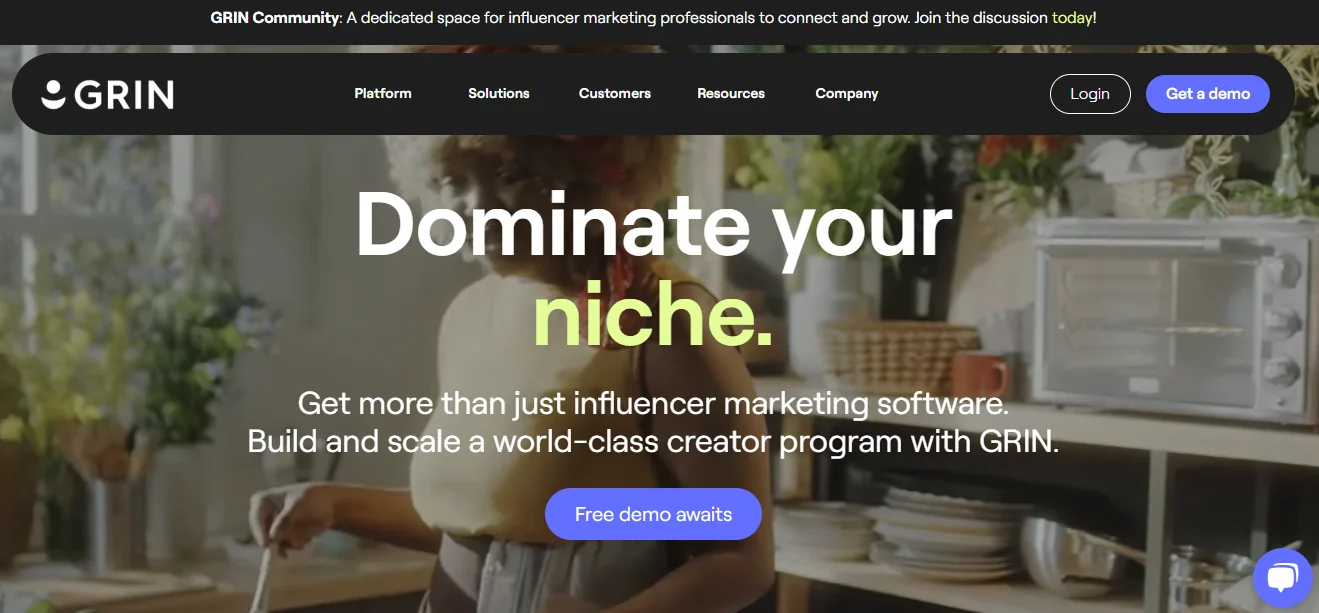
GRIN is built to handle the complexities of large-scale influencer programs by prioritizing relationship ownership. Its "unlimited" management model is designed specifically for brands that have outgrown manual list-building and need a robust, enterprise-grade system to manage hundreds of active partnerships simultaneously.
Pricing: Starts around $2,500/month
Best For: Established DTC brands managing large-scale, high-volume programs.
Why It Stands Out:
• Unlimited Creator Relationship Management: GRIN’s infrastructure is designed for brands managing hundreds or even thousands of influencer relationships simultaneously. Unlike platforms that charge based on creator volume, GRIN allows brands to scale creator partnerships without worrying about relationship limits.
• Centralized Influencer CRM: The platform acts as a true CRM for influencer marketing, helping brands organize creator conversations, outreach history, campaign participation, contracts, shipping details, and performance metrics inside one operational dashboard.
• Automated Product Seeding Workflows: GRIN simplifies gifting and product fulfillment for influencer campaigns. Brands can send products directly to creators, track shipment status, and manage creator deliverables without relying on external spreadsheets or disconnected tools.
• UGC Content Library: One of GRIN’s strongest operational features is its automated UGC management system. Creator content is automatically organized into searchable libraries, making it easier for teams to repurpose influencer assets for paid ads, email campaigns, landing pages, and social media.
• Shopify & eCommerce Integration: The platform integrates directly with Shopify and other eCommerce systems, allowing brands to connect influencer-driven revenue, affiliate performance, and discount code usage directly to campaign reporting.
Pros
• Excellent Creator Relationship Management: Built specifically for managing long-term influencer partnerships at scale.
• Strong UGC Organization: Makes influencer content easy to store, search, and reuse.
• Deep eCommerce Integrations: Useful for DTC brands focused on revenue attribution.
• Good Product Gifting Infrastructure: Simplifies product seeding workflows significantly.
• Unlimited Creator Management: Ideal for brands scaling large creator ecosystems.
Cons
• Expensive for Growing Brands: Pricing is geared toward mature DTC and enterprise companies.
• Steeper Learning Curve: The platform can feel operationally heavy for new teams.
• Reporting Delays on Some Platforms: Occasional synchronization delays may occur depending on the social channel.
3. Upfluence
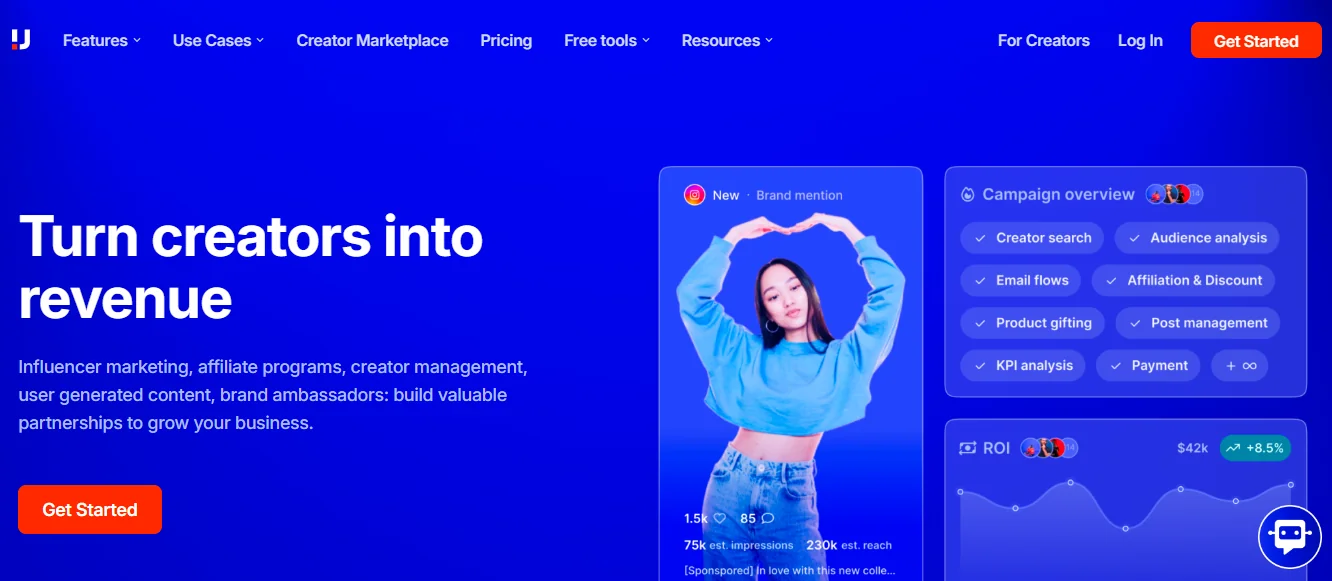
Upfluence serves as a powerful bridge between influencer activity and e-commerce outcomes. By integrating directly into platforms like Shopify and Amazon, it allows brands to treat influencer marketing as a performance-driven acquisition channel, making it ideal for teams that need to prove the bottom-line ROI of every creator partnership.
Pricing: Starts around $1,276/month
Best For: eCommerce brands laser-focused on sales conversion.
Why it Stands Out
• Deep eCommerce Integration: Upfluence integrates directly with Shopify, WooCommerce, Amazon, and other eCommerce platforms, allowing brands to connect influencer activity directly to sales performance, affiliate revenue, and customer acquisition metrics.
• Customer-to-Creator Identification: One of Upfluence’s most unique features is its ability to identify existing customers who are also creators. This allows brands to recruit influencers who already use and purchase their products, improving authenticity and conversion potential.
• AI-Powered Outreach Assistance: The platform includes automation tools for influencer outreach, follow-ups, and campaign communication, helping teams scale creator management more efficiently.
• Affiliate & Discount Code Tracking: Upfluence makes it easy to generate affiliate links and discount codes tied directly to influencer-driven revenue attribution, making it especially valuable for ambassador and affiliate-style campaigns.
• Social Listening & Competitive Monitoring: The platform includes social listening tools that help brands monitor competitor partnerships, brand mentions, and creator conversations across social channels.
Pros
• Strong Revenue Attribution: Excellent for tracking influencer-driven sales and ROI.
• Native Shopify Integration: Very useful for DTC and eCommerce workflows.
• Good Affiliate Infrastructure: Supports ambassador and referral programs effectively.
• Helpful Outreach Automation: Reduces manual communication tasks.
• Customer-to-Creator Discovery: Unique feature for identifying influential customers.
Cons
• Annual Contracts Required: Long-term commitments may not suit all brands.
• Interface Can Feel Cluttered: Large feature set may overwhelm smaller teams.
• Creator Database Requires Filtering: Search results can sometimes include inactive profiles.
4. Aspire

Aspire focuses on the human element of influencer marketing, emphasizing ease of use and team collaboration. Its standout feature, the inbound marketplace, allows brands to attract creators directly to their programs, significantly reducing the time spent on manual cold outreach and relationship sourcing.
Pricing: Starts around $2,300/month
Best For: Mid-market and enterprise DTC brands.
Why It Stands Out
• Inbound Creator Marketplace: Aspire’s marketplace allows creators to proactively apply to brand campaigns, reducing the need for constant outbound outreach and helping brands build stronger creator communities organically.
• Collaborative Influencer CRM: The platform centralizes creator communication, approvals, contracts, deliverables, and relationship history into one collaborative workflow that works well for larger marketing teams.
• Product Gifting Automation: Aspire integrates with Shopify to streamline gifting workflows, making it easier to collect creator shipping details, send products, and monitor campaign fulfillment.
• UGC Asset Management: The platform organizes influencer-generated content into searchable libraries, allowing brands to reuse creator assets across ads, landing pages, email campaigns, and social media.
• Verified First-Party Audience Data: Aspire emphasizes audience authenticity by using verified creator data rather than relying solely on scraped social metrics.
Pros
• Strong Creator Collaboration Features: Excellent for managing ongoing partnerships.
• Good UGC Workflow Infrastructure: Makes content organization and reuse easier.
• Helpful Product Seeding Tools: Very useful for Shopify gifting campaigns.
• Intuitive Interface: Easy for teams to adopt operationally.
• Good for Community-Led Programs: Supports ambassador-style creator ecosystems.
Cons
• Less Advanced Financial Reporting: Not as data-heavy as some enterprise competitors.
• Pricing Transparency Is Limited: Requires direct sales conversations for detailed pricing.
• Discovery Features Are More Limited: Not as discovery-focused as platforms like Modash.
5. Traackr
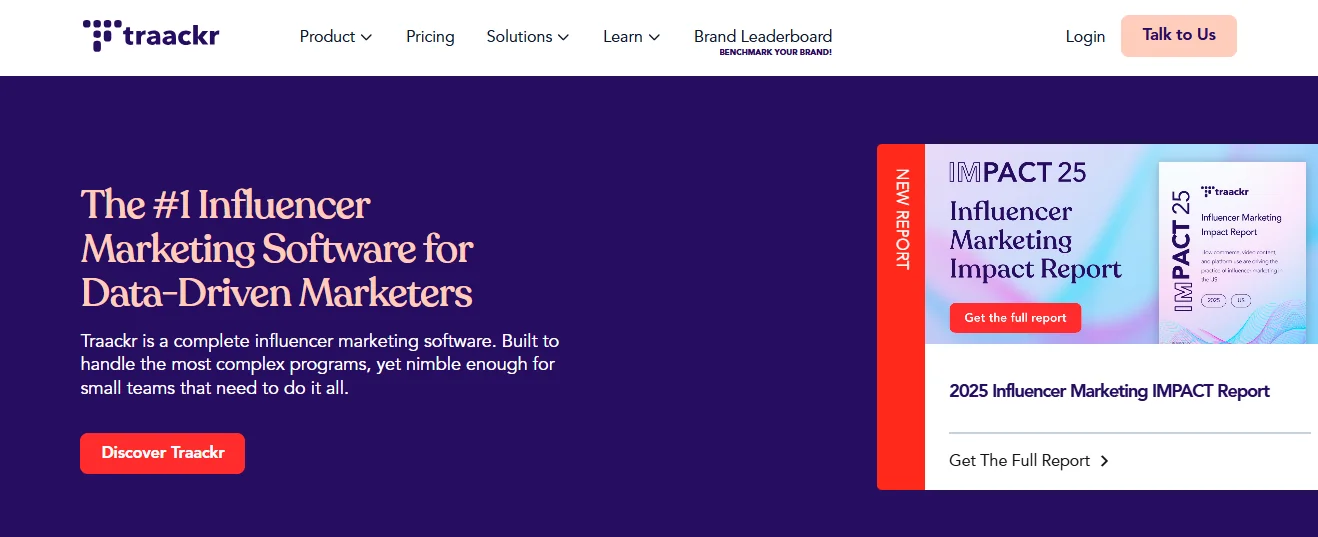
Traackr is the gold standard for global enterprise brands that treat influencer marketing as a core component of their PR and communications strategy. With its proprietary benchmarking metrics and multi-market support, it provides the level of data and legal compliance reporting required by Fortune 500 companies.
Pricing: Starts around $32,500/year
Best For: Global enterprises requiring deep analytics and international benchmarking.
Why It Stands Out
• Global Influencer Infrastructure: Traackr supports large-scale international influencer programs with tools built specifically for multi-region campaign management and localized reporting.
• Brand Vitality Score (BVS): The platform’s proprietary benchmarking system helps brands measure creator impact and campaign performance against competitors and industry standards.
• Enterprise Reporting & Forecasting: Traackr provides advanced ROI dashboards and executive-level analytics designed for leadership teams, agencies, and global marketing departments.
• Compliance & Governance Features: The platform includes infrastructure for FTC, ASA, and international compliance workflows, making it particularly valuable for regulated enterprise organizations.
• Relationship & Campaign Tracking: Traackr centralizes creator partnerships, campaign participation, performance metrics, and influencer history within one enterprise CRM environment.
Pros
• Excellent Global Benchmarking: Strong cross-market reporting infrastructure.
• Enterprise-Level Analytics: Provides advanced performance dashboards.
• Strong Compliance Features: Useful for global enterprise organizations.
• Large Influencer Database: Extensive creator coverage across regions.
• Good Executive Reporting: Well suited for C-suite performance visibility.
Cons
• Extremely Expensive: Pricing is inaccessible for most smaller brands.
• Long Implementation Process: Enterprise onboarding can take significant time.
• Affiliate Attribution Can Require Manual Work: Some workflows still need operational adjustments.
6. HypeAuditor
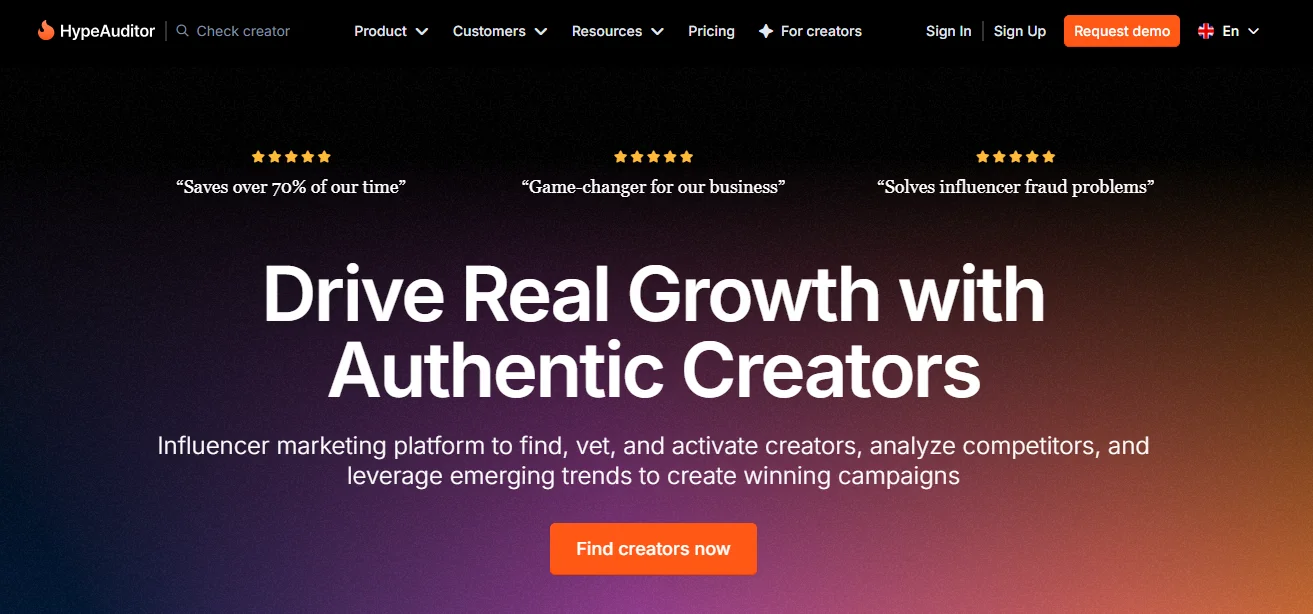
HypeAuditor has built its reputation on data integrity and fraud detection. It is the premier choice for brands that are risk-averse, providing deep analytical insights into audience quality and engagement authenticity, ensuring you aren't wasting your budget on "vanity" metrics or fake influencers.
Pricing: Starts around $10,000/year
Best For: Brands where authenticity and audience data quality are the top priorities.
Why It Stands Out
• Industry-Leading Fraud Detection: HypeAuditor is widely recognized for its fake follower detection, engagement authenticity analysis, and audience quality scoring systems.
• Deep Audience Analytics: The platform provides highly detailed demographic insights, including audience age, gender, country, interests, and engagement behavior.
• Massive Influencer Database: HypeAuditor includes millions of creator profiles across Instagram, TikTok, YouTube, and other major social platforms.
• Competitive Benchmarking: Brands can compare creator performance against competitors, industry averages, and campaign benchmarks.
• Influencer CRM Functionality: While more analytics-focused than CRM-heavy competitors, HypeAuditor still allows teams to organize creator lists, campaign tracking, and influencer management workflows.
Pros
• Best-in-Class Fraud Detection: Excellent for avoiding fake influencers and low-quality audiences.
• Highly Detailed Analytics: Provides strong audience-level insights.
• Strong Benchmarking Features: Useful for competitive campaign analysis.
• Massive Creator Database: Excellent for influencer discovery.
• Trusted Enterprise Reputation: Widely used by agencies and enterprise brands.
Cons
• More Analytics-Focused Than CRM-Focused: Workflow automation is less advanced than dedicated CRM tools.
• Expensive as a Secondary Tool: Can become costly if used mainly for vetting.
• Collaboration Features Are More Limited: Not as strong for operational campaign management.
7. Modash
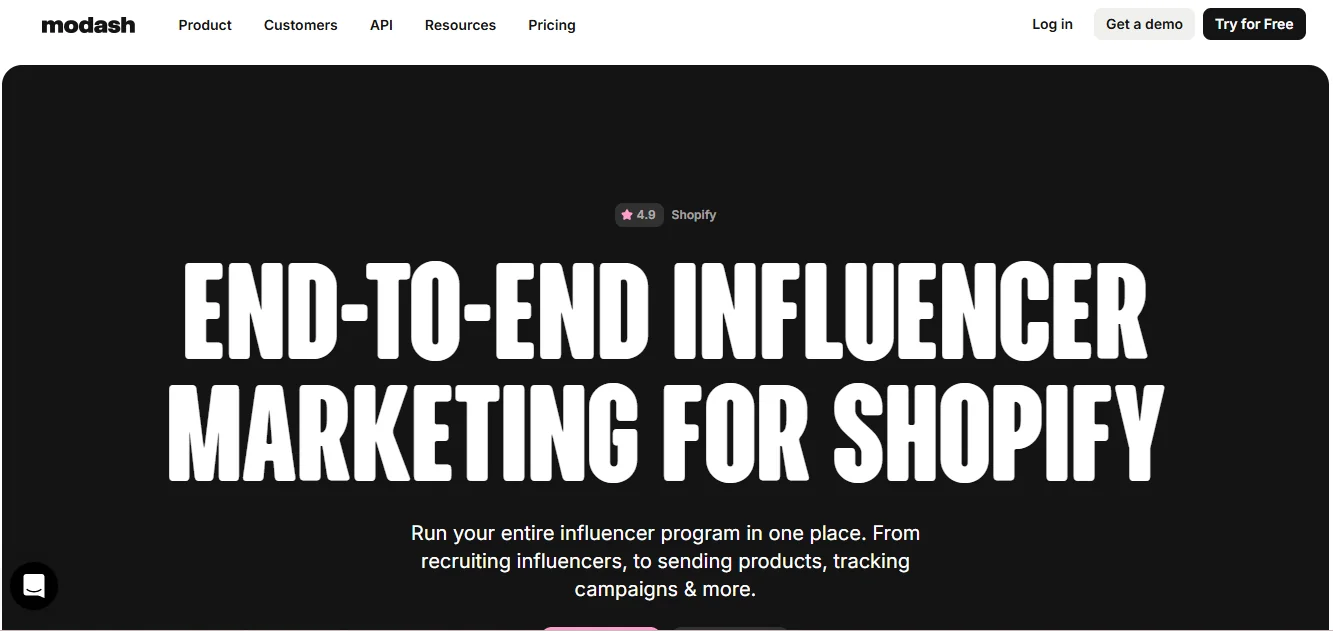
Modash provides a refreshing mix of high-end data access and an accessible, easy-to-use CRM interface. It is perfect for growing brands that want enterprise-level discovery features—without the enterprise-level price tag or complex onboarding requirements.
Pricing: Starts at $199/month
Best For: Growing DTC brands needing high-value tools without the enterprise cost.
Why It Stands Out
• Massive Creator Database: Modash gives brands access to over 350M creator profiles across Instagram, TikTok, and YouTube, making it one of the largest searchable influencer databases available.
• Lightweight Influencer CRM: Unlike more operationally heavy enterprise systems, Modash keeps creator management simple and intuitive. Teams can organize influencer lists, manage outreach, track partnerships, and monitor campaign activity without navigating complex workflows.
• Shopify & Affiliate Integration: The platform integrates well with Shopify workflows, allowing brands to manage discount codes, affiliate links, and creator attribution more efficiently.
• Audience Quality & Vetting Tools: Modash includes fake follower analysis, engagement quality scoring, audience demographics, and follower growth tracking to help brands avoid low-quality creator partnerships.
• Spreadsheet-Like Workflow: One of Modash’s biggest strengths is usability. The interface feels fast and operationally simple, making it easy for lean DTC teams to adopt without extensive onboarding or training.
Pros
• Very Affordable for the Feature Set: Strong value compared to enterprise CRM platforms.
• Huge Influencer Database: Excellent for large-scale creator sourcing.
• Easy-To-Use Interface: Minimal learning curve for marketing teams.
• Good Shopify Workflow Support: Useful affiliate and discount code capabilities.
• Strong Discovery Features: Excellent filtering and creator search tools.
Cons
• Limited Enterprise Features: Does not offer advanced compliance or enterprise governance tools.
• CRM Features Are More Lightweight: Less operational depth than platforms like GRIN or CreatorIQ.
• Reporting Is More Basic: Analytics are solid but not enterprise-grade.
8. Influencity

Influencity takes a "visual-first" approach to CRM, using a highly intuitive, Trello-style workflow. This is ideal for teams that manage multiple campaigns at once and need a quick, visual way to see exactly where every creator is in the outreach, negotiation, or content approval process.
Pricing: Starts at $3,816/year
Best For: Mid-sized brands managing multiple simultaneous campaigns.
Why It Stands Out
• Visual CRM Workflow: Influencity uses a highly visual, pipeline-style interface that allows teams to track creators through different campaign stages, including outreach, negotiation, approvals, gifting, and content delivery.
• Audience Overlap Analysis: The platform helps brands identify audience overlap between creators, reducing redundant reach and improving campaign diversification.
• Granular Audience Filtering: Influencity provides detailed demographic filters, including audience age, gender, interests, location, and brand affinity insights.
• Campaign Collaboration Tools: The platform is well suited for collaborative marketing teams that need shared visibility into campaign progress and influencer relationship status.
• Flexible Campaign Organization: Teams can customize campaign structures and creator pipelines based on their operational workflows rather than relying on rigid templates.
Pros
• Excellent Visual Workflow Management: Makes campaign tracking very intuitive.
• Strong Audience Analytics: Provides detailed demographic insights.
• Helpful Audience Overlap Features: Useful for optimizing creator selection.
• Good Multi-Campaign Organization: Works well for busy marketing teams.
• Flexible CRM Structure: Allows workflow customization.
Cons
• Learning Curve for Complex Setups: Custom workflows may require onboarding time.
• No Native Content Scheduling: Lacks built-in social publishing features.
• Reporting Can Lack Raw Data Depth: Some analysts may want more export flexibility.
9. Meltwater
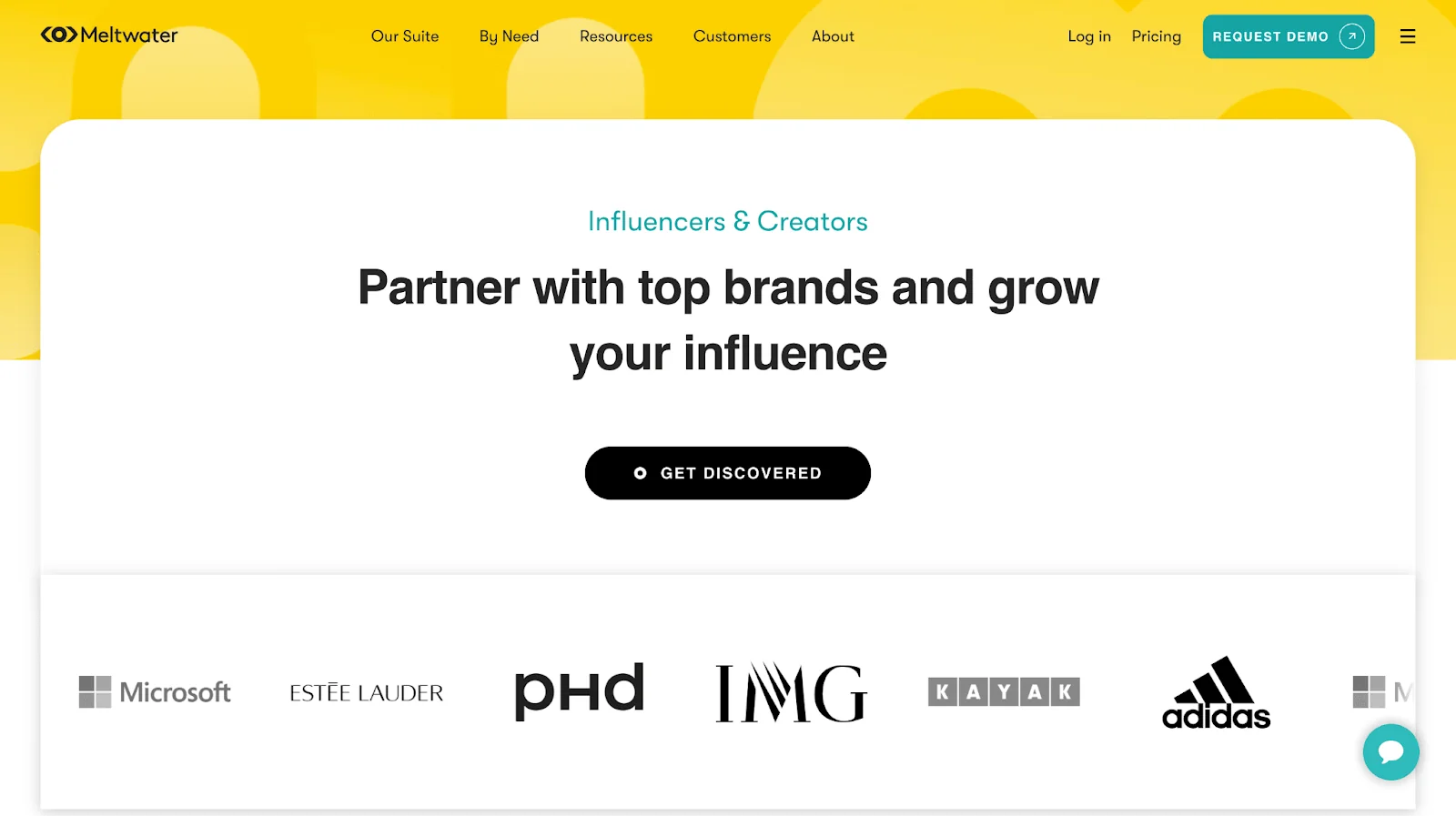
Meltwater is a comprehensive media intelligence platform that offers influencer marketing as part of a much larger ecosystem. For teams that want to tie their influencer activities into broader PR, brand sentiment, and social listening trends, this is the ultimate, all-encompassing solution.
Pricing: Starts around $50,000/year
Best For: Large enterprises that need influencer marketing as part of a total PR and media suite.
Why It Stands Out
• Integrated Media Intelligence Platform: Meltwater combines influencer CRM functionality with social listening, news monitoring, brand sentiment analysis, and media intelligence reporting.
• Enterprise-Level Social Listening: Brands can monitor conversations about creators, competitors, campaigns, and industry trends across social media, online publications, and digital communities.
• Brand Sentiment & Reputation Analysis: The platform helps organizations evaluate influencer partnerships within the broader context of brand perception and public sentiment.
• Influencer Relationship Management: Meltwater centralizes creator communication, campaign management, influencer tracking, and performance reporting within one enterprise environment.
• Dedicated Enterprise Support: One of Meltwater’s strongest advantages is its enterprise onboarding, consulting, and account management infrastructure for large organizations.
Pros
• Strong PR + Influencer Integration: Excellent for communications-driven organizations.
• Powerful Social Listening: Advanced monitoring across digital channels.
• Enterprise Reporting Infrastructure: Good for executive-level reporting and analysis.
• Helpful Brand Sentiment Features: Useful for reputation management.
• Dedicated Customer Support: Strong onboarding and consulting resources.
Cons
• Very Expensive: Pricing is designed for enterprise organizations.
• Complex Platform Structure: Requires training and operational onboarding.
• Overkill for Pure Influencer Marketing Teams: More functionality than many brands actually need.
• Requires Boolean Search Knowledge: Advanced searches can feel technical for new users.
10. CreatorIQ

CreatorIQ operates as an enterprise-grade ERP for the influencer space. It is designed for global brands with large, dispersed teams that need strict compliance controls, automated legal documentation, and complex hierarchy management to keep their influencer programs running smoothly and legally.
Pricing: Starts at $35,000/year
Best For: Enterprise global brands with complex compliance and multi-team reporting needs.
Why It Stands Out
• Enterprise-Grade Influencer CRM: CreatorIQ is designed to manage large-scale creator programs with strict organizational controls, centralized reporting, and structured workflows across departments and markets.
• Advanced Team Collaboration Infrastructure: The platform allows multiple internal teams, agencies, and stakeholders to collaborate on influencer campaigns while maintaining permissions, approval systems, and workflow governance.
• Automated Compliance & Legal Workflows: CreatorIQ includes tools for tax documentation, payment compliance, FTC disclosures, contracts, and legal approvals, making it particularly useful for regulated enterprise organizations.
• Global Campaign Management: The platform supports multi-region influencer operations with localized reporting, currency support, and scalable campaign infrastructure.
• Enterprise Security & Governance: CreatorIQ is heavily focused on enterprise security standards, making it a strong fit for publicly traded companies and large organizations with strict IT requirements.
Pros
• Excellent Enterprise Governance: Strong permissions, compliance, and organizational controls.
• Built for Global Teams: Very scalable for multi-region operations.
• Advanced Collaboration Features: Good for large cross-functional marketing teams.
• Strong Legal & Compliance Infrastructure: Useful for enterprise influencer operations.
• Centralized Campaign Management: Organizes large creator ecosystems effectively.
Cons
• High Cost: Pricing is prohibitive for smaller companies.
• Long Implementation Timeline: Requires onboarding, setup, and training.
• Less Agile for Smaller Teams: Platform structure is optimized for enterprise operations rather than speed.
• Can Feel Operationally Heavy: Feature depth may overwhelm lean marketing teams.
Final Thoughts
In 2026, influencer CRM has evolved from simple list-keeping to a mission-critical strategy for brand growth. Selecting the right platform is the difference between disorganized outreach and a scalable, high-performing revenue channel.
Whether you need the all-in-one automation of Influencer Hero or the enterprise-grade governance of platforms like CreatorIQ, the goal is the same: eliminate friction between creator discovery and bottom-line ROI.
The most successful brands today are those that centralize their data, automate their workflows, and treat every creator relationship as a long-term asset. Don't wait for your program to outgrow your spreadsheets, book a demo with Influencer Hero to turn your influencer strategy into your brand’s greatest competitive advantage.


.svg)


%201.png)


_logo.svg.png)


