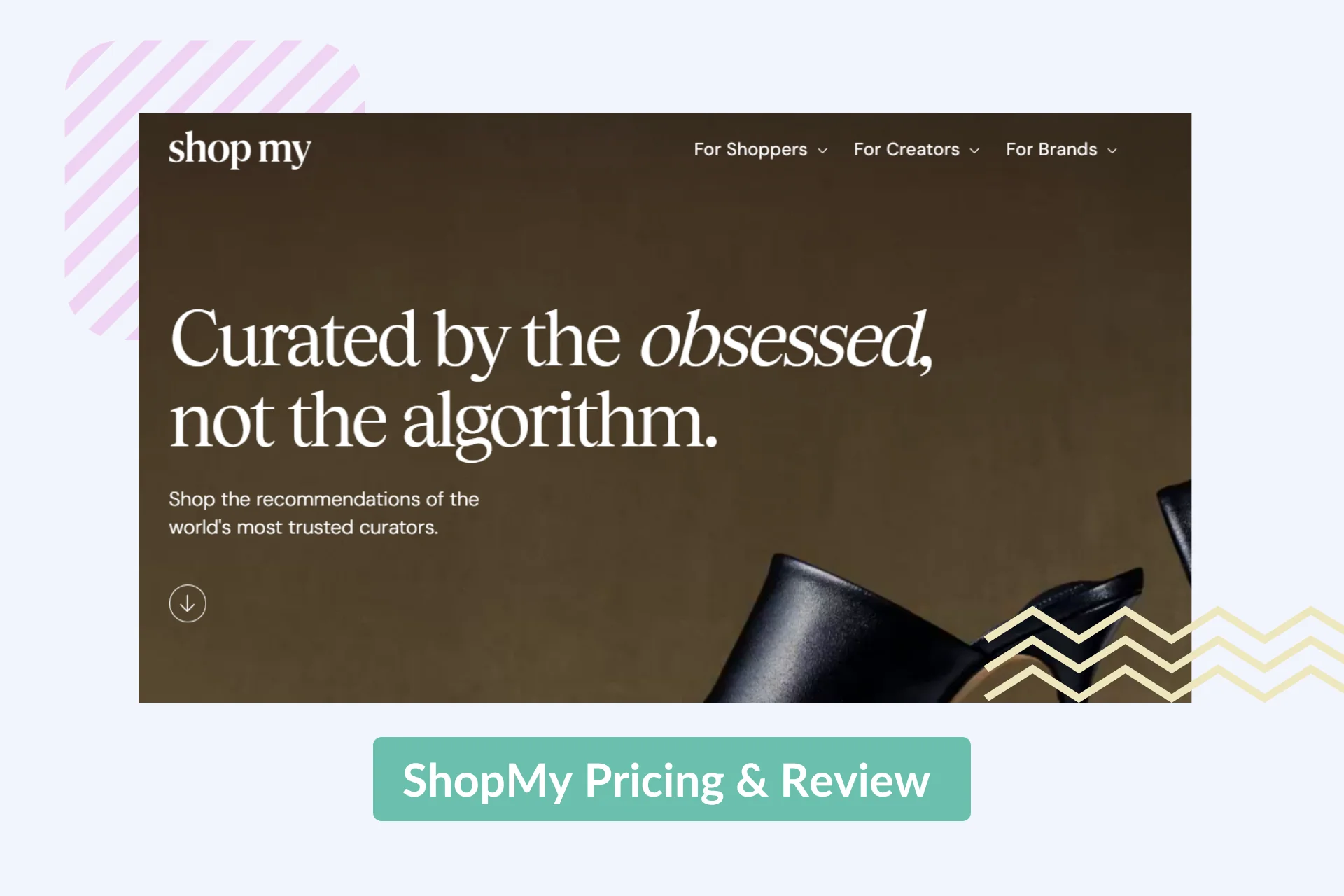
Tarification et Avis ShopMy 2026 : Fonctionnalités, Coûts et Verdict
La tarification de ShopMy commence à 399 $/mois pour un accès d'affiliate au niveau débutant et monte jusqu'à 2 799+ $/mois pour un accès complet à la plateforme — avec des frais de transaction en plus. La plupart des paliers au-delà de ce prix d'entrée sont sur devis, donc le montant réel dépend des fonctionnalités que vous activez.
Dans cet avis, nous couvrons les paliers tarifaires de ShopMy, ses fonctionnalités remarquables, les retours réels des utilisateurs, et si cela vaut le coup pour votre marque. Nous signalerons également où ShopMy excelle vraiment (programmes d'affiliation mode et beauté) et où il commence à montrer ses limites (workflows de campagne complexes et catégories à panier moyen élevé).
Si vous êtes une marque DTC ou une agence évaluant des plateformes d'affiliation et de storefront et que vous essayez de déterminer où ShopMy s'inscrit, cette analyse est pour vous.
Idéal pour : Les marques mode, beauté et lifestyle qui gèrent des programmes d'affiliation et de gifting avec des créateurs micro et nano
Prix de départ : 399 $/mois (accès complet 2 799+$/mois, principalement sur devis)
Essai gratuit : Pas d'essai gratuit public — l'accès pour les marques se fait via une démonstration et un processus commercial
Note G2 : Limitée — ShopMy a très peu d'avis G2 du côté des marques ; la majorité du sentiment public se trouve sur Reddit, Medium et les blogs de créateurs
Notre verdict : Excellent moteur de ventes orienté affiliation pour les marques beauté et mode, mais faible en gestion de campagne avancée et peu pertinent en dehors de ses verticales principales
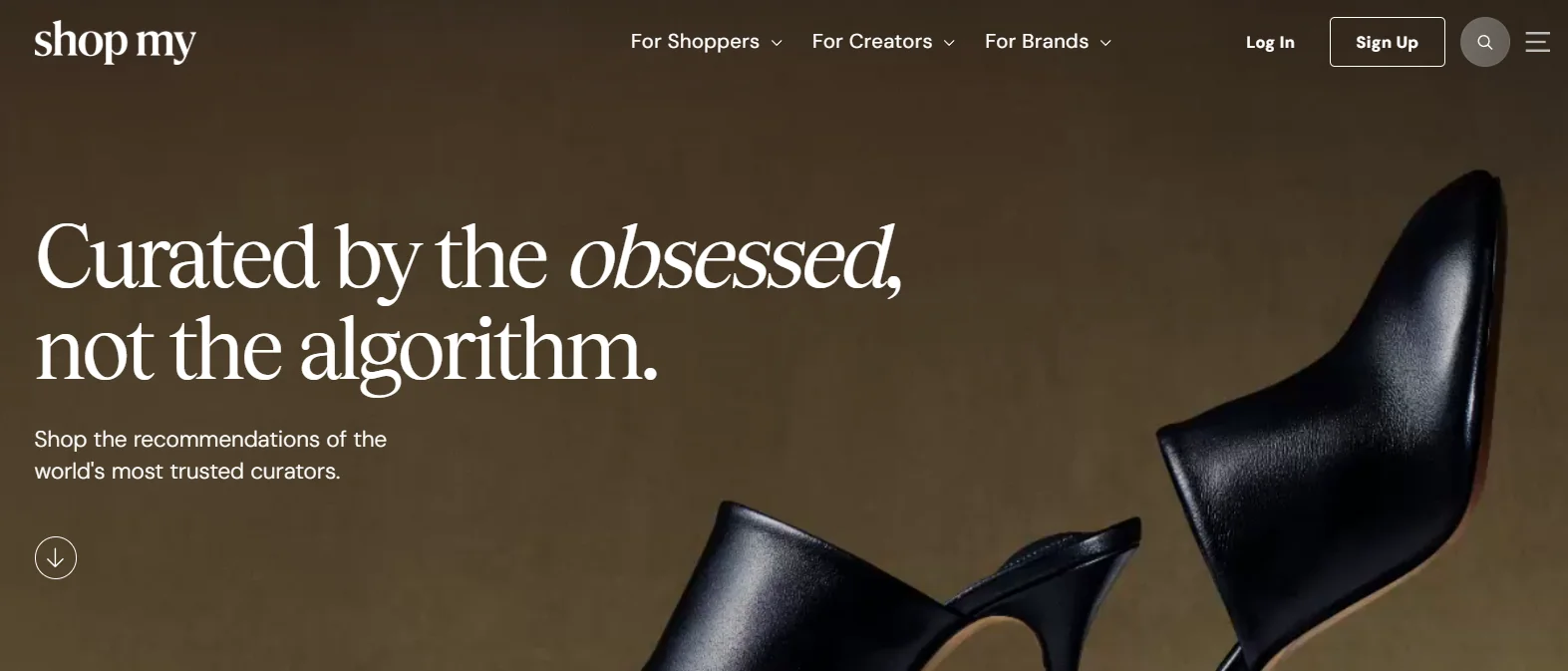
Qu'est-ce que ShopMy ?
ShopMy est une plateforme de creator commerce basée à New York, fondée en 2020, qui connecte les marques aux créateurs via des storefronts d'affiliation, le gifting automatisé et des campagnes de performance. Elle a levé 77,5 millions de dollars en Serie B au début 2025, menée par Bessemer et Bain Capital Ventures, atteignant une valorisation rapportée de 1,5 milliard de dollars, et sert désormais environ 200 000 créateurs et 1 200 partenaires marques générant plus d'1 milliard de dollars en GMV annuel.
La plateforme opère dans le même créneau que LTK : les créateurs construisent des storefronts shoppables et gagnent des commissions, tandis que les marques obtiennent des outils de découverte, de gifting et d'attribution des ventes. Sa réputation a été construite sur la mode, la beauté et les soins de la peau — bien qu'elle pousse activement dans les catégories bien-être, agroalimentaire, fitness et famille.
Fonctionnalités Clés de ShopMy
• Découverte et évaluation des créateurs. Les marques peuvent filtrer les ~200 000 créateurs vérifiés de ShopMy par catégorie, valeur panier moyenne et retour sur dépenses publicitaires passé. La base de données penche fortement vers la mode, la beauté et le lifestyle, et vers les créateurs micro et nano plutôt que les méga-influenceurs.
• Lookbooks (gifting automatisé). C'est l'un des outils les plus loués de ShopMy. Les marques créent des campagnes de gifting qui se synchronisent directement avec l'inventaire Shopify et placent automatiquement des commandes à 0 $, et les créateurs choisissent les produits qui correspondent à leur esthétique. Cela a généré plus de 10 millions de dollars en volume de gifting au cours des six mois suivant son lancement.
• Opportunities (campagnes de performance). Les marques publient des campagnes à forfait où les créateurs gagnent pour des actions spécifiques, ShopMy rapportant environ 3,3x ROAS et 53% moins cher par clic que les publicités Instagram. Le hic : ShopMy prélève une commission de 15% sur le budget total de la campagne que vous déposez.
• Transparence au niveau SKU et attribution des commissions. Les marques voient exactement quel créateur a généré quelle vente, plus les clics, le volume de commandes et les taux de commission jusqu'au produit individuel. Cette attribution en dollars directs est la fonctionnalité qui distingue vraiment ShopMy des métriques de vanité basées sur le nombre de followers.
• Flux de mentions sociales. ShopMy surface les mentions organiques de créateurs sur Instagram, TikTok et YouTube — y compris les Stories expirées — pour que les marques repèrent les créateurs qui en parlent déjà. C'est un moteur utile de leads chauds pour la prospection.
Tarification ShopMy
Voici ce que les signaux tarifaires publics nous disent.
Palier d'entrée — 399 $/mois
C'est le minimum pour les marques voulant un accès d'affiliation au réseau de créateurs ShopMy et un suivi de performance basique. C'est abordable par rapport aux outils d'entreprise, ce qui est une grande partie de la promesse de ShopMy auprès des marques DTC en croissance. Notez qu'il s'agit d'une baisse significative par rapport au point de départ de 999 $ que ShopMy proposait en 2024 — ils ont restructuré pour abaisser la barrière à l'entrée.
Accès complet à la plateforme — 2 799+$/mois
Le haut de gamme déverrouille la suite complète : analyses avancées, outils de découverte et gestion de campagne. Tout ce qui se situe entre le plancher de 399 $ et ce plafond est sur devis et dépend des fonctionnalités que vous activez, donc attendez-vous à un appel commercial plutôt qu'à une liste de prix.
Le chiffre d'affaires moyen par client marque direct atteignait environ 67 000 $/an en 2025, ce qui vous dit que la plupart des marques payantes se situent bien au-dessus du palier d'entrée.
Signalez les frais de transaction — c'est le coût caché.
L'abonnement ne représente que la moitié de la facture. ShopMy prélève jusqu'à 2,9% du GMV sur les ventes d'affiliation provenant des partenariats de marques directs, et environ 3,9% sur les ventes de sous-affiliés acheminées via des réseaux tiers comme Rakuten et CJ.
Lookbooks gifting carry des frais de facilitation basés sur la valeur des produits envoyés, et les campagnes Opportunities ajoutent cette commission de plateforme de 15% par-dessus. Votre coût réel est donc abonnement + frais de transaction + frais de campagne — modélisez les trois avant de vous engager.
Forces et faiblesses de ShopMy
Forces
• Une base de créateurs mode et beauté sans égale. Si vous êtes une marque de beauté, skincare ou de mode, c'est là que le réseau de 200 000 créateurs de ShopMy est le plus profond et pertinent.
• Une attribution des ventes véritablement solide. La visibilité des commissions au niveau du SKU et le suivi direct des dollars permettent de prouver facilement le ROI — une vraie faiblesse de la plupart des outils d'influence.
• Un envoi automatisé qui fonctionne vraiment. La synchronisation Shopify de Lookbooks et les commandes auto-$0 éliminent la plupart du travail manuel de seeding.
• Un point d'entrée abordable. $399/mois est bien en dessous des plateformes enterprise comme Traackr ($32 500+/an).
• Une couverture solide des micro et nano créateurs. Pas de limitation par nombre de followers signifie accès aux plus petits créateurs, ceux à fort engagement, qui génèrent les conversions authentiques.
Faiblesses
• Automatisation légère des campagnes avancées. Comparée à Influencer Hero ou CreatorIQ, ShopMy manque des workflows d'approbation multi-parties prenantes et de l'orchestration que les programmes de grande envergure ou gérés par des agences nécessitent.
• Faible en dehors de ses verticales clés. Le modèle est optimisé pour les achats impulsifs sous $200 et les catégories à dominante féminine — il peine avec le luxe, l'ameublement et les produits à fort panier moyen avec des cycles de réflexion longs.
• Une tarification opaque et imprévisible. L'écart entre $399 et $2 799+ est basé sur devis sans option publique intermédiaire, impossible donc d'évaluer facilement votre adéquation avant un appel commercial.
• Des frais de transaction qui s'ajoutent. L'abonnement n'est que la base ; les frais GMV, les frais d'envoi et les frais de campagne s'accumulent.
• Des plaintes de créateurs sur les paiements affectent votre roster. Certains créateurs signalent des commissions retardées ou manquantes et un manque de transparence des paiements — à savoir, car le sentiment des créateurs affecte qui reste actif dans vos programmes.
Ce que disent les utilisateurs de ShopMy
ShopMy a très peu de présence du côté marques sur G2 et Capterra — il est bien plus noté par des créateurs sur Reddit, Medium et les blogs de créateurs que par des équipes marketing sur les sites d'avis B2B. C'est un signal en soi : c'est un produit adoré des créateurs d'abord, un SaaS pour marques ensuite.
Parmi les créateurs, le sentiment est fort. « J'aurais aimé rejoindre plus tôt », a écrit un créateur dans un avis de première année, louant les versements hebdomadaires, l'open linking et les envois. Le refrain courant est que les créateurs utilisent ShopMy aux côtés de LTK plutôt que de le remplacer — ce qui signifie que les marques qui l'utilisent accèdent à une base de créateurs active et multi-plateforme.
La frustration récurrente est la transparence des paiements. Plusieurs créateurs ont signalé des commissions retardées ou manquantes, et les agrégateurs d'avis notent que ShopMy offre moins de fonctionnalités sophistiquées de gestion de campagne que les plateformes enterprise comme GRIN ou CreatorIQ. Pour les marques, cela se traduit par un outil excellent pour les ventes d'affiliation mais plus léger sur l'orchestration de workflows lourds.
Pour qui ShopMy est-il le meilleur choix ?
ShopMy est un bon choix pour les marques mode, beauté, skincare et lifestyle gérant des programmes d'affiliation et de gifting, en particulier les marques DTC sur Shopify qui veulent des ventes créateur mesurables et basées sur la performance sans surcharge enterprise. Si votre stratégie s'appuie sur les micro et nano créateurs et que vous tenez au ROAS prouvé, c'est proche du sweet spot.
C'est moins adapté pour les marques dans les catégories luxe, maison, tech ou à dominante masculine, et pour les équipes qui ont besoin de workflows de campagne complexes multi-parties prenantes, de chaînes d'approbation ou de gestion de projet de grade agence. Ces équipes ont tendance à dépasser ShopMy ou à le compléter avec un autre outil.
Sur le budget : l'entrée $399 a du sens pour les marques testant des ventes créateur driven par affiliation, mais une fois que vous approchez la gamme $2 799+ plus les frais de transaction, vous devriez comparer directement avec les plateformes tout-en-un qui regroupent plus de workflow pour le même prix.
ShopMy en vaut-il la peine ?
Pour son cas d'usage clé, oui. Si vous êtes une marque de beauté ou de mode qui cherche un moteur d'affiliation et gifting avec une vraie bonne attribution des ventes et accès à un profond réseau de micro créateurs, ShopMy mérite son prix — et l'entrée $399 la rend faible risque à tester.
Ce n'est pas la peine si vous avez besoin de gestion de campagne end-to-end, si vous opérez dans des verticales à haut panier moyen ou à dominante masculine, ou si vous voulez une tarification transparente et prévisible. Dans ces cas, les sauts basés sur devis, les frais de transaction qui s'ajoutent et l'outillage workflow plus léger signifient que vous trouverez probablement une meilleure valeur ailleurs.
Alternatives à ShopMy
Si ShopMy n'est pas le bon choix — que ce soit le décalage vertical, les lacunes de workflow ou les frais en couches — voici cinq alternatives qui valent le coup, encadrées autour du gap spécifique que chacune comble.
Aspire
La plateforme est conçue pour les marques de commerce électronique qui gèrent des programmes de cadeaux, d'affiliation et d'UGC à grande échelle, avec une solide intégration Shopify. Une marque choisirait Aspire plutôt que ShopMy lorsqu'elle a besoin d'une gestion des campagnes plus approfondie et de flux de contenu aux côtés des ventes d'affiliation, plutôt qu'un modèle axé sur la vitrine. La tarification est sur devis et généralement destinée aux entreprises de taille moyenne et supérieure.
Influencer Hero
C'est une plateforme de marketing d'influenceurs tout-en-un couvrant la découverte de créateurs et la recherche sur Instagram, TikTok et YouTube, un CRM pour influenceurs, l'outreach automatisé et les relances, la gestion de campagnes, le suivi des affiliations et des cadeaux, les paiements et les rapports.
La raison pour laquelle une marque la choisit plutôt que ShopMy est la consolidation : au lieu de compter uniquement sur ShopMy pour les ventes d'affiliation et d'ajouter d'autres outils pour l'outreach et le CRM, vous gérez l'ensemble du programme de bout en bout en un seul endroit. C'est un excellent choix pour les marques DTC et les agences qui souhaitent maîtriser l'ensemble du flux plutôt que simplement la couche vitrine.
GRIN
C'est une plateforme de gestion de créateurs axée sur la DTC avec les flux de campagnes approfondis, les chaînes d'approbation et la gestion des relations que ShopMy n'offre pas. Les marques choisissent GRIN lorsqu'elles gèrent des programmes complexes avec plusieurs parties prenantes et ont besoin d'orchestration plutôt qu'une vitrine. C'est un outil plus lourd et plus coûteux destiné aux marques établies avec des équipes d'influenceurs dédiées.
Upfluence
Associe la découverte de créateurs au suivi des affiliations et aux intégrations de données de commerce électronique, en intégrant les données de clients et de ventes pour identifier les créateurs qui sont déjà des acheteurs. Une marque choisirait Upfluence plutôt que ShopMy lorsqu'elle souhaite explorer sa propre base de clients pour trouver des créateurs et gérer des programmes d'affiliation avec des données de commerce électronique plus riches. La tarification est sur devis et se situe dans la fourchette moyenne à supérieure.
Réflexions finales
ShopMy est une véritable plateforme d'affiliation et de cadeaux pour les marques de mode et de beauté — attribution solide, cadeaux automatisés, accès approfondi aux micro-créateurs et un point d'entrée accessible à 399 $. Ses principales limitations sont les sauts tarifaires sur devis, les frais de transaction qui s'accumulent et l'outillage de gestion de campagnes plus léger en dehors de ses verticales principales.
Si vous préférez ignorer entièrement le travail de gestion des campagnes et laisser les créateurs générer des ventes pour vous, Creator Hero adopte une approche différente : un modèle de vitrine basé sur les commissions où les créateurs vendent directement vos produits, sans dépenses de campagne préalables.
Laissez les créateurs faire la vente pour vous, afin que vous puissiez vous concentrer sur le développement de nouveaux produits et la croissance de votre marque. Explorez Creator Hero pour les marques ouréservez une démonstration gratuite pour voir comment cela fonctionne.
FAQs
Combien coûte ShopMy ?
Les plans pour les marques commencent à $399/mois pour un accès affiliate d'entrée de gamme et vont jusqu'à $2,799+/mois pour un accès complet à la plateforme, avec la plupart des niveaux intermédiaires sur devis. Des frais de transaction (jusqu'à 2,9 % du GMV, plus pour les ventes de sous-affiliés) et une commission de 15 % sur les budgets de campagne s'ajoutent à cela.
ShopMy propose-t-il un essai gratuit ?
Il n'y a pas d'essai gratuit en libre-service accessible au public pour les marques — l'accès se fait via une démonstration et un processus commercial. Les créateurs peuvent rejoindre gratuitement et gagner des commissions, mais c'est une expérience distincte de la plateforme payante pour les marques.
ShopMy vaut-il le coup pour les petites marques ?
Pour les petites marques de mode, beauté ou lifestyle cherchant à générer des ventes par affiliation à prix abordable, le forfait à $399 mérite d'être testé. Prévoyez simplement les frais de transaction en sus, car l'abonnement ne représente pas votre coût total.
À quoi sert principalement ShopMy ?
Les vitrines d'affiliation et l'envoi de produits automatisé pour les marques de beauté, mode et lifestyle travaillant avec des créateurs micro et nano, avec une attribution des ventes au niveau des SKU très développée.
Quelle est une bonne alternative à ShopMy ?
LTK est le concurrent direct le plus proche pour les programmes d'affiliation de type vitrine, tandis qu'Influencer Hero est le meilleur choix si vous souhaitez gérer la découverte, la prospection, la CRM et les campagnes de bout en bout sur une seule plateforme.
Related Posts
The incredible power of team collaboration is evident in the remarkable outcomes it can achieve
Tarification d'Influur expliquée : pas d'abonnement pour les marques, frais à l'usage, vrais avantages et inconvénients, et notre avis sur le fait que cette place de marché créateurs vaut le coup en 2026.
Tagbox semble bon marché à $19/mois — mais la fonctionnalité dont la plupart des marques ont vraiment besoin est cachée derrière un devis Enterprise. Voici le détail complet des tarifs et notre verdict honnête.
Word on the Block ne facture pas d'abonnement — mais sa page tarifaire ne vous dit jamais quel est le coût réel. Voici ce que le modèle coûte réellement aux marques, ce qui est inclus, et notre verdict honnête.
Build your own business without having to manage all the operational aspects of an e-commerce. Focus on creating content, driving sales and maximise your earnings!


.svg)


%201.png)



_logo.svg.png)


