Influencity Pricing & Review 2026: Features, Costs & Verdict
Influencity pricing starts at roughly $168/month, with no free plan and most brands landing somewhere between $300 and $1,000/month depending on how many profiles and campaigns they need. It's a data-first influencer discovery and campaign platform — not a social scheduler or a managed service.
In this review, we cover Influencity's pricing tiers, standout features, real user feedback, and whether it's worth it for your team.
If you're a D2C brand or agency running (or scaling) an influencer program and weighing your software options, this breakdown is for you.
Best for: Mid-to-large brands and agencies running regular, data-driven influencer campaigns
Starting price: ~$168/month (no free plan; 7-day free trial on all plans)
Free trial: Yes — 7 days
G2 rating: 4.6/5 (~260 reviews)
Our verdict: Excellent discovery and audience analytics, but the cost climbs fast and it leans heavily on a Shopify-only integration.
What Is Influencity?
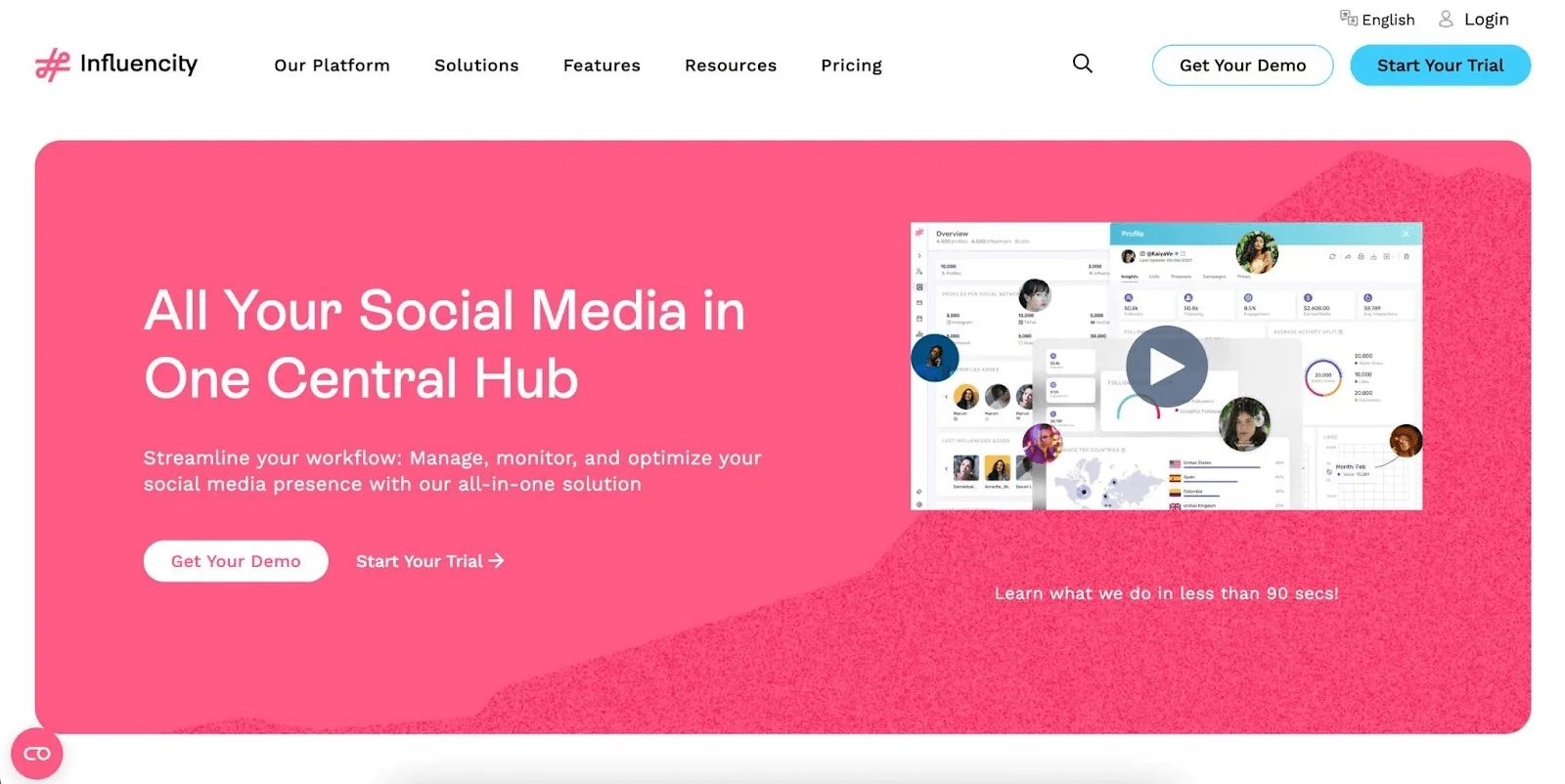
Influencity is a Madrid-based influencer marketing platform built around a massive creator database — 200M+ profiles — and deep audience analytics. Its core job is helping brands find the right creators, vet them with real audience data, and manage campaigns end to end.
It's positioned for mid-sized to enterprise brands and agencies, with strong adoption in retail, consumer goods, and tech. One thing to be clear on up front: Influencity is software, not an agency or marketplace — there's no team that hires or manages influencers for you.
Influencity Key Features
• Influencer discovery across 4 channels. Search and filter creators on Instagram, TikTok, YouTube, and Twitch using detailed filters like engagement rate, audience demographics, and content type. The depth of the filters is genuinely one of the platform's strongest points.
• Audience analysis and fraud detection. This is where Influencity earns its reputation. You can vet a creator's audience quality, spot fake followers, and avoid partnerships that look big on paper but won't convert.
• Shopify influencer seeding. Influencity's "Programs" feature integrates directly with Shopify so you can run gifting campaigns at scale — invite creators, let them redeem a product with a code, and ship it like any normal order.
• Built-in outreach and mass email. You can contact large groups of influencers with personalized emails directly inside the platform, which keeps discovery and outreach in one place instead of bouncing to a separate email tool.
• Influencer payments in 143 currencies. Pay multiple creators across 186 countries from within the platform — a real advantage for brands running international programs that would otherwise wrestle with PayPal fees or manual transfers.
Influencity Pricing
Influencity doesn't display its prices openly on the pricing page — you have to log in or start a trial to see exact figures, and public sources report a range. Here's the clearest picture from current third-party data and the platform's own plan structure.
Basic / entry tier — $168/month
The entry point for brands just getting started with influencer search. You get discovery and basic analysis, but profile analyses are capped (reported around 30/month), which gets tight quickly once you're actively evaluating multiple creators.
Professional — $348–398/month
Built for brands running end-to-end campaigns throughout the year. Adds fuller campaign management and a larger analysis allowance. This is the tier most active D2C brands will realistically need.
Business — $698–998/month
For brands and agencies investing heavily in influencer marketing — multiple simultaneous campaigns, shared reporting, and more seats. This is the agency and multi-client tier.
Enterprise — Custom
Tailored plans with options like unlimited searches and custom campaign workflows. Quote-based, so you'll need to talk to sales.
A few things worth flagging on cost. Billing is month-to-month with no mandatory contract, which is great — you can subscribe only during active campaign periods. But if you cancel, you lose your stored influencer data and campaign archives, so it's not as clean as it sounds.
Watch for hidden costs
Automated post-tracking is reported to come as a paid add-on rather than being baked into the core plan, and the lower tiers' analysis caps push you to upgrade faster than you might expect.
Influencity Pros & Cons
Pros
• Best-in-class audience analytics. The fake-follower detection and audience quality data are the standout reason people stay. Multiple reviewers credit it with saving them from bad partnerships.
• Huge, well-filtered database. 200M+ profiles with granular search filters make finding niche or micro-influencers fast.
• No lock-in contract. Month-to-month billing means you can pay only when you're actively running campaigns.
• Strong multi-currency payments. Paying creators across 186 countries natively is a genuine edge for international programs.
• Doesn't charge per influencer. Pricing is based on usage limits, not per-profile, so you're not penalized for analyzing more creators.
Cons
• Expensive for small brands. At $168/month minimum, it's a hard sell for startups or anyone running only the occasional campaign.
• Steep learning curve. The interface is feature-dense, and several users report it taking a couple of weeks to feel comfortable.
• Shopify-only ecommerce integration. No WooCommerce, BigCommerce, or Magento support — a real limitation for agencies juggling varied client tech stacks.
• You lose your data if you cancel. Pause your subscription and your influencer archives and campaign history go with it.
• No hands-on support. It's software only — no managed campaign help, hiring, or strategy.
What Influencity Users Say
Influencity holds a strong 4.6/5 on G2 across roughly 260 reviews, with the majority coming from the small-business segment. The praise is consistent: people love the discovery filters and the audience data depth.
The recurring frustrations are just as consistent — cost relative to campaign frequency, and the onboarding curve. One Capterra reviewer described how the analytics flagged a creator whose audience was 40% fake before they signed a deal. On the flip side, a G2 reviewer called it overwhelming at first, noting their team needed about two weeks to get comfortable.
The broader sentiment across forums lines up: marketers who run campaigns frequently feel they get their money's worth, while those running quarterly or one-off programs question the price.
Who Is Influencity Best For?
Influencity makes the most sense for mid-to-large brands and agencies running influencer campaigns regularly — think three or more campaigns a month — where the database access and audience analytics actually get used enough to justify the spend.
It's a strong fit for Shopify-based ecommerce brands that want to automate gifting and for teams running international programs that need multi-currency payments.
Where it falls short: small businesses, solo marketers, and brands running occasional campaigns. If you're only activating influencers quarterly, the monthly cost is hard to defend, and cheaper discovery tools or manual outreach will cover you. Agencies on non-Shopify stacks will also feel the integration gap.
Is Influencity Worth It?
For its target user, yes. If you're running frequent, data-driven campaigns and you live in the discovery-and-vetting stage, Influencity's analytics genuinely earn their keep — the fraud detection alone can pay for the subscription by preventing one bad partnership.
But if you're a smaller brand, run campaigns sporadically, or need ecommerce flexibility beyond Shopify, the price-to-value math gets shaky fast. The opaque pricing and paid add-ons don't help either. It's a specialist tool that rewards heavy, consistent use and punishes light use.
Final Thoughts
Influencity is a sharp, data-led platform that does discovery, audience analysis, and campaign management well — especially for mid-market and enterprise brands that run influencer programs as an always-on channel. The main caveats are cost at scale, a Shopify-only integration, and a learning curve that takes some patience.
If you'd rather skip the campaign-management overhead entirely — the searching, vetting, outreach, and tracking — there's a different model worth considering. Creator Hero flips the approach: instead of you running campaigns, creators sell your products for you through commission-based storefronts, so there's no upfront campaign spend and no SaaS learning curve.
Let the creators do the selling for you, so you can focus on developing new products and scaling your brand. Explore Creator Hero for brands or book a free demo to see how it works.


.svg)


%201.png)


_logo.svg.png)


