Captiv8 Pricing & Review 2026: Features, Costs & Verdict
Captiv8 pricing starts at around $25,000 per year on an annual contract, with a $3,000 onboarding fee — and that's before any add-ons like affiliate or storefront features, which can push the bill considerably higher. There's no monthly plan, no free trial, and no public pricing page.
In this review, we cover Captiv8's pricing tiers, standout features, real user feedback, and whether it's worth it for your team. We'll also flag the things that aren't obvious until you're already signed.
If you're a brand evaluating enterprise influencer marketing software — or trying to figure out if Captiv8 is overkill for your stage — this breakdown is for you.
Best for: Enterprise and large mid-market brands running high-budget, multi-channel influencer programs
Starting price: ~$25,000/year (annual contract) + $3,000 onboarding fee
Free trial: No
G2 rating: 4.7/5 (500+ reviews)
Our verdict: Strong enterprise platform with excellent analytics and support — but the price tag and rigid contract structure put it out of reach for most D2C brands.
What Is Captiv8?
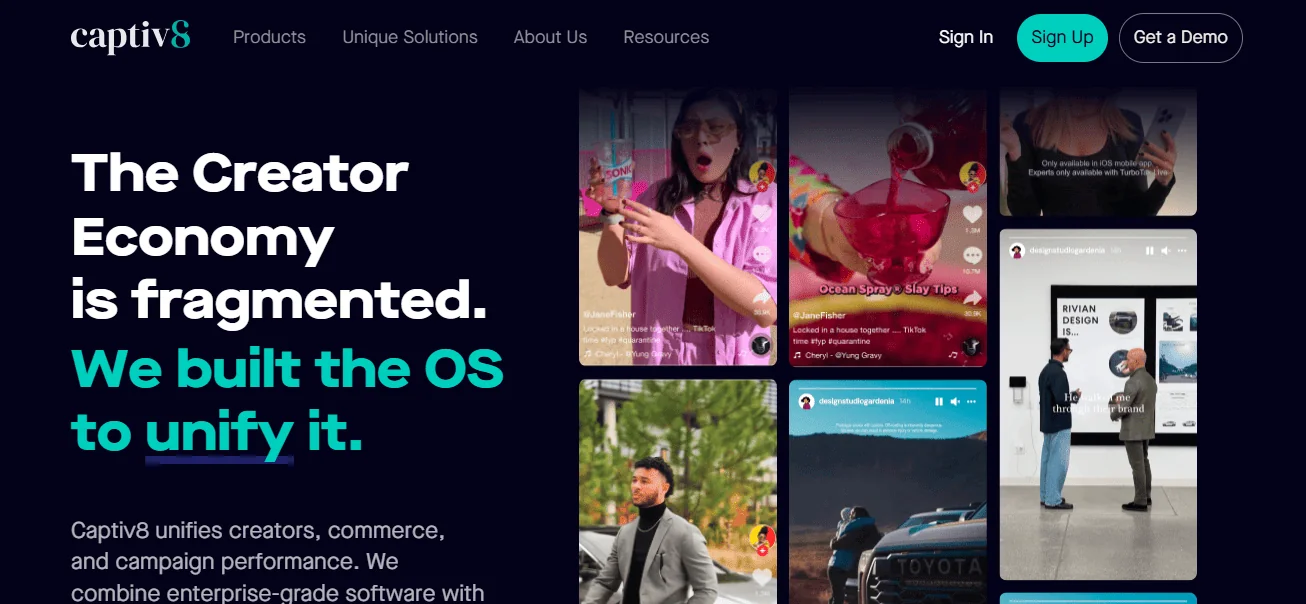
Captiv8 is an enterprise influencer marketing platform built for large brands and agencies managing complex, multi-team campaigns. It's used by names like Honda and Walmart, and its core pitch is end-to-end campaign management — discovery, outreach, contracting, content review, payments, and reporting in one place.
Captiv8 Key Features
• Influencer Velocity Index (IVI): Captiv8's proprietary AI scoring system that ranks creators by predicted campaign performance, not just follower count. It pulls audience data, engagement quality, and brand fit signals to surface creators who'll actually drive results. Useful if you're tired of vanity-metric discovery, less useful if your team isn't equipped to act on the volume of data it surfaces.
• Audience and content insights: Real-time audience demographic data, brand affinity, and content analysis across Instagram, TikTok, YouTube, Twitter, Pinterest, Twitch, and Facebook. This is where Captiv8 genuinely outperforms cheaper tools — the depth here is enterprise-grade. The catch: some data is only fully accessible for creators who've authenticated their accounts on the platform.
• Campaign management workflows: Brief creation, contracting, content approval, and creator communication all run through the platform. Reviewers consistently call this out as a major time-saver, especially for teams that previously juggled Google Sheets and email threads. Setup takes time, though — most users report a meaningful onboarding curve.
• Affiliate and storefront tools: Through Captiv8's Creator Collective and its integration with Shopify and Refersion, you can run commission-based affiliate programs alongside paid campaigns. Important caveat: this is generally treated as an add-on, with pricing reports suggesting it sits in a much higher tier or is bundled into managed services.
• Reporting and ROI tracking: Customizable real-time dashboards that pull engagement, reach, conversions, and revenue data into client-ready exports. Reporting is one of the most-praised features in G2 reviews — agencies in particular get a lot of value here.
Captiv8 Pricing
Captiv8 doesn't publish pricing. You'll need to book a demo and get a custom quote, and the number depends on team size, number of creators managed, features included, and whether you're adding managed services on top.
Based on public reports from G2 reviewers, Reddit discussions, and competitive comparison sites, here's what we know:
Core Platform — Starting at ~$25,000/year (annual contract)
This is the baseline entry point for SaaS access to the platform. It typically includes discovery, campaign management, basic reporting, and creator CRM. Captiv8 doesn't offer monthly billing — annual commitment is standard, which is a significant structural constraint compared to most mid-market alternatives.
Onboarding Fee — $3,000 (one-time)
This is a flat setup cost that covers training, account configuration, and initial team enablement. Some review sites have called this out as a hidden cost users don't see coming until they're deep in negotiations.
Affiliate & Storefront Add-ons — $20,000–$30,000/month
If you want access to the affiliate, creator or social commerce, and storefront features, this is typically packaged as a managed services tier — meaning a significant monthly investment on top of the base SaaS subscription. This is where the real cost of running a full Captiv8 program reveals itself.
Hidden costs to watch for:
• Per-user/seat fees that scale up as your team grows
• Higher pricing for additional features, integrations, or expanded creator access
• Storefront/affiliate features gated behind managed services rather than self-serve plans
• Annual commitment with no easy month-to-month exit if the platform isn't working for you
Bottom line on pricing: Captiv8 is built for budgets that start in the five-figure annual range and can comfortably scale into six figures once add-ons and services are layered in.
Captiv8 Pros & Cons
Pros
• Deep audience and content analytics. The data quality is genuinely strong, particularly the Influencer Velocity Index and audience demographic breakdowns. This is the kind of insight enterprise brands actually use for strategic decisions.
• End-to-end workflow in one platform. Discovery, contracting, payments, reporting, and outreach tools are consolidated — multiple G2 reviewers call out the time savings vs. piecing together a stack of tools.
• Strong customer support and onboarding. A consistent theme in reviews: the customer success team is responsive and helps clients get value from the platform. Captiv8 won G2's "Best Relationship" badge in this category multiple times.
• Enterprise-grade reporting. The reporting and dashboard customization is repeatedly highlighted as a standout — particularly valuable for agencies that need polished, client-ready exports.
• Recent affiliate and commerce expansion. Following the Influential merger, the platform has expanded its affiliate and creator commerce capabilities, making it more competitive against tools like Aspire and GRIN.
Cons
• Very high cost with no flexible entry point. $25K+/year is the floor, and the annual commitment makes it inaccessible for most small and mid-sized brands. There's no path to start small and scale.
• Steep learning curve. Multiple G2 reviewers note that the platform takes time to learn, and that new team members need significant training before they're efficient. The platform is powerful, but that power comes with complexity.
• Inefficient search workflow. Several users mention having to open multiple tabs to compare creators side-by-side, which slows down the discovery process and gets frustrating at scale.
• Payment delays and friction. Some users report friction with the payment system — both timing of creator payouts and complications when managing affiliate commissions.
• Annual contract rigidity. No monthly billing, no easy exit if the platform isn't a fit. This is a structural disadvantage versus platforms that let you scale your investment as your program grows.
What Captiv8 Users Say
Captiv8 holds a strong 4.7/5 rating on G2 across 500+ reviews. The praise consistently centers on three things: depth of data, quality of customer support, and the time savings from consolidating workflows.
The frustrations show up most around the learning curve and search workflow. "The search system is inefficient — I often have to open multiple tabs just to compare creators," another user shared. There's also a recurring theme around price-to-value among smaller teams: the platform's analytics depth is impressive, but reviewers from smaller brands consistently flag that the cost wasn't justified by the volume of campaigns they were running.
In broader marketing forums and LinkedIn discussions, the pattern is clear: Captiv8 is recommended for enterprise programs and rarely recommended for D2C brands under a certain budget threshold.
Who Is Captiv8 Best For?
Captiv8 makes the most sense for enterprise brands and large agencies running high-volume, multi-region influencer programs where the budget for software is treated as a strategic line item, not a cost to minimize. Brands like Honda and Walmart use it for a reason — at that scale, the depth of audience data and the operational efficiency justify the price.
Where it starts to fall short is for D2C brands and mid-market teams. If you're spending $50K–$200K/year total on influencer marketing (including creator payments), allocating $25K+ to the software alone is a tough math. You'd likely get more total program value from a platform with a lower entry point and reinvesting the savings into creator partnerships.
The budget range where Captiv8 makes sense: brands with annual influencer marketing budgets of $500K+ and a dedicated influencer team of 3+ people. Below that, there are platforms that deliver 80% of the core functionality at 10–20% of the cost — and they'll let you pay monthly.
Is Captiv8 Worth It?
For enterprise brands with the budget and team to use the platform fully, yes — Captiv8 is a strong investment. The analytics depth, reporting capabilities, and customer support are genuinely best-in-class for this category, and the time savings from running campaigns end-to-end in one platform compound over time.
For everyone else, it's hard to justify. The $25K+ floor, the annual contract, and the add-on pricing for affiliate and commerce features create a cost structure that only makes sense if you're already operating at enterprise scale. If you're building toward that and not there yet, a more flexible platform — or a different model entirely — will get you further per dollar.
Final Thoughts
Captiv8 is one of the most capable enterprise influencer marketing platforms on the market. The data depth is real, the customer support is real, and for brands at the right scale, the ROI math works. But the pricing structure is built for a specific buyer — and if you're not that buyer, the gap between what you pay and what you actually use will be uncomfortable.
If you'd rather skip the campaign management overhead entirely, there's a different model worth looking at: instead of paying enterprise SaaS fees to manage paid creator campaigns, you can let creators sell your products on commission through their own storefronts. That's what Creator Hero does — brands list their products, creators promote and sell them, and you pay 20–50% commission only on actual sales.
Let the creators do the selling for you, so you can focus on developing new products and scaling your brand. Explore Creator Hero for brands or book a free demo to see how it works.


.svg)


%201.png)


_logo.svg.png)


