Precios y análisis de Modash 2026: Funcionalidades, costos y veredicto
Los precios de Modash comienzan en $199/mes con facturación anual y $299/mes mes a mes, con un nivel Performance a $499/$599 y un plan Enterprise con presupuesto personalizado. Es una opción de precio medio para software de marketing de influencers — más económica que GRIN o CreatorIQ, más cara que herramientas de entrada como Click Analytic o Social Cat.
En esta reseña, cubrimos los niveles de precios de Modash, funcionalidades destacadas, opiniones reales de usuarios y si vale la pena para tu equipo. También señalaremos las limitaciones que no son obvias en la página de precios pero importan cuando realmente usas la plataforma.
Si eres una marca que ejecuta o escala un programa de influencers y estás evaluando opciones de software, este análisis es para ti.
¿Qué es Modash?
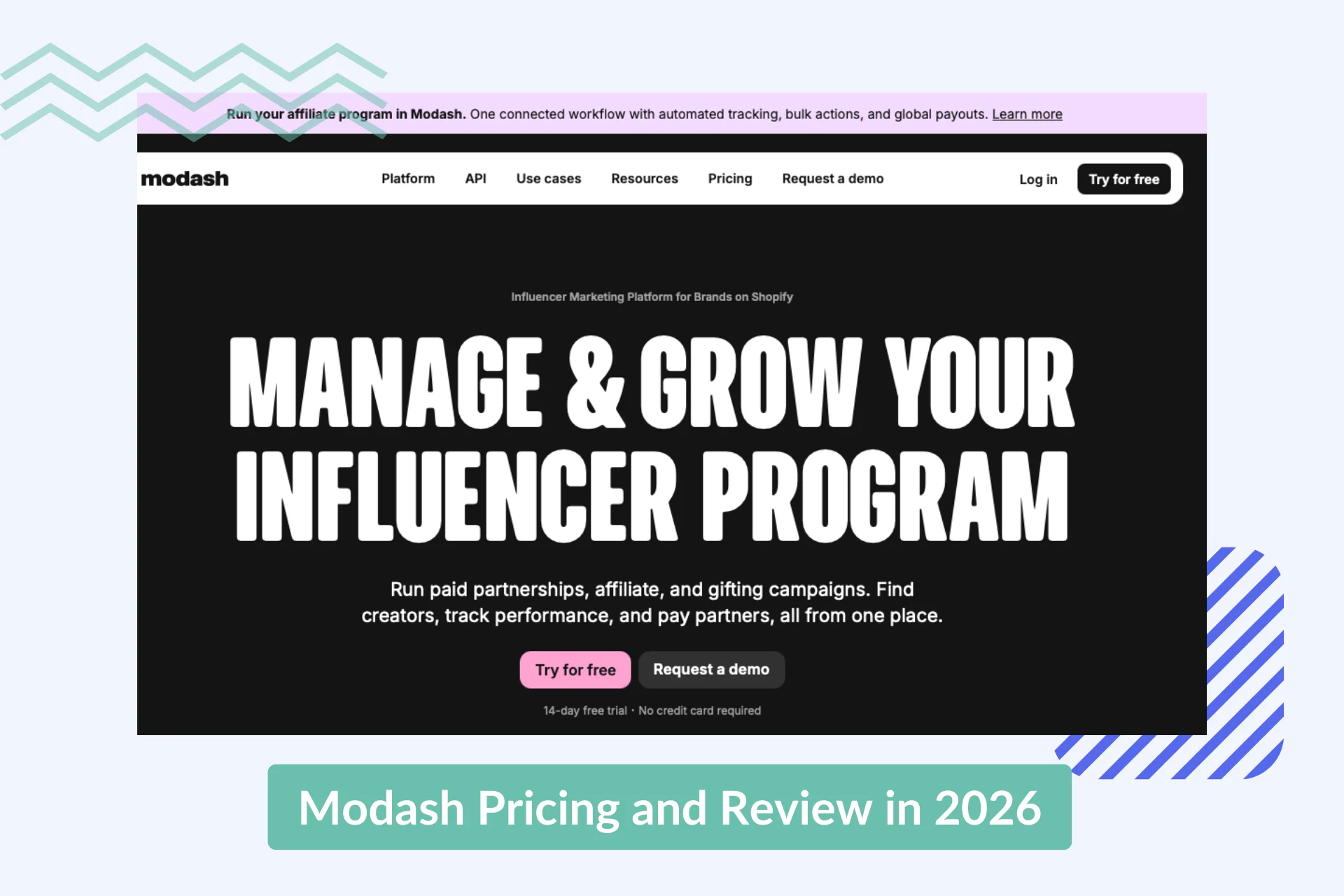
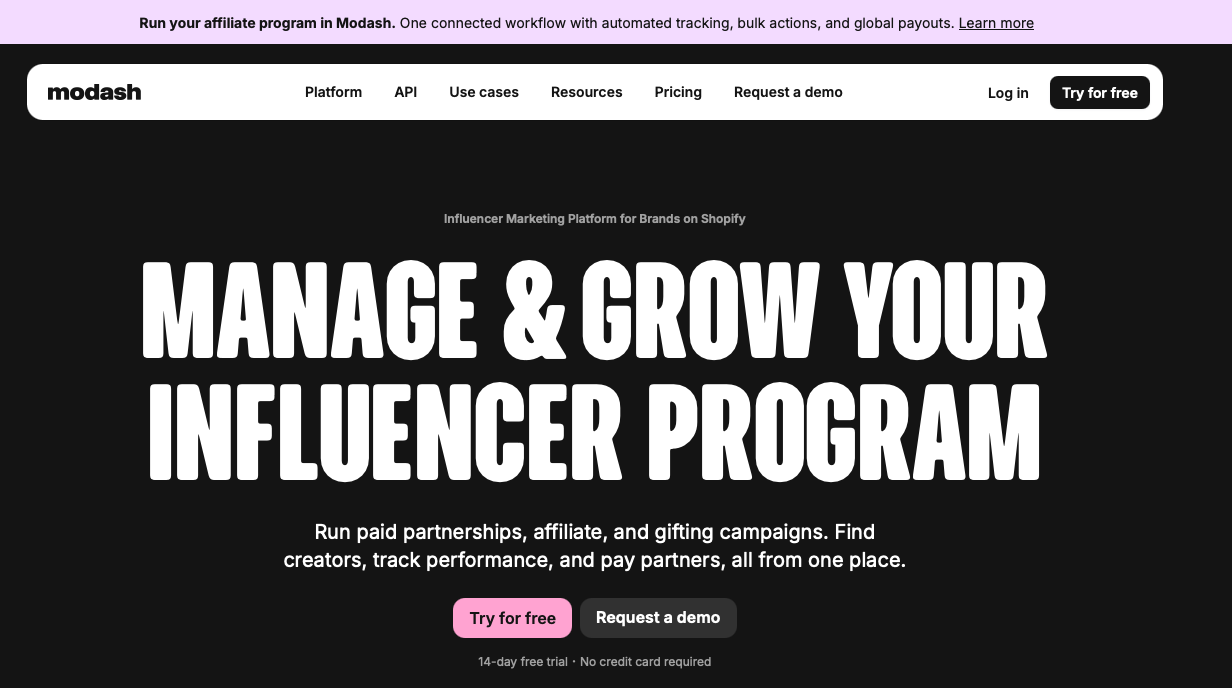
Modash es una plataforma de marketing de influencers creada para marcas que quieren ejecutar descubrimiento, alcance, envíos de productos, pagos y seguimiento de campañas en un solo lugar. Fundada en 2018 y con sede en Estonia, trabaja con marcas como Google, Victoria's Secret, NordVPN y Airbnb, y es conocida especialmente por su base de datos de 350M+ creadores que cubre Instagram, TikTok, y YouTube. La plataforma se enfoca fuertemente en Shopify, con una integración nativa que vincula la actividad de los creadores directamente a datos de ventas — por eso la ves más frecuentemente en stacks de ecommerce.
Funcionalidades clave de Modash
Base de datos de 350M+ creadores con filtros avanzados. Busca por nicho, demografía de audiencia, ubicación (hasta nivel de ciudad en la mayoría de mercados), tasa de engagement y puntuaciones de seguidores falsos. La granularidad aquí es lo que la mayoría de usuarios destacan como la mayor fortaleza de la plataforma — puedes encontrar microinfluencers en nichos muy específicos como dermatólogos o barberos.
Análisis de audiencia y detección de seguidores falsos. Para cualquier perfil de creador, puedes obtener demografía de audiencia, intereses, afinidad de marca y una puntuación de Audience Overlap. Este es el datos que la mayoría de marcas necesita antes de enviar cualquier cosa a un creador, y Modash lo presenta sin necesidad de salir de la vista del perfil.
Desbloqueos de correo electrónico y alcance. Los correos electrónicos verificados de creadores son desbloqueables desde la plataforma (limitados por plan), y puedes ejecutar campañas de alcance directamente desde Modash. El seguimiento es sólido; la interfaz de mensajería en sí es la debilidad más citada por usuarios — la describen como "limitada" y "engorrosa".
Seguimiento de contenido en Instagram, TikTok y YouTube. Etiqueta a un creador y Modash captura automáticamente sus posts, Reels, Stories y contenido de YouTube vinculado a tu campaña. Esta es una de las configuraciones de monitoreo de contenido más limpias de la categoría, y elimina la necesidad de que los creadores reporten manualmente.
Integración con Shopify para seguimiento de ROI. Conexión nativa que vincula códigos de descuento, enlaces de afiliados y actividad de creadores a ingresos reales de la tienda. Esta es la funcionalidad que mantiene a la mayoría de marcas ecommerce — si estás en WooCommerce, Magento o un stack personalizado, pierdes mucho del valor aquí.
Precios de Modash
Modash utiliza un modelo público de dos niveles transparentes con un tercer plan Enterprise que requiere una demostración. La facturación anual te ahorra aproximadamente $100/mes en Essentials y $100/mes en Performance. Hay una prueba gratuita de 14 días en ambos niveles públicos — sin tarjeta requerida.
Essentials — $199/mes (anual) o $299/mes (mensual)
Este es el nivel de entrada, diseñado para equipos pequeños que ejecutan hasta 100 asociaciones activas de creadores. Incluye 2 miembros del equipo, 300 análisis de perfil por mes, 150 desbloqueos de correo electrónico y 100 creadores rastreados. El límite de 300 perfiles es la restricción que aparece primero — si tu equipo hace descubrimiento intensivo, la agotarás en las primeras dos semanas de cualquier mes.
Performance — $499/mes (anual) o $599/mes (mensual)
Diseñado para marcas que escalan más allá de ~100 creadores. Te aumenta a 5 miembros del equipo, 800 análisis de perfil, 400 desbloqueos de correo electrónico y 250 creadores rastreados. Este es el nivel donde termina la mayoría de marcas D2C en crecimiento después de algunos meses en Essentials.
Enterprise — Precios personalizados
Presupuesto personalizado. Las estimaciones públicas de G2 y sitios de reseñas lo ubican alrededor de $14,700/año y más, dependiendo del tamaño del equipo, límites de perfiles y acceso a API. Incluye SSO, asientos expandidos y acceso a API — funcionalidades que no están disponibles en niveles inferiores sin importar el uso.
Costos ocultos a tener en cuenta: La facturación anual significa pagar $2,388 por adelantado para Essentials o $5,988 para Performance. El procesamiento de pagos para pagos a creadores se maneja a través de la plataforma pero conlleva sus propias comisiones encima de la suscripción. Y el acceso a API está bloqueado tras Enterprise — significando que si necesitas datos canalizados a tus propios sistemas, te estás moviendo al nivel personalizado sin importar lo pequeño que sea tu equipo.
Pros y contras de Modash
Pros
Filtros de descubrimiento genuinamente líderes en la industria. Los críticos reconocen constantemente la capacidad de encontrar creadores de nicho (profesiones específicas, intersecciones de audiencias, precisión geográfica) como la razón por la que permanecen en la plataforma.
Integración sólida con Shopify y atribución real de ROI. Si vendes en Shopify, la conexión de datos de ventas es una mejora significativa en tu flujo de trabajo.
Precios públicos y transparentes en los dos niveles principales. No necesitas reservar una demostración para saber cuánto cuesta — algo raro en esta categoría.
Actualizaciones frecuentes del producto y soporte receptivo. Múltiples reseñadores en G2 y Capterra mencionan características solicitadas que se lanzan en semanas, no en trimestres.
Prueba gratuita de 14 días sin necesidad de tarjeta. Te permite probar el motor de descubrimiento antes de comprometerte.
Contras
La interfaz de mensajería y alcance es la parte más débil del producto. Múltiples reseñadores en G2 lo señalan directamente — la bandeja de entrada parece añadida posteriormente, y los usuarios terminan ejecutando el alcance en sus propias herramientas de correo electrónico.
Sin constructor de contratos integrado. Estás redactando acuerdos fuera de la plataforma y enviando PDFs por correo — un punto de fricción real que varios reseñadores mencionaron.
Los límites mensuales son ajustados. El límite de 300 perfiles en Essentials se agota rápidamente para equipos de descubrimiento activos.
La cobertura de plataforma se limita a Instagram, TikTok y YouTube. Sin LinkedIn, Twitch, Pinterest o creadores de blogs.
La facturación anual es la única forma de obtener el precio titular. La tarifa mes a mes es 33% más cara.
Los elementos visuales de informes son funcionales pero no pulidos. Útiles, no listos para presentación — un problema real si envías presentaciones a stakeholders.
Lo Que Dicen los Usuarios de Modash
Modash tiene una calificación de 4.9/5 en G2 en más de 15 reseñas y una puntuación similar en Capterra, lo que es raro en esta categoría. El elogio es consistente: filtros de descubrimiento, precisión de datos de audiencia, integración con Shopify y un equipo de soporte que lanza características solicitadas rápidamente.
Las frustraciones son igualmente consistentes. Un reseñador de G2 señaló que "las funcionalidades de bandeja de entrada y correo electrónico son bastante limitadas actualmente," y otro compartió que "la fase de contratación sigue siendo un poco manual — actualmente tengo que redactar acuerdos externamente." Múltiples reseñas de la Shopify App Store hacen eco de lo mismo: el descubrimiento y los pagos se sienten sin fricciones, los contratos y el alcance se sienten como un flujo de trabajo separado.
El sentimiento más amplio en LinkedIn y Reddit está alineado con esto: Modash es lo que los especialistas en marketing recomiendan cuando alguien pregunta "¿cuál es la mejor herramienta de descubrimiento por menos de $500/mes?" — pero las mismas personas te dirán que mantengas tu flujo de trabajo de contratos y alcance en otro lugar por ahora.
¿Para Quién es Modash lo Mejor?
Modash es genuinamente la opción correcta para marcas D2C y ecommerce — particularmente tiendas Shopify — que ya han validado el marketing de influencers como un canal y desean escalar el descubrimiento, análisis de audiencias y seguimiento de contenido en un solo lugar. Si estás ejecutando entre 50 y 250 asociaciones activas de creadores y tu stack ya incluye Shopify, el plan Performance a $499/mes está bien valorado por lo que obtienes.
Comienza a fallar para dos grupos específicos. El primero son marcas que necesitan gestión de alcance y contratos pesados como flujo de trabajo principal — agotarás las herramientas de mensajería de Modash rápidamente y probablemente terminarás ejecutando alcance en un CRM dedicado. El segundo son marcas que no están en Shopify — sin la integración de ventas nativa, una gran parte de la historia de ROI de Modash desaparece.
Presupuestariamente, Modash tiene sentido en el rango de $200-$600/mes. Por debajo de eso, herramientas como Click Analytic, Social Cat o los planes de entrada de Influencer Hero cubren los conceptos básicos de descubrimiento a menor costo. Por encima de eso, GRIN y CreatorIQ te ofrecen profundidad completa de CRM empresarial que Modash actualmente no iguala.
¿Vale la Pena Modash?
Para marcas D2C en Shopify que ejecutan descubrimiento de creadores a escala, sí — Modash es una de las plataformas de mejor relación calidad-precio en la categoría. La base de datos de 350M, análisis de audiencias e integración con Shopify proporcionan mejoras reales en el flujo de trabajo, y los precios públicos significan que puedes presupuestar sin negociar. La calificación de 4.9/5 en G2 es real.
Donde Modash falla es en las partes del flujo de trabajo que no son descubrimiento. Si la contratación, alcance estructurado o integración de ecommerce que no sea Shopify son centrales en cómo ejecutas marketing de influencers, sentirás las brechas dentro del primer mes. Y si no necesitas el nivel de profundidad de descubrimiento que proporciona Modash, probablemente estés pagando de más — hay herramientas más baratas que cubren lo básico.
Reflexiones Finales
Modash es una plataforma sólida y bien valorada para el trabajo específico para el que fue construida: ayudar a marcas de ecommerce a encontrar creadores, verificar sus audiencias, ejecutar campañas y vincular eso con datos de ventas de Shopify. Las dos debilidades principales — interfaz de alcance y sin constructor de contratos — son reales, pero el equipo está lanzando rápidamente y el producto principal es sólido.
Dicho esto, el software no es la única forma de ejecutar un programa de influencers. Si la gestión de campañas, alcance y contratación es la parte que preferirías no manejar en absoluto, hay un modelo diferente que vale la pena considerar. Creator Hero es una plataforma de tienda donde más de 55,000 creadores se registran para vender productos de marca a comisión (20–50%). No hay gasto de campaña inicial, sin alcance, sin contratos que gestionar — los creadores eligen tus productos, construyen tiendas, e impulsan ventas. Te enfocas en producto y escalabilidad; ellos manejan la venta.
Deja que los creadores hagan la venta por ti, para que puedas enfocarte en desarrollar nuevos productos y escalar tu marca. Explora Creator Hero para marcas y reserva una demo gratuita para ver cómo funciona.
FAQs
How much does Modash cost?
Modash starts at $199/month on annual billing ($299 monthly) for the Essentials plan, and $499/month annually ($599 monthly) for Performance. Enterprise is custom-quoted, with public estimates starting around $14,700/year.
Does Modash have a free trial?
Yes — a 14-day free trial on both Essentials and Performance plans, no credit card required.
Is Modash worth it for small brands?
For small brands that are committed to scaling influencer marketing and already on Shopify, yes — the Essentials plan covers the core workflow. For brands just testing the channel, the $2,388 annual commitment is steep; cheaper discovery-only tools may make more sense to start.
What is Modash best for?
Creator discovery, audience analysis, and content/sales tracking — especially for Shopify ecommerce brands. It's not the strongest pick for outreach-heavy or contract-heavy workflows.
What's a good alternative to Modash?
Influencer Hero and CreatorIQ cover more of the enterprise CRM workflow at higher price points. Click Analytic and Social Cat are cheaper discovery-focused options. For brands that want to skip campaign management entirely, Creator Hero's commission-based storefront model is a different approach worth considering.
Related Posts
The incredible power of team collaboration is evident in the remarkable outcomes it can achieve
¿Comparar UGC de pago con posts patrocinados? Aquí te mostramos qué pagan las marcas a los creadores por cada uno, qué incluyen esas tarifas y cómo los derechos de uso impactan el presupuesto.
Explicamos los precios de Influur: sin suscripción de marca, tarifas por uso, ventajas y desventajas reales, y nuestro veredicto sobre si este marketplace de creadores vale la pena en 2026.
Tagbox parece económico a $19/mes — pero la función que la mayoría de las marcas realmente necesita está oculta detrás de una cotización Enterprise. Aquí está el desglose completo de precios y nuestro veredicto honesto.
Build your own business without having to manage all the operational aspects of an e-commerce. Focus on creating content, driving sales and maximise your earnings!


.svg)


%201.png)



_logo.svg.png)


