Precios y análisis de Markerly 2026: Características, costos y veredicto
Los precios de Markerly no están publicados en ningún lado — es una agencia de servicio completo, por lo que los costos se cotizan por campaña y generalmente comienzan alrededor de $18,000/mes con un mínimo de seis meses. Eso por sí solo te dice para quién está hecho: marcas con presupuesto real que prefieren entregar todo el programa a un equipo en lugar de ejecutarlo ellas mismas.
En esta reseña, cubrimos los precios de Markerly, características destacadas, opiniones reales de usuarios y si vale la pena para tu equipo. Hemos extraído los números de informes de terceros y reseñas de usuarios, ya que Markerly no los lista, e identificamos dónde las estimaciones varían.
Si eres una marca sopesando una agencia gestionada versus ejecutar marketing de influencers internamente, este desglose es para ti.
Resumen rápido
Mejor para: Marcas empresariales y de mercado medio que desean un programa de influencers totalmente gestionado y de alta categoría
Precio inicial: Cotización (~$18,000/mes, mínimo de seis meses)
Prueba gratuita: No
Calificación G2: Reseñas públicas limitadas — sin puntuación agregada establecida
Nuestro veredicto: Ejecución sin intervención fuerte y evaluación de creadores, pero costoso, lento para comenzar e inferior en reportes de ROI.
¿Qué es Markerly?
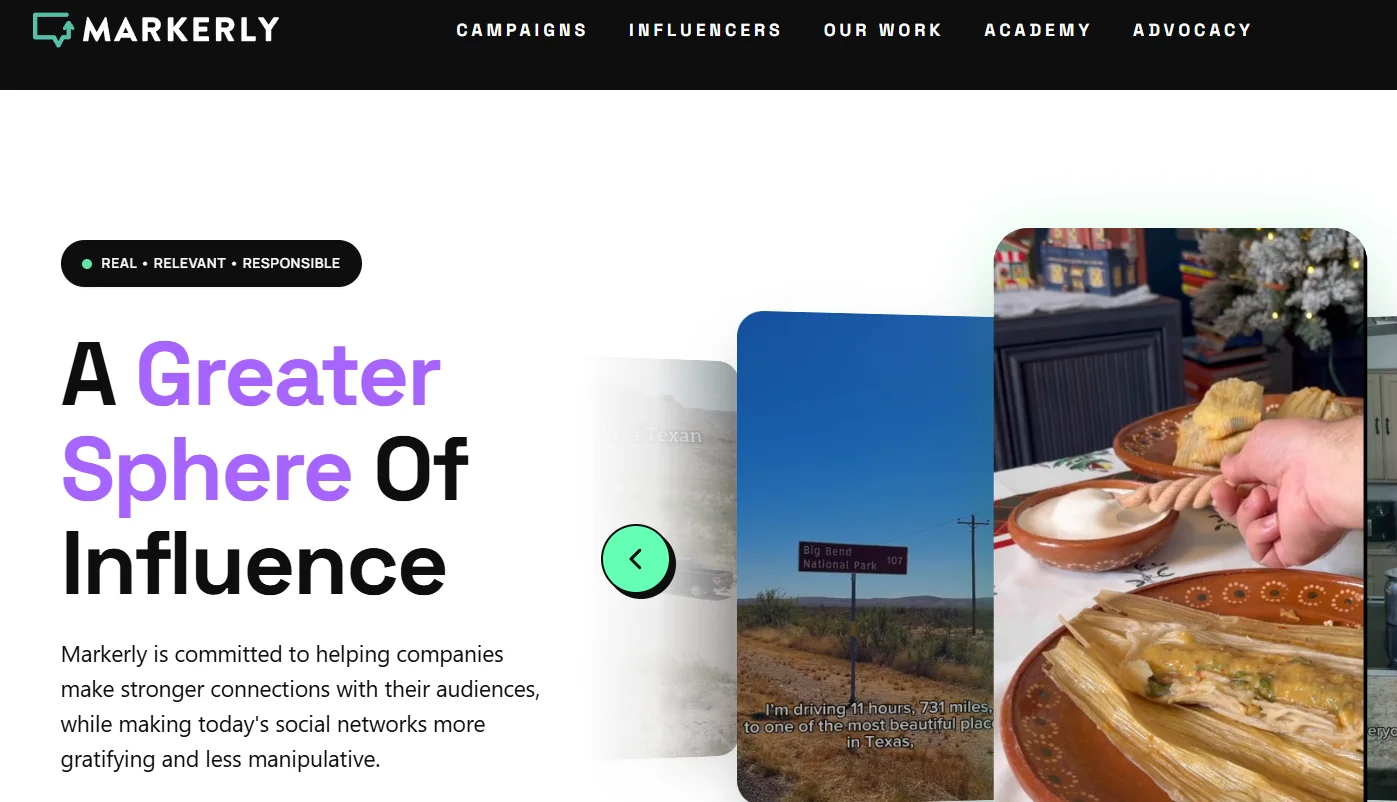
Markerly es una agencia de marketing de influencers de servicio completo fundada en 2012 y con sede en Menlo Park, California. En lugar de venderte software para ejecutar campañas, su equipo las ejecuta por ti — buscando creadores, negociando, manejando contratos, aprobando contenido e informando.
El modelo es de alta categoría e impulsado por humanos. Traes el briefing (palabras clave, nicho, objetivos) y Markerly maneja el resto, por lo que apela a equipos sin una contratación dedicada de marketing de influencers.
Markerly ha ejecutado programas para nombres importantes como Coca-Cola, Nike y Nordstrom. Si eres un creador o una marca curiosa sobre cómo un minorista en esa escala estructura sus pagos a creadores, nuestro desglose deel programa de afiliados de Nordstrom es una lectura complementaria útil.
Características clave de Markerly
Ejecución de campaña gestionada. El equipo de Markerly maneja la búsqueda, contacto, negociación, contratos y aprobaciones de extremo a extremo. Este es el núcleo de lo que estás pagando — estás comprando un equipo, no una cuenta de usuario.
Emparejamiento de creadores evaluado a mano. Markerly es selectivo sobre los creadores con los que trabaja, apuntando a asociaciones auténticas sobre volumen. Los revisores elogian consistentemente la calidad de los emparejamientos, aunque el proceso de evaluación puede ser lento.
Licencia de contenido y amplificación pagada. Más allá de las publicaciones orgánicas, Markerly gestiona los derechos de uso de contenido y puede impulsar gasto potenciado/pagado detrás del contenido del creador. Esto está incluido en el costo de la campaña en lugar de venderse como un nivel separado.
Panel de control de informes en tiempo real. Las marcas obtienen un panel de control que rastrea menciones, etiquetas e impresiones en Instagram, YouTube, Facebook, Pinterest y blogs. Es funcional para métricas de superficie, pero los usuarios lo señalan como débil en ROI más profundo y atribución.
Plataforma de marca blanca (SaaS). Markerly también licencia su tecnología subyacente como producto de marca blanca, permitiendo que agencias o marcas más grandes ejecuten programas internamente bajo su propia marca.
Precios de Markerly
Markerly no publica páginas de precios por niveles como lo hace una plataforma SaaS. Los costos se cotizan por compromiso basado en cantidad de creadores, entregables, licencia de contenido y si se incluye amplificación pagada. Las cifras a continuación son rangos reportados de reseñas de terceros — las cotizaciones reales variarán.
Para contexto sobre cómo funcionan generalmente los retenes de agencias, nuestro resumen de los principalesagencias de marketing de influencers compara modelos de precios típicos en el espacio.
Servicio gestionado (nivel de entrada) — desde ~$18,000/mes
Este es el punto de partida típico y viene con un compromiso mínimo de seis meses. Un equipo de cuenta dedicado maneja la búsqueda, negociaciones, contratos, aprobaciones de contenido e informes. Mejor para marcas con presupuesto pero con cantidad de personal interno limitada — la fricción principal es comprometerse a seis meses antes de poder probar adecuadamente el ajuste.
Compromiso de campaña completa (20–40 influencers) — ~$100,000+ total
Una campaña típica de Markerly de tamaño medio aterriza en seis cifras. Ese costo agrupado cubre honorarios de creadores, gestión de agencias, licencia de contenido y amplificación pagada opcional. Mejor para campañas nombradas y acotadas en el tiempo en lugar de programas siempre activos.
Plataforma de marca blanca (SaaS) — precios personalizados
Markerly licencia su tecnología como producto de marca blanca para que marcas o agencias ejecuten programas internamente usando su descubrimiento, flujo de trabajo y herramientas de seguimiento. Los precios se cotizan por separado y generalmente son anuales. Mejor para agencias más grandes que agregan una oferta de influencers sin construir tecnología desde cero.
Enterprise / Fortune 500 — a medida, multi-millonarios
Los compromisos con marcas como Coca-Cola, Nike y Nordstrom se definen individualmente — generalmente contratos de varios años con entregables personalizados y estructuras de equipo dedicadas.
Señal de costos ocultos: Dado que todo está agrupado, puede ser difícil separar las tarifas de la agencia del gasto real en creadores. Pide un desglose por línea de artículo para que sepas cuánto de tu presupuesto llega realmente a los creadores versus a la agencia.
Ventajas y desventajas de Markerly
Ventajas
Completamente sin complicaciones. Si no tienes un equipo interno de influencers, Markerly elimina toda la carga operativa — desde la búsqueda hasta los informes.
Evaluación de creadores de alta calidad. Los revisores citan repetidamente la autenticidad y relevancia de los creadores que Markerly identifica.
Alcance multiplataforma con licencias incluidas. Los derechos de contenido y la amplificación pagada se manejan dentro del compromiso, no como complemento posterior.
Desventajas
Caro con un contrato de larga duración. ~$18K/mes y un mínimo de seis meses lo hacen inaccesible para la mayoría de marcas pequeñas y en etapa inicial.
Automatización limitada. El modelo es manual e impulsado por personas, por lo que es más lento y menos escalable que el software de autoservicio.
Seguimiento débil del ROI y atribución. Múltiples revisores — incluso antiguos empleados — señalan que los informes son superficiales, lo cual es un problema real cuando gastas seis cifras.
Cobertura limitada de plataformas nuevas. El soporte se inclina hacia canales establecidos; las marcas que quieren actividad importante en TikTok, Snapchat o LinkedIn pueden sentirse limitadas.
Qué dicen los usuarios de Markerly
Markerly tiene relativamente pocas reseñas públicas, por lo que no hay una puntuación agregada sólida — trata el sentimiento aquí como orientativo más que como algo estadísticamente sólido.
Cuando los usuarios son positivos, es sobre las personas y los emparejamientos. Un revisor de G2 lo describió como una herramienta sólida para identificar influencers serios cuyos públicos se ajusten a la marca, y elogió el análisis de engagement y seguidores. El tema recurrente es que Markerly simplifica la prospección y ahorra horas de búsqueda manual de creadores.
Cuando los usuarios expresan preocupaciones, es sobre la profundidad y la velocidad. Otro revisor señaló que la plataforma no detalla las colaboraciones pasadas de los creadores ni su estrategia de contenido, lo que dificulta crear campañas específicas para cada audiencia, y un antiguo empleado calificó directamente el seguimiento e informes como débiles. Si tu equipo depende mucho de una plataforma, vale la pena verificar que Markerly pueda soportarla — nuestra comparación de Instagram vs. TikTok para brand deals muestra por qué el ajuste del canal cambia el cálculo.
¿Para quién es mejor Markerly?
Markerly tiene sentido para marcas de nivel empresarial y de mercado medio-alto con presupuesto real y poco o ningún equipo interno de influencers. Si buscas un socio que maneje la estrategia, búsqueda y ejecución de una campaña específica, el modelo white-glove entrega resultados.
Comienza a quedarse corto para marcas D2C ágiles y cualquiera que quiera control, velocidad o programas siempre activos. El compromiso de seis meses y los flujos manuales van en contra de la iteración rápida, y el costo es difícil de justificar por debajo de cierta escala.
Para marcas más pequeñas o conscientes del presupuesto, la ruta de microinfluencers a menudo es un mejor punto de partida que una agencia empresarial — nuestra lista de food brands trabajando con microinfluencers muestra cómo incluso las grandes marcas ejecutan programas de seeding rentables.
¿Vale la pena Markerly?
Para una marca grande que lanza una campaña específica y limitada en tiempo sin equipo interno, Markerly definitivamente puede valer la pena. Estás pagando por experiencia y ejecución, y la evaluación de creadores es genuinamente sólida.
Para la mayoría de marcas D2C y de mercado medio, sin embargo, las matemáticas son más complicadas. El bloqueo de seis meses, las campañas de seis cifras y los informes débiles significan que estás pagando una prima por una experiencia sin complicaciones mientras obtienes visibilidad limitada en ROI. Si el desempeño medible y el control importan más que la conveniencia, probablemente obtengas más de una plataforma — o de construir relaciones con creadores directamente.
Alternativas a Markerly
Si el costo o el bloqueo de Markerly te genera dudas, aquí hay cinco alternativas que vale la pena considerar — enfocadas en la brecha que más probablemente estés intentando cerrar.
GRIN
Una plataforma de influencers premium e interna para marcas DTC que quieren ejecutar programas continuamente a escala. Sigue siendo una inversión (aproximadamente $25K/año en adelante), pero controlas el programa en lugar de subcontratarlo. Si el precio de GRIN es el problema, nuestro resumen de alternativas a GRIN cubre opciones más económicas con flujos de trabajo similares.
Influencer Hero
Es la mejor plataforma todo en uno que cubre descubrimiento de creadores en Instagram, TikTok y YouTube, un CRM para influencers, alcance automatizado, gestión de campañas, seguimiento de afiliados y regalos, pagos e informes. A diferencia de Markerly, su precio es público: los planes comienzan a $649/mes, con el plan Pro (hasta 5,000 creadores) a $1,049/mes. Las marcas la eligen frente a Markerly cuando quieren ejecutar todo el programa de principio a fin en un solo lugar, a una fracción del costo de una agencia.
Upfluence
Una plataforma de autoservicio con una base de datos de 12M+ influencers e integraciones sólidas con Shopify/Amazon, comenzando alrededor de $1,276/mes en un plan anual. Ideal para marcas que desean automatización y seguimiento de comercio electrónico y que están cómodas con una curva de aprendizaje.
Aspire
Una combinación de software y servicios gestionados opcionales, ideal para marcas que desean programas de embajadores y afiliados con más estructura que una herramienta pura pero menos gastos generales que una agencia completa.
GetSaral
Una opción económica y amigable con la automatización para marcas Shopify y DTC, con regalos, seguimiento de afiliados y alcance integrados. Ideal si deseas mantener el control total y los costos bajos mientras automatizas el trabajo tedioso.
Reflexiones Finales
Markerly es una agencia capaz y de alto contacto que se adapta a marcas grandes que desean un programa completamente gestionado: la evaluación de creadores es sólida y la ejecución es genuinamente sin preocupaciones. Pero el costo, el bloqueo de seis meses y los informes de ROI limitados la hacen difícil de usar para la mayoría de equipos D2C y de mercado medio, que generalmente obtienen más control y claridad de rendimiento de una plataforma.
Si el atractivo de Markerly es "no quiero gestionar campañas", hay una forma más ligera de obtener ventas impulsadas por creadores sin los gastos generales de una agencia. Con Creator Hero, las marcas se conectan con creadores que venden productos a través de tiendas basadas en comisiones, sin retenciones de seis cifras ni contratos de seis meses.
Deja que los creadores hagan la venta por ti, para que puedas enfocarte en desarrollar nuevos productos y escalar tu marca. Explora Creator Hero para marcas oreserva una demostración gratuita para ver cómo funciona.
FAQs
¿Cuánto cuesta Markerly?
Markerly ofrece presupuestos personalizados y no publica tarifas públicas. Las campañas gestionadas típicamente comienzan alrededor de $18,000/mes con un mínimo de seis meses, y las campañas de tamaño medio (20–40 creadores) pueden alcanzar $100,000+ en total.
¿Markerly tiene prueba gratuita?
No. Markerly es una agencia de servicio completo, no una herramienta de autoservicio, por lo que no hay prueba gratuita ni plan gratuito — comienzas con un compromiso definido y un contrato mínimo.
¿Vale la pena Markerly para marcas pequeñas?
Generalmente no. El costo de entrada y el compromiso de seis meses están diseñados para presupuestos empresariales y de mercado medio-alto. Las marcas más pequeñas suelen beneficiarse más de una plataforma de autoservicio o un programa de microinfluenciadores.
¿Para qué es mejor Markerly?
Campañas completamente gestionadas y personalizadas para marcas grandes que no tienen un equipo interno de influencers y buscan un socio que maneje la búsqueda, ejecución y reportes.
¿Cuál es una buena alternativa a Markerly?
Para una plataforma todo en uno con precios públicos, Influencer Hero es una excelente opción; si buscas una plataforma interna premium, GRIN es la comparación más cercana.
Related Posts
The incredible power of team collaboration is evident in the remarkable outcomes it can achieve
Explicamos los precios de Influur: sin suscripción de marca, tarifas por uso, ventajas y desventajas reales, y nuestro veredicto sobre si este marketplace de creadores vale la pena en 2026.
Tagbox parece económico a $19/mes — pero la función que la mayoría de las marcas realmente necesita está oculta detrás de una cotización Enterprise. Aquí está el desglose completo de precios y nuestro veredicto honesto.
Word on the Block no cobra suscripción, pero su página de precios nunca te dice cuál es la comisión. Aquí te mostramos cuánto cuesta realmente para las marcas, qué incluye y nuestro veredicto sincero.
Build your own business without having to manage all the operational aspects of an e-commerce. Focus on creating content, driving sales and maximise your earnings!


.svg)


%201.png)



_logo.svg.png)


