Top 10 Best Influencer Reporting Tools
Meta Description: Looking for the best influencer reporting tools in 2026? Explore top platforms like Influencer Hero, HypeAuditor, and Sprout Social to discover how to measure, analyze, and prove the ROI of your influencer campaigns effectively.
As influencer marketing matures, proving campaign performance has become just as critical as finding the right creators. That's where influencer reporting tools come in, helping you track key metrics, measure ROI, and present campaign results in a clear, actionable format.
Choosing the right reporting tool is essential for brands of all sizes. Whether you're a small business running your first influencer campaign or a large enterprise managing dozens of creator partnerships simultaneously, the right platform can turn raw data into strategic decisions, justify spend to stakeholders, and help you continuously optimize for better results.
These tools offer key features such as real-time dashboards, content performance tracking, earned media value calculations, audience analytics, and automated PDF reporting.
To help you find the best fit for your needs, we've reviewed the top 10 influencer reporting tools for 2026:
• HypeAuditor
• Sprout Social
• CreatorIQ
• Influencer Hero
• Upfluence
• GRIN
• Modash
• Aspire
• Julius
• Tagger by Sprinklr
Why Are Influencer Reporting Tools Important
Influencer reporting tools are essential for brands aiming to move beyond vanity metrics, demonstrate real campaign value, and make data-driven decisions about future creator partnerships.
These platforms centralize performance data from multiple channels, automate the collection of post-level analytics, and generate executive-ready reports that connect influencer activity to tangible business outcomes.
Key Benefits of Influencer Reporting Tools
• Campaign Performance Tracking: Monitor impressions, reach, engagement, video views, and click-through rates across all creators and platforms from a single dashboard in real time.
• ROI & Revenue Attribution: Connect influencer content directly to conversions, sales, and revenue through affiliate tracking, UTM parameters, and eCommerce integrations, so you always know what's working.
• Earned Media Value (EMV) Calculation: Automatically translate organic reach and engagement into a dollar equivalent, giving marketers a universally understood metric to justify influencer investment.
• Audience Insights: Go beyond surface-level stats to understand who is actually engaging with influencer content — including demographic breakdowns by age, gender, location, and interests.
• Automated & Shareable Reports: Generate polished, branded PDF or live-link reports that can be shared with clients, CMOs, or stakeholders without manual data compilation.
• Content Collection & Archiving: Automatically save published posts, Stories, and videos so you always have a complete record of campaign deliverables for reporting and repurposing.
Why It Matters for Your Brand
In the competitive landscape of digital marketing, the ability to prove influencer marketing ROI is no longer optional — it's a business imperative. Reporting tools transform scattered data points into a coherent narrative about campaign impact.
By automating and centralizing the measurement process, these tools enable brands to identify top-performing creators, optimize mid-campaign, and build a data-backed case for scaling influencer investment. The right reporting tool doesn't just tell you what happened — it tells you why, and what to do next.
Top 10 Best Influencer Reporting Tools
1. HypeAuditor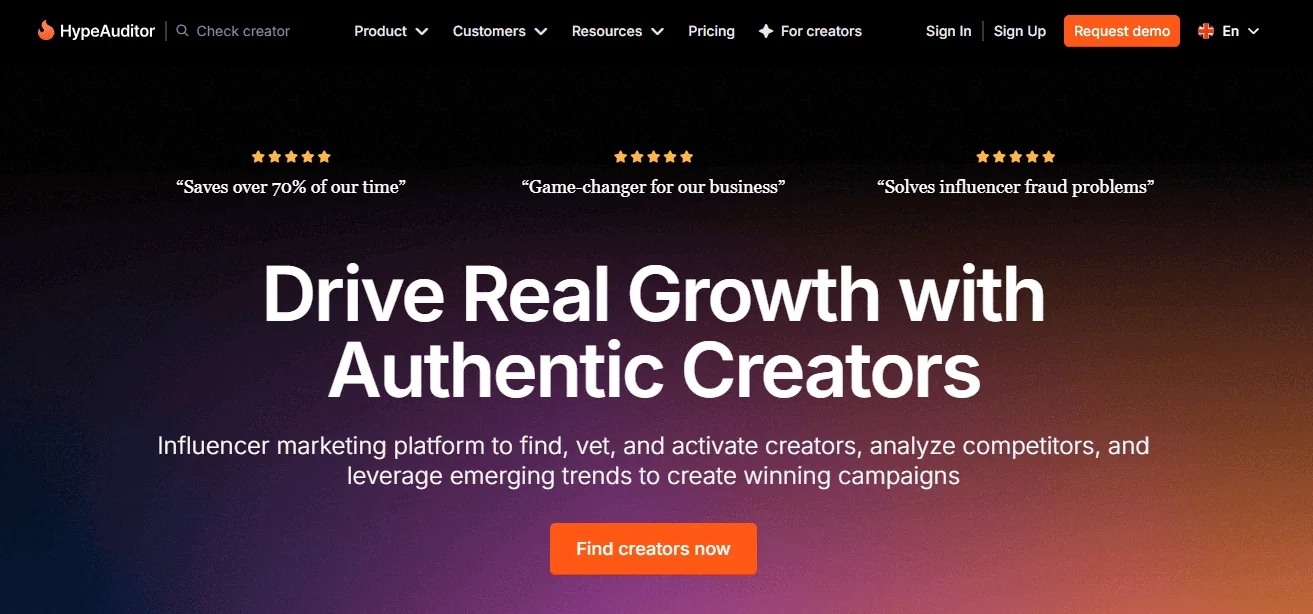
Best For: Data-driven brands that need the deepest possible analytics on influencer audience quality, content performance, and long-term creator value before and after a campaign.
Pricing: HypeAuditor offers a modular pricing structure based on the specific features you need.
• Free Version: Limited access to basic reports.
• Professional: Typically starts around $399/month (contact for specific custom quotes).
Why It Stands Out:
• Audience Quality Score (AQS) in Reports: Every post-campaign report includes a breakdown of audience authenticity alongside performance data, so you can evaluate not just reach but the quality of who was reached.
• Historical Performance Analytics: View an influencer's full performance history — not just current campaign data — to contextualize results and identify patterns in engagement and growth.
• Post-Campaign Comparison Reports: Benchmark campaign results against an influencer's historical average and against industry standards, giving stakeholders meaningful context for the numbers.
• Trend & Market Reports: Identify which niches, content formats, and platform features are currently driving the highest engagement, informing future campaign strategy.
Pros
• Unmatched Data Depth: Widely considered the gold standard for audience authenticity and post-performance analytics.
• Fraud Detection in Reporting: Flags unusual engagement spikes or bot-driven interactions within campaign data, protecting your brand from inflated results.
• Visual & Exportable Reports: Clean, data-rich reports that are easy to export and present to non-marketing stakeholders.
Cons
• Credit-Based System: Detailed influencer reports often require individual credits, which can lead to unexpected costs during high-volume campaigns.
• Focused on Large Platforms: Reporting is strongest for Instagram, TikTok, and YouTube, but less comprehensive for niche platforms like Pinterest or LinkedIn.
2. Sprout Social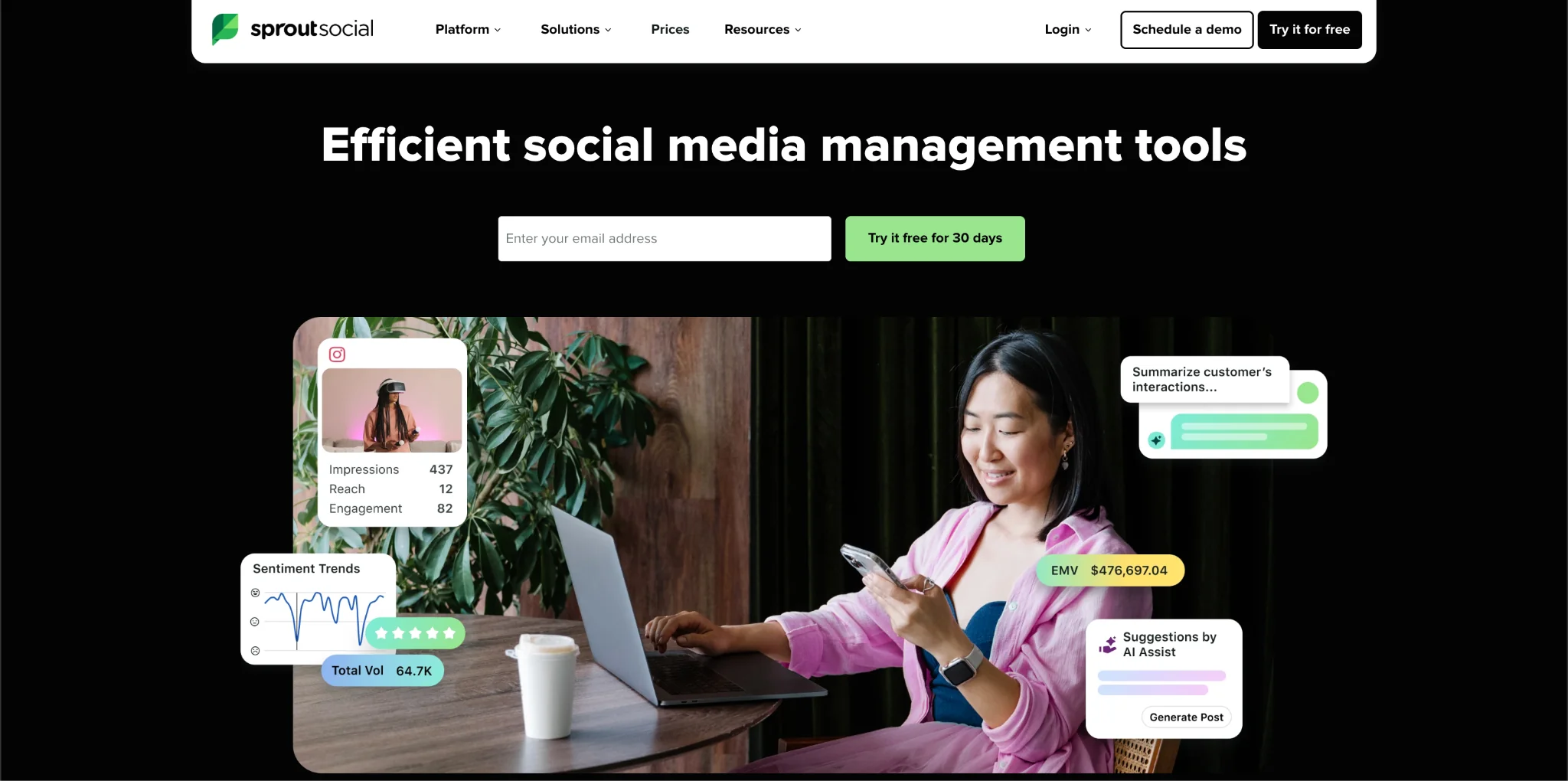
Best For: Mid-to-large enterprises and global agencies that want to consolidate influencer campaign reporting into a unified social media intelligence suite for a holistic view of their brand's digital impact.
Pricing: Sprout Social operates on a per-seat pricing model with annual billing. Influencer reporting features are typically available as part of their higher-tier plans or as a specialized add-on.
• Standard: $249/user/month — 5 social profiles and basic analytics.
• Professional: $399/user/month — Unlimited profiles and competitive reports.
• Advanced: $499/user/month — Automated workflows and advanced social listening.
• Enterprise: Custom pricing for large-scale influencer reporting and multi-market support.
Why It Stands Out:
• Unified Social & Influencer Reporting: Merges influencer campaign data with your brand's own social media performance metrics in a single report, giving a complete and unified view of total brand reach and sentiment.
• Centralized PDF Reporting: Generates a single, polished report that combines organic social performance with influencer campaign metrics, eliminating the need to stitch data together from multiple sources.
• Sentiment Analysis: Goes beyond engagement numbers to analyze the tone and sentiment of comments and conversations driven by influencer content, revealing how audiences truly feel about your brand.
• Competitive Benchmarking: Measure your influencer campaign performance not just in isolation, but against competitor brands and industry standards.
Pros
• Holistic Social Intelligence: One of the only tools that lets you report on your own social channels and influencer campaigns from the same platform, eliminating data silos.
• Industry-Leading Analytics: Offers incredibly deep data on audience sentiment, reach attribution, and competitor benchmarking.
• Collaborative Workspaces: Built for large teams with complex internal approval and reporting permission levels.
• Reliable Data Quality: Official API partnerships with Meta, TikTok, and YouTube ensure that all reported metrics are accurate and current.
Cons
• High Price Point: The per-user pricing model can become very expensive quickly for larger marketing teams.
• Limited Bulk Outreach Reporting: While campaign analytics are powerful, the platform's creator-level outreach tracking is less specialized than dedicated influencer tools.
3. CreatorIQ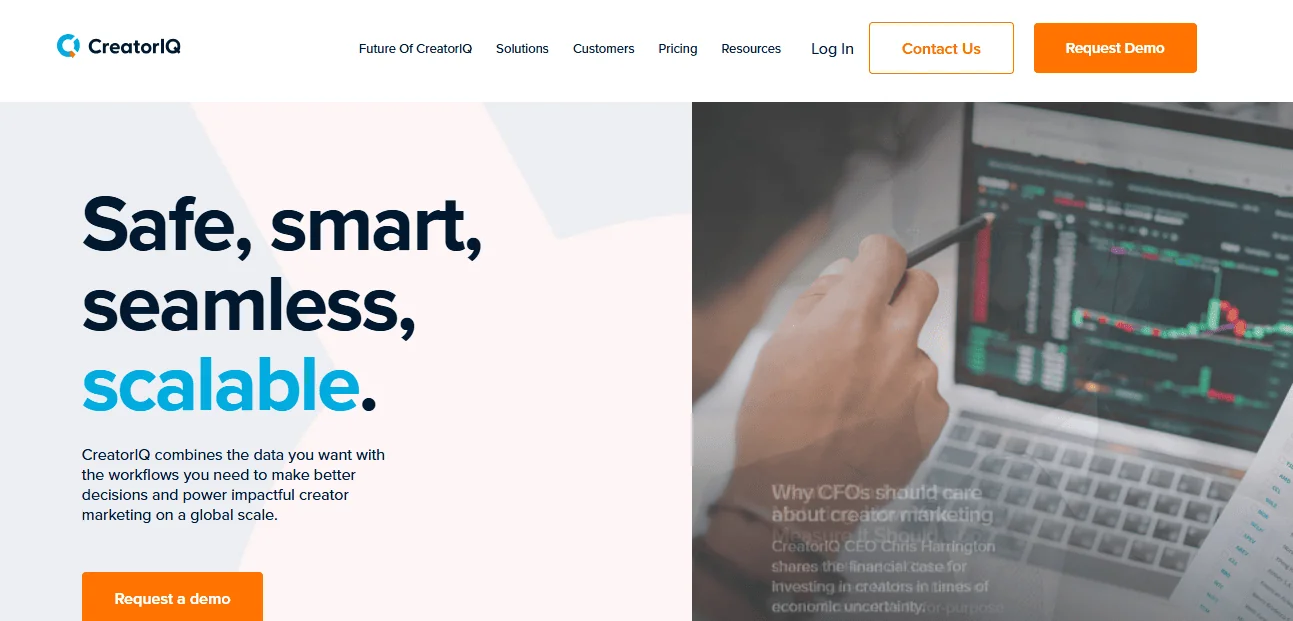
Best For: Global enterprises and large agencies that require a robust, data-heavy reporting engine capable of handling multi-market campaigns and delivering executive-level ROI dashboards.
Pricing: CreatorIQ is an enterprise solution with custom pricing tailored to large-scale needs.
• Starting Price: Typically around $2,350/month (billed annually).
Why It Stands Out:
• AI-Powered Performance Scoring: Uses machine learning to automatically score each piece of influencer content based on predicted and actual performance, helping teams quickly identify top-performing creative.
• Executive Reporting Dashboards: Purpose-built dashboards designed for presentation to CMOs and board-level stakeholders, with high-level KPIs and visual storytelling that translate influencer data into business impact.
• Collaborative Reporting Workflows: Allows large teams to annotate, comment on, and approve campaign performance data in real-time before reports are finalized and shared externally.
• Global Benchmarking: Compares campaign results against industry standards and competitor activity across multiple markets, ensuring your reporting always has meaningful context.
Pros
• Direct API Access: Deep partnerships with Meta, TikTok, and YouTube ensure the underlying data behind every report is the most accurate and up-to-date available.
• Enterprise-Ready CRM Integration: Reporting is tied directly to a robust CRM that tracks every creator touchpoint, giving a complete picture of each relationship's value over time.
• Multi-Market Campaign Tracking: Built to handle complex, simultaneous campaigns across multiple countries and languages without compromising reporting clarity.
Cons
• Annual Commitment Only: Does not offer monthly flexibility, requiring a significant long-term financial investment.
• Steep Learning Curve: The sheer volume of data, filters, and reporting features can be overwhelming for smaller marketing teams or those new to the platform.
4. Influencer Hero
Best For: Brands and agencies seeking an all-in-one platform that combines seamless influencer reporting, automated content tracking, and campaign analytics from a single, unified dashboard.
Pricing: Influencer Hero offers flexible pricing plans that grow with your brand. Each tier includes full reporting features, CRM integration, and campaign analytics.
• Standard: $649/month — up to 1,000 creators
• Pro: $1,049/month — up to 5,000 creators
• Business: $2,490/month — up to 10,000 creators
• Custom & Agency: Tailored pricing based on specific brand or agency needs
Why It Stands Out:
• Automated Content & Story Tracking: Influencer Hero automatically collects and archives published posts, Reels, TikToks, and Instagram Stories, including ephemeral content, ensuring no deliverable is ever missed in your final report.
• Real-Time Campaign Dashboards: Monitor live impressions, reach, engagement rates, and link clicks across all active campaigns and creators in one centralized view, updated continuously without manual data entry.
• Affiliate & Revenue Reporting: Tracks every click and conversion through unique affiliate links and promo codes, directly connecting influencer posts to revenue generated and providing a clear ROAS calculation.
• Shareable Client Reports: Generate fully branded, white-label PDF and live-link reports in minutes, designed specifically for presenting campaign results to clients, executives, and stakeholders.
Pros
• Multi-Platform Coverage: Reports on campaign performance across 8 major platforms, including Instagram, TikTok, YouTube, and Pinterest, in a single dashboard.
• Automated Story Capture: One of the few platforms that reliably captures and archives Instagram and TikTok Stories before they expire.
• All-in-One Efficiency: Eliminates the need for separate tools by combining discovery, outreach, CRM, and reporting in a single subscription.
• Flexible Contracts: Offers monthly subscription options, allowing brands to scale reporting needs without long-term annual lock-ins.
Cons
• Mild Learning Curve: The depth of the reporting dashboards and analytics features may take a few days to fully master.
5. Upfluence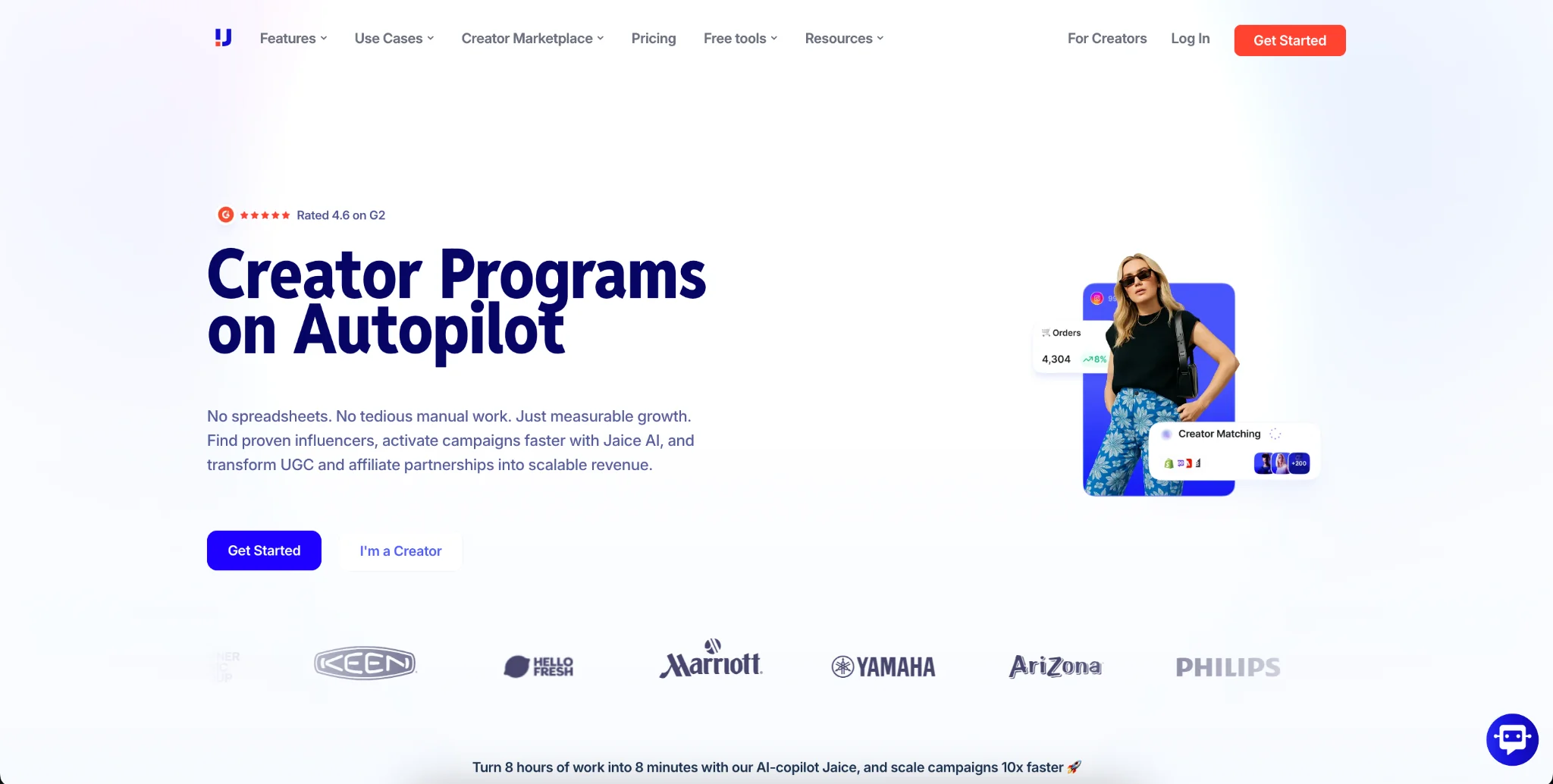
Best For: eCommerce and DTC brands that need reporting tools tightly integrated with their online store, allowing them to directly attribute sales revenue to specific influencer posts and campaigns.
Pricing: Upfluence typically uses annual contracts, though smaller plans are available.
• Growth: Starting around $478/month
• Scale/Enterprise: Custom pricing (typically $1,000+ per month)
Why It Stands Out:
• Direct Revenue Attribution Reporting: Connects influencer posts to actual orders placed in your Shopify, WooCommerce, or Magento store, producing reports that show exact revenue generated per creator.
• Affiliate Link & Promo Code Tracking: Automatically generates and tracks unique links and discount codes for every influencer, feeding clean conversion data directly into campaign reports.
• AI-Powered ROI Calculation: The platform's AI assistant, Jaice, automatically calculates and presents ROAS, cost-per-acquisition, and other critical ROI metrics within the reporting dashboard.
• Live Social Listening Reports: Tracks and reports on any organic mentions of your brand by creators or their audiences, capturing value that goes beyond contracted deliverables.
Pros
• Strong Sales Attribution: The best option in the market for brands that need influencer reports to directly reference eCommerce revenue data.
• Extensive Platform Coverage: Reports on performance across 8+ social channels, including blogs and Pinterest, in addition to the major platforms.
• Automated Reporting Cadences: Schedule regular report generation and delivery so stakeholders always have up-to-date campaign data without manual effort.
Cons
• Annual Commitment: Often requires a long-term contract, which may not suit brands running seasonal or short-term campaigns.
• Interface Complexity: The vast number of reporting features and data views can make the platform feel cluttered for new users.
6. GRIN
Best For: Large eCommerce enterprises that need to report on the entire creator lifecycle — from first post to long-term brand advocacy — with deep integration between influencer activity and sales performance.
Pricing: GRIN is an enterprise-level tool with custom pricing only.
• Estimated Price: $2,500+/month (often billed annually)
Why It Stands Out:
• End-to-End Lifecycle Reporting: GRIN tracks and reports on every stage of the creator relationship — content submissions, product seeding, post performance, affiliate conversions, and payment history — in one comprehensive view.
• Content Performance Dashboard: Automatically pulls published content from all creator accounts into a central library with post-level analytics, so you never have to manually track down deliverables.
• Long-Term Creator Value Reporting: Measures and reports on the cumulative value of each creator relationship over months or years, helping brands identify their highest-ROI long-term partners.
• Deep Shopify/Magento Sync: Sales data from your eCommerce store flows directly into GRIN reports, giving an accurate picture of how influencer content drives product demand.
Pros
• Highly Customizable Reporting: Brands can build entirely bespoke reporting workflows and KPI dashboards tailored to their specific business goals.
• Robust Payment & ROI Reporting: Tracks creator payments alongside revenue generated, providing a true profit-and-loss view of every influencer partnership.
• Automatic UGC Archiving: All creator content is automatically saved and tagged in the platform, creating a permanent archive for reporting and future content repurposing.
Cons
• Very Expensive: The price point makes it inaccessible for small and medium-sized businesses.
• Reporting Complexity: The depth of the reporting suite requires dedicated time and training to extract maximum value.
7. Modash
Best For: B2C and eCommerce brands that need a straightforward, accurate, and scalable way to track post-level performance across Instagram, TikTok, and YouTube campaigns without relying on creators to self-report.
Pricing: Modash offers usage-based pricing with a 14-day free trial.
• Essentials: $199/month — up to 100 creators
• Performance: $499/month — up to 250 creators
• Enterprise: Custom pricing for large-scale operations
Why It Stands Out:
• Automated Content Detection: Modash automatically finds and logs content published by tracked creators — including Instagram Stories — without requiring influencers to submit links manually, eliminating gaps in your reporting.
• Post-Level Analytics Breakdown: Generates granular performance data at the individual post level, including reach, impressions, saves, and engagement rate, making it easy to pinpoint exactly which content drove results.
• Audience Overlap Reporting: Identifies when multiple influencers you're working with share the same audience segments, helping you optimize spend and avoid paying for duplicated reach in your reports.
• Shopify Integration for Sales Reporting: Syncs directly with Shopify to attribute sales to specific creators and campaigns, turning performance reports into revenue reports.
Pros
• No Creator Login Required: Because Modash doesn't rely on influencers connecting their accounts, reporting data is collected automatically and consistently across every creator.
• Intuitive Reporting Interface: One of the most user-friendly reporting dashboards on the market, making it easy for teams of any experience level to interpret campaign data.
• Accurate Story Capture: Reliably tracks and archives time-sensitive Instagram Stories before they disappear, ensuring complete campaign coverage.
Cons
• Limited Platform Support: Reporting is primarily focused on Instagram, TikTok, and YouTube, with no support for platforms like Twitch or Pinterest.
• Contact Credits: Accessing direct creator contact information is limited by monthly credits, which can be restrictive for brands managing high-volume campaigns.
8. Aspire
Best For: eCommerce brands focused on UGC-driven campaigns that need reporting tools that measure both influencer performance and the downstream value of creator content when repurposed in paid advertising.
Pricing: Aspire offers custom pricing, generally aimed at mid-market and enterprise brands.
• Estimated Pricing: Starting at $2,000 - $3,000+/month.
Why It Stands Out:
• UGC Performance Reporting: Tracks how creator content performs not just organically, but when amplified through paid social ads, giving brands a full picture of total content value and media efficiency.
• Campaign Workflow Reporting: Provides real-time visibility into every stage of a campaign — brief sent, content submitted, content approved, post published — so nothing falls through the cracks.
• Creator Marketplace Analytics: Reports on the performance of creators who pitch themselves through the Aspire marketplace, making it easy to evaluate inbound creator quality against existing partners.
• Content Rights Tracking: Built-in reporting on which creators have granted usage rights for specific content, ensuring compliance and making it easy to identify assets available for paid amplification.
Pros
• Excellent UI: Reporting dashboards are frequently cited as among the most intuitive and visually appealing in the industry.
• UGC-Centric Metrics: Purpose-built for brands that use creator content in paid media, with reporting metrics that bridge the gap between organic influence and paid performance.
• Strong Customer Support: A dedicated success team helps brands set up and interpret their reporting frameworks for maximum strategic value.
Cons
• Premium Price Point: The high cost of entry makes it difficult for small businesses to justify the investment.
• External Database Limitations: Some users find reporting on creators sourced outside the Aspire marketplace is slightly less seamless than for in-network creators.
9. Julius
Best For: Agencies and brand teams that need highly customizable, presentation-ready reporting combined with robust influencer search, making it ideal for client-facing campaign management.
Pricing: Julius uses custom pricing based on team size and feature requirements.
• Estimated Price: Starting around $500–$1,000+/month (contact for exact quote).
Why It Stands Out:
• Custom Report Builder: Drag-and-drop report construction allows teams to tailor every report to the specific KPIs and branding requirements of each client or campaign, without relying on rigid templates.
• Multi-Channel Campaign Tracking: Monitors and consolidates performance data from Instagram, TikTok, YouTube, Facebook, Twitter/X, Pinterest, and blogs into a single campaign report.
• Content Performance Scoring: Automatically assigns a performance score to each piece of creator content based on reach, engagement, and audience quality, making it easy to rank creators and content in final reports.
• Team Collaboration on Reports: Multiple team members can access, annotate, and contribute to campaign reports simultaneously, streamlining the agency workflow from data collection to client delivery.
Pros
• Highly Customizable: More flexible in report design and KPI selection than most competitors, making it particularly strong for agency use cases.
• Broad Platform Coverage: One of the few tools that includes Pinterest, blogs, and Twitter/X alongside the major video and photo platforms in its reporting.
• Strong Search-to-Report Pipeline: The transition from finding an influencer to reporting on their campaign performance is cohesive and intuitive within the same platform.
Cons
• Dated Interface: Some users find the overall UI feels less modern compared to newer entrants in the market.
• Manual Data Entry Required: Certain campaign metrics, particularly from platforms with limited API access, may require manual input to complete reports accurately.
10. Traackr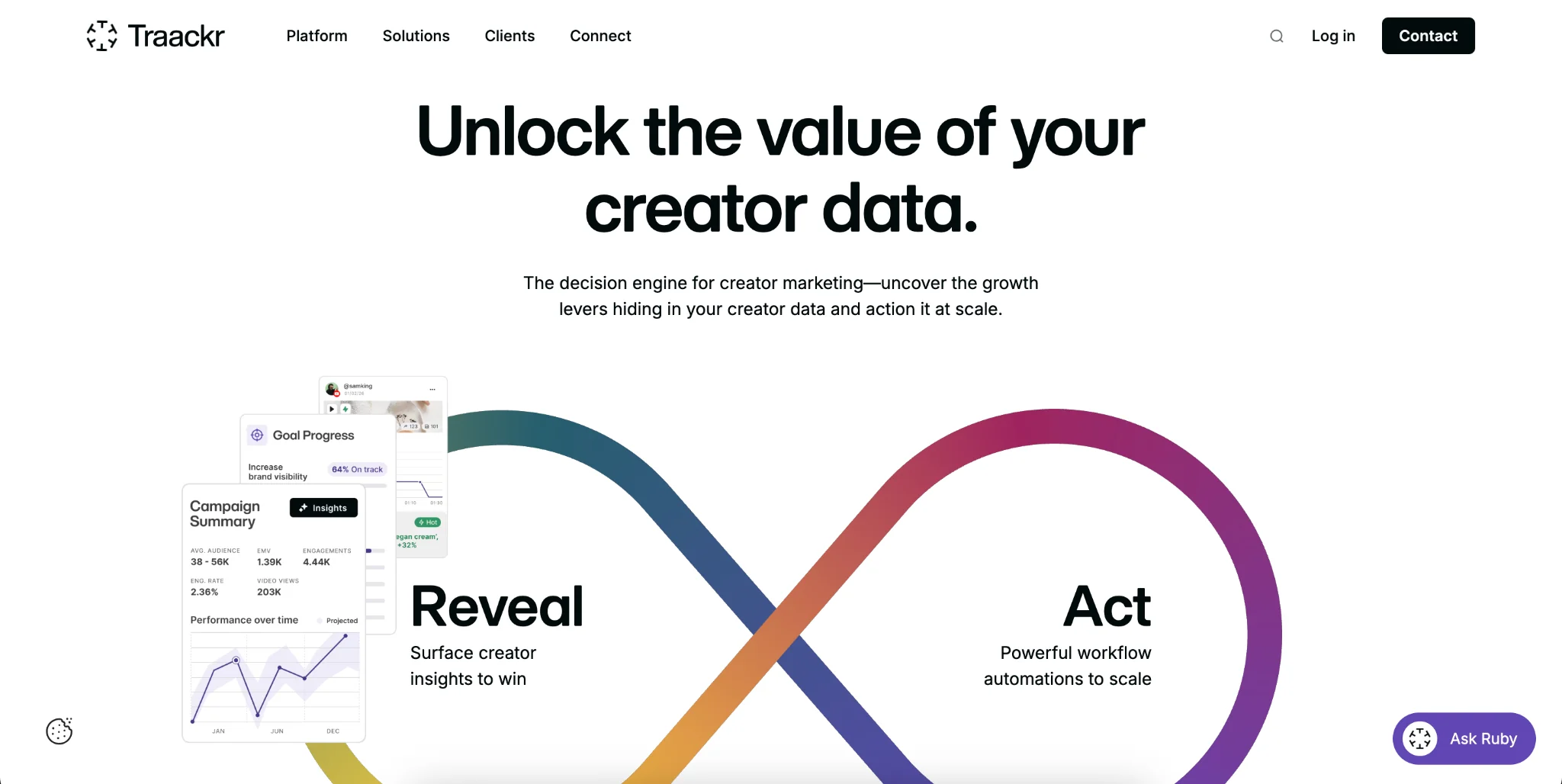
Best For: Global enterprise brands and agencies that need a rigorous, data-driven reporting platform focused on long-term influencer program performance, budget efficiency, and cross-market benchmarking.
Pricing: Traackr is an enterprise solution with custom pricing based on program size and market scope.
• Estimated Price: Starting around $1,500–$3,000+/month (contact for a custom quote).
Why It Stands Out:
• Brand Vitality Score (VIT) Reporting: Traackr's proprietary VIT metric measures the volume, impact, and trust of influencer content over time, giving brands a single, comparable score to track program health across campaigns and markets.
• Spend Efficiency Reporting: Goes beyond standard ROI to report on how efficiently your budget is being allocated across creators, tiers, and platforms — helping brands continuously optimize where their influencer dollars go.
• Cross-Market & Competitive Benchmarking: Compares your influencer program's performance against competitors and industry benchmarks across multiple global markets simultaneously, giving reporting real strategic context.
• Long-Term Program Tracking: Built to report on influencer marketing as an ongoing program rather than one-off campaigns, tracking creator relationship value, content performance trends, and audience growth over months and years.
Pros
• Best-in-Class Budget Reporting: Uniquely strong at connecting influencer spend to performance outcomes, making it a favorite for brands with large, complex media budgets.
• Global Scalability: Purpose-built for multi-market reporting, with the ability to compare campaign performance across regions and currencies in a single dashboard.
• Robust Data Integrations: Connects with major social APIs and third-party data sources to ensure reporting accuracy and completeness across all tracked platforms.
Cons
• Enterprise Pricing Only: The cost structure makes it inaccessible for small and mid-sized brands not running large-scale influencer programs.
• Steeper Learning Curve: The breadth of reporting metrics and program-level analytics requires meaningful onboarding time before teams can use the platform to its full potential.
Final Thoughts
Among these options, the most comprehensive all-in-one reporting solutions combine automated content tracking, real-time campaign dashboards, affiliate revenue attribution, and shareable client reports, all within a single platform that also handles discovery and outreach.
For brands looking to move beyond spreadsheets and manual data collection, the right reporting tool transforms influencer marketing from a cost center into a measurable, optimizable growth channel.
Whether you're a startup seeking your first transparent view of campaign performance or an enterprise managing global creator programs, investing in a dedicated reporting platform is the clearest path to proving ROI.
Ready to turn your influencer campaigns into measurable results? Explore Creator Hero and discover how to track content, attribute revenue, and prove ROI, all in one place.



.svg)


%201.png)


_logo.svg.png)


